Class 7 Basic Science Chapter 9 Question Answer Notes Hurt not the Environment

Reviewing SCERT Kerala Syllabus 7th Standard Basic Science Notes Pdf and Class 7 Basic Science Chapter 9 Question Answer Notes Solutions Pdf Hurt not the Environment can uncover gaps in understanding.

Hurt not the Environment Class 7 Questions and Answers Notes

Class 7 Basic Science Chapter 9 Hurt not the Environment Question Answer Pdf

Basic Science Class 7 Chapter 9 Question Answer Kerala Syllabus

Let Us Assess

Question 1.
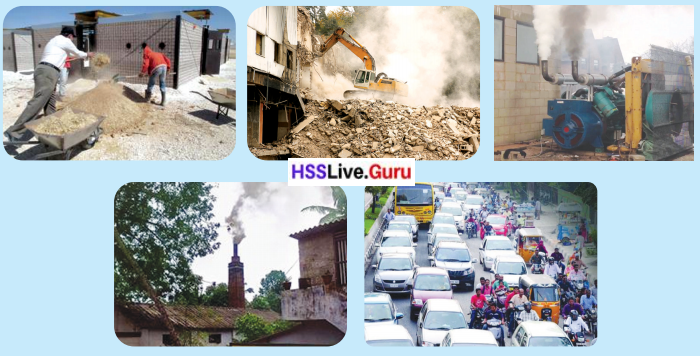
Observe the diagrams given below. Find out how the air gets polluted in each situation and complete the table.
Class 7 Basic Science Chapter 9 Question Answer Notes Hurt not the Environment Img 1
Answer:

Situation Ways of Air Pollution Consequences
Construction Site Dust particles from digging, moving, and sifting materials Respiratory problems, eye irritation, damage to lungs and heart
Demolition Site Dust, debris, and other particulate matter from the demolition process. Respiratory problems, eye irritation,damage to lungs and heart.
Industrial Area Smoke and exhaust gases from factory chimneys Respiratory problems, acid rain, global warming, damage to plants and ecosystems
Traffic Congestion Vehicle exhaust gases from burning fossil fuels Respiratory problems, heart disease,acid rain, global warming, smog

Question 2.
Prepare posters calling for the prevention of environmental pollution.
Answer:
Class 7 Basic Science Chapter 9 Question Answer Notes Hurt not the Environment Img 2

Question 3.
Identify the correct statements regarding plastic waste management from those given below:
a) Thin plastic products should be burnt.
b) Plastic products should be recycled as much as possible.
c) Plastic products should be reused as much as possible.
d) Use of plastic products should be minimised.
Answer:
b) Plastic products should be recycled as much as possible.
c) Plastic products should be reused as much as possible.
d) Use of plastic products should be minimised.

Class 7 Basic Science Chapter 9 Question Answer Notes Hurt not the Environment

Question 4.
Which method of purification can be adopted to separate freshwater from seawater?
a) Sifting
b) Chlorination
c) Distillation
d) Sedimentation
Answer:
c) Distillation

Class 7 Basic Science Chapter 9 Extended Activities Answers

Question 1.
Take moist soil in a pot. Bury a fruit peel and a plastic wrap in the potting soil simultaneously. Observe them after two weeks. Prepare a note based on your findings.
Answer:
The fruit peel decomposes naturally in soil, while plastic wrap remains intact or shows minimal signs of decomposition. The experiment demonstrates that organic materials like fruit peels decompose naturally, while plastic is not biodegradable.

Question 2.
Prepare a speech on ‘Vehicles and Air Pollution.’
Answer:
Good moming/aftemoon, everyone.
Today, I want to talk about air pollution caused by vehicles. As our cities grow, more people rely on cars, bikes, and buses, which has worsened the air we breathe. Vehicles that run on petrol and diesel are big contributors to air pollution. When these fuels bum, they release harmful substances into the air.

One of these is particulate matter, which can get deep into our lungs and cause breathing problems. Nitrogen oxides lead to smog and acid rain, while carbon monoxide is a poisonous gas that can be very dangerous. Carbon dioxide, another gas released, is a greenhouse gas that adds to global warming.

This problem is especially bad in cities because of the large number of vehicles and traffic jams. People living in cities often suffer from health problems like breathing issues and heart diseases due to air pollution. Switching to electric vehicles can help reduce this pollution.

Air pollution from vehicles is a serious issue, and we must act now. By using cleaner fuels and reducing our use of fossil fuels, we can improve the air we breathe and make the world healthier for future generations. Thank you.

Question 3.
Prepare a short note based on an activity carried out at your home on a project implemented by the Local Self Government for waste management. Present it before the class.
Answer:
Our local self-government initiated a waste management project to address environmental concerns. During the clean-up, we found significant plastic waste, emphasising the need for recycling. The project raised awareness about waste management. We can contribute by reducing single-use plastic consumption, segregating waste, participating in recycling initiatives, and educating others.

Class 7 Basic Science Chapter 9 Question Answer Notes Hurt not the Environment

Question 4.
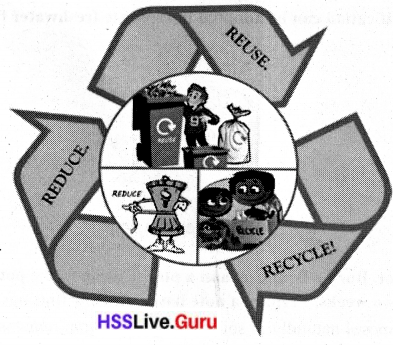
Create and display a logo in connection with making your school a Zero Waste Green School.
Answer:
Class 7 Basic Science Chapter 9 Question Answer Notes Hurt not the Environment Img 3

Class 7 Basic Science Chapter 9 Intext Question and Answers

Question 1.
Have you seen such sights? List such situations you have observed and the problems caused by them.
Answer:

Situations Problems
Plastic being burnt Air gets polluted due to smoke.
Air Pollution from vehicular emissions Vehicles, especially older or poorly maintained ones, release harmful gases like carbon monoxide and nitrogen oxides.
Improper industrial waste disposal Factories discharging untreated waste into rivers and lakes.

Question 2.
Which are the substances produced when solid waste, including plastic, is burnt?
Answer:
Carbon monoxide, Sulphur dioxide, Nitrogen dioxide, Particulate matter, dioxins etc.

Question 3.
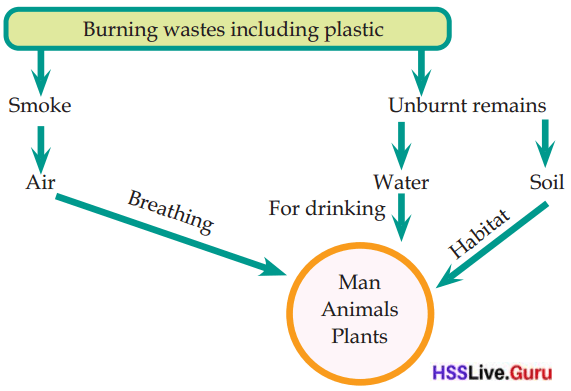
Won’t there be unburnt remains while burning plastic and other materials? What will happen to these unburnt remains when it rains? What are the consequences of such situations? Analyse the illustration given below and write your findings in the Science Diary.
Class 7 Basic Science Chapter 9 Question Answer Notes Hurt not the Environment Img 4
Answer:
The burning of plastic releases harmful smoke into the atmosphere. The smoke contains toxic chemicals like dioxins and particulate matter, which pollute the air. Humans, animals, and plants are exposed to this polluted air, leading to breathing issues and long-term respiratory diseases. When plastic is burned and leaving behind unbumt remains. These remains can mix with water or seep into the soil. This will result in contamination of drinking water for humans, animals, and plants.

Class 7 Basic Science Chapter 9 Question Answer Notes Hurt not the Environment

Question 4.
What chemical substances are present in the smoke produced when plastic is burnt? How do they affect our health?
Answer:

Chemical substances are produced when wastes, including plastic, are burnt. Health issues affecting humans
Carbon monoxide Causes cardiovascular and respiratory diseases.
Sulphur dioxide Causes respiratory diseases.
Nitrogen dioxide Inhalation causes itching in the throat and eyes, allergies, asthma and lung cancer.
Particulate matter Increases the risk of cancer and causes thyroid-related problems and respiratory diseases.
Dioxins Even when a small amount reaches the body, problems like headache, fatigue, blurred vision, and memory loss occur. Inhalation of large quantities of carbon monoxide leads to death.

Question 5.
Which are the chemical substances released while burning waste materials including plastic?
What are the health issues caused as a result of this? Write them in the Science Diary.
Answer:
Burning waste materials, including plastic, releases harmful chemicals like carbon monoxide, sulphur dioxide, nitrogen dioxide, dioxins, and particulate matter into the air. These chemicals can cause serious health problems such as breathing issues, heart diseases, and even cancer.

Question 6.
Does air pollution cause changes in the components of air?
Answer:
Yes, air pollution causes changes in the components of air by introducing harmful substances, such as chemicals, particulates, and biological materials, into the atmosphere. These pollutants can alter the natural composition of air.

Question 7.
Which are the elements found naturally in the air? Observe the given pie diagram and tabulate their quantities.
Class 7 Basic Science Chapter 9 Question Answer Notes Hurt not the Environment Img 6
a. What are the components present in atmospheric air?
b. Which is the most abundant component?
c. What is the quantity of oxygen in the air?
Answer:
The elements found naturally in the air include Oxygen, Carbon dioxide, Nitrogen and others.

Elements Composition
Oxygen 21%
Nitrogen 78%
Carbon dioxide 0.04%
Others 0.96%

a. Nitrogen, Oxygen, Carbon dioxide and others.
b. Nitrogen
c. 21%
When the atmospheric air is mixed with chemical substances, the quantity of natural constituents in the air changes.

Question 8.
Which types of stoves are used for cooking?
Answer:
The different types of stoves that are used for cooking include Firewood stoves, Kerosene stoves, Gas stoves, electric stoves, etc.
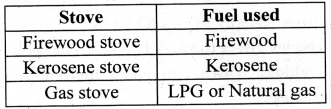
Class 7 Basic Science Chapter 9 Question Answer Notes Hurt not the Environment Img 8
When fuels like wood, kerosene and cooking gas are burnt, various chemical substances are released. The chemical substances released are mainly carbon dioxide, carbon monoxide, nitrogen dioxide, particulate matter, etc.

Question 9.
What measures should be taken to control air pollution in the kitchen due to the burning of cooking fuels? Discuss with friends and write in the Science Diary.
Answer:

  • Construction of chimneys
  • Proper ventilation
  • Regular maintenance of stoves
  • Usage of cleaner fuels such as LPG (Liquefied Petroleum Gas), natural gas, or electric stoves instead of firewood stoves.

Question 10.
As in the kitchen, don’t we use different types of fuels in our vehicles? Which are the fuels commonly used in vehicles? Write them in the Science Diary.
Answer:
Petrol, Diesel, CNG, and Electricity.

Question 11.
The change in the number of automobiles in Kerala since 2013 is shown in the bar diagram below.
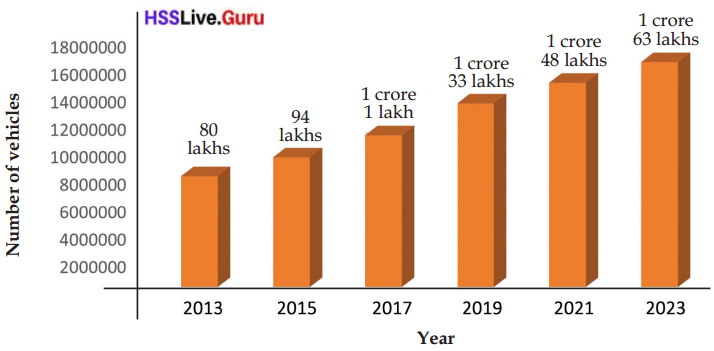
Class 7 Basic Science Chapter 9 Question Answer Notes Hurt not the Environment Img 9
a. What was the approximate number of vehicles in 2013?
b. What was the number of vehicles in 2023?
c. What is the change in the number of vehicles from 2013 to 2023?
Answer:
a. 80 lakhs (8 million).
b. 1 crore, 63 lakhs (16.3 million).
c. The change in the number of vehicles from 2013 to 2023 is 83 lakhs.

Question 12.
How does the increase in petrolรญdiesel vehicles affect the air? Havenโ€™t you seen instances where only one person is travelling in one vehicle, which can accommodate more passengers? Shouldnโ€™t this be avoided as much as possible?
Answer:
Vehicles that run on petrol and diesel release harmful gases like carbon monoxide and nitrogen oxides, which pollute the air.
Travelling alone in a car uses more fuel and adds to traffic jams. To reduce pollution, itโ€™s better to use public transport like buses and trains instead of driving alone.

Question 13.
How does the use of vehicles like bicycles benefit the environment? Present your findings in the class.
Answer:
Bicycles are great because they don’t use fuel, so they don’t release carbon dioxide or other harmful gases that harm the air and climate. They take up less space, helping reduce traffic and pollution. Bicycles run on human energy, saving fuel, and are quiet, lowering noise in cities.

Question 14.
How does smoke testing help to reduce air pollution? Discuss in your class. Visit a Vehicle Pollution Testing Centre arid find out the activities going on there.
Answer:
Smoke testing helps identify if a vehicle’s emissions contain more harmful chemicals due to engine problems, age, or bad fuel, helping to reduce air pollution. During vehicle inspection, technicians check the exhaust and engine to ensure they are working properly. Then, the vehicle is connected to an emission testing machine to measure the pollution level. If the vehicle passes, a Pollution Under Control (PUC) certificate is given. If it fails, the owner is advised to make repairs and return for another test.

Class 7 Basic Science Chapter 9 Question Answer Notes Hurt not the Environment

Question 15.
What are your comments on the use of vehicles regarding air pollution control? Write them in your Science Diary and present them in the class.
Answer:
Electric vehicles are a great way to reduce air pollution. Fewer vehicles on the road mean less pollution, so using public transport or carpooling helps. For short trips, walking or biking not only reduces pollution but also improves health. Keeping vehicles well-maintained and using cleaner fusls can also help cut down air pollution.

Question 16.
We have discussed air pollution caused by burning fuels and other substances. Apart from this, what are the other ways by which air gets polluted?
Answer:
Factories and industrial plants release harmful gases such as sulphur dioxide and nitrogen oxides, which can cause smog and acid rain. Chemical fertilisers and pesticides also add pollutants like ammonia and methane to the air. Natural events like volcanic eruptions, wildfires, and dust storms are other sources of air pollution.

Question 17.
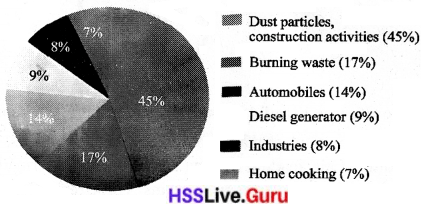
Analyse the Pie diagram given below and find out how air pollution occurs in our country. How does air pollution occur? Based on the Pie diagram, prepare a note on your findings and present it in the class.
Class 7 Basic Science Chapter 9 Question Answer Notes Hurt not the Environment Img 10
Answer:
The biggest source of air pollution is dust from construction activities. Automobiles contribute 14% to air pollution, while diesel generators add 9%, industries contribute 8%, and home cooking adds 7%.
From the pie chart, it’s clear that construction, burning waste, and vehicle emissions are the main causes of air pollution in India. When vehicles burn fossil fuels, they produce harmful gases like carbon monoxide and nitrogen oxides. Factories also release pollutants such as sulphur dioxide and volatile organic compounds into the air.

Question 18.
Conduct a seminar in your class on air pollution, its causes and remedies.
Answer:
The main causes of air pollution include industrial emissions, vehicle emissions, and construction dust. Factories release harmful gases like sulphur dioxide, nitrogen oxides, and particulate matter. Vehicles burning fossil fuels produce carbon monoxide. Cooking, heating, and burning waste add to pollution. Natural events like volcanic eruptions and forest fires also contribute, while deforestation reduces forests’ ability to absorb carbon dioxide.

We can reduce air pollution by using public transport, carpooling, and switching to electric vehicles. Saving energy by turning off appliances when not in use. Planting more trees improves air quality as they absorb carbon dioxide. Proper waste management and Promoting renewable energy sources like solar, wind, and hydropower is also needed.

Question 19.
You know that two-thirds of the Earth is water. What are the different forms of water found on the Earth?
Answer:

  • Ice caps, glaciers etc.
  • Water vapour, Fog
  • Snow, Icebergs
  • Freshwater, Saltwater, Wetlands, Rain and Dew

Question 20.
How do water bodies get polluted?
Answer:

  • Disposal of plastic wastes
  • Spillage of chemical substances
  • Factories release harmful chemicals and toxic waste directly into rivers and lakes.
  • Thermal pollution happens when factories release hot water into rivers or lakes.
  • Sewage from homes, including human waste.

Question 21.
A water body polluted by algae. What is the reason for this condition of the water body?
Answer:
Eutrophication.

Question 22.
By analysing the pictures given below and observing your surroundings, find out the situations that cause water pollution and write them in the Science Diary.
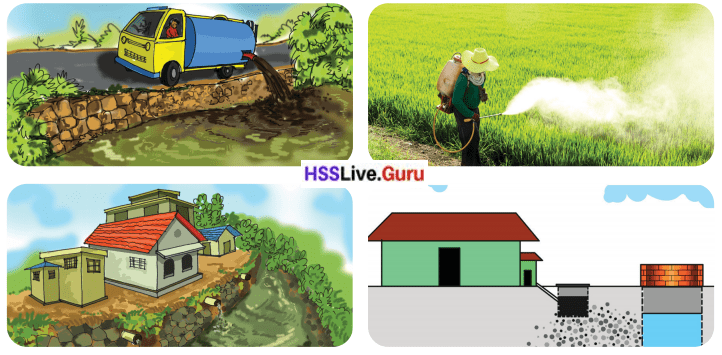
Class 7 Basic Science Chapter 9 Question Answer Notes Hurt not the Environment Img 11
Answer:

  • Excessive use of chemical pesticides.
  • Discharge of wastewater into drainages.
  • Dumping of slaughterhouse waste in land and water bodies.
  • Discharge of waste from industries into water bodies.
  • Untreated sewage discharge into water bodies.
  • People are throwing garbage, plastic, and household waste directly into water bodies.

Question 23.
You have listed the situations related to water pollution. Discuss its consequences and write them iff your Science Diary.
Answer:
Polluted water contains harmful germs like bacteria, viruses, and parasites that can cause diseases such as cholera, typhoid, dysentery, and hepatitis. Toxic chemicals, sewage, and plastic waste harm fish and other aquatic animals. Pollutants like microplastics and heavy metals can build up in their bodies. Chemicals from landfills, factories, and farms can also seep into the ground, contaminating groundwater.

Class 7 Basic Science Chapter 9 Question Answer Notes Hurt not the Environment

Question 24.
What measures can we adopt to make water sources free from pollution? Discuss.
Answer:
Reducing waste, recycling materials, and reusing products can help minimise the amount of waste. Encourage the use of organic fertilisers and natural pest control methods.

Question 25.
What are the sources of drinking water in your school?
Answer:
Tap Water, Water Dispensers, Filtered Water Stations, Bottled Water, and Groundwater.

Question 26.
What are the qualities drinking water should have? In the following statements, put a tick against the qualities that drinking water should possess.
Clearwater
Colourless and odourless
Free from germs
Absence of hazardous chemical substances
Presence of adequate mineral salts
Salty taste
Neither acidic nor basic
Answer:
Clearwater
Colourless and odourless
Free from germs
Absence of hazardous chemical substances
Presence of adequate mineral salts
Salty taste
Neither acidic nor basic (neutral pH)

Question 27.
Collect samples of drinking water and test the following characteristics:
โ€ข Colour
โ€ข Odour
โ€ข Acidic/basic nature
โ€ข Presence of insoluble impurities
What materials are required for doing the experiment?
Answer:
Hand lens, Filter paper, Universal indicator, Transparent glass beaker or test tube, Cotton wool, pH paper (litmus paper), Funnel, Stirring rod, Distilled water.

Question 28.
How can we observe the colour and odour of water?
Answer:
To check the colour of the water, use a clear glass beaker and white paper. Pour the water into the beaker and place it in front of the white paper. If the water is clear and colourless, it’s safe to drink. If you notice any tint or cloudiness, it may contain impurities.
To check the odour of water, use a clean glass container and cotton wool. Pour the water into the container, cover it with cotton wool, and gently swirl it. Then, smell the water. Drinking water should have no smell. If it has a strange odour, it might have impurities.

Question 29.
What characteristics of water can be identified using filter paper and hand lens?
Answer:
The filter paper can be used to identify the presence of insoluble impurities present in the water. The hand lens helps you identify the size and type of impurities, such as tiny sediments, dust particles, or organic material.

Question 30.
Can’t you find out whether water is acidic or basic using a universal indicator? Check the samples of drinking water you have collected. Collect data and tabulate. Analyse the data and record the results in your Science Diary. Present them before the class.
Answer:
Yes, we can use a universal indicator to determine whether water is acidic, basic, or neutral. The universal indicator will change colour based on the pH of the water sample. Gather drinking water samples from various sources (e.g., tap water, bottled water, rainwater, well water). Add a few drops of universal indicator solution to each water sample, or dip the indicator paper in the water.

Sample Source Colour of Universal Indicator pH value Acidic/Basic/Neutral
Tap Water Green 7 Neutral
Bottled Water Greenish-blue 7.5 Slightly Basic
Well Water Green 7 Neutral
Rain water Yellowish-green 6.5 Slightly Acidic

Question 31.
Shouldn’t the drinking water be purified if it is contaminated with impurities?
Answer:
The drinking water can be purified using different techniques like Boiling, Sifting, Sedimentation, Chlorination, and Filtration.

Question 32.
Enquire other ways to purify drinking water. Record them in Science Diary.
Answer:
Ceramic Filtration:-Water passes through porous ceramic filters, which trap bacteria and sediments. Iodine Treatment:- Iodine tablets or solutions are added to water to disinfect it. Biosand Filter:- A sand-based filtration system where water passes through layers of sand and gravel. Ion Exchange:- Effective for softening water by removing hard minerals like calcium and magnesium. It can remove some heavy metals like lead, mercury, and cadmium.

Question 33.
Which of the water purifying methods are used in your home and school? Write them in the Science Diary.
Answer:
Filtration, reverse osmosis (RO), or boiling.

Question 34.
Observe the headlines and the picture of the news given below. What are the things mentioned in this news? How do such habits of some people in our society affect the environment? Write your findings in the Science Diary and present them before the class.
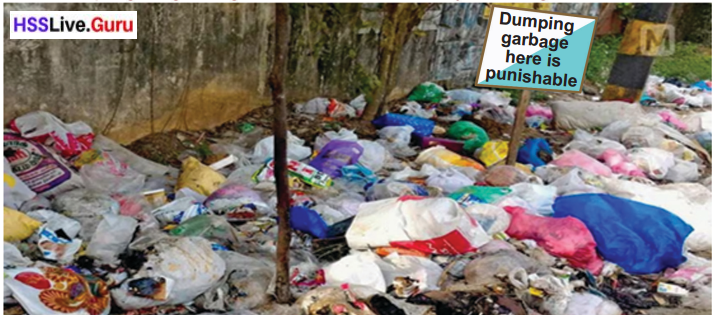
Class 7 Basic Science Chapter 9 Question Answer Notes Hurt not the Environment Img 12
Answer:
The image indicates the illegal dumping of waste. A sign indicates that dumping garbage in this area is punishable, likely by law. A reward of 2500 is promised to anyone who provides information about the people illegally dumping garbage.
Uncontrolled garbage dumping can lead to contamination of groundwater and nearby water bodies with harmful chemicals. Accumulation of waste can release foul odours and methane, a greenhouse gas, contributing to air pollution and climate change. Stagnant garbage can attract pests, rodents, and mosquitoes, leading to the spread of diseases such as malaria, cholera, and dysentery.

Question 35.
List out the different kinds of waste formed in a household?
Answer:
Fruit peel, Vegetable waste, Plastic covers, Aluminum cans, Glass bottles, Newspapers, Cardboard boxes, Old batteries, Bulbs, CFLs, Wires and cables.

Class 7 Basic Science Chapter 9 Question Answer Notes Hurt not the Environment

Question 36.
Classify wastes into biodegradable and non-biodegradable.
Answer:

Biodegradable Non-Biodegradable
  • Banana peel
  • Eggshells
  • Food leftovers
  • Paper towels
  • Garden waste
  • Cardboard
  • Plastic covers
  • Plastic bottles
  • Glass bottles and jars
  • Aluminum cans
  • Metal scraps
  • Old batteries
  • Electronic waste

Question 37.
Which type of waste cause soil pollution? Discuss.
Answer:
Plastic bags, bottles, and other plastic items take hundreds of years to decompose. Discarded electronics release harmful substances like lead, mercury, and cadmium into the soil, thereby affecting its quality and contaminating water supplies. Pesticides and Herbicides used in agriculture, if not used properly, can accumulate in the soil, poisoning the ecosystem.

Question 38.
Certain household wastes are mentioned below:
Bulbs, food wastes, CF lamps, paper, paper cups, footwear, bags, clothes, pesticide containers, paint containers, plastic bags, vegetable wastes, cardboard packing materials, plastic cups, mobile phone batteries, plastic bottles, glass bottles, empty toothpaste tube, fish and meat waste.
Classify and tabulate them in such a way that they can be deposited in the appropriate bins shown in the figure.
Answer:

Biodegradable Non-biodegradable Hazardous
Food Wastes
Paper
Paper Cups
Vegetable Wastes
Cardboard Packing
Materials
fish and meat waste
Bulbs
Footwear
Bags (Plastic)
Clothes
Plastic Bags
Plastic Cups
Plastic Bottles
Empty Toothpaste Tube
CF Lamps
Pesticide Containers
Paint Containers
Mobile Phone Battery
Glass Bottles

Question 39.
What is the advantage of sorting waste at its origin itself?
Answer:
Segregated waste can be directed to proper recycling plants, ensuring plastic, metal, paper, and glass materials are reused instead of ending up in landfills. Organic waste, when separated, can be turned into compost, enriching the soil and reducing the need for chemical fertilisers.

Question 40.
What should we do after sorting the garbage? Let’s discuss.
Answer:
Biodegradable waste at home is collected for composting. Many municipalities have separate bins for organic waste. Non-biodegradable wastes like plastics, metals, and glass items are sent to recycling centres or collected by local waste management authorities. Hazardous waste like chemicals, batteries, and electronic waste should go to designated collection points or recycling centres equipped to handle such waste.

Question 41.
Observe the picture. Are you familiar with this system? Find out how it works.
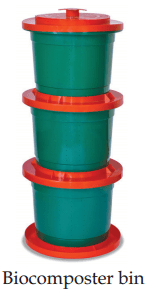
Class 7 Basic Science Chapter 9 Question Answer Notes Hurt not the Environment Img 13
Answer:
A biocomposter bin works by allowing air to flow through multiple tiers where organic waste is added. Microorganisms in the bin break down the waste with the help of oxygen and heat. Over time, the waste decomposes into compost, a nutrient-rich material used for gardening.

Question 42.
Visit a biogas plant and learn about its working. Write it in the Science Diary.
Answer:
A biogas plant works by using organic waste in a sealed container called a digester. Inside, bacteria break down the waste without oxygen (anaerobic digestion), producing biogas (mainly methane) and a by-product called digestate. The biogas is used as a renewable energy source, and the digestate can be used as fertiliser.

Question 43.
We can manage biodegradable waste generated at home and school using the above methods. Collect more details about each method.
Answer:
Vermicomposting: It is a method of composting where earthworms break down organic waste like food scraps and plant material. The worms eat the waste and produce nutrient-rich castings, which are a natural fertiliser. The process requires a moist, oxygen-rich environment and results in high- quality compost that improves soil health.

Air Contact Composting: A biocomposter bin works by allowing air to flow through multiple tiers where organic waste is added. Microorganisms in the bin break down the waste with the help of oxygen and heat. Over time, the waste decomposes into compost, a nutrient-rich material used for gardening.

Biogas Production: A biogas plant works by using organic waste in a sealed container called a digester. Inside, bacteria break down the waste without oxygen (anaerobic digestion), producing biogas (mainly methane) and a by-product called digestate. The biogas is used as a renewable energy source, and the digestate can be used as fertiliser.

Class 7 Basic Science Chapter 9 Question Answer Notes Hurt not the Environment

Question 44.
Paper and paper products can be recycled. But can all non-biodegradable waste be disposed in the same way?
Answer:
No. Nonbiodegradable waste includes materials like plastics, metals, glass, and electronic waste (e-waste), but each type needs to be handled differently.

Question 45.
What would be the reason for banning the production and distribution of very thin plastic covers?
Answer:
Thin plastic covers are a significant source of waste often found in waterways, oceans, and landscapes.

Question 46.
What measures can be taken to reduce nonbiodegradable waste?
Answer:
Use reusable bags, bottles, and containers instead of single-use plastic items like bags, straws, and cups. Encourage plastic-free packaging for products. Switch to biodegradable or eco-friendly materials like bamboo, cloth, or metal instead of plastics.
It is the strategy adopted worldwide to reduce the amount of non-biodegradable waste. It has to become a part of our life and culture.

R-Reduce (minimised use) R-Reuse (Reusable) Only those with standard grades R-Recycle (Recyclable)
Plastic cups Plastic bags Metal products
Plastic, thermocol plates Plastic jars Plastic products
Mineral water bottle Plastic utensils Aluminium cans

Question 47.
Enquire more about the activities of Haritha Karma Sena and write them in the Science Diary. Collect information about such activities, prepare a report and present it before the class.
Answer:
Haritha Karma Sena members collect segregated waste (biodegradable and non-biodegradable) directly from households. They educate the public on the importance of sorting waste into categories like biodegradable, recyclable, and hazardous waste, encouraging sustainable waste disposal practices. Non-biodegradable waste like plastics and metals are taken to recycling facilities. Haritha Karma Sena works closely with local self-government bodies to ensure efficient waste collection and disposal.

Question 48.
We have understood the various situations in which air, water and soil are polluted and their consequences. Conduct a study to find whether such conditions exist in your locality for air, water and soil. Write your hypotheses regarding this topic in your Science Diary.
Answer:
Air Pollution Hypothesis: There are high levels of air pollution in our locality due to traffic and industrial emissions.
Water Pollution Hypothesis: The local water sources are contaminated with pollutants from nearby industries and improper waste disposal.
Soil Pollution Hypothesis: The soil in our locality is polluted due to the excessive use of fertilisers and improper waste management.

Question 49.
What observations are needed for conducting the study? What information are to be collected? Analyse the data and prepare a project report including your findings and recommendations. Present it before the class and invite guests and discuss.
Answer:
Use air quality monitors or check local air quality indices. Observe and record traffic patterns, industrial activities, and the presence of greenery. Test water from local sources (wells, rivers, or taps) for pH, turbidity, and contamination indicators (like bacteria). Observe the colour and odour of water for the identification of pollution. Collect soil samples from various locations (near schools, parks, and industrial areas). Observe the presence of garbage, chemicals, or unusual plant growth.

Question 50.
Discuss in class the steps you can take to make your school a waste-free green school.
Answer:

Objectives Actions to be taken
Garbage disposal of noon-meal
  • Collect organic waste separately for composting.
  • Encourage students to bring minimal packaging for their meals.
Paper waste disposal
  • Initiate a paper recycling program with designated bins for paper waste.
  • Promote digital communication to reduce paper use. (online assignments and newsletters)
Plastic waste disposal
  • Reduce single-use plastics by promoting reusable bottles, containers, and utensils.
  • Set up recycling bins specifically for plastic items and educate students on proper recycling practices.
Constructing Biodiversity Park
  • Identify a suitable area in the school for creating a biodiversity park.
  • Involve students in planning and planting native plants, trees, and flowers to enhance local biodiversity.

Hurt not the Environment Class 7 Notes Extra Questions and Answers

Question 1.
The main factor of air pollution is ………..
Answer:
Carbon dioxide.

Question 2.
What can be done for garbage disposal?
Answer:

  • Sorting garbage by type and disposing of it.
  • Making biofertilisers using organic waste.
  • Controlling the use of plastics and reusing them.
  • Never throw away waste materials.
  • Reuse that can be recycled.
  • Follow the important rules and regulations connected with the protection of the environment and pronouncements.

Question 3.
What are the health issues created by the carbon monoxide from vehicle emissions?
Answer:
Even when a small amount of carbon monoxide reaches the body, problems like headache, fatigue, blurred vision, and memory loss occur. Inhalation of large quantities of carbon monoxide leads to death.

Question 4.
What are the components present in atmospheric air?
Answer:
The elements found naturally in the air include oxygen, carbon dioxide, nitrogen and others.

Question 5.
What is air pollution, and explain the factors affecting it?
Answer:
Air pollution is caused by the mixing of smoke, toxic gases and other chemical substances in the atmospheric air. Wildfires and natural phenomena like volcanic eruptions and earthquakes also contribute to air pollution. Indiscriminate actions of human beings are the main cause of air pollution.

Question 6.
Substances, which undergo decomposition, are used to produce
Answer:
Compost

Class 7 Basic Science Chapter 9 Question Answer Notes Hurt not the Environment

Question 7.
………….. decompose organic matter and thus improve the fertility of the soil.
Answer:
Microorganisms

Question 8.
How can we protect water sources from getting polluted? Prepare an action plan to keep the water sources in your locality pollution-free.
Answer:

  • Do not allow the putting of wastewater from factories and industries into the river, pond, etc.
  • Avoid washing vehicles near water sources.
  • Avoid washing of cattles near water sources.
  • Avoid situations in which human excreta is mixed in water.

Question 4.
What are the harmful effects that cause soil pollution?
Answer:

  • The natural condition of the soil is ruined.
  • Its capacity for holding water is reduced.
  • The poisons in the pollutants reach plants and animals.
  • Through food, these poisons reach man.
  • The bad effects of radiation.

Question 5.
What do you mean by eutrophication?
Answer:
Excess growth of water plants like algae in water bodies is caused by a phenomenon known as eutrophication. This happens in water bodies where fertilisers containing nitrogen and other similar substances flow in. It is such flowing excess nutrients that cause excessive growth of aquatic plants. These aquatic plants use oxygen dissolved in water excessively. Due to this, other plants and animals in water die without getting oxygen and the ecosystem that existed in the water body gets disturbed.

Question 6.
What is the solution for air pollution caused by the vehicle’s emissions?
Answer:
Electric vehicles

Question 7.
Which are the chemical substances produced by the automobile emissions?
Answer:
When automobile engines are operated using fuels like petrol and diesel, sulphur dioxide, nitrogen dioxide, carbon monoxide and particulate matter are released.

Question 8.
What is the purpose of smoke testing?
Answer:
Smoke testing is carried out to find out whether the smoke of vehicles contains more than the permissible amount of harmful chemical substances. By smoke testing, it can be detected whether vehicle emissions contain more harmful chemical substances due to engine failure, age of vehicles and impurities in fuel.

Question 9.
Why is it necessary to prevent the increased use of plastics?
Answer:
Plastics are non-degradable substances that pollute air, water, and soil. Burning plastic releases poisonotis gases, causing air pollution and irritation. Plastic doesnโ€™t degrade in soil, preventing water; penetration and root growth. Mosquitoes multiply in plastic vessels, and stagnant water leads to the destruction of aquatic organisms. The treatment of plastic waste is a serious issue.

Question 10.
Explain the different methods for the purification of drinking water.
Answer:
Boiling for at least one minute will kill the microorganisms in the water. But the dissolved components in the water will remain.
Sifting:-Undissolved impurities in water are separated by filters.

Sedimentation:-The undissolved impurities are allowed to settle down. The water that appears on top can be separated and used.
Chlorination:-Adding a sufficient quantity of bleaching powder will kill the microorganisms in water.

Filtration:-It is the method of boiling water into steam and cooling it to collect pure water. There will be no dissolved components in the water collected in this way.

Hurt not the Environment Class 7 Notes

  • The smoke and unbumt remains generated by burning wastes, including plastic, have an adverse impact on air, soil, water and living organisms.
  • Air pollution is caused by the mixing of smoke, toxic gases and other chemical substances in the atmospheric air.
  • Nitrogen is the most abundant component found in the atmosphere.
  • Petrol, Diesel, CNG, and Electricity are commonly used as fuels in vehicles.
  • Using public transport like buses and trains can help to reduce the need for private vehicles and thereby reduce pollution.
  • Smoke testing is carried out to find out whether the smoke of vehicles contains more than the permissible amount of harmful chemical substances.
  • Electric vehicles are a solution for air pollution caused by vehicles.
  • Excess growth of water plants like algae in water bodies is caused by a phenomenon known as eutrophication.
  • Reducing waste, recycling materials, and reusing products can help minimise the amount of waste.
  • The drinking water can be purified using different techniques like Boiling, Sifting, Sedimentation, Chlorination, and Filtration.
  • Vermicomposting, Air Contact Composting and Biogas Production are the different ways of scientific methods of waste management.

Class 7 Basic Science Chapter 8 Question Answer Notes Wonders of Sky

Reviewing SCERT Kerala Syllabus 7th Standard Basic Science Notes Pdf and Class 7 Basic Science Chapter 8 Question Answer Notes Solutions Pdf Wonders of Sky can uncover gaps in understanding.

Wonders of Sky Class 7 Questions and Answers Notes

Class 7 Basic Science Chapter 8 Wonders of Sky Question Answer Pdf

Basic Science Class 7 Chapter 8 Question Answer Kerala Syllabus

Let Us Assess

Question 1.
Observe the picture. Check the orbital path of the Moon around the Earth and complete the table below:
Class 7 Basic Science Chapter 8 Question Answer Notes Wonders of Sky Img 1
Answer:
The starting position of the lunar eclipse B
The position of complete lunar eclipse C
The position where the lunar eclipse ends D

Question 2.
Observe the picture and complete the table by matching the boxes appropriately.
Class 7 Basic Science Chapter 8 Question Answer Notes Wonders of Sky Img 2
Answer:
Class 7 Basic Science Chapter 8 Question Answer Notes Wonders of Sky Img 3

Class 7 Basic Science Chapter 8 Question Answer Notes Wonders of Sky

Question 3.
Some statements are given below. Tick (โœ”) the correct ones.
โ€ข A Full Moon is the day when the part of the Moon on which the sunlight falls, is completely visible from the Earth.
โ€ข The waxing crescent Moon is visible overhead at sunset.
โ€ข The period of revolution of the Moon and the period during waxing will be visible are the same.
โ€ข Solar eclipse occurs only on New Moon day.
โ€ข Lunar eclipse occurs only on Full Moon day.
โ€ข Lunar eclipse occurs on all Full Moon days.
Answer:

  • A Full Moon is the day when the part of the Moon on which the sunlight falls, is completely visible from the Earth.
  • Solar eclipse occurs only on New Moon day.
  • Lunar eclipse occurs only on Full Moon day.

Class 7 Basic Science Chapter 8 Extended Activities Answers

Question 1.
Let’s do an activity to find out how Solar Eclipse occurs.
Preparation
Place a football on a table.
Let a child stand facing the table at a distance of one and a half meters.
Let the child hold a small ball fixed on a stick as shown in the picture.
Close one eye and hold the small ball closely in front of the other eye and look at the football on the table.
Class 7 Basic Science Chapter 8 Question Answer Notes Wonders of Sky Img 4
a) Is the football the only thing to disappear from the view?
b) Slowly move the small ball forward aw ay from the eye. What change occurs in viewing the ball?
c) How far should the small ball be held from the eye for the football to be completely hidden? If the small ball is further moved aw ay from the eye, w hat change can be observed in the hidden football?
d) How should you hold the small ball to hide the football partially?
Class 7 Basic Science Chapter 8 Question Answer Notes Wonders of Sky Img 5
e) Compare the observations you had during the above experiment with the different pictures
Class 7 Basic Science Chapter 8 Question Answer Notes Wonders of Sky Img 6
Answer:
In the activity:

  • Football: Represents the Sun.
  • Small ball: Represents the Moon.

a) No. When the small ball (Moon) is held close to the eye (Earth), it blocks not only the football (Sun) but also the area around it.

b) As the small ball (Moon) moves away from the eye (Earth), the area it blocks becomes smaller. The football (Sun) may still be partially hidden, but more of its surroundings can be seen.

c) The small ball (Moon) needs to be held at a specific distance from the eye (Earth) to block the football (Sun) completely. This distance is determined by the relative sizes of the football and the small ball. If the small ball is moved further away, the football will no longer be completely hidden, and part of it will be visible.

d) To partially hide the football (Sun), the small ball (Moon) should be positioned so that it only partially covers the football.

e) The provided images depict three different phases of a solar eclipse:
Total Eclipse: The Moon completely covers the Sun, leaving only the Sun’s outer atmosphere visible.
Annular Eclipse: The Moon is slightly smaller than the Sun, leaving a ring of sunlight around the Moon’s silhouette.
Partial Eclipse: Only part of the Sun is covered by the Moon.
Here’s a comparison of the activity’s observations and the eclipse images:
Class 7 Basic Science Chapter 8 Question Answer Notes Wonders of Sky Img 7

Question 2.
What are India’s achievements in Space Science? Collect information and prepare an article. Conduct a seminar exploring the ICT possibilities.
Answer:
India’s Space Achievements:

  • Launched numerous satellites.
  • Explored the Moon and Mars.
  • Developed reliable launch vehicles.
  • Created navigation system NavIC.
  • Applied space technology to various sectors.
  • ICT Possibilities:
  • Satellite communication.
  • Remote sensing.
  • Navigation.
  • Data analysis.
  • Education and research.

Class 7 Basic Science Chapter 8 Intext Question and Answers

Question 1.
You might have seen your own shadow. How is it formed?
Answer:
A shadow is formed when an object blocks light from reaching a surface, and your shadow is formed because your body is opaque and doesn’t allow light to pass through it.

Class 7 Basic Science Chapter 8 Question Answer Notes Wonders of Sky

Question 2.
Observe the picture.
Class 7 Basic Science Chapter 8 Question Answer Notes Wonders of Sky Img 8
a) In which direction will the shadow of the tree be seen in the morning?
Answer:
The shadow of a tree in the morning will be long and point west.

b) In which direction will the shadow of this tree be in the evening?
Answer:
The shadow of a tree in the evening will be long and point east.

c) What change can you see in it at noon?
Answer:
The shadow of a tree at noon will be short because the sun is directly overhead, and its rays fall vertically on the tree.

Question 3.
Observe the changes in the size and the direction of the shadow of the tree in the above situations. Record it in your Science Diary.
Answer:
The size and direction of a tree’s shadow change throughout the day because the sun’s position changes in the sky:

  • Morning: Shadows are longer and point west. This is because the sun rises in the east.
  • Noon: Shadows are shorter because the sun is directly above the tree.
  • Afternoon: Shadows are shorter and point east. This is because the sun sets in the west.

Question 4.
Let’s do a simple experiment.
Class 7 Basic Science Chapter 8 Question Answer Notes Wonders of Sky Img 9
Hold a bangle as shown in the figure 1. Light a torch against it. Observe the shape of the shadow formed on the wall.
Hold a bangle as shown in the figures 2 and 3. Repeat the process. Are the shapes of all the three shadows the same?
Answer:
If you hold a bangle, as shown in Figure 1, and shine a torch against it, the shadow formed on the wall will likely be a crescent shape. This phenomenon occurs because the light from the torch is blocked by the curved surface of the bangle, creating a curved shadow.
Figure 2 and Figure 3 show the hand and bangle in slightly different positions, but the basic idea is still the same: the bangle’s curved surface stops light from the torch, making a crescent-shaped shadow.

Class 7 Basic Science Chapter 8 Question Answer Notes Wonders of Sky

Question 5.
Repeat the experiment using the following objects given in the Science Kit.
Materials: Pen, cricket ball, piece of glass, instrument box, plate, steel glass, football. Hold each object against the wall in different ways and light the torch onto them. Tabulate your observations.
Class 7 Basic Science Chapter 8 Question Answer Notes Wonders of Sky Img 10
Answer:
Class 7 Basic Science Chapter 8 Question Answer Notes Wonders of Sky Img 11

Question 6.
Analyse the table
a) Do all the objects cast shadows?
Answer:
No, If the glass is transparent, no shadow is formed. If it is opaque, the shadow will be irregular depending on the object’s shape.

b) On which side of the source of light is the shadow formed?
Answer:
Shadow forms in the direction opposite to that of the source of light.

c) Which were the objects that always formed shadow of the same shape?
Answer:
Only spherical objects always form circular shadows.

Question 7.
The Earth, the Moon and other celestial bodies are opaque objects. Do they form shadows?
Answer:
Yes, they do form shadows.
We have learnt that the Sun, a source of light, is very large and that the Earth is relatively small in size. Observe the ray diagram of the sunlight reaching the Earth.
Class 7 Basic Science Chapter 8 Question Answer Notes Wonders of Sky Img 12
The Earth does not allow sunlight to pass through it. Hence shadow is formed on the other side.

Question 8.
Observe the shaded part A in figure 4, in which the shadow of the Earth is formed. Look at the shape of the Earth’s shadow. Doesn’t it look like a cone ice cream cup?
Answer:
Yes, it has the shape of a cone ice cream cup.

Question 9.
What are the facts you have understood about the Earth’s shadow?
Answer:

  • Being an opaque object, the Earth forms its shadow.
  • The shadow of the Earth is always formed in the direction opposite to the Sun.
  • The Earth’s shadow gradually diminishes and finally disappears as it moves away.

Question 10.
You have now understood the shape of the shadow of the Earth. Guess whether it will be day or night where the Earth’s shadow is formed. Write it down.
Answer:
Earthโ€™s shadow has the shape of a cone ice cream cup. So, the place where Earthโ€™s shadow is formed is night.

Question 11.
Observe the picture.
Class 7 Basic Science Chapter 8 Question Answer Notes Wonders of Sky Img 13
a) Are all celestial bodies of the same size?
Answer:
No
The size of the shadows varies with the change in the size of the celestial bodies.

b) Doesn’t the moon also cast a shadow like this?
Answer:
Yes.
In a celestial sphere, it is day where the light falls and night where the shadow is formed.

Question 12.
Among the following, which is the probable position of the moon in the shadow of the earth?
Class 7 Basic Science Chapter 8 Question Answer Notes Wonders of Sky Img 14
Discuss and record your answer in the Science Diary.
Answer:
The probable position of the Moon in the shadow of the Earth is behind the Earth.
This is because the Earth’s shadow is cast away from the Sun. If the Moon were in front of the Earth, it would not be in the shadow. Therefore, the Moon must be behind the Earth to be in its shadow. This is illustrated in Figure B.

Question 13.
The figure below shows the celestial spheres the Sun and the Earth and the Moon’s orbit. B, C and D are the various positions in the path through which the Moon revolves round the Earth.
Class 7 Basic Science Chapter 8 Question Answer Notes Wonders of Sky Img 15
a) At which of these positions does the Moon enter the Earth’s shadow?
Answer:
B

b) At what position does the Moon enter completely in the Earth’s shadow?
Answer:
C

c) At which point does the Moon come out of the Earth’s shadow?
Answer:
D

Class 7 Basic Science Chapter 8 Question Answer Notes Wonders of Sky

Question 14.
In the above picture, the part of the Moon where sunlight falls is facing the Earth. On this day, the Moon can be seen from the Earth. But w hen you reach position C, you cannot see the Moon. Why? Isn’t it because the Moon comes in the shadow of the Earth?
Answer:
When the Moon is at position C, it is indeed in the Earth’s shadow. This is why it becomes invisible from Earth.
The Earth’s shadow is cast away from the Sun, and as the Moon orbits the Earth, it can pass through this shadow. When it does, it is eclipsed and cannot be seen from Earth. This phenomenon is known as a lunar eclipse.

Lunar eclipse is one of the most beautiful phenomena visible in the sky. During a total eclipse, the Moon appears dim in orangish red colour. Remember to observe the upcoming lunar eclipse without fail.

Question 15.
What happens when the Moon comes in a straight line between the Sun and the Earth? The Moon is a smaller sphere than the Earth. Can the shadow of the Moon completely cover the Earth? Observe the picture and record your inference in the Science Diary.
Class 7 Basic Science Chapter 8 Question Answer Notes Wonders of Sky Img 16
Answer:
The Moon’s shadow does not completely cover the Earth. The Sun cannot be seen at that time because the Moon is covering the Sun. People in the area where the Moon’s shadow falls cannot see the Sun because the Moon covers the Sun.

Now you might have understood that the Moon’s shadow does not completely cover the Earth. Can those people, on the side in which the Moon’s shadow falls on the Earth see the Sun at that time? The Sun cannot be seen at that time because the Moon is covering the Sun. This is solar eclipse. Does this phenomenon occur during the day or at night? Analyse the figure, arrive at an inference and discuss in the class.

Question 16.
Look at the pictures of different solar eclipses.
Class 7 Basic Science Chapter 8 Question Answer Notes Wonders of Sky Img 17
We can observe total solar eclipse, annular solar eclipse and partial solar eclipse. Analyse the above pictures. Discuss their characteristics and record them in the Science Diary.
Answer:
Total Solar Eclipse:

  • The Moon completely blocks the Sun, creating total darkness in the area of the eclipse.
  • Daytime turns into night for a brief period.

Annular Solar Eclipse:

  • The Moon is slightly smaller than the Sun, leaving a ring of sunlight visible around the Moon.
  • Daytime remains bright, but there is a noticeable dimming of the sunlight.

Partial Solar Eclipse:

  • The Moon partially covers the Sun, creating a crescent-shaped solar disk.
  • The amount of sunlight blocked varies depending on the position of the Moon.
  • Daytime remains partially bright.

Question 17.
You might have noticed the news related to the solar eclipse in newspapers. Places suitable for observing solar eclipse and the precautions to be taken usually appear in the news. How can we observe a solar eclipse safely? Read the following note and write down your findings in Science Diary.
Answer:
Direct observation of a solar eclipse can be harmful to the eyes. This is because intense sunlight can damage the retina, a sensitive part of the eye. Therefore, it is essential to use proper filters or indirect methods to observe a solar eclipse.
Safe methods for observing a solar eclipse include:

  • Using solar eclipse glasses: These special glasses have a special filter that blocks harmful ultraviolet and infrared rays while allowing visible light to pass through.
  • Using a solar filter for telescopes or binoculars: A solar filter should be attached to the front Of the telescope or binoculars to protect your eyes.
  • Projecting the Sun’s image: You can project the Sun’s image onto a screen using a pinhole camera or a telescope. This indirect method allows you to observe the eclipse without looking directly at the Sun.

It is important to avoid using:

  • Homemade filters: These filters may not provide adequate protection and can be dangerous.
  • Sunglasses: Sunglasses do not block harmful ultraviolet or infrared rays and should not be used to observe a solar eclipse.
    X-ray film: X-ray film can be harmful to your eyes and should not be used.

Class 7 Basic Science Chapter 8 Question Answer Notes Wonders of Sky Img 18

Question 18.
How is it possible for the Moon to shine so brightly, when it can’t shine by itself? Observe the image.
Class 7 Basic Science Chapter 8 Question Answer Notes Wonders of Sky Img 19
What would be the reason for the brightness of the moon?
Answer:
The Moon shines because it reflects sunlight. It’s like a mirror in space, reflecting the light from the Sun back to Earth. That’s why we see it as a bright object in the night sky.

Question 19.
In the picture given below, can’t you see the sunlight falling simultaneously on the Earth and the Moon? Since these are opaque objects, won’t the light be reflected?
Class 7 Basic Science Chapter 8 Question Answer Notes Wonders of Sky Img 20
Answer:
In the picture, sunlight is falling on both the Earth and the Moon. Both of these objects are opaque, meaning they don’t allow light to pass through them. The Moon is too small to cast a shadow that covers the whole Earth. Even when it’s between the Sun and Earth, its shadow only covers a small part. That’s why we don’t always see a solar eclipse everywhere on Earth.

Question 20.
Moonlight is sunlight reflected from the Moon. The surface of the Moon is rough. If so, is it due to regular or irregular reflection? Discuss and write it down in your Science Diary.
Answer:
The surface of the Moon is rough, and this roughness causes the sunlight to be irregularly reflected. This means that the light is scattered in many different directions, rather than being reflected in a single, focused beam. Because of this irregular reflection, the Moon appears to have a soft, diffuse glow in the night sky.

Question 21.
Observe the shape of the Moon on different days and draw them in the Science Diary.
Answer:
Here are some tips that you can use while drawing.

  1. Choose a starting date: Decide on a day to begin your moon observations.
  2. Observe the moon: Look at the moon each night at the same time. Pay attention to its shape and brightness.
  3. Draw the moon: In your science diary, draw the moon as accurately as possible. Label the date and time of your observation.
  4. Continue observing: Repeat steps 2 and 3 for several weeks.
  5. Analyse your drawings: Compare the moon’s shape on different days. Notice how it changes over time.

Class 7 Basic Science Chapter 8 Question Answer Notes Wonders of Sky

Question 22.
Why is the spherical Moon seen in different shapes on different days?
Answer:
The Moon appears in different shapes throughout the month because of its orbit around the Earth. As the Moon orbits, the amount of its illuminated surface that we can see from Earth changes.

Question 23.
Let’s do an activity.
Materials needed: Three smiley balls, black paint
Examine the pictures and notes in the boxes given below. Paint half of each smiley ball with black paint as suggested in the notes in the boxes.
Class 7 Basic Science Chapter 8 Question Answer Notes Wonders of Sky Img 21
The black painted part represents the shadow side of the Moon. The unpainted part represents that part of the Moon where light falls.
Place the balls in the class in east-west direction as shown in the picture below.
Class 7 Basic Science Chapter 8 Question Answer Notes Wonders of Sky Img 22
The unpainted part of the smiley ball should face the light and the black painted part should face the side opposite of light. Imagine the smiley ball as the Moon and the bulb as the Sun. A, B and C are the positions when the Moon revolves around the Earth.
The child should sit in the middle of balls A and C and observe. As per the picture, how will the child be viewing all the three balls?
a) On which ball can the child see the shadow portion completely? ( )
Answer:
A

b) Ball placed at which position enables the child to view half illuminated and half shadow portions? ( )
Answer:
B

c) On which ball can the child see the illuminated portion completely? ( )
Answer:
C

Question 24.
Given below are the positions and shapes in which a child observed the Moon in the sky after sunset on different days. Analyse the given picture based on the activity you have done.
Class 7 Basic Science Chapter 8 Question Answer Notes Wonders of Sky Img 23
Doesn’t the illuminated part of the Moon viewed from the Earth show a difference at each position? Examine the table given below and record your inferences in your Science Diary.
Class 7 Basic Science Chapter 8 Question Answer Notes Wonders of Sky Img 24
Answer:
The illuminated portion of the Moon, when viewed from Earth, shows differences at each position. At position D The shadow side completely faces the Earth so that we cannot see the Moon. At position E, only half of the Moon is visible because half the illuminated and half the shadow sides face the Earth. Coming to position F Moon is completely visible as the illuminated side is completely facing the Earth.

Question 25.
Observe the pictures given below.
The two pictures A and B represent the revolution of the Moon from New Moon to Full Moon and vice versa. Are both the pictures alike? What differences can you observe in these pictures?
Class 7 Basic Science Chapter 8 Question Answer Notes Wonders of Sky Img 25
a) Which picture shows the illuminated portion of the Moon getting increased, when viewed from the Earth? ( )
Answer:
Picture A
b) Which picture shows the illuminated portion of the Moon getting decreased, when viewed from the Earth? ( )
Answer:
Picture B

Question 26.
Observe the given calendar.
Donโ€™t you see these symbols in the calendar? By looking at the calendar, can you find out how many days it takes for the Moon to reach the New Moon from Full Moon?
Class 7 Basic Science Chapter 8 Question Answer Notes Wonders of Sky Img 26
Answer:
Class 7 Basic Science Chapter 8 Question Answer Notes Wonders of Sky Img 27

Question 27.
Examine the next monthโ€™s calendar also. Find out how many days are needed for the Moon to reach the next New Moon from the Full Moon?
Class 7 Basic Science Chapter 8 Question Answer Notes Wonders of Sky Img 28
Didnโ€™t It take 30 days for one New Moon to reach the next?
Class 7 Basic Science Chapter 8 Question Answer Notes Wonders of Sky Img 29
Answer:
Yes.

Question 28.
The Moon takes 27\(\frac{1}{3}\) days to revolve round the Earth once. What is the reason for this difference? Discuss.
Answer:
The Earth needs 365\(\frac{1}{2}\) days to revolve around the Sun once. 8v the time the Moon revolves around the Earth once, the Earth would have travelled some distance in its orbit with the Moon around the Sun. Thus, a change occurs to the position of the Earth. Hence the Moon will have to travel some more distance in the same path to repeatedly see the phases of the Moon. It takes more than two days for this. That is why it takes 29\(\frac{1}{2}\) days from one New Moon to the next New Moon.

Question 29.
We have searched the reasons for the beautiful sights of the sky. Find out the New Moon and Full Moon days in this monthโ€™s calendar and observe the Moon every day after the sunset from New Moon to Full Moon. Share your findings with your friends.
Answer:
The New Moon and Full Moon days for September 2024 are:

  • New Moon: September 2, 2024
  • Full Moon: September 18, 2024

Here are some things you might observe as you watch the Moon:

  • The Moonโ€™s brightness: The Mรณonโ€™s brightness varies depending on its phase. It is brightest when it is Full Moon and dimmest when it is New Moon.
  • The Moonโ€™s position in the sky: The Moonโ€™s position in the sky changes each night. It rises earlier and sets later as it moves from New Moon to Full Moon.

Wonders of Sky Class 7 Notes Extra Questions and Answers

Question 1.
How is a shadow formed?
Answer:
A shadow is formed when an object blocks light from reaching a surface.

Question 2.
What are the different types of solar eclipses?
Answer:
Total solar eclipse, annular solar eclipse, and partial solar eclipse.

Question 3.
What is Lunar Eclipse?
Answer:
As the Moon revolves round the Earth, the Earth sometimes comes between the Sun and the Moon in a straight line. At this time, the Moon will be in the shadow of the Earth. This is the lunar eclipse.

Question 4.
A lunar eclipse can be observed directly. However, observing the solar eclipse directly is harmful to the eyes. Why?
Answer:
Observing a lunar eclipse directly is generally safe because the Moon reflects sunlight. It’s like looking at the moon on any other night. The light is significantly less intense and doesn’t pose a risk to your eyes. However, observing a solar eclipse directly is extremely harmful. Even during the partial phases of a solar eclipse, the Sun’s intense light can damage your retinas, the light-sensitive tissue at the back of your eyes. This damage can lead to permanent vision loss.

Question 5.
You are provided with some of the objects that are given below.
Light a torch against each of the objects. Observe the shape of the shadow formed on the wall.
A) Classify the given objects into two as given below.
Class 7 Basic Science Chapter 8 Question Answer Notes Wonders of Sky Img 30
B) Write the result that helped you to classify the objects.
Answer:
A)

Objects that form circular Shadow Objects that do not form circular Shadow
  • Football
  • Cricket ball
  • Smiley ball
  • Pen
  • Instrument box
  • Plate
  • Steel glass

B) Only spherical objects always form circular shadows.

Question 6.
Observe the ray diagram of the sunlight reaching the Earth.
Class 7 Basic Science Chapter 8 Question Answer Notes Wonders of Sky Img 31
A) Are there any shadows formed?
B) What is the shape of the Earthโ€™s shadow?
C) Write any three facts about Earthโ€™s shadow.
Answer:
A) The Earth does not allow sunlight to pass through it. Hence shadow is formed on the other side.
B) Shape of a cone ice cream cup.
C)

  • Being an opaque object, the Earth forms its shadow.
  • The shadow of the Earth is always formed in the direction opposite to the Sun.
  • The Earth’s shadow gradually diminishes and finally disappears as it moves away.

Question 7.
Observe the news report.
Class 7 Basic Science Chapter 8 Question Answer Notes Wonders of Sky Img 32
A) Draw a circle to represent the Sun.
Draw a smaller circle to represent the Moon.
Position the Moon between the Sun and the Earth.
Draw the shadow cast by the Moon onto the Earth.
Label the Sun, Moon, Earth, and shadow in your drawing.
B) Explain what happens during a solar eclipse based on your diagram.
C) What are the risks of looking directly at a solar eclipse? Describe atleast two safe ways to observe a solar eclipse.
Answer:
Class 7 Basic Science Chapter 8 Question Answer Notes Wonders of Sky Img 33
B) In a solar eclipse, the Moon passes between the Sun and the Earth. When this happens, the Moon blocks the Sun’s light, casting a shadow onto the Earth. The area of the Earth that is covered by the shadow experiences a solar eclipse.

C) Direct observation of a solar eclipse can be harmful to the eyes. This is because intense sunlight can damage the retina, a sensitive part of the eye. Therefore, it is essential to use proper filters or indirect methods to observe a solar eclipse.

Safe methods for observing a solar eclipse include:

  • Using solar eclipse glasses: These special glasses have a special filter that blocks harmful ultraviolet and infrared rays while allowing visible light to pass through.
  • Using a solar filter for telescopes or binoculars: A solar filter should be attached to the front of the telescope or binoculars to protect your eyes.

Question 8.
What do you mean by New Moon?
Answer:
New Moon occurs when the shadow side of the Moon completely faces the Earth. We cannot see the Moon on this day.

Question 9.
Why does the Moon appear in different shapes throughout the month?
Answer:
The Moon’s orbit around the Earth changes the amount of its illuminated surface that we can see.

Class 7 Basic Science Chapter 8 Question Answer Notes Wonders of Sky

Question 10.
How long does it take for the Moon to revolve around the Earth once?
Answer:
Approximately 27\(\frac{1}{3}\) days.

Question 11.
Why does it take more than 27\(\frac{1}{3}\) days for the Moon to go from one New Moon to the next?
Answer:
The Earthโ€™s orbit around the Sun affects the Moon’s position, so it takes slightly longer for the Moon to return to the same position relative to the Sun.

Question 12.
Observe the Sun, the Earth and the Moon in the given illustration.
Class 7 Basic Science Chapter 8 Question Answer Notes Wonders of Sky Img 34
A) What do pictures 1 & 5 indicate? Write the reason for seeing them like this.
B) Waxing and waning happens on the moon. Why?
Answer:
A) Picture 1 indicates a new moon day, and picture 5 indicates a full moon day. When the moon comes to position 1, The lighted part of the moon is not facing the Earth, so the moon is not visible. When the moon comes to position 5, the whole of the lighted part of the Moon is facing the Earth.

B) From the new moon day to the full moon day, the lighted portion of the moon becomes more visible. This is called waxing. From the full moon day to the new moon day, there is a decrease in the visibility of the lighted area of the moon from the Earth. This is called waning. The difference in the visibility of the lighted and dark areas of the moon when observed from the Earth is the reason for the waxing and waning of the moon.

Question 13.
Choose the incorrect statements from the following and correct them.
a) Only one side of the moon always faces the Earth.
b) On a new moon day, the lighted part of the moon faces the Earth.
c) Waxing is the decrease in visibility of the lighted area of the moon on the earth from the full moon day to the new moon day.
d) Since the moon revolves around the earth, the position of the moon in the sky changes.
Answer:
b) and c) are the incorrect statements.
The corrected statements are
b) On a new moon day, the lighted part of the moon is not facing the earth.
c) Waxing is the increase in visibility of the lighted area of the moon on the earth from the new
moon day to the full moon day.

Question 14.
Observe the figure. Different positions of the moon in its path of revolution around the earth are depicted here.
Class 7 Basic Science Chapter 8 Question Answer Notes Wonders of Sky Img 35
A) Match the facts given below by drawing lines.
Class 7 Basic Science Chapter 8 Question Answer Notes Wonders of Sky Img 36
B) Vani observed the moon from the full moon day to the new moon day. Is there a decrease or increase in the visibility of the lighted area of the moon? What is it called?
C) What do you mean by waxing of the moon?
Answer:
Class 7 Basic Science Chapter 8 Question Answer Notes Wonders of Sky Img 37
B) There is a decrease in the visibility of the lighted area of the moon from the Earth. It is called the waning of the moon.
C) From the new moon day to the full moon day lighted portion of the moon becomes more visible is called the waxing of the moon.

Wonders of Sky Class 7 Notes

  • All opaque objects form shadows.
  • Shadow forms in the direction opposite to that of the source of light.
  • Only spherical objects always form circular shadows.
  • As the Moon revolves round the Earth, the Earth sometimes comes between the Sun and the Moon in a straight line.
  • At this time the Moon will be in the shadow of the Earth.
  • When the Moon revolves round the Earth, the Moon rarely comes in between the Earth and the Sun in a straight line.
  • At this time the Moon’s shadow falls on the Earth.
  • People in the area where the Moon’s shadow falls cannot see the Sun because the Moon covers the Sun. This is solar eclipse.
  • A solar eclipse is visible only to those in the lunar shadow.
  • The sunlight falling on the Moon’s surface gets scattered and reaches the Earth. This is the moonlight that we see at night.
  • New Moon occurs when the shadow side of the Moon completely faces the Earth. We cannot see the Moon on this day.
  • Full Moon occurs when the illuminated part of the Moon completely faces the Earth.
  • Half Moon is seen when the half illuminated and half shadow portions of the Moon face the Earth.
  • When viewed from the Earth, the illuminated part of the Moon keeps on increasing from the New Moon to Full Moon. This period is known as the waxing or white halo.
  • When viewed from the Earth, the illuminated part of the Moon keeps on decreasing from the Full Moon to New Moon. This period is known as the waning or black halo.
  • It takes 29\(\frac{1}{2}\) days from one New Moon to the next New Moon.

เคนเคพเคฅเคฟเคฏเฅ‹เค‚ เค•เฅ€ เคฐเคนเค—เฅเคœเคผเคฐ Summary in Malayalam Hindi Class 7

Readingย SCERT Class 7 Hindi Solutions and เคนเคพเคฅเคฟเคฏเฅ‹เค‚ เค•เฅ€ เคฐเคนเค—เฅเคœเคผเคฐ Hathiyon Ki Rahguzar Summary in Malayalam Hindi before the exam can save a lot of preparation time.

Hathiyon Ki Rahguzar Summary in Malayalam Hindi

เคนเคพเคฅเคฟเคฏเฅ‹เค‚ เค•เฅ€ เคฐเคนเค—เฅเคœเคผเคฐ Summary in Hindi

Hathiyon Ki Rahguzar Summary in Hindi

เคถเฅเคฐเฅ€ เคฏเคพเคฆเคตเฅ‡เค‚เคฆเฅเคฐ เคฆเฅเคตเคพเคฐเคพ เคฐเคšเคพ เค—เคฏเคพ เคเค• เค˜เคŸเคจเคพ เคตเคฐเฅเคฃเคจ เคนเฅˆ ‘ เคนเคพเคฅเคฟเคฏเฅ‹เค‚ เค•เฅ€ เคฐเคนเค—เฅเคœเคผเคฐ ‘ เฅค เค‡เคธเคฎเฅ‡เค‚ เคนเคพเคฅเฅ€ เคธเฅ‡ เคธเค‚เคฌเค‚เคงเคฟเคค เคฆเฅ‹ เค˜เคŸเคจเคพเค“เค‚ เค•เคพ เคตเคฐเฅเคฃเคจ เค•เคฟเคฏเคพ เคนเฅˆเฅค เค•เฅ‡เคฐเคฒ เค”เคฐ เคคเคฎเคฟเคฒเคจเคพเคกเฅ เค•เฅ€ เคธเฅ€เคฎเคพ เคชเคฐ เคฌเคธเฅ‡ เคœเค‚เค—เคฒ เค•เฅ€ เคฌเคพเคค เคนเฅˆ เฅค เคเค• เคนเคฅเคฟเคจเฅ€ เค…เคชเคจเฅ‡ เคฆเฅ‹ เคฌเคšเฅเคšเฅ‹เค‚ เค•เฅ‡ เคธเคพเคฅ เคธเคกเคผเค• เคชเคพเคฐ เค•เคฐ เคฐเคนเฅ€ เคฅเฅ€ เฅค เคธเคพเค‡เค•เคฟเคฒ เคธเฅ‡ เคถเคนเคฐ เคœเคพ เคฐเคนเฅ‡ เคเค• เคฏเฅเคตเค• เคจเฅ‡ เค‡เคธเค•เคพ เคตเฅ€เคกเคฟเคฏเฅ‹ เคฌเคจเคพ เคฒเคฟเคฏเคพเฅค เค•เฅเค› เคฎเคนเฅ€เคจเฅ‹เค‚ เคชเคนเคฒเฅ‡ เคฏเคน เคตเฅ€เคกเคฟเคฏเฅ‹เค‚ เค–เฅ‚เคฌ เคซเฅˆเคฒเคพ เฅค เคฏเคนเคพเค เค–เคพเคธ เคฅเคพ เคเค• เคฌเคšเฅเคšเฅ‡ เค•เคพ เคฌเคนเฅเคค เค›เฅ‹เคŸเคพ เคนเฅ‹เคจเคพ เฅค เคธเคกเคผเค• เค”เคฐ เคœเค‚เค—เคฒ เค•เฅ‡ เคฌเฅ€เคš เคกเคฟเคตเคพเค‡เคกเคฐ เคฌเคจเคพ เคฅเคพเฅค เค›เฅ‹เคŸเฅ‡ เค•เฅ€ เคŠเคเคšเคพเคˆ เคกเคฟเคตเคพเค‡เคกเคฐ เคœเคฟเคคเคจเฅ€ เคนเฅ€ เคฅเฅ€ เฅค เคนเคฅเคฟเคจเฅ€ เค”เคฐ เค‰เคธเค•เคพ เคฌเคกเคผเคพ เคฌเคšเฅเคšเคพ เค†เคธเคพเคจเฅ€ เคธเฅ‡ เคกเคฟเคตเคพเค‡เคกเคฐ เคชเคพเคฐ เค•เคฐ เค—เคเฅค เคนเคฅเคฟเคจเฅ€ เคฒเฅŒเคŸเฅ€ เค”เคฐ เคฌเคšเฅเคšเฅ‡ เค•เฅ‹ เคธเฅ‚เคเคก เคธเฅ‡ เคธเคนเคพเคฐเคพ เคฆเคฟเคฏเคพเฅค เคตเฅ‡ เคคเฅ€เคจเฅ‹เค‚ เคกเคฟเคตเคพเค‡เคกเคฐ เคชเคพเคฐ เค•เคฐ เคœเค‚เค—เคฒ เคฎเฅ‡เค‚ เคšเคฒเฅ‡ เค—เคเฅค

เคนเคพเคฅเคฟเคฏเฅ‹เค‚ เคธเฅ‡ เคœเฅเคกเฅ€ เคเค• เค”เคฐ เค˜เคŸเคจเคพ เคนเฅˆเฅค เค‹เคทเคฟเค•เฅ‡เคถ เคธเฅ‡ เคนเคฐเคฟเคฆเฅเคตเคพเคฐ เค•เฅ€ เคคเคฐเคซ เคฒเฅŒเคŸเคจเฅ‡เคตเคพเคฒเฅ‡ เคฐเคพเคธเฅเคคเฅ‡ เคฎเฅ‡เค‚ เคนเคพเคฅเคฟเคฏเฅ‹เค‚ เค•เคพ เคเค• เคเฅเค‚เคก เคœเค‚เค—เคฒ เคธเฅ‡ เคจเคฆเฅ€ เค•เฅ€ เค“เคฐ เคชเคพเคจเฅ€ เคชเฅ€เคจเฅ‡ เค†เคฏเคพ เคฅเคพ เฅค เคตเคนเคพเค เคจเคฆเฅ€ เค•เฅ€ เคฆเฅ‹เคจเฅ‹เค‚ เคคเคฐเคซ เคฒเคฟเค–เคพ เคนเฅเค† เคนเฅˆ, โ€œเคฏเคน เคนเคพเคฅเคฟเคฏเฅ‹เค‚ เค•เฅ‡ เคธเคกเคผเค• เคชเคพเคฐ เค•เคฐเคจเฅ‡ เค•เฅ€ เคœเค—เคนเฅˆ เคนเฅˆเฅค เคนเคพเคฅเคฟเคฏเฅ‹เค‚ เค•เฅ‡ เคธเคกเคผเค• เคชเคพเคฐ เค•เคฐเคจเฅ‡ เคฆเฅ‹เฅคโ€ เคตเคนเคพเค เคจเคฆเฅ€ เค•เฅ‡ เคฆเฅ‹เคจเฅ‹เค‚ เคคเคฐเคซ เค—เคพเคกเคฟเคฏเคพเค เค–เคกเฅ€ เคฅเฅ€ เฅค เคนเคพเคฅเคฟเคฏเฅ‹เค‚ เคจเฅ‡ เคตเคน เคเฅเค‚เคก เค…เคชเคจเฅ‡ เคฌเคšเฅเคšเฅ‹เค‚ เค•เฅ‹ เคฌเฅ€เคš เคฎเฅ‡เค‚ เคฐเค–เคจเฅ‡ เค•เฅ‡ เคฒเคฟเค เคฌเคจเคพเคฏเคพ เคฅเคพเฅค เค‰เคจเค•เฅ‡ เค•เฅเคจเคฌเฅ‡ เค•เคพ เคจเฅ‡เคคเฅƒเคคเฅเคต เค•เคฐเคจเฅ‡ เค•เฅ€ เคœเคฟเคฎเฅเคฎเฅ‡เคฆเคพเคฐเฅ€ เคธเคฐเคฆเคพเคฐ เคนเคพเคฅเฅ€ เคชเคฐ เคนเฅˆเฅค

เคนเคพเคฅเคฟเคฏเฅ‹เค‚ เค•เฅ€ เคฐเคนเค—เฅเคœเคผเคฐ Summary in Malayalam Hindi Class 7 1

เคธเคฐเคฆเคพเคฐ เคนเคพเคฅเฅ€ เค†เค—เฅ‡ เคšเคฒเคคเคพ เคนเฅˆ เค”เคฐ เค…เคชเคจเฅ‡ เคชเคฐเคฟเคตเคพเคฐ เคชเคฐ เค•เคฟเคธเฅ€ เคญเฅ€ เค–เคคเคฐเฅ‡ เค•เคพ เคงเฅเคฏเคพเคจ เคฐเค–เคคเคพ เคนเฅˆ, เคซเคฟเคฐ เคตเคพเคชเคธ เค†เคคเคพ เคนเฅˆ เค”เคฐ เค…เคชเคจเฅ‡ เคชเคฐเคฟเคตเคพเคฐ เค•เฅ‹ เค†เค—เฅ‡ เคฒเฅ‡ เคœเคพเคคเคพ เคนเฅˆเฅค เคตเคน เค†เค—เฅ‡ เคšเคฒเค•เคฐ เคšเคพเคฐเฅ‹เค‚ เคคเคฐเคซ เคฆเฅ‡เค–เคพ เค”เคฐ เค—เค‚เค—เคพ เคจเคฆเฅ€ เค•เฅ€ เคคเคฐเคซ เค•เคฆเคฎ เคฌเคขเคผเคพ เคฆเคฟเคเฅค เคชเฅ€เค›เฅ‡-เคชเฅ€เค›เฅ‡ เค‰เคธเค•เคพ เคชเฅ‚เคฐเคพ เค•เฅเคจเคฌเคพ เคชเคพเคจเฅ€ เคชเฅ€เคจเฅ‡ เค•เฅ‡ เคฒเคฟเค เคœเค‚เค—เคฒ เคฎเฅ‡เค‚ เคšเคฒเคพ เค—เคฏเคพเฅค เค‡เคคเคจเฅ€ เคธเค‚เคœเฅ€เคฆเค—เฅ€ เค”เคฐ เคงเฅ€เคฐเคœ เค•เฅ‡ เคธเคพเคฅ เค…เคชเคจเคพ เคซเคฐเฅเคœ เคจเคฟเคญเคพเคคเฅ‡ เค•เคฟเคธเฅ€ เค•เฅ‹ เคจเคนเฅ€เค‚ เคฆเฅ‡เค–เคพ เคฅเฅ‡เฅค เค•เคฟเคธเฅ€ เค‡เค‚เคธเคพเคจ เค•เฅ‹ เคญเฅ€ เคจเคนเฅ€เค‚ เฅค

Hathiyon Ki Rahguzar Summary in Malayalam

เคนเคพเคฅเคฟเคฏเฅ‹เค‚ เค•เฅ€ เคฐเคนเค—เฅเคœเคผเคฐ Summary in Malayalam

เดถเตเดฐเต€ เดฏเดพเดฆเดตเต‡เดจเตเดฆเตเดฐ เดŽเดดเตเดคเดฟเดฏ เด’เดฐเต เดธเด‚เดญเดตเดคเตเดคเดฟเดจเตเดฑเต† เด•เดฅเดฏเดพเดฃเต “เด†เดจเด•เตพ เดœเต€เดตเดฟเด•เตเด•เตเดจเตเดจเต’ เดŽเดจเตเดจ เดชเดพเด เด‚. เด†เดจเด•เดณเต เดฎเดพเดฏเดฟ เดฌเดจเตเดงเดชเตเดชเต†เดŸเตเดŸ เดฐเดฃเตเดŸเต เดธเด‚เดญเดตเด™เตเด™เดณเดพเดฃเต เด‡เดคเดฟเตฝ เดตเดฟเดตเดฐเดฟเด•เตเด•เตเดจเตเดจเดคเต. เด•เต‡เดฐเดณเดคเตเดคเดฟเดจเตเดฑเต‡เดฏเตเด‚, เดคเดฎเดฟเดดเตเดจเดพเดŸเดฟเดจเตเดฑเต‡เดฏเตเด‚ เด…เดคเดฟเตผเดคเตเดคเดฟเดฏเดฟเตฝ เดธเตเดฅเดฟเดคเดฟ เดšเต†เดฏเตเดฏเตเดจเตเดจ เดตเดจเด‚. เดฐเดฃเตเดŸเต เด•เตเดŸเตเดŸเดฟเด•เดณเตเดฎเดพเดฏเดฟ เด’เดฐเต เด†เดจ เดฑเต‹เดกเต เดฎเตเดฑเดฟเดšเตเดšเต เด•เดŸเด•เตเด•เตเด•เดฏเดพเดฏเดฟเดฐเตเดจเตเดจเต. เดธเตˆเด•เตเด•เดฟเดณเดฟเตฝ เดจเด—เดฐเดคเตเดคเดฟเดฒเต‡เด•เตเด•เต เดชเต‹เด•เตเดจเตเดจ เดฏเตเดตเดพเดตเต เด‡เดคเดฟเดจเตเดฑเต† เดตเต€เดกเดฟเดฏเต‹ เดŽเดŸเตเดคเตเดคเดฟเดฐเตเดจเตเดจเต. เดเดคเดพเดจเตเด‚ เดฎเดพเดธ เด™เตเด™เตพเด•เตเด•เต เดฎเตเดฎเตเดชเต เดˆ เดตเต€เดกเดฟเดฏเต‹ เดฆเตƒเดถเตเดฏเด‚ เดตเตเดฏเดพเดชเดฟเดšเตเดšเดฟเดฐเตเดจเตเดจเต. เด‡เดตเดฟเดŸเตเดคเตเดคเต† เดตเดฟเดถเต‡เดทเดค เด’เดฐเต เด•เตเดŸเตเดŸเดฟ เดจเดจเตเดจเดพเดฏเดฟ เดšเต†เดฑเตเดชเตเดชเดฎเดพ เดฏเดฟเดฐเตเดจเตเดจเต เดŽเดจเตเดจเดคเดพเดฏเดฟเดฐเตเดจเตเดจเต. เดฑเต‹เดกเดฟเดจเตเด‚ เด•เดพเดŸเดฟเดจเตเด‚ เด‡เดŸเดฏเดฟเตฝ เด’เดฐเต เดกเดฟเดตเตˆเดกเตผ เด‰เดฃเตเดŸเดพเดฏเดฟเดฐเตเดจเตเดจเต. เดšเต†เดฑเดฟเดฏเดคเดฟเดจเตเดฑเต† เด‰เดฏเดฐเด‚ เดกเดฟเดตเตˆเดกเดฑเดฟเดจเต เดคเตเดฒเตเดฏเดฎเตเดฃเตเดŸเดพเดฏเดฟเดฐเตเดจเตเดจเต. เด†เดจเดฏเตเด‚ เด…เดคเดฟเดจเตเดฑเต† เดฎเต‚เดคเตเดคเด•เตเดŸเตเดŸเดฟเดฏเตเด‚ เด…เดจเดพเดฏเดพเดธเด‚ เดกเดฟเดตเตˆเดกเตผ เดฎเตเดฑเดฟเดšเตเดšเต เด•เดŸเดจเตเดจเต. เดชเดฟเดŸเดฟเดฏเดพเดจ เดคเดฟเดฐเดฟเด•เต† เดตเดจเตเดจเต เดคเดจเตเดฑเต† เดคเตเดฎเตเดชเดฟเด•เตเด•เตˆ เด•เตŠเดฃเตเดŸเต เดธเดนเดพเดฏเดฟเดšเตเดšเต เดคเดจเตเดฑเต† เด•เตเดŸเตเดŸเดฟเดฏเดพเดจเดฏเต† เดกเดฟเดตเตˆเดกเตผ เด•เดŸเดคเตเดคเดฟ. เดคเตเดŸเตผเดจเตเดจเต เดฎเต‚เดตเดฐเตเด‚ เด•เดพเดŸเตเดŸเดฟเดฒเต‡เด•เตเด•เต เดชเต‹เดฏเดฟ.

เด†เดจเดฏเตเดฎเดพเดฏเดฟ เดฌเดจเตเดงเดชเตเดชเต†เดŸเตเดŸ เดฎเดฑเตเดฑเตŠเดฐเต เดธเด‚เดญเดตเดฎเตเดฃเตเดŸเต. เด‹เดทเดฟเด•เต‡เดถเดฟเตฝ เดจเดฟเดจเตเดจเต เดนเดฐเดฟเดฆเตเดตเดพเดฑเดฟเดฒเต‡เด•เตเด•เต เดฎเดŸเด™เตเด™เตเดจเตเดจเต เดตเดดเดฟเดฏเดฟเตฝ เด†เดจเด•เตเด•เต‚เดŸเตเดŸเด‚ เด•เดพเดŸเตเดŸเดฟเตฝเดจเดฟเดจเตเดจเต เดจเดฆเดฟเดฏเดฟเดฒเต‡เด•เตเด•เต เดตเต†เดณเตเดณเด‚ เด•เตเดŸเดฟเด•เตเด•เดพเดจเต†เดคเตเดคเดฟเดฏเดคเดพเดฃเต. เดจเดฆเดฟเดฏเตเดŸเต† เด‡เดฐเตเด•เดฐเด•เดณเดฟเดฒเตเด‚ เด‡เด™เตเด™เดจเต† เดŽเดดเตเดคเดฟเดฏเดฟเดฐเตเดจเตเดจเต โ€œเด‡เดคเต เด†เดจเด•เตพเด•เตเด•เต เดฑเต‹เดกเต เดฎเตเดฑเดฟเดšเตเดšเต เด•เดŸเด•เตเด•เดพเดจเตเดณเตเดณ เดธเตเดฅเดฒเดฎเดพเดฃเต. เด†เดจเด•เตพ เดฑเต‹เดกเต เดฎเตเดฑเดฟเดšเตเดšเต เด•เดŸเด•เตเด• เดŸเตเดŸเต†.’ เดจเดฆเดฟเดฏเตเดŸเต† เด‡เดฐเตเด•เดฐเด•เดณเดฟเดฒเตเด‚ เดตเดพเดนเดจเด™เตเด™เตพ เดชเดพเตผเด•เตเด•เต เดšเต†เดฏเตเดคเดฟเดฐเตเดจเตเดจเต. เดคเด™เตเด™เดณเตเดŸเต† เด•เตเดŸเตเดŸเดฟเด•เดณเต† เดจเดŸเตเดคเตเดคเดณเดคเตเดคเดฟเตฝ เดจเดฟเตผเดคเตเดคเดพเดจเดพเดฃเต เด†เดจเด•เตพ เด† เด•เต‚เดŸเตเดŸเดคเตเดคเต† เดธเตƒเดทเตเดŸเดฟเดšเตเดšเดคเต. เด…เดตเดฐเตเดŸเต† เด•เต‚เดŸเตเดŸเดคเตเดคเต† เดจเดฏเดฟเด•เตเด•เดพเดจเตเดณเตเดณ เด‰เดคเตเดคเดฐเดตเดพเดฆเดฟเดคเตเดตเด‚ เดธเตผเดฆเดพเตผ เดนเดพเดคเตเดคเดฟเด•เตเด•เดพเดฃเต (เดฎเตเด–เตเดฏ เด†เดจ) เด‰เดณเตเดณเดคเต.

เคนเคพเคฅเคฟเคฏเฅ‹เค‚ เค•เฅ€ เคฐเคนเค—เฅเคœเคผเคฐ Summary in Malayalam Hindi Class 7 2

เดธเตผเดฆเดพเตผ เด†เดจ เดฎเตเดจเตเดจเต‹เดŸเตเดŸเต เดจเดŸเดจเตเดจเต เดคเดจเตเดฑเต† เด•เตเดŸเตเด‚เดฌเดคเตเดคเดฟเดจเต เดŽเดจเตเดคเต†เด™เตเด•เดฟเดฒเตเด‚ เด…เดชเด•เดŸเดฎเตเดฃเตเดŸเต‹ เดŽเดจเตเดจเต เดถเตเดฐเดฆเตเดงเดฟเด•เตเด•เตเดจเตเดจเต. เดคเตเดŸเตผเดจเตเดจเต เดคเดฟเดฐเดฟเด•เต† เดตเดจเตเดจเต เด•เตเดŸเตเด‚เดฌเดคเตเดคเต† เดจเดฏเดฟเด•เตเด•เตเดจเตเดจเต. เดธเตผเดฆเดพเตผ เด†เดจ เดฎเตเดจเตเดจเต‹เดŸเตเดŸเต เดจเดŸเดจเตเดจเต เดšเตเดฑเตเดฑเตเด‚ เดจเต‹เด•เตเด•เดฟ เด—เด‚เด—เดพ เดจเดฆเดฟเดฏเตเดŸเต† เด…เดŸเตเดคเตเดคเต‡เด•เตเด•เต เดจเดŸเดจเตเดจเต. เด…เดตเดจเตเดฑเต† เด•เตเดŸเตเด‚เดฌเด‚ เดฎเตเดดเดตเตป เดตเต†เดณเตเดณเด‚ เด•เตเดŸเดฟเด•เตเด•เดพเตป เด•เดพเดŸเตเดŸเดฟเดฒเต‡เด•เต เด…เดตเดจเต† เด…เดจเตเด— เดฎเดฟเดšเตเดšเต. เด‡เดคเตเดฐเดฏเตเด‚ เด—เต—เดฐเดตเดคเตเดคเต‹เดŸเต†เดฏเตเด‚ เด•เตเดทเดฎเดฏเต‹เดŸเต†เดฏเตเด‚ เด•เตผเดคเตเดคเดตเตเดฏเด‚ เดจเดฟเตผเดตเดนเดฟเด•เตเด•เตเดจเตเดจ เด’เดฐเดพเดณเต†, เด’เดฐเต เดฎเดจเตเดทเตเดฏเดจเต† เดชเต‹เดฒเตเด‚ เด•เดฃเตเดŸเดฟเดŸเตเดŸเดฟเดฒเตเดฒ.

Hathiyon Ki Rahguzar Translation in Malayalam

เดฎเดฒเดฏเดพเดณ เดชเดฐเดฟเดญเดพเดท
เด•เต‡เดฐเดณเดคเตเดคเดฟเดจเตเดฑเต‡เดฏเตเด‚ เดคเดฎเดฟเดดเตเดจเดพเดŸเดฟเดจเตเดฑเต‡เดฏเตเด‚ เด…เดคเดฟเตผเดคเตเดคเดฟเดฏเดฟเตฝ เดธเตเดฅเดฟเดคเดฟ เดšเต†เดฏเตเดฏเตเดจเตเดจ เดตเดจเดคเตเดคเต†เด•เตเด•เตเดฑเดฟเดšเตเดšเดพเดฃเต. เดฐเดฃเตเดŸเต เด•เตเดŸเตเดŸเดฟเด•เดณเตเดฎเดพเดฏเดฟ เด’เดฐเต เดชเดฟเดŸเดฟเดฏเดพเดจ เดฑเต‹เดกเต เดฎเตเดฑเดฟเดšเตเดšเต เด•เดŸ เด•เตเด•เตเด•เดฏเดพเดฏเดฟเดฐเตเดจเตเดจเต. เดธเตˆเด•เตเด•เดฟเดณเดฟเตฝ เดจเด—เดฐเดคเตเดคเดฟเดฒเต‡เด•เตเด•เต เดชเต‹เด•เตเดจเตเดจ เด’เดฐเต เดฏเตเดตเดพเดตเดพเดฃเต เด‡เดคเดฟเดจเตเดฑเต† เดตเต€เดกเดฟเดฏเต‹ เดฆเตƒเดถเตเดฏเด‚ เดชเด•เตผเดคเตเดคเดฟเดฏเดคเต. เด•เตเดฑเดšเตเดšเต เดฎเดพเดธเด™เตเด™เตพเด•เตเด•เตเดฎเตเดฎเตเดชเต เดˆ เดตเต€เดกเดฟเดฏเต‹ เดตเตˆเดฑเดฒเดพเดฏเดฟเดฐเตเดจเตเดจเต. เด‡เดคเดพเดฆเตเดฏเดฎเดพเดฏเดฒเตเดฒ เด†เดจเดฏเตเด‚ เด•เตเดžเตเดžเตเด™เตเด™เดณเตเด‚ เดฑเต‹เดกเต เดฎเตเดฑเดฟเดšเตเดšเต เด•เดŸเด•เตเด•เตเดจเตเดจ เดคเต. เด’เดฐเต เด•เตเดŸเตเดŸเดฟ เดจเดจเตเดจเต‡ เดšเต†เดฑเตเดชเตเดชเดฎเดพเดฏเดฟเดฐเตเดจเตเดจเต เดŽเดจเตเดจเดคเต เด‡เดตเดฟเดŸเตเดคเตเดคเต† เดชเตเดฐเดคเตเดฏเต‡เด•เดคเดฏเดพเดฏเดฟเดฐเตเดจเตเดจเต. เดฑเต‹เดกเดฟเดจเตเด‚ เด•เดพเดŸเดฟเดจเตเด‚ เด‡เดŸเดฏเดฟเตฝ เด’เดฐเต เดกเดฟเดตเตˆเดกเตผ เด‰เดฃเตเดŸเดพเดฏเดฟเดฐเต เดจเตเดจเต. เดšเต†เดฑเดฟเดฏเดคเดฟเดจเตเดฑเต† เด‰เดฏเดฐเด‚ เดกเดฟเดตเตˆเดกเดฑเดฟเดจเต เดคเตเดฒเตเดฏ เดฎเดพเดฏเดฟเดฐเตเดจเตเดจเต.

เด†เดจเดฏเตเด‚ เด…เดคเดฟเดจเตเดฑเต† เดฎเต‚เดคเตเดคเด•เตเดŸเตเดŸเดฟเดฏเตเด‚ เด…เดจเดพเดฏเดพเดธเด‚ เดกเดฟเดตเตˆเดกเตผ เดฎเตเดฑเดฟเดšเตเดšเต เด•เดŸเดจเตเดจเต. เดŽเดจเตเดจเดพเตฝ เด‡เดณเดฏเดตเตป เด‡เดตเดฟเดŸเต† เดคเดจเตเดจเต† เดจเดฟเดจเตเดจเต. เด…เดฎเตเดฎ เด†เดจเต เดธเด‚เดถเดฏเดฟเดšเตเดšเต. เด…เด™เตเด™เดจเต† เด…เดตเตพ เด•เดพเดŸเตเดŸเดฟเดฒเต‡เด•เตเด•เต เดชเต‹เด•เดพเดคเต† เดตเดดเดฟเดฏเดฟ เดฒเต‡เด•เตเด•เต เดฎเตเด–เด‚ เดคเดฟเดฐเดฟเดšเตเดšเต เด…เดตเดจเต† เดจเต‹เด•เตเด•เดพเตป เดคเตเดŸเด™เตเด™เดฟ. เด†เดจเด•เตเด•เตเดŸเตเดŸเดฟเด•เตเด•เต เดกเดฟเดตเตˆเดกเตผ เดฎเตเดฑเดฟเดšเตเดšเต เด•เดŸเด•เตเด•เดพเตป เด•เดดเดฟ เดฏเตเดจเตเดจเดฟเดฒเตเดฒ. เด…เดตเตพ เดคเดฟเดฐเดฟเดšเตเดšเตเดชเต‹เดฏเดฟ เดกเดฟเดตเตˆเดกเดฑเดฟเดจเต เดธเดฎเต€เดชเด‚ เดชเต‹เดฏเดฟ เดคเตเดฎเตเดชเดฟเด•เตเด•เตˆ เด•เตŠเดฃเตเดŸเต เด•เตเดŸเตเดŸเดฟเดฏเต† เดคเดพเด™เตเด™เดฟ. เด•เตเดŸเตเดŸเดฟเดฏเต† เดชเดฟเดจเตเดจเดฟเตฝ เดจเดฟเดจเตเดจเต เดคเดณเตเดณเดฟ เดฎเดคเดฟ
เดฒเดฟเดจเต‹เดŸเต เดšเต‡เตผเดคเตเดคเต. เด…เดชเตเดชเต‹เตพ เดฎเดพเดคเตเดฐเดฎเต‡ เด…เดตเดจเต เดกเดฟเดตเตˆเดกเตผ เด•เดŸเด•เตเด•เดพเตป เด•เดดเดฟเดฏเต‚. เดคเตเดŸเตผเดจเตเดจเต เดฎเต‚เดตเดฐเตเด‚ เด•เดพเดŸเตเดŸเดฟเดฒเต‡เด•เตเด•เต เดชเต‹เดฏเดฟ.
เด‡เดคเดฟเดจเดพเดฏเดฟ 15-20 เดฎเดฟเดจเดฟเดฑเตเดฑเต เดŽเดŸเตเดคเตเดคเต. เด…เดคเตเดตเดฐเต† เด†เดณเตเด•เตพ เดฑเต‹เดกเดฟเดจเตเดฑเต† เด‡เดฐเตเดตเดถเด™เตเด™เดณเดฟเดฒเตเด‚ เดตเดพเดน เดจเด™เตเด™เตพ เดจเดฟเตผเดคเตเดคเดฟ. เดˆ เดธเตเดจเต‡เดนเดชเต‚เตผเดตเตเดตเดฎเดพเดฏ เดชเดฐเดฟ เดถเตเดฐเดฎเด‚ เด•เตเดทเดฎเดฏเต‹เดŸเต† เด•เดฃเตเดŸเตเด•เตŠเดฃเตเดŸเดฟเดฐเตเดจเตเดจเต.

เด†เดจเดฏเตเดฎเดพเดฏเดฟ เดฌเดจเตเดงเดชเตเดชเต†เดŸเตเดŸ เดฎเดฑเตเดฑเตŠเดฐเต เดธเด‚เดญเดตเด‚ เด“เตผเดฎเตเดฎ เดตเดฐเตเดจเตเดจเต. เดเด•เดฆเต‡เดถเด‚ 10 เดตเตผเดทเด‚ เดฎเตเดฎเตเดชเต เดžเด™เตเด™เตพ เด‹เดทเดฟเด•เต‡เดถเดฟเตฝ เดจเดฟเดจเตเดจเต เดฐเดพเดœเดพเดœเดฟ เดซเต‹เดฑเดธเตเดฑเตเดฑเต เดฑเดฟเดธเตผเดตเดฟเดฒเต† เดšเต€เดฒเด‚ เดฑเต‡เดžเตเดšเต เดตเดดเดฟ เดนเดฐเดฟเดฆเตเดตเดพเดฑเดฟเดฒเต‡เด•เตเด•เต เดฎเดŸเด™เตเด™เตเด•เดฏเดพเดฏเดฟเดฐเตเดจเตเดจเต. เด’เดฐเดฟเดŸเดคเตเดคเต เด’เดฐเต เด‡เดŸเต เด™เตเด™เดฟเดฏ เดฎเดฒเดฏเดฟเตฝ เดจเดฟเดจเตเดจเตเดณเตเดณ เดจเดฆเดฟ เดฑเต‹เดกเดฟเดจเต เด•เตเดฑเตเด•เต† เด•เดŸเดจเตเดจเต. เด…เดตเดฟเดŸเต† เดชเตเดดเดฏเตเดŸเต† เด‡เดฐเตเด•เดฐเด•เดณเดฟเดฒเตเด‚ เดŽเดดเต เดคเดฟเดตเดšเตเดšเดฟเดŸเตเดŸเตเดฃเตเดŸเต. เด‡เดคเต เด†เดจเด•เตพเด•เตเด•เต เดฑเต‹เดกเต เดฎเตเดฑเดฟเดšเตเดšเต เด•เดŸเด•เตเด•เดพเดจเตเดณเตเดณ เดธเตเดฅเดฒเดฎเดพเดฃเต†เดจเตเดจเต. เด’เดฐเต เดชเด•เตเดทเต‡ เดจเดฟเด™เตเด™เตพ เด†เดจเดฏเต† เด•เดพเดฃเตเดตเดพเดฃเต†เด™เตเด•เดฟเตฝ เด…เดตเดฟเดŸเต† เดจเดฟเตฝเด•เตเด•เตเด•. เด†เดจเด•เตพ เดฑเต‹เดกเต เดฎเตเดฑเดฟเดšเตเดšเต เด•เดŸเด•เตเด•เดŸเตเดŸเต†. เด‡เดคเต†เดดเตเดคเดฟเดฏเดฟ เดฐเดฟเด•เตเด•เตเดจเตเดจเดคเต เด•เดพเดฃเตเดฎเตเดชเต‹เตพ เดŽเดจเดฟเด•เตเด•เต เดŽเดจเตเดจเตเด‚ เด†เดตเต‡เดถเดฎเดพเดฏเดฟเดฐเตเดจเตเดจเต. เดŽเดจเตเดจเดพเตฝ เด‡เดคเตเดตเดฐเต† เด†เดจเด•เตพ เด…เด™เตเด™เต‹เดŸเตเดŸเตเดฎเดฟเด™เตเด™เต‹เดŸเตเดŸเตเด‚ เดชเต‹เด•เตเดจเตเดจเดคเต เด•เดฃเตเดŸเดฟเดŸเตเดŸเดฟเดฒเตเดฒ.

เคนเคพเคฅเคฟเคฏเฅ‹เค‚ เค•เฅ€ เคฐเคนเค—เฅเคœเคผเคฐ Summary in Malayalam Hindi Class 7 3

เด‡เดคเตเดคเดตเดฃ เด…เดตเดฟเดŸเต† เดŽเดคเตเดคเดฟเดฏเดชเตเดชเต‹เตพ เดคเดจเตเดจเต† เดชเตเดดเดฏเตเดŸเต† เด‡เดฐเตเด•เดฐเด•เดณเดฟเดฒเตเด‚ เดตเดพเดนเดจเด™เตเด™เตพ เดจเดฟเตผเดคเตเดคเดฟเดฏเดฟเดŸเตเดŸเดฟเดฐเดฟ เด•เตเด•เตเดจเตเดจเดคเต เด•เดฃเตเดŸเต. เดžเด™เตเด™เดณเตเด‚ เด…เดตเดฟเดŸเต† เดจเดฟเตผเดคเตเดคเดฟเดฏเดฟเดŸเตเดŸเต. เดจเต‡เดฐเด‚ เด‡เดฐเตเดŸเตเดŸเดฟเดคเตเดคเตเดŸเด™เตเด™เดฟเดฏเดคเดฟเดจเดพเตฝ เดšเดฟเดฒเตผ เดตเดพเดนเดจ เด™เตเด™เดณเตเดŸเต† เดนเต†เดกเตเดฒเตˆเดฑเตเดฑเต เด“เดฃเดพเด•เตเด•เดฟเดฏเดฟเดฐเตเดจเตเดจเต. เดฎเตเตปเดชเดฟเตฝ เดคเดจเตเดจเต† เด’เดฐเต เดตเดฒเดฟเดฏ เด†เดจเดฏเดฟเตฝ เดŽเดจเตเดฑเต† เด•เดฃเตเดฃเตเด•เตพ เดชเดคเดฟเดžเตเดžเต. เด‡เดคเตเดฐเดฏเตเด‚ เดตเดฒเดฟเดฏ เด†เดจเดฏเต† เดžเดพเตป เดฎเตเตปเดชเตŠเดฐเดฟเด•เตเด•เดฒเตเด‚ เด•เดฃเตเดŸเดฟเดŸเตเดŸเดฟเดฒเตเดฒเดพเดฏเดฟเดฐเตเดจเตเดจเต. เด…เดฑเตเดชเดคเต เดŽเดดเตเดชเดคเต เดฎเต€เดฑเตเดฑเตผ เดชเดฟเดจเตเดจเดฟเตฝ เดšเต†เดฑเตเดคเตเด‚ เดตเดฒเตเดคเตเดฎเดพเดฏ เด‡เดฐเตเดชเดคเต‹เดณเด‚ เด†เดจเด•เตพ เดตเดŸเตเดŸเดฎเดฟเดŸเตเดŸเต เดจเดฟเตฝเด•เตเด•เตเดจเตเดจเต. เด†เดจเด•เตพ เด† เดตเดฒเดฟเดฏ เด•เต‚เดŸเตเดŸเด‚ เดคเดจเตเดฑเต† เด•เตเดŸเตเดŸเดฟเด•เดณเต† เดจเดŸเต เดตเดฟเตฝ เดจเดฟเตผเดคเตเดคเดพเดจเดพเดฏเดฟ เดจเดฟเตผเดฎเตเดฎเดฟเดšเตเดšเดคเดพเดฃเต. เด•เตเดŸเตเดŸเดฟเด•เตพ เดจเดŸเตเดตเดฟเดฒเดพเดฏเดฟเดฐเตเดจเตเดจเต. เดตเดฒเดฟเดฏ เด†เดจเด•เตพ เด…เดคเดฟเดจเต เดšเตเดฑเตเดฑเตเด‚ เดšเตเดฑเตเดฑเดชเตเดชเต†เดŸเตเดŸเดฟเดฐเตเดจเตเดจเต. เดŽเดจเตเดจเดพเตฝ เด•เตเดŸเตเดŸเดฟเด•เตพ เด•เตเดŸเตเดŸเดฟเด• เดณเดพเดฃเต. เด“เดฐเต‹ เดฎเดฟเดจเดฟเดฑเตเดฑเดฟเดฒเตเด‚ เดšเดฟเดฒ เด•เตเดŸเตเดŸเดฟเด•เตพ เดตเตƒเดคเตเดคเด‚ เดคเด•เตผเดคเตเดคเต เดชเตเดฑเดคเตเดคเต‡เด•เตเด•เต เดชเต‹เด•เตเด‚. เดตเดฒเดฟเดฏ เด†เดจเด•เตพ เด…เดตเดฐเต† เดชเดฟเดŸเดฟเดšเตเดšเตเด•เตŠเดฃเตเดŸเต เด† เดตเดฒเดฏเดคเตเดคเดฟเดฒเต‡เด•เตเด•เต เดตเดฐเตเด‚. เดŽเดฒเตเดฒเดพเด‚ เดตเดณเดฐเต† เดฐเดธเด•เดฐเดฎเดพเดฏเดฟเดฐเตเดจเตเดจเต. เดŽเดจเตเดจเดพเตฝ เดเดฑเตเดฑเดตเตเด‚ เดถเตเดฐเดฆเตเดงเต‡เดฏเดฎเดพเดฏ เด•เดพเดฐเตเดฏเด‚ เดธเตผเดฆเดพเตผ (เดตเดฒเดฟเดฏ เด†เดจ) เด•เตเดฒเดคเตเดคเต† เดจเดฏเดฟเดšเตเดš เดฐเต€เดคเดฟเดฏเดพเดฃเต.

เด†เดจเด•เตเด•เต‚เดŸเตเดŸเด‚ เดŽเดตเดฟเดŸเต†เดฏเดพเดฃเต‹ เด…เดตเดฟเดŸเต† เดคเดจเตเดจเต† เดจเดฟเดจเตเดจเต. เดธเตผเดฆเดพเตผ เดถเตเดฐเดฆเตเดงเดฏเต‹เดŸเต† เดฎเต‚เดจเตเดจเต เดตเดถเดคเตเดคเต‡เด•เตเด•เตเด‚ เดจเต‹เด•เตเด•เดฟ เดชเดคเดฟเดฏเต† เดชเดคเดฟเดฏเต† เดฑเต‹เดกเต เดตเดฐเต† เดตเดจเตเดจเต. เดฑเต‹เดกเดฟเดฒเต†เดคเตเดคเดฏเดคเดฟเดจเตเดถเต‡เดทเด‚ เดธเตผเดฆเดพเตผ เดจเดพเดฒเดพเด‚ เดตเดถ เดคเตเดคเต‡เด•เตเด•เต เดคเดฟเดฐเดฟเดžเตเดžเต เดจเต‹เด•เตเด•เดฟ. เดคเดจเตเดฑเต† เด•เตเดŸเตเด‚เดฌเดคเตเดคเดฟเดจเต เด…เดชเด•เดŸเดฎเตŠเดจเตเดจเตเด‚ เดธเด‚เดญเดตเดฟเดšเตเดšเดฟเดŸเตเดŸเดฟเดฒเตเดฒเต†เดจเตเดจเต เดชเต‚เตผเดฃเตเดฃ เดฎเดพเดฏเตเด‚ เดคเตƒเดชเตเดคเดฟเดชเตเดชเต†เดŸเดพเตป เด…เดตเตป เด†เด—เตเดฐเดนเดฟเดšเตเดšเดฟเดฐเดฟเด•เตเด•เดพเด‚. เดธเตผเดฆเดพเตผ เด†เดจ เดฑเต‹เดกเดฟเดจเต เดจเดŸเตเดตเดฟเตฝ เดฐเดฃเตเดŸเต เดฎเต‚เดจเตเดจเต เดฎเดฟเดจเดฟเดฑเตเดฑเต เดจเดฟเตฝเด•เตเด•เตเด•เดฏเตเด‚ เดชเดฟเดจเตเดจเต€เดŸเต เด’เดฐเต เดชเตเดฐเดฆเด•เตเดทเดฟเดฃเด‚ เดจเดŸเดคเตเดคเตเด•เดฏเตเด‚ เดชเดฟเดจเตเดจเต€เดŸเต เดฑเต‹เดกเต เดฎเตเดฑเดฟเดšเตเดšเต เด•เดŸเตเดจเตเดจเต เด—เด‚เด—เดพ เดจเดฆเดฟเดฏเตเดŸเต† เด…เดฐเดฟเด•เดฟเดฒเตเดณเตเดณ เดตเดจเดคเตเดคเดฟเดฒเต‡เด•เตเด•เต เดชเต‹เดฏเดฟ. เดเด•เดฆเต‡เดถเด‚ 50 เดฎเต€เดฑเตเดฑเดฑเต‹เดณเด‚ เดฎเตเดจเตเดจเต‹เดŸเตเดŸเต เดชเต‹เดฏเดถเต‡เดทเด‚ เด…เดตเตป เดจเดฟเดจเตเดจเต. เดตเต€เดฃเตเดŸเตเด‚ เดคเดฟเดฐเดฟเดžเตเดžเต เดšเตเดฑเตเดฑเตเด‚ เดจเต‹เด•เตเด•เดฟ เดชเต‚เตผเดฃเตเดฃเดฎเดพเดฏเตเด‚ เดธเด‚เดคเตƒเดชเตเดคเดจเดพเดฏเดฟ. เดชเดฟเดจเตเดจเต† เด…เดตเตป เดคเดฟเดฐเดฟเดžเตเดžเต เด•เตเดŸเตเด‚เดฌเดคเตเดคเดฟเดจเตเดฑเต† เด…เดŸเตเดคเตเดคเต‡เด•เตเด•เต เดชเต‹เดฏเดฟ. เดจเดŸเตเดฑเต‹เดกเดฟเตฝ เดจเดฟเดจเตเดจเต เด…เดตเตป เดตเต€เดฃเตเดŸเตเด‚ เดšเตเดฑเตเดฑเตเด‚ เดจเต‹เด•เตเด•เดฟ. เด…เดคเดฟเดจเตเดถเต‡เดทเด‚ เด•เตเดŸเตเด‚เดฌเดคเตเดคเดฟ เดฒเต‡เด•เตเด•เต เดฎเดŸเด™เตเด™เดฟ. เด•เต‚เดŸเตเดŸเดคเตเดคเดฟเดฒเต† เดฎเดฑเตเดฑเตเดณเตเดณเดตเตผ เด•เตเดทเดฎเดฏเต‹เดŸเต เด•เต‚เดŸเดฟ เดคเด™เตเด™เดณเตเดŸเต† เดจเต‡เดคเดพเดตเดฟเดจเต† เด•เดพเดคเตเดคเตเดจเดฟเดจเตเดจเต.

เคนเคพเคฅเคฟเคฏเฅ‹เค‚ เค•เฅ€ เคฐเคนเค—เฅเคœเคผเคฐ Summary in Malayalam Hindi Class 7 4

เดธเตผเดฆเดพเตผ เด•เต‚เดŸเตเดŸเดคเตเดคเต‹เดŸเต เดŽเดจเตเดคเดพเดฃเต เดชเดฑเดžเตเดž เดคเต†เดจเตเดจเต เดžเด™เตเด™เตพเด•เตเด•เต เด…เดฑเดฟเดฏเดฟเดฒเตเดฒ. เดŽเดจเตเดจเดพเตฝ เดธเตผเดฆเดพเตผ เด†เดจ เดฎเตเดจเตเดจเต‹เดŸเตเดŸเต เดจเต€เด™เตเด™เตเดจเตเดจเดคเตเด‚ เด…เดตเดจเตเดฑเต† เด•เต‚เดŸเตเดŸเด‚ เด—เด‚เด—เดฏเดฟเดฒเต‡เด•เตเด•เต เดชเตเดฑเด•เต† เดชเตเดฑเด•เต† เดจเต€เด™เตเด™เตเดจเตเดจเดคเตเด‚ เดžเด™เตเด™เตพ เด•เดฃเตเดŸเต. เดธเตผเดฆเดพเตผ เด†เดจ เดตเต€เดฃเตเดŸเตเด‚ เดฑเต‹เดกเดฟเตฝ เดจเดฟเดจเตเดจเต เดšเตเดฑเตเดฑเตเด‚ เดจเต‹เด•เตเด•เดฟ เด—เด‚เด—เดพ เดจเดฆเดฟเดฏเดฟเดฒเต‡เด•เตเด•เต เดจเดŸเดจเตเดจเต. เด…เดตเดจเตเดฑเต† เด•เตเดŸเตเด‚เดฌเด‚ เดฎเตเดดเตเดตเตป เดตเต†เดณเตเดณเด‚ เด•เตเดŸเดฟเด•เตเด•เดพเตป เด•เดพเดŸเตเดŸเดฟ เดฒเต‡เด•เตเด•เต เด…เดตเดจเต† เด…เดจเตเด—เดฎเดฟเดšเตเดšเต. เด‡เดคเตเดฐเดฏเตเด‚ เด—เต—เดฐเดตเดคเตเดคเต‹เดŸเต†เดฏเตเด‚ เด•เตเดทเดฎเดฏเต‹เดŸเต†เดฏเตเด‚ เด’เดฐเต เดฎเดจเตเดทเตเดฏเตป เดชเต‹เดฒเตเด‚ เดคเดจเตเดฑเต† เด•เตผเดคเตเดคเดตเตเดฏเด‚ เดจเดฟเตผเดตเดนเดฟเด•เตเด•เตเดจเตเดจเดคเต เดžเดพเตป เดฎเตเดฎเตเดชเต เด•เดฃเตเดŸเดฟเดŸเตเดŸเดฟเดฒเตเดฒ.

เคนเคพเคฅเคฟเคฏเฅ‹เค‚ เค•เฅ€ เคฐเคนเค—เฅเคœเคผเคฐ เคฒเฅ‡เค–เค• เคชเคฐเคฟเคšเคฏ เคฏเคพเคฆเคตเฅ‡เค‚เคฆเฅเคฐ

เคฏเคพเคฆเคตเฅ‡เค‚เคฆเฅเคฐ เค•เคพ เคœเคจเฅเคฎ 13 เค…เค•เฅเคคเฅ‚เคฌเคฐ 1957 เคฎเฅ‡เค‚ เคฌเคฟเคนเคพเคฐ เคฎเฅ‡เค‚ เคนเฅเค†เฅค เค‰เคจเค•เฅ€ เคถเฅเคฐเฅเค†เคคเฅ€ เคถเคฟเค•เฅเคทเคพ เค‡เค‚เคœเฅ€เคจเคฟเคฏเคฐเคฟเค‚เค— เค•เฅ€ เคชเคขเคผเคพเคˆ เค•เฅ‡ เคฌเคพเคฆ เคฐเฅเคกเคผเค•เฅ€ (เค‰เคคเฅเคคเคฐเคพเค–เคฃเฅเคก) เคธเฅเคฅเคฟเคค เคเค• เคฐเคพเคทเฅเคŸเฅเคฐเฅ€เคฏ เคถเฅ‹เคง เคธเค‚เคธเฅเคฅเคพเคจ เคฎเฅ‡เค‚ เคฒเค—เคญเค— เค…เคกเคผเคคเฅ€เคธ เคธเคพเคฒ เค•เคพ เคชเฅเคฐเฅ‹เคซเฅ‡เคถเคจเคฒ เคตเฅˆเคœเฅเคžเคพเคจเคฟเค• เคœเฅ€เคตเคจ เคœเคฟเคธเคฎเฅ‡เค‚ เคชเฅเคฐเคพเค•เฅƒเคคเคฟเค• เค†เคชเคฆเคพ เคจเฅเคฏเฅ‚เคจเฅ€เค•เคฐเคฃ เค”เคฐ เคธเคพเค‚เคธเฅเค•เฅƒเคคเคฟเค• เคงเคฐเฅ‹เคนเคฐ เคธเค‚เคฐเค•เฅเคทเคฃ เค•เฅ€ เคตเคฟเคถเฅ‡เคทเคคเคพ เคนเคพเคธเคฟเคฒ เค•เฅ€เฅค เค‡เคธเค•เฅ‡ เคธเคพเคฅ-เคธเคพเคฅ เคชเฅเคฐเคฎเฅเค– เคฐเคพเคทเฅเคŸเฅเคฐเฅ€เคฏ เค…เค–เคฌเคพเคฐเฅ‹เค‚, เคชเคคเฅเคฐเคฟเค•เคพเค“เค‚ เคฎเฅ‡เค‚ เคตเคฟเคœเฅเคžเคพเคจ เค”เคฐ เคธเคพเคฎเคฏเคฟเค• เคตเคฟเคทเคฏเฅ‹เค‚ เคชเคฐ เคชเฅเคฐเคšเฅเคฐ เคฒเฅ‡เค–เคจ เค•เฅ‡ เคฌเคพเคฆ เคธเคพเคนเคฟเคคเฅเคฏเคฟเค• เค…เคจเฅเคตเคพเคฆ เค•เฅ€ เค“เคฐ เคชเฅเคฐเคตเฅƒเคคเฅเคค เคนเฅเคเฅค เคธเคญเฅ€ เคชเฅเคฐเคฎเฅเค– เคธเคพเคนเคฟเคคเฅเคฏเคฟเค• เคชเคคเฅเคฐเคฟเค•เคพเค“เค‚ เคฎเฅ‡เค‚ เค…เคจเฅเคตเคพเคฆ เคชเฅเคฐเค•เคพเคถเคฟเคคเฅค เคœเคฟเคจ เคชเคกเคผเฅ‹เคธเฅ€ เคธเคฎเคพเคœเฅ‹เค‚ เค•เฅ€ เค“เคฐ เคนเคฟเคจเฅเคฆเฅ€ เคธเคพเคนเคฟเคคเฅเคฏเค•เคพเคฐเฅ‹เค‚ เค•เคพ เคงเฅเคฏเคพเคจ เคจเคนเฅ€เค‚ เค—เคฏเคพเฅค เค‰เคจเค•เฅ‡ เคธเคพเค‚เคธเฅเค•เฅƒเคคเคฟเค•-เคธเคพเคนเคฟเคคเฅเคฏเคฟเค• เค•เฅเคฐเคฟเคฏเคพเค•เคฒเคพเคชเฅ‹เค‚ เคฎเฅ‡เค‚ เคตเคฟเคถเฅ‡เคท เคฐเฅเคšเคฟ เคฏเคพเคฏเคพเคตเคฐเฅ€, เคธเคฟเคจเฅ‡เคฎเคพ เค”เคฐ เคซเฅ‹เคŸเฅ‹เค—เฅเคฐเคพเคซเฅ€ เค•เคพ เคถเฅŒเค•เฅค เคชเฅเคฐเค•เคพเคถเคฟเคค เค•เฅƒเคคเคฟเคฏเคพเค เคคเค‚เค— เค—เคฒเคฟเคฏเฅ‹เค‚ เคธเฅ‡ เคญเฅ€ เคฆเคฟเค–เคคเคพ เคนเฅˆ, เค†เค•เคพเคถ, เคœเค—เคฎเค—เคพเคคเฅ‡ เคœเฅเค—เฅเคจเคพเค“เค‚ เค•เฅ€ เคœเฅ‹เคค, เค•เคตเคฟเคค เค•เคพ เคตเคฟเคถเฅเคต เคฐเค‚เค— เค†เคฆเคฟเฅค

เดฏเดพเดฆเดตเต‡เดจเตเดฆเตเดฐเดฏเตเดŸเต† เดœเดจเตเดฎเด‚ 13 เด’เด•เตเดŸเต‹เดฌเตผ 1957-เตฝ เดฌเต€เดนเดพเดฑเดฟเตฝ เด†เดฏเดฟเดฐเตเดจเตเดจเต. เดชเตเดฐเดพเดฅเดฎเดฟเด• เดตเดฟเดฆเตเดฏเดพเดญเตเดฏเดพเดธ เดคเตเดคเดฟเดจเต เดถเต‡เดทเด‚ เดฐเตเดกเตเด•เดฟ (เด‰เดคเตเดคเดฐเดพเด–เดฃเตเดกเต) เดธเตเดฅเดฟเดคเดฟ เดšเต†เดฏเตเดฏเตเดจเตเดจ เด’เดฐเต เดฆเต‡เดถเต€เดฏ เด—เดตเต‡เดทเดฃ เดธเตเดฅเดพเดชเดจ เดคเตเดคเดฟเตฝ เดเด•เดฆเต‡เดถเด‚ เดฎเตเดชเตเดชเดคเตเดคเดฟเดฏเต†เดŸเตเดŸเต เดตเตผเดทเดคเตเดคเต† เดชเตเดฐเตŠเดซเดทเดฃเตฝ เดธเดฏเดจเตเดฑเดฟเดซเดฟเด•เต เดœเต€เดตเดฟเดคเด‚, เด…เดคเดฟเตฝ เดชเตเดฐเด•เตƒเดคเดฟ เดฆเตเดฐเดจเตเดค เดจเดฟเดตเดพเดฐเดฃเดคเตเดคเดฟเดฒเตเด‚, เดตเตˆเดฆเด—เตเดงเตเดฏเด‚ เดจเต‡เดŸเดฟ. เด‡เดคเต‹เดŸเตŠเดชเตเดชเด‚ เดชเตเดฐเดฎเตเด– เดฆเต‡เดถเต€เดฏ เดชเดคเตเดฐเด™เตเด™ เดณเดฟเดฒเตเด‚ เดฎเดพเด—เดธเดฟเดจเตเด•เดณเดฟเดฒเตเด‚ เดถเดพเดธเตเดคเตเดฐเดคเตเดคเต†เดฏเตเด‚ เดธเดฎเด•เดพเดฒเดฟเด• เด•เดพเดฐเตเดฏเด™เตเด™เดณเต†เดฏเตเด‚ เด•เตเดฑเดฟเดšเตเดšเต เดตเดฟเดถเดฆเดฎเดพเดฏเดฟ เดŽเดดเตเดคเดฟเดฏ เดถเต‡เดทเดฎเดพเดฃเต เดธเดพเดนเดฟเดคเตเดฏ เดตเดฟเดตเตผเดคเตเดคเดจเดคเตเดคเดฟเดฒเต‡เด•เตเด•เต เดคเดฟเดฐเดฟเดฏเตเดจเตเดจเดคเต. เดŽเดฒเตเดฒเดพ เดชเตเดฐเดฎเตเด– เดธเดพเดนเดฟเดคเตเดฏ เดฎเดพเดธเดฟเด•เด•เดณเดฟเดฒเตเด‚ เดตเดฟเดตเตผเดคเตเดคเดจเด™เตเด™เตพ เดชเตเดฐเดธเดฟเดฆเตเดงเต€เด•เดฐเดฟเดšเตเดšเต. เดนเดฟเดจเตเดฆเดฟ เดธเดพเดนเดฟเดคเตเดฏเด•เดพเดฐเตปเดฎเดพเตผ เดถเตเดฐเดฆเตเดงเดฟเด•เตเด•เดพเดคเตเดค เด…เดฏเตฝ เดธเดฎเต‚เดนเด™เตเด™เดณเตเดŸเต† เดธเดพเด‚เดธเตเด•เดพเดฐเดฟเด• เดธเดพเดนเดฟเดคเตเดฏ เดชเตเดฐเดตเตผเดคเตเดคเดจเด™เตเด™เดณเดฟเตฝ เดชเตเดฐเดคเตเดฏเต‡เด• เดคเดพเตฝเดชเดฐเตเดฏเด‚, เดฏเดพเดคเตเดฐ, เดธเดฟเดจเดฟเดฎ, เดซเต‹เดŸเตเดŸเต‹เด—เตเดฐเดพเดซเดฟ เดŽเดจเตเดจเดฟเดต เดนเต‹เดฌเดฟ. เดชเตเดฐเดธเดฟเดฆเตเดงเต€เด•เดฐเดฟเดšเตเดš เด•เตƒเดคเดฟเด•เตพ – เดคเด‚เด—เต เด—เดฒเดฟเดฏเต‹เด‚ เดธเต‡ เดญเต€ เดฆเดฟเด–เดพ เดนเต‡, เด†เด•เดพเดถเต, เดœเด—เตเดฎเด—เดพเดคเต‡ เดœเตเด—เตเดจเตเดตเต‹เด‚ เด•เต€ เดœเต‹เดคเต, เด•เดตเดฟเดคเดพ เด•เดพ เดตเดฟเดถเตเดต เดฐเด‚เด—เต เดคเตเดŸเด™เตเด™เดฟเดฏเดต.

เคนเคพเคฅเคฟเคฏเฅ‹เค‚ เค•เฅ€ เคฐเคนเค—เฅเคœเคผเคฐ เคถเคฌเฅเคฆเคพเคฐเฅเคฅ

เคธเคพเค  – เด…เดฑเตเดชเดคเต, sixty
เคฒเค—เคญเค— – เดเด•เดฆเต‡เดถเด‚, approximate
เคธเคคเฅเคคเคฐ – เดŽเดดเตเดชเดคเต, seventy
เคเฅเค‚เคก – เดธเดฎเต‚เดนเด‚, group
เคธเฅ€เคฎเคพ – เด…เดคเดฟเตผเดคเตเดคเดฟ, boundary
เคœเค‚เค—เคฒ – เดตเดจเด‚, forest
เคนเคฅเคฟเคจเฅ€ – เดชเดฟเดŸเดฟเดฏเดพเดจ, female elephant
เคธเคกเคผเค• – เดฑเต‹เดกเต
เคชเคพเคฐ เค•เคฐเคจเคพ – เด•เดŸเด•เตเด•เตเด•, to cross
เคถเคนเคฐ – เดชเดŸเตเดŸเดฃเด‚, city
เคฎเคนเฅ€เคจเคพ – เดฎเดพเดธเด‚, month
เค–เฅ‚เคฌ – เดจเดฒเตเดฒเดคเตเดชเต‹เดฒเต†, plenty
เค–เคพเคธ – เดตเดฟเดถเต‡เดทเดชเตเดชเต†เดŸเตเดŸ, special
เค›เฅ‹เคŸเคพ – เดšเต†เดฑเตเดคเต, small
เคŠเคเคšเคพเคˆ – เด‰เดฏเดฐเด‚, height
เค†เคธเคพเคจเฅ€ – เด…เดจเดพเดฏเดพเดธเด‚, easy
เค‡เคงเคฐ – เด‡เดตเดฟเดŸเต†, here
เค…เคจเฅเคฆเฅ‡เคถเคพ – เดธเด‚เดถเดฏเด‚, suspicion
เค•เฅ€ เคคเคฐเคซ – เดจเต‡เดฐเต†, towards
เคธเฅ‚เคเคก – เดคเตเดฎเตเดชเดฟเด•เตเด•เตˆ, trunk
เคธเคนเคพเคฐเคพ – เดธเดนเดพเดฏเด‚, help
เคชเฅ€เค›เฅ‡ – เดชเตเดฑเด•เดฟเตฝ, back
เคงเค•เฅ‡เคฒเคจเคพ – เดคเดณเตเดณเตเด•, to push
เคฆเฅ€เคตเคพเคฐ – เดญเดฟเดคเตเดคเดฟ, wall
เคชเคจเฅเคฆเฅเคฐเคน – เดชเดคเดฟเดจเดžเตเดšเต, fifteen
เคฌเฅ€เคธ – เด‡เดฐเตเดชเดคเต, twenty
เค—เคพเคกเคผเฅ€ – เดตเดพเดนเดจเด‚, vehicle
เคฐเฅ‹เค•เคจเคพ – เดคเดŸเดฏเตเด•, prevent
เค˜เคŸเคจเคพ – เดธเด‚เดญเดตเด‚, incident
เคธเคพเคฒ – เดตเตผเดทเด‚, year
เคฒเฅŒเคŸเคจเคพ – เดคเดฟเดฐเดฟเด•เต† เดตเดฐเตเด•, to return
เคถเคพเคฎ – เดตเตˆเด•เตเดจเตเดจเต‡เดฐเด‚, evening
เคœเค—เคน – เดธเตเดฅเดฒเด‚, place
เคชเคนเคพเคกเคผ – เด•เตŠเดŸเตเดฎเตเดŸเดฟ, mountain
เคฐเฅ‹เคฎเคพเค‚เคšเคฟเคค – เดฐเต‹เดฎเดพเดžเตเดšเด‚ เด‰เดฃเตเดŸเดพเด•เตเด•เตเด•, to thrill
เค•เคฐเคจเคพ – เด•เดŸเดจเตเดจเตเดชเต‹เด•เตเด•, to go past
เค—เฅเคœเคผเคฐเคจเคพ – เด•เดคเตเดคเดฟเด•เตเด•เตเด•, to fire
เคœเคฒเคพเคจเคพ – เดเด•เดฆเต‡เดถเด‚, approximately
เคฒเค—เคญเค— เค—เฅ‹เคฒ เคฌเคพเคเคงเคจเคพ – เดธเด‚เด˜เด‚ เดšเต‡เดฐเตเด•, to form a gang
เคจเคฟเคนเคพเคฐเคจเคพ – เด•เดพเดฃเตเด•, to see
เคงเฅ€เคฐเคœ เค•เฅ‡ เคธเคพเคฅ – เดงเตˆเดฐเตเดฏเดคเตเดคเต‹เดŸเต เด•เต‚เดŸเดฟ, with patience
เค˜เฅ‡เคฐเคจเคพ – เดตเดฒเดฏเด‚ เดšเต†เดฏเตเดฏเตเด•, to encircle
เค•เฅเคจเคฌเคพ – เด•เตเดŸเตเด‚เดฌเด‚, family
เคชเค•เคกเคผเคจเคพ – เดชเดฟเดŸเดฟเด•เตเด•เตเด•, to catch
เค—เฅŒเคฐเคคเคฒเคฌ – เดถเตเดฐเดฆเตเดงเดฏเต‹เดŸเตเด•เต‚เดŸเดฟ, call for attention
เค…เค—เฅเค†เคˆ – เดจเต‡เดคเตƒเดคเตเดตเด‚, leadership
เคธเคงเฅ‡ – เดถเตเดฐเดฆเตเดงเดฏเต‹เดŸเต†, attentively
เค•เคฆเคฎ – เดšเตเดตเดŸเต, footstep
เคงเฅ€เคฐเฅ‡ – เดชเดคเตเด•เตเด•เต†, slowly
เคšเฅŒเคฅเฅ€ – เดจเดพเดฒเดพเดฎเดคเตเดคเต†, fourth
เคฏเคพเคจเฅ€ – เด…เดคเดพเดฏเดคเต, that is
เคถเคพเคฏเคฆ – เด’เดฐเต เดชเด•เตเดทเต‡, perhaps
เคคเคธเคฒเฅเคฒเฅ€ เค•เคฐ เคฒเฅ‡เคจเคพ – เด†เดถเตเดตเดธเดฟเด•เตเด•เตเด•, to relax
เค–เคคเคฐเคพ – เด…เดชเด•เดŸเด‚, danger
เค—เฅ‹เคฒ เคšเค•เฅเค•เคฐ เคฒเค—เคพเคฏเคพ – เดตเดŸเตเดŸเด‚ เด•เดฑเด™เตเด™เตเด•, go around
เคฎเฅเคกเคผเค•เคฐ – เดคเดฟเดฐเดฟเดฏเตเด•, turning around
เค เคนเคฐเคจเคพ – เดจเดฟเตฝเด•เตเด•เตเด•, to stay
เค‡เค‚เคคเคœเคผเคพเคฐ เค•เคฐเคจเคพ- เดชเตเดฐเดคเต€เด•เตเดทเดฟเด•เตเด•เตเด•, to wait
เคธเค‚เคœเฅ€เคฆเค—เฅ€ – เด—เต—เดฐเดตเด‚, seriousness
เคซเคฐเฅเคœ เคจเคฟเคญเคพเคจเคพ – เด’เดฐเดพเดณเตเดŸเต† เด•เดŸเดฎ เดจเดฟเตผเดตเตเดตเดนเดฟเด•เตเด•เตเด• perform one’s duty
เค‡เคจเคธเคพเคจ – เดฎเดจเตเดทเตเดฏเตป, human being

เคนเคพเคฅเคฟเคฏเฅ‹เค‚ เค•เฅ€ เคฐเคนเค—เฅเคœเคผเคฐ Questions and Answers Notes Class 7 Hindi Kerala Syllabus

Practicing with SCERT Kerala Syllabus 7th Standard Hindi Textbook Solutions Unit 5 Chapter 2 เคนเคพเคฅเคฟเคฏเฅ‹เค‚ เค•เฅ€ เคฐเคนเค—เฅเคœเคผเคฐ Hathiyon Ki Rahguzar Questions and Answers Notes improves language skills.

Class 7 Hindi Hathiyon Ki Rahguzar Question Answer

Hathiyon Ki Rahguzar Question Answer Class 7

SCERT Class 7 Hindi Unit 5 Chapter 2 Question Answer Kerala Syllabus เคนเคพเคฅเคฟเคฏเฅ‹เค‚ เค•เฅ€ เคฐเคนเค—เฅเคœเคผเคฐ

เคชเฅเคฐเคถเฅเคจ 1.
เคธเคกเคผเค• เค”เคฐ เคœเค‚เค—เคฒ เค•เฅ‡ เคฌเฅ€เคš เคกเคฟเคตเคพเค‡เคกเคฐ เคฌเคจเคพเคจเฅ‡ เค•เคพ เค‰เคฆเฅเคฆเฅ‡เคถเฅเคฏ เค•เฅเคฏเคพ เคนเฅˆ ?
เดฑเต‹เดกเดฟเดจเตเด‚ เดตเดจเดคเตเดคเดฟเดจเต เด‡เดŸเดฏเดฟเตฝ เดกเดฟเดตเตˆเดกเตผ เด‰เดฃเตเดŸเดพเด•เตเด•เตเดจเตเดจเดคเดฟเดจเตเดฑเดŽ เด‰เดฆเตเดฆเต‡เดถเตเดฏเด‚ เดŽเดจเตเดคเดพเดฃเต?
เค‰เคคเฅเคคเคฐ :
เคธเคกเคผเค• เคกเคฟเคตเคพเค‡เคกเคฐ เคเค• เค…เคจเคฟเคตเคพเคฐเฅเคฏ เคนเคฟเคธเฅเคธเคพ เคนเฅˆ, เคœเฅ‹ เคŸเค•เคฐเคพเคต เค”เคฐ เค…เคจเฅเคฏ เคฆเฅเคฐเฅเค˜เคŸเคจเคพเค“เค‚ เค•เฅ‹ เคฐเฅ‹เค•เคจเฅ‡ เคฎเฅ‡เค‚ เคฎเคฆเคฆ เค•เคฐเคคเฅ‡ เคนเฅˆเค‚เฅค เคฏเคน เคœเค‚เค—เคฒ เค•เฅ‡ เคฌเฅ€เคš เคฌเคจเคพเคจเฅ‡ เค•เคพ เค‰เคฆเฅเคฆเฅ‡เคถเฅเคฏ เคฏเคน เคนเฅˆ เค•เคฟ เค‡เคธเคธเฅ‡ เคœเคพเคจเคตเคฐเฅ‹เค‚ เค•เฅ‹ เค…เคจเคพเคตเคถเฅเคฏเค• เคฐเฅ‚เคช เคธเฅ‡ เคธเคกเคผเค• เคชเคฐ เค†เคจเฅ‡ เคธเฅ‡ เคฐเฅ‹เค•เคจเฅ‡ เคฎเฅ‡เค‚ เคฎเคฆเคฆ เคฎเคฟเคฒเคคเฅ€ เคนเฅˆ เค“เคฐ เคœเคพเคจเคตเคฐเฅ‹เค‚ เค”เคฐ เคตเคพเคนเคจเฅ‹เค‚ เค•เฅ‹ เค•เคฟเคธเฅ€ เคญเฅ€ เค–เคคเคฐเฅ‡ เคธเฅ‡ เคฌเคšเคพเคฏเคพ เคœเคพ เคธเค•เคคเคพ เคนเฅˆเฅค

เดฑเต‹เดกเต เดกเดฟเดตเตˆเดกเดฑเตเด•เตพ เด’เดฐเต เด…เดจเดฟเดตเดพเดฐเตเดฏ เด˜เดŸเด• เดฎเดพเดฃเต. เด•เต‚เดŸเตเดŸเดฟเดฏเดฟเดŸเดฟเด•เดณเตเด‚ เดฎเดฑเตเดฑเต เด…เดชเด•เดŸเด™เตเด™เดณเตเด‚ เดคเดŸ เดฏเดพเดจเต เด‡เดคเต เดธเดนเดพเดฏเดฟเด•เตเด•เตเดจเตเดจเต. เด‡เดคเต เดตเดจเด™เตเด™เดณเตเดŸเต† เด‡เดŸเดฏเดฟเตฝ เด‰เดฃเตเดŸเดพเด•เตเด•เตเดจเตเดจเดคเดฟเดจเตเดฑเต† เด‰เดฆเตเดฆเต‡เดถเตเดฏเด‚ เด‡เดคเดพเดฃเต. เดฎเตƒเด—เด™เตเด™เตพ เด…เดจเดพเดตเดถเตเดฏเดฎเดพเดฏเดฟ เดฑเต‹เดกเดฟเตฝ เด‡เดฑเด™เตเด™เต เดจเตเดจเดคเต เดคเดŸเดฏเดพเดจเตเด‚ เดฎเตƒเด—เด™เตเด™เตพเด•เตเด•เตเด‚, เดตเดพเดนเดจ เด™เตเด™เตพเด•เตเด•เตเด‚ เดฏเดพเดคเตŠเดฐเตเดตเดฟเดง เด…เดชเด•เดŸเด‚ เด‰เดฃเตเดŸเดพเด•เดพเดคเดฟ เดฐเดฟเด•เตเด•เดพเดจเตเด‚ เด‡เดคเต เดธเดนเดพเดฏเดฟเด•เตเด•เตเดจเตเดจเต.

เคชเฅเคฐเคถเฅเคจ 2.
โ€œเคฌเคšเฅเคšเฅ‡ เคคเฅ‹ เคฌเคšเฅเคšเฅ‡ เค เคนเคฐเฅ‡เฅคโ€ เค‡เคธเคธเฅ‡ เค†เคชเคจเฅ‡ เค•เฅเคฏเคพ
เด•เตเดŸเตเดŸเดฟเด•เตพ เด•เตเดŸเตเดŸเดฟเด•เดณเดพเดฃเต – เด‡เดคเดฟเตฝ เดจเดฟเดจเตเดจเต เดŽเดจเตเดคเดพเดฃเต เดฎเดจเดธเตเดธเดฟเดฒเดพเด•เตเด•เตเดจเตเดจเดคเต?
เค‰เคคเฅเคคเคฐ :
เคนเคพเคฅเคฟเคฏเฅ‹เค‚ เค•เฅ‡ เคเฅเค‚เคก เคฎเฅ‡เค‚ เคธเคฐเคฆเคพเคฐ เคนเคพเคฅเฅ€ เค”เคฐ เคฌเคกเคผเฅ‡ เคนเคพเคฅเคฟเคฏเฅ‹เค‚ เคจเฅ‡ เคฌเคšเฅเคšเฅ‹เค‚ เค•เฅ‹ เค…เคชเคจเฅ‡ เคฌเฅ€เคš เคฎเฅ‡เค‚ เค–เคกเคผเคพเค•เคฐ เคšเคพเคฐเฅ‹เค‚ เคคเคฐเคซ เคธเฅ‡ เค‰เคจเฅเคนเฅ‡เค‚ เค˜เฅ‡เคฐ เคฐเค–เคพ เคฅเคพเฅค เคฒเฅ‡เค•เคฟเคจ เคนเคฐ เคฆเฅ‚เคธเคฐเฅ‡ เคฎเคฟเคจเคŸ เคชเคฐ เค•เฅ‹เคˆ เคจ เค•เฅ‹เคˆ เคฌเคšเฅเคšเคพ เค˜เฅ‡เคฐเคพ เคคเฅ‹เคกเคผเค•เคฐ เคฌเคพเคนเคฐ เคจเคฟเค•เคฒ เคœเคพเคคเคพ เคฅเคพเฅค เคฌเคกเคผเฅ‡ เคนเคพเคฅเฅ€ เค‰เคธเฅ‡ เคชเค•เคกเคผเค•เคฐ เค˜เฅ‡เคฐเฅ‡ เคฎเฅ‡เค‚ เคฒเฅ‡ เค†เคคเฅ‡เฅค

เด†เดจเด•เตเด•เต‚เดŸเตเดŸเดคเตเดคเดฟเตฝ เดธเตผเดฆเดพเตผ เด†เดจเดฏเตเด‚ เดฎเดฑเตเดฑเต เดฎเตเดคเดฟเตผเดจเตเดจ เด†เดจเด•เดณเตเด‚ เดคเดจเตเดฑเต† เด•เตเดŸเตเดŸเดฟเด•เดณเต† เดจเดŸเตเดตเดฟเตฝ เดจเดฟเดฒเดคเตเดคเดฟ เดจเดพเดฒเตเดตเดถเดคเตเดคเต เดจเดฟเดจเตเดจเตเด‚ เดšเตเดฑเตเดฑเดชเตเดชเต†เดŸเตเดŸเต เดจเดฟเตฝเด•เตเด•เตเดจเตเดจเต. เดŽเดจเตเดจเดพเตฝ เด“เดฐเต‹ เดฎเดฟเดจเดฟเดฑเตเดฑเดฟเดฒเตเด‚ เดšเดฟเดฒ เด•เตเดŸเตเดŸเดฟเด•เตพ เดตเตƒเดคเตเดคเด‚ เดคเด•เตผเดคเตเดคเต เดชเตเดฑเดคเตเดคเต‡เด•เตเด•เต เดตเดฒเดฟเดฏ เด†เดจเด•เตพ เด…เดตเดฐเต† เดชเดฟเดŸเดฟเดšเตเดšเต เด•เตŠเดฃเตเดŸเต เด† เดตเดฒเดฏเดคเตเดคเดฟเดฒเต‡เด•เต เดตเดฐเตเด‚.

เคชเฅเคฐเคถเฅเคจ 3.
เคธเคฐเคฆเคพเคฐ เคนเคพเคฅเฅ€ เคจเฅ‡ เคšเคพเคฐเฅ‹เค‚ เคคเคฐเคซ เคเค• เค—เฅ‹เคฒ เคšเค•เฅเค•เคฐ เค•เฅเคฏเฅ‹เค‚ เคฒเค—เคพเคฏเคพ ?
เดŽเดจเตเดคเดฟเดจเดพเดฃเต เดธเตผเดฆเดพเตผ เด†เดจ เดตเดŸเตเดŸเด‚ เด•เดฑเด™เตเด™เดฟเดฏเดคเต?
เค‰เคคเฅเคคเคฐ :
เคธเคฐเคฆเคพเคฐ เคนเคพเคฅเฅ€ เคนเคพเคฅเคฟเคฏเฅ‹เค‚ เค•เฅ‡ เคเฅเค‚เคก เค•เคพ เคจเฅ‡เคคเคพ เคนเฅ‹เคคเคพ เคนเฅˆ เฅค เคนเคพเคฅเคฟเคฏเฅ‹เค‚ เค•เฅ‡ เคเฅเค‚เคก เค•เฅ‹ เคชเคพเคจเฅ€ เคชเฅ€เคจเฅ‡ เค•เฅ‡ เคฒเคฟเค เค—เค‚เค—เคพ เคจเคฆเฅ€ เค•เฅ‡ เค•เคฟเคจเคพเคฐเฅ‡ เคœเคพเคจเคพ เคชเคกเคผเคคเคพ เคนเฅˆ เฅค เคฐเคพเคธเฅเคคเฅ‡ เคฎเฅ‡เค‚ เค…เคชเคจเฅ‡ เคเฅเค‚เคก เค•เฅ‹ เค•เฅ‹เคˆ เค–เคคเคฐเคพ เคคเฅ‹ เคจเคนเฅ€เค‚ เคนเฅˆ เคฏเคน เคœเคพเคจเคจเฅ‡ เค•เฅ‡ เคฒเคฟเค เคนเฅ€ เคธเคฐเคฆเคพเคฐ เคนเคพเคฅเฅ€ เคจเฅ‡ เคšเคพเคฐเฅ‹เค‚ เคคเคฐเคซ เคเค• เค—เฅ‹เคฒ เคšเค•เฅเค•เคฐ เคฒเค—เคพเคฏเคพเฅค
เดธเตผเดฆเดพเตผ เด†เดจเดฏเดพเดฃเต เด†เดจเด•เตเด•เต‚เดŸเตเดŸเด™เตเด™เดณเตเดŸเต† เดจเต‡เดคเดพ เดตเต. เด†เดจเด•เตเด•เต‚เดŸเตเดŸเด™เตเด™เตพเด•เตเด•เต เดตเต†เดณเตเดณเด‚ เด•เตเดŸเดฟเด•เตเด•เตเดจเตเดจเดคเดฟ เดจเดพเดฏเดฟ เด—เด‚เด—เดพ เดจเดฆเดฟเดฏเตเดŸเต† เดคเต€เดฐเดคเตเดคเต เดชเต‹เด•เต‡เดฃเตเดŸเดคเต. เดตเดดเดฟเดฏเดฟเตฝ เดŽเดจเตเดคเต†เด™เตเด•เดฟเดฒเตเด‚ เด…เดชเด•เดŸเด™เตเด™เตพ เดคเดจเตเดฑเต† เด†เดจเด•เตเด•เต‚เดŸเตเดŸเด™เตเด™เตพเด•เตเด•เตเดฃเตเดŸเต‹ เดŽเดจเตเดจเดฑเดฟเดฏเดพเตป เดตเต‡เดฃเตเดŸเดฟเดฏเดฟเดŸเตเดŸเดพเดฃเต เดธเตผเดฆเดพเตผ เด†เดจ เดจเดพเดฒเต เดตเดถเดคเตเดคเตเด‚ เดตเดŸเตเดŸเด‚ เด•เดฑเด™เตเด™เดฟเดฏเดคเต.

เคชเฅเคฐเคถเฅเคจ 4.
โ€œ เค‡เคคเคจเฅ€ เคธเค‚เคœเฅ€เคฆเค—เฅ€ เค”เคฐ เคงเฅ€เคฐเคœ เค•เฅ‡ เคธเคพเคฅ เค…เคชเคจเคพ เคซเคฐเฅเคœ เคจเคฟเคญเคพเคคเฅ‡ เค•เคฟเคธเฅ€ เค•เฅ‹ เคจเคนเฅ€เค‚ เคฆเฅ‡เค–เคพ เคฅเคพเฅค เค•เคฟเคธเฅ€ เค‡เคจเคธเคพเคจ เค•เฅ‹ เคญเฅ€ เคจเคนเฅ€เค‚ เฅค” เค•เฅเคฏเคพ เค†เคช เค‡เคธเคธเฅ‡ เคธเคนเคฎเคค เคนเฅˆ ?
โ€œเด‡เดคเตเดฐเดฏเตเด‚ เด—เต—เดฐเดตเดคเตเดคเต‹เดŸเต†เดฏเตเด‚ เด•เตเดทเดฎเดฏเต‹เดŸเต†เดฏเตเด‚ เด’เดฐเต เดฎเดจเตเดทเตเดฏเตป เดชเต‹เดฒเตเด‚ เดคเดจเตเดฑเต† เด•เตผเดคเตเดคเดตเตเดฏเด‚ เดจเดฟเตผเดตเดนเดฟเด•เตเด•เตเดจเตเดจเดคเต เด•เดฃเตเดŸเดฟเดŸเตเดŸเดฟเดฒเตเดฒ. เดจเดฟเด™เตเด™เตพ เด‡เดคเดฟ เดจเต‹เดŸเต เดฏเต‹เดœเดฟเด•เตเด•เตเดจเตเดจเตเดฃเตเดŸเต‹?
เค‰เคคเฅเคคเคฐ :
เคนเคฎ เค‡เคธเคธเฅ‡ เคชเฅ‚เคฐเฅ€ เคคเคฐเคน เคธเคนเคฎเคค เคนเฅˆเฅค เค•เฅเคฏเฅ‹เค‚เค•เคฟ เคธเคฐเคฆเคพเคฐ เคนเคพเคฅเฅ€ เคนเฅ€ เค‡เคธ เคนเคพเคฅเฅ€ เคเฅเค‚เคก เค•เฅ‡ เคจเฅ‡เคคเคพ เคนเฅˆเฅค เคตเคน เค…เคชเคจเฅ€ เคเฅเค‚เคก เค•เฅ‡ เคนเคพเคฅเคฟเคฏเฅ‹เค‚ เค•เฅ‡ เคชเฅเคฐเคคเคฟ เคฌเคนเฅเคค เคธเฅเคฐเค•เฅเคทเคพเคคเฅเคฎเค• เคนเฅˆเฅค เค‰เคจเค•เคพ เค•เคฐเฅเคคเคตเฅเคฏ เคนเฅˆ เค•เคฟ เคตเคน เค†เค—เฅ‡ เคšเคฒเค•เคฐ เค‰เคจเฅเคนเฅ‡เค‚ เคญเฅ‹เคœเคจ เค”เคฐ เคชเฅ€เคจเฅ‡ เค•เฅ‡ เคฒเคฟเค เคชเคพเคจเฅ€ เคฆเฅ‡เค‚ เค”เคฐ เคฏเคน เคธเฅเคจเคฟเคถเฅเคšเคฟเคค เค•เคฐเฅ‡เค‚ เค•เคฟ เค‰เคจเฅเคนเฅ‡เค‚ เค•เฅ‹เคˆ เค–เคคเคฐเคพ เคจ เคนเฅ‹เฅค เดžเด™เตเด™เตพ เด‡เดคเดฟเดจเต‹เดŸเต เดชเต‚เตผเดฃเตเดฃเดฎเดพเดฏเตเด‚ เดฏเต‹เดœเดฟเด•เตเด•เต เดจเตเดจเต. เด•เดพเดฐเดฃเด‚ เดธเตผเดฆเดพเตผ (เดฎเตเด–เตเดฏ) เด†เดจเดฏเดพเดฃเต เดˆ

เด†เดจเด•เตเด•เต‚เดŸเตเดŸเดคเตเดคเดฟเดจเตเดฑเต† เดจเต‡เดคเดพเดตเต. เด…เดตเตป เดคเดจเตเดฑเต† เด•เต‚เดŸเตเดŸ เดคเตเดคเดฟเตฝ เด†เดจเด•เดณเต† เดตเดณเดฐเต† เด•เดพเดฐเตเดฏเดฎเดพเดฏเดฟ เดธเด‚เดฐเด•เตเดทเดฟ เด•เตเด•เตเดจเตเดจเต. เด…เดตเตผเด•เตเด•เต เดตเต†เดณเตเดณเด‚ เด•เตเดŸเดฟเด•เตเด•เดพเดจเตเด‚ เดญเด•เตเดทเดฃเด‚ เด•เดดเดฟเด•เตเด•เดพเดจเตเดฎเดพเดฏเดฟ เด…เดตเตผ เดชเต‹เด•เตเดฎเตเดชเต‹เตพ เดฎเตเตปเดชเต‡ เดจเดŸเดจเตเดจเต เด…เดตเตผเด•เตเด•เต เดฏเดพเดคเตŠเดฐเต เดตเดฟเดง เด…เดชเด•เดŸเดตเตเด‚ เด‡เดฒเตเดฒ เดŽเดจเตเดจเต เด‰เดฑเดชเตเดชเต เดตเดฐเตเดคเตเดคเตเดจเตเดจ เด•เดŸเดฎ เด…เดตเดจเตเดฑเต‡เดคเดพเดฃเต.

เคนเคพเคฅเคฟเคฏเฅ‹เค‚ เค•เฅ€ เคฐเคนเค—เฅเคœเคผเคฐ Questions and Answers Notes Class 7 Hindi Kerala Syllabus

เคธเคนเฅ€ เคตเคพเค•เฅเคฏ เคšเฅเคจเค•เคฐ เคฒเคฟเค–เฅ‡เค‚เฅค
เดถเดฐเดฟเดฏเดพเดฏ เดตเดพเด•เตเดฏเด‚ เดคเดฟเดฐเดžเตเดžเต†เดŸเตเดคเตเดคเต†เดดเตเดคเตเด•.

เคฏเฅเคตเค• เคจเฅ‡ เคนเคพเคฅเคฟเคฏเฅ‹เค‚ เค•เคพ เคตเฅ€เคกเคฟเคฏเฅ‹ เคฌเคจเคพเคฏเคพ เฅค
เดฏเตเดตเดพเดตเต เด†เดจเด•เดณเตเดŸเต† เดตเต€เดกเดฟเดฏเต‹ เดฆเตƒเดถเตเดฏเด‚ เดŽเดŸเต เดคเตเดคเต.

  • เคนเคฅเคฟเคจเฅ€ เค”เคฐ เค›เฅ‹เคŸเฅ‡ เคฌเคšเฅเคšเฅ‡ เคจเฅ‡ เค†เคธเคพเคจเฅ€ เคธเฅ‡ เคกเคฟเคตเคพเค‡เคกเคฐ เคชเคพเคฐ เค•เคฟเคฏเคพเฅค
    เดชเดฟเดŸเดฟเดฏเดพเดจ เดคเดจเตเดฑเต† เดšเต†เดฑเดฟเดฏ เด†เดจเด•เตเด•เตเดŸเตเดŸเดฟเดฏเตเดŸเต† เด•เต‚เดŸเต† เดŽเดณเตเดชเตเดชเดคเตเดคเดฟเตฝ เดกเดฟเดตเตˆเดกเตผ เด•เดŸเดจเตเดจเต.
  • เคฌเคšเฅเคšเฅ‹เค‚ เค•เฅ€ เคธเฅเคฐเค•เฅเคทเคพ เค•เฅ‡ เคฒเคฟเค เคนเคพเคฅเคฟเคฏเฅ‹เค‚ เคจเฅ‡ เคเฅเค‚เคก
    เด•เตเดŸเตเดŸเดฟเด•เดณเตเดŸเต† เดธเตเดฐเด•เตเดทเดฏเตเด•เตเด•เต เดตเต‡เดฃเตเดŸเดฟเดฏเดพเดฃเต เด†เดจ เด•เตเด•เต‚เดŸเตเดŸเด‚ เด•เต‚เดŸเดฟ เดจเดฟเตฝเด•เตเด•เตเดจเตเดจเดคเต.
  • เคธเคฐเคฆเคพเคฐ เคนเคพเคฅเฅ€ เคจเฅ‡ เค…เคชเคจเฅ‡ เค•เฅเคจเคฌเฅ‡ เค•เฅ‹ เคธเฅเคฐเค•เฅเคทเคฟเคค เคฐเค–เคพเฅค
    เดฎเตเด–เตเดฏ เด†เดจ เดคเดจเตเดฑเต† เด•เตเดŸเตเด‚เดฌเดคเตเดคเต† เดธเด‚เดฐเด•เตเดทเดฟเด•เตเด•เตเดจเตเดจเต.
  • เค•เฅเคจเคฌเคพ เคชเคพเคจเฅ€ เคชเฅ€เคจเฅ‡ เค•เฅ‡ เคฒเคฟเค เคšเคฒเคพ เค—เคฏเคพเฅค
    เด•เตเดŸเตเด‚เดฌเด‚ เดตเต†เดณเตเดณเด‚ เด•เตเดŸเดฟเด•เตเด•เตเดจเตเดจเดคเดฟเดจเดพเดฏเดฟ เดชเต‹เดฏเดฟ.
  • เคธเคฐเคฆเคพเคฐ เคนเคพเคฅเฅ€ เคเฅเค‚เคก เคธเฅ‡ เค…เคฒเค— เคšเคฒเคพ เค—เคฏเคพเฅค
    เดฎเตเด–เตเดฏ เด†เดจ เด†เดจเด•เตเด•เต‚เดŸเตเดŸเดคเตเดคเดฟเตฝ เดจเดฟเดจเตเดจเต เดตเต‡เดฑเดฟเดŸเตเดŸเดพเดฃเต เดจเดŸเดจเตเดจเดคเต.

เค‰เคคเฅเคคเคฐ :
เคฏเฅเคตเค• เคจเฅ‡ เคนเคพเคฅเคฟเคฏเฅ‹เค‚ เค•เคพ เคตเฅ€เคกเคฟเคฏเฅ‹ เคฌเคจเคพเคฏเคพ เฅค
เคฌเคšเฅเคšเฅ‹เค‚ เค•เฅ€ เคธเฅเคฐเค•เฅเคทเคพ เค•เฅ‡ เคฒเคฟเค เคนเคพเคฅเคฟเคฏเฅ‹เค‚ เคจเฅ‡ เคเฅเค‚เคก เคฌเคจเคพเคฏเคพเฅค
เคธเคฐเคฆเคพเคฐ เคนเคพเคฅเฅ€ เคจเฅ‡ เค…เคชเคจเฅ‡ เค•เฅเคจเคฌเฅ‡ เค•เฅ‹ เคธเฅเคฐเค•เฅเคทเคฟเคค เคฐเค–เคพเฅค
เค•เฅเคจเคฌเคพ เคชเคพเคจเฅ€ เคชเฅ€เคจเฅ‡ เค•เฅ‡ เคฒเคฟเค เคšเคฒเคพ เค—เคฏเคพเฅค

‘เค”เคฐ’ เค•เคพ เคชเฅเคฐเคฏเฅ‹เค—

‘เค”เคฐ ‘ เคเค• เคฏเฅ‹เคœเค• เคนเฅˆ เคœเฅ‹ เคฆเฅ‹ เคถเคฌเฅเคฆ เคฏเคพ เคฆเฅ‹ เคตเคพเค•เฅเคฏ เค•เฅ‹ เคœเฅ‹เคกเคผเคคเคพ เคนเฅˆเฅค
เคœเฅˆเคธเฅ‡ ” เคนเคฎเฅ‡เค‚ เคธเฅเคฌเคน เค”เคฐ เคถเคพเคฎ เคฆเฅ‹เคจเฅ‹เค‚ เคตเค•เฅเคค เคŸเคนเคฒเคจเคพ เคšเคพเคนเคฟเคเฅค”
เคธเค‚เคธเฅเค•เฅƒเคค เคญเคพเคทเคพ เคฎเฅ‡เค‚ เคต, เคตเคพ, เคฏเคฅเคพ, เคคเคฅเคพ, เค‡เคต, เคเคตเค‚ – เคฏเคน เคธเคญเฅ€ เคธเคฎเคพเคจเคพเคฐเฅเคฅเค• เคถเคฌเฅเคฆ เคนเฅˆเค‚เฅค
เค…เค‚เค—เฅเคฐเฅ‡เคœเคผเฅ€ เคฎเฅ‡เค‚ ‘and’ เค•เคนเคคเฅ‡ เคนเฅˆเค‚ เค”เคฐ เคฎเคฒเคฏเคพเคฒเคฎ เคฎเฅ‡เค‚ ‘เฎ‰เฅฆ’ เค•เคนเคคเฅ‡ เคนเฅˆเค‚เฅค

เคœเฅˆเคธเฅ‡, Reena and Teena are playing. เดฑเต€เดจเดฏเตเด‚ เดŸเต€เดจเดฏเตเด‚ เด•เดณเดฟเด•เตเด•เตเดจเตเดจเต.
‘ เค”เคฐ ‘โ€œ เดŽเดจเตเดจเดคเต เดฐเดฃเตเดŸเต เดตเดพเด•เตเด•เตเด•เดณเต† เด…เดฒเตเดฒเต†เด™เตเด•เดฟเตฝ เดฐเดฃเตเดŸเต เดตเดพเด•เตเดฏเด™เตเด™เดณเต† เดคเดฎเตเดฎเดฟเตฝ เดฏเต‹เดœเดฟเดชเตเดชเดฟเด•เตเด•เดพเดจเดพเดฏเดฟ เด‰เดชเดฏเต‹เด—เดฟ เด•เตเด•เตเดจเตเดจเต.
เด‰เดฆเดพเดนเดฐเดฃเดฎเดพเดฏเดฟ, เดžเด™เตเด™เตพเด•เตเด•เต เดฐเดพเดตเดฟเดฒเต‡เดฏเตเด‚ เดตเตˆเด•เต เดจเตเดจเต‡เดฐเดตเตเด‚ เดจเดŸเด•เตเด•เดพเตป เดชเต‹เด•เดฃเด‚.
เดธเด‚เดธเตเด•เตƒเดคเดญเดพเดทเดฏเดฟเตฝ เคต, เคตเคพ, เคฏเคฅเคพ, เคคเคฅเคพ, เค‡เคต, เคเคตเค‚ เด‡เดคเต†เดฒเตเดฒเดพเด‚ เด‡เดคเดฟเดจเตเดฑเต† เดธเดฎเดพเดจเดพเตผเดคเตเดฅเด™เตเด™เตพ เดคเดฐเตเดจเตเดจ เดตเดพเด•เตเด•เตเด•เดณเดพเดฃเต.
เด‡เด‚เด—เตเดฒเต€เดทเดฟเตฝ ‘and’ เดŽเดจเตเดจเตเด‚ เดฎเดฒเดฏเดพเดณเดคเตเดคเดฟเตฝ “เด‰เด‚’ เดŽเดจเตเดจเดพเดฃเต เดชเดฑเดฏเตเดจเตเดจเดคเต.

เคฐเฅ‡เค–เคพเค‚เคคเคฟเค• เค…เค‚เคถ เคชเคฐ เคงเฅเคฏเคพเคจ เคฆเฅ‡เค‚ เฅค
เด…เดŸเดฟเดตเดฐเดฏเดฟเดŸเตเดŸ เดญเดพเด—เด‚ เดถเตเดฐเดฆเตเดงเดฟเด•เตเด•เตเด•.

  • เค•เฅ‡เคฐเคฒ เค”เคฐ เคคเคฎเคฟเคฒเคจเคพเคกเฅ เค•เฅ€ เคธเฅ€เคฎเคพ เคชเคฐ เคฌเคธเฅ‡ เคœเค‚เค—เคฒ เค•เฅ€ เคฌเคพเคค เคนเฅˆเฅค
    เด•เต‡เดฐเดณเดคเตเดคเดฟเดจเตเดฑเต†เดฏเตเด‚ เดคเดฎเดฟเดดเตเดจเดพเดŸเดฟเดจเตเดฑเต‡เดฏเตเด‚ เด…เดคเดฟเตผเดคเตเดคเดฟ เดฏเดฟเตฝ เดธเตเดฅเดฟเดคเดฟ เดšเต†เดฏเตเดฏเตเดจเตเดจ เดตเดจเดคเตเดคเต†เด•เตเด•เตเดฑเดฟเดšเตเดšเดพเดฃเต.
  • เคนเคฅเคฟเคจเฅ€ เค”เคฐ เค‰เคธเค•เคพ เคฌเคกเคผเคพ เคฌเคšเฅเคšเคพ เค†เคธเคพเคจเฅ€ เคธเฅ‡
    เคกเคฟเคตเคพเค‡เคกเคฐ เคชเคพเคฐ เค•เคฐ เค—เคเฅค
    เดชเดฟเดŸเดฟเดฏเดพเดจเดฏเตเด‚ เด…เดคเดฟเดจเตเดฑเต† เด•เตเดŸเตเดŸเดฟเดฏเตเด‚ เดตเดณเดฐเต† เดชเต†เดŸเตเดŸเต†เดจเตเดจเต เดคเดจเตเดจเต† เดกเดฟเดตเตˆเดกเตผ เด•เดŸเดจเตเดจเต.

เคšเคฟเคคเฅเคฐ เคฆเฅ‡เค–เฅ‡เค‚, เคจเคฎเฅ‚เคจเฅ‡ เค•เฅ‡ เค…เคจเฅเคธเคพเคฐ เคธเฅ‚เคšเคจเคพเคชเคŸ เคคเฅˆเคฏเคพเคฐ เค•เคฐเฅ‡เค‚เฅค
เดšเดฟเดคเตเดฐเด‚ เด•เดพเดฃเดพเด‚, เดฎเดพเดคเตƒเด• เด…เดจเตเดธเดฐเดฟเดšเตเดšเต เดจเต‹เดŸเตเดŸเต€เดธเต เดฌเต‹เตผเดกเต เดคเดฏเตเดฏเดพเดฑเดพเด•เตเด•เดพเด‚.
เคนเคพเคฅเคฟเคฏเฅ‹เค‚ เค•เฅ€ เคฐเคนเค—เฅเคœเคผเคฐ Questions and Answers Notes Class 7 Hindi Kerala Syllabus 1
เค‰เคคเฅเคคเคฐ :
เคธเคพเคตเคงเคพเคจ, เคนเคพเคฅเคฟเคฏเฅ‹เค‚ เค•เฅ‡ เคธเคกเคผเค• เคชเคพเคฐ เค•เคฐเคจเฅ‡ เค•เฅ€ เคœเค—เคน เคนเฅˆเฅค
เดœเดพเด—เตเดฐเดค เดชเดพเดฒเดฟเด•เตเด•เตเด•, เด†เดจเด•เตพ เดฑเต‹เดกเต เดฎเตเดฑเดฟเดšเตเดšเต เด•เดŸเด•เตเด•เตเดจเตเดจ เดธเตเดฅเดฒเดฎเดพเดฃเต.

  • เค†เค—, เคฎเคค เคœเคฒเคพเค“เฅค
    เดคเต€ เด•เดคเตเดคเดฟเด•เตเด•เดฐเตเดคเต.
  • เคœเค‚เค• เคซเฅ‚เคก เคจ เค–เคพเคเคเฅค
    เดœเด™เตเด•เต เดซเตเดกเต เด•เดดเดฟเด•เตเด•เดฐเตเดคเต.
  • เคœเคพเคจเคตเคฐเฅ‹เค‚ เค•เฅ‹ เค•เฅเค› เคจ เค–เคฟเคฒเคพเคเค เฅค
    เดฎเตƒเด—เด™เตเด™เตพเด•เตเด•เต เด’เดจเตเดจเตเด‚ เด•เดดเดฟเด•เตเด•เดพเตป เด•เตŠเดŸเตเด•เตเด•เดฐเตเดคเต.
  • เคธเฅ€เคงเฅ‡ เค†เค—เฅ‡ เคจเคนเฅ€เค‚ เฅค
    เดจเต‡เดฐเต‡ เดฎเตเดฎเตเดชเดฟเตฝ เด…เดฒเตเดฒ.

เคตเคฟเคตเคฐเคฃ เคคเฅˆเคฏเคพเคฐ เค•เคฐเฅ‡เค‚เฅค
เดตเดฟเดตเดฐเดฃเด‚ เดคเดฏเตเดฏเดพเดฑเดพเด•เตเด•เดพเด‚.

เค†เคชเคจเฅ‡ เคญเฅ€ เคฏเคพเคคเฅเคฐเคพ เค•เฅ‡ เคฆเฅŒเคฐเคพเคจ เค•เคˆ เคฆเฅƒเคถเฅเคฏ เคฆเฅ‡เค–เฅ‡เค‚ เคนเฅ‹เค‚เค—เฅ‡เฅค เคเคธเฅ‡ เค•เคฟเคธเฅ€ เคฆเฅƒเคถเฅเคฏ เค•เคพ เคตเคฟเคตเคฐเคฃ เคคเฅˆเคฏเคพเคฐ เค•เคฐเฅ‡เค‚ เฅค
เดฏเดพเดคเตเดฐเดฏเตเด•เตเด•เดฟเดŸเดฏเดฟเตฝ เดจเดฟเด™เตเด™เดณเตเด‚ เดชเดฒ เดฐเด‚เด—เด™เตเด™เดณเตเด‚ เด•เดฃเตเดŸเดฟเดŸเตเดŸเตเดฃเตเดŸเดพเด•เดพเด‚. เด‡เดคเตเดชเต‹เดฒเต†เดฏเตเดณเตเดณ เด’เดฐเต เดฐเด‚เด—เด‚ เดตเดฟเดตเดฐเดฟเด•เตเด•เตเด•.
เค‰เคคเฅเคคเคฐ :
เคœเคฏเคชเฅเคฐ เค•เฅ€ เคฏเคพเคคเฅเคฐเคพ

เคชเคฟเค›เคฒเฅ‡ เคตเคฐเฅเคท เคฎเฅˆเค‚ เค…เคชเคจเฅ‡ เคตเคฟเคฆเฅเคฏเคพเคฒเคฏ เค•เฅ€ เค“เคฐ เคธเฅ‡ เคœเคฏเคชเฅเคฐ เคงเฅ‚เคฎเคจเฅ‡ เค—เคฏเคพ เฅค เคนเคฎ เคชเคšเคพเคธ เคฌเคšเฅเคšเฅ‡ เคฅเฅ‡ เคต เคชเคพเคเคš เค…เคงเฅเคฏเคพเคชเคฟเค•เคพเคเค เคนเคฎเคพเคฐเฅ‡ เคธเคพเคฅ เคฅเฅ€เค‚เฅค เคฌเคกเคผเฅ€ เค–เฅเคถเฅ€ เค–เฅเคถเฅ€ เคนเคฎเคพเคฐเฅ€ เคฌเคธ เคถเคพเคฎ เค•เฅ‹ เคชเคพเคเคš เคฌเคœเฅ‡ เคœเคฏเคชเฅเคฐ เค•เฅ‡เคฒเคฟเค เคฐเคตเคพเคจเคพ เคนเฅเคˆเฅค เคนเคฎเฅ‡เค‚ เค•เคนเคพ เค—เคฏเคพ เค•เคฟ เคธเฅเคฌเคน เคชเคพเคเคš เคฌเคœเฅ‡ เคคเค• เคนเคฎ เคฒเฅ‹เค— เคœเคฏเคชเฅเคฐ เคชเคนเฅเคเคš เคœเคพเคเคเค—เฅ‡ เฅค เคเคธเฅ‡ เคนเฅ€ เคฌเคธ เคšเคฒเฅ€ เคเคธเคพ เคฒเค—เคพ เค•เคฟ เคœเฅˆเคธเฅ‡ เคฎเคจเคšเคพเคนเฅ€ เคฎเคฐเคพเคฆ เคชเฅ‚เคฐเฅ€ เคนเฅ‹เคจเฅ‡ เคœเคพ เคฐเคนเฅ€ เคนเฅ‹เฅค เคนเคฎเคจเฅ‡ เค–เฅ‚เคฌ เค–เฅ‡เคฒ เค–เคฒเคจเฅ‡ เคต เคจเคพเคš เค—เคพเคจเคพ เคถเฅเคฐเฅ เค•เคฐ เคฆเคฟเคฏเคพเฅค เค…เคงเฅเคฏเคพเคชเคฟเค•เคพเคเค เคญเฅ€ เคฌเคกเคผเฅ‡ เค†เคจเค‚เคฆ เคญเคพเคต เคธเฅ‡ เคนเคฎเคพเคฐเคพ เคธเคพเคฅ เคฆเฅ‡ เคฐเคนเฅ€ เคฅเฅ€เค‚เฅค เคนเคฎเคจเฅ‡ เคจเฅŒ เคฌเคœเฅ‡ เค…เคชเคจเฅ‡ -เค…เคชเคจเฅ‡ เค–เคพเคจเฅ‡ เค•เฅ‡ เคกเคฟเคฌเฅเคฌเฅ‡ เค–เฅ‹เคฒเฅ‡ เค”เคฐ เคฎเคœเคผเฅ‡ เคธเฅ‡ เคธเคฌ เค…เคชเคจเฅ‡ เคฎเคจเคชเคธเค‚เคฆ เคญเฅ‹เคœเคจ เค•เคพ เค†เคจเค‚เคฆ เคฒเฅ‡เคจเฅ‡ เคฒเค—เฅ‡เฅค เคซเคฟเคฐ เค…เคงเฅเคฏเคพเคชเคฟเค•เคพเค“เค‚ เคจเฅ‡ เค•เคนเคพ เค•เคฟ เคนเคฎเฅ‡เค‚ เคฅเฅ‹เคกเคผเฅ€ เคฆเฅ‡เคฐ เค†เคฐเคพเคฎ เค•เคฐเคจเคพ เคšเคพเคนเคฟเค เฅค เคฒเฅ‡เค•เคฟเคจ เคนเคฎเฅ‡เค‚ เคšเฅˆเคจ เค•เคนเคพเค เฅค เคนเคฎเคจเฅ‡ เคซเคฟเคฐ เค…เค‚เคคเคพเค•เฅเคทเคฐเฅ€ เค–เฅ‡เคฒเคจเฅ€ เคชเฅเคฐเคพเคฐเค‚เคญ เค•เคฐ เคฆเฅ€เฅค เคฐเคพเคค เค•เฅ‹ เคฆเฅ‹ เคฌเคœ เค—เค เคฒเฅ‡เค•เคฟเคจ เค•เคฟเคธเฅ€ เค•เฅ€ เค†เคเค–เฅ‹เค‚ เคฎเฅ‡เค‚ เคจเฅ€เค‚เคฆ เคจ เคฅเฅ€ เฅค เคฒเค—เคญเค— เคคเฅ€เคจ เคฌเคœเฅ‡ เค•เฅ‡ เค•เคฐเฅ€เคฌ เคเค•เคฆเคฎ เคธเฅเคจเคธเคพเคจ เคœเค‚เค—เคฒ เคฎเฅ‡เค‚ เคญเคฐเคคเคชเฅเคฐ เค•เฅ‡ เคชเคพเคธ เค…เคšเคพเคจเค• เคนเคฎเคพเคฐเฅ€ เคฌเคธ เค•เคพ เคŸเคพเคฏเคฐ เคชเค‚เคšเคฐ เคนเฅ‹ เค—เคฏเคพ เฅค เคจ เคšเคพเคนเคคเฅ‡ เคนเฅเค เคญเฅ€ เคฌเคธ เคฐเฅ‹เค•เคจเฅ€ เคชเคกเคผเฅ€เฅค เคนเคฎ เคธเคฌ เคกเคฐ เค—เค เคฅเฅ‡เฅค เค…เคšเคพเคจเค• เคฆเฅ‹ เคฒเฅเคŸเฅ‡เคฐเฅ‡ เคฌเคธ เคฎเฅ‡เค‚ เคšเคขเคผ เค†เคเฅค เค‰เคจเฅเคนเฅ‹เค‚เคจเฅ‡ เคนเคฎ เคธเคฌเคธเฅ‡ เคจเค—เคฆเฅ€ เคฌเคŸเฅ‹เคฐ เคฒเฅ€เฅค เคนเคฎ เคต เคนเคฎเคพเคฐเฅ€ เค…เคงเฅเคฏเคพเคชเคฟเค•เคพเคเค เคธเคญเฅ€ เคกเคฐ เค—เคเฅค เคŸเคพเคฏเคฐ เค•เฅ‡ เค เฅ€เค• เคนเฅ‹เคคเฅ‡ เคนเฅ€ เคนเคฎ เค…เคชเคจเฅ€ เคฏเคพเคคเฅเคฐเคพ เคถเฅเคฐเฅ€ เค•เฅ€ เฅค เคฏเคน เคฎเฅ‡เคฐเฅ‡ เคœเฅ€เคตเคจ เค•เฅ€ เคเค• เค…เคตเคฟเคธเฅเคฎเคฐเคฃเฅ€เคฏ เคฏเคพเคคเฅเคฐเคพ เคนเฅˆเฅค

เด•เดดเดฟเดžเตเดž เดตเตผเดทเด‚ เดŽเดจเตเดฑเต† เดธเตเด•เตเด•เต‚เดณเดฟเดจเต† เดชเตเดฐเดคเดฟเดจเดฟเดงเต€เด•เดฐเดฟเดšเตเดšเต เดžเดพเตป เดœเดฏเตเดชเต‚เตผ เดธเดจเตเดฆเตผเดถเดฟเด•เตเด•เดพเตป เดชเต‹เดฏเดฟ, เดžเด™เตเด™เตพ 50 เด•เตเดŸเตเดŸเดฟเด•เดณเตเด‚ เด…เดžเตเดšเต เด…เดฆเตเดงเตเดฏเดพเดชเด•เดฐเตเด‚ เดžเด™เตเด™เดณเต‹เดŸเตŠเดชเตเดชเด‚ เด‰เดฃเตเดŸเดพเดฏเดฟเดฐเตเดจเตเดจเต. เดตเดณเดฐเต† เดธเดจเตเดคเต‹เดทเดคเตเดคเต‹เดŸเต† เดžเด™เตเด™เดณเตเดŸเต† เดฌเดธเต เดตเตˆเด•เตเดจเตเดจเต‡เดฐเด‚ 5.00 เดฎเดฃเดฟเด•เตเด•เต เดœเดฏเตเดชเต‚เดฐเดฟเดฒเต‡เด•เตเด•เต เดชเตเดฑเดชเตเดชเต†เดŸเตเดŸเต. เดชเตเดฒเตผเดšเตเดšเต† 5 เดฎเดฃเดฟเด•เตเด•เต เดœเดฏเตเดชเต‚เดฐเดฟเดฒเต†เดคเตเดคเตเด‚ เดŽเดจเตเดจเดพเดฃเต เดžเด™เตเด™เดณเต‹เดŸเต เดชเดฑเดžเตเดžเดคเต. เดฌเดธเต เดธเตเดฑเตเดฑเดพเตผเดŸเตเดŸเต เดšเต†เดฏเตเดคเดชเตเดชเต‹เตพ เดคเดจเตเดจเต† เด†เด—เตเดฐเดนเด‚ เดธเดซเดฒเดฎเดพเด•เดพเตป เดชเต‹เด•เตเดจเตเดจ เดชเต‹เดฒเต† เดคเต‹เดจเตเดจเดฟ. เดžเด™เตเด™เตพ เด’เดฐเตเดชเดพเดŸเต เด•เดณเดฟ เด•เตพ เด•เดณเดฟเด•เตเด•เดพเดจเตเด‚, เดจเตƒเดคเตเดคเด‚ เดšเต†เดฏเตเดฏเดพเดจเตเด‚, เดชเดพเดŸเตเดŸเต เดชเดพเดŸเดพเดจเต เดฎเตŠเด•เตเด•เต† เดคเตเดŸเด™เตเด™เดฟ. เด…เดฆเตเดงเตเดฏเดพเดชเด•เดฐเตเด‚ เดžเด™เตเด™เดณเต‹เดŸเตŠเดชเตเดชเด‚ เดตเดณเดฐเต† เดธเดจเตเดคเต‹เดทเดคเตเดคเต‹เดŸเต† เด•เต‚เดŸเดฟ. 9 เดฎเดฃเดฟเดฏเต‹เดŸเตเด•เต‚เดŸเดฟ เดžเด™เตเด™เตพ เดžเด™เตเด™เดณเตเดŸเต† เดญเด•เตเดทเดฃเดชเตŠเดคเดฟเด•เตพ เดคเตเดฑเดจเตเดจเต. เดŽเดฒเตเดฒเดพเดตเดฐเตเด‚ เด…เดตเดฐเดตเดฐเตเดŸเต† เดชเตเดฐเดฟเดฏเดชเตเดชเต†เดŸเตเดŸ เดญเด•เตเดทเดฃเด‚ เด†เดธเตเดต เดฆเดฟเด•เตเด•เดพเตป เดคเตเดŸเด™เตเด™เดฟ. เด…เดชเตเดชเต‹เตพ เด…เดฆเตเดงเตเดฏเดพเดชเด•เตผ เดžเด™เตเด™เดณเต‹เดŸเต เด‡เดจเดฟ เด•เตเดฑเดšเตเดšเต เดจเต‡เดฐเด‚ เดตเดฟเดถเตเดฐเดฎเดฟเด•เตเด•เดพเดจเดพเดฏเดฟ เดชเดฑเดžเตเดžเต. เดŽเดจเตเดจเดพเตฝ เดžเด™เตเด™เตพเด•เตเด•เต†เดตเดฟเดŸเต† เดธเดฎเดพเดงเดพเดจเด‚? เดžเด™เตเด™เตพ เดชเดฟเดจเตเดจเต‡เดฏเตเด‚ เด…เดจเตเดคเดพเด•เตเดทเดฐเดฟ เด•เดณเดฟเด•เตเด•เดพเดจเดพเดฏเดฟ เดคเตเดŸเด™เตเด™เดฟ. เดฐเดพเดคเตเดฐเดฟ เดฐเดฃเตเดŸเตเดฎเดฃเดฟเดฏเดพเดฏเดฟเดŸเตเดŸเตเด‚ เด†เดฐเตเดŸเต‡เดฏเตเด‚ เด•เดฃเตเดฃเตเด•เดณเดฟเตฝ เด‰เดฑเด•เตเด•เด‚ เดตเดจเตเดจเดฟเดฒเตเดฒ. เดเด•เดฆเต‡เดถเด‚ 3 เดฎเดฃเดฟ เด†เดฏเดชเตเดชเต‹เดดเต‡เด•เตเด•เตเด‚ เดญเดฐเดคเตเดชเต‚เดฐเดฟเดจเดŸเตเดคเตเดคเต เดชเต‚เตผเดฃเตเดฃเดฎเดพเดฏเตเด‚, เดตเดฟเดœเดจเดฎเดพเดฏ เดตเดจ เดคเตเดคเดฟเตฝ, เดžเด™เตเด™เดณเตเดŸเต† เดฌเดธเดฟเดจเตเดฑเต† เดŸเดฏเตผ เดชเต†เดŸเตเดŸเต†เดจเตเดจเต เดชเดžเตเดšเดฑเดพ 01. เดžเด™เตเด™เตพเด•เตเด•เต เด†เด—เตเดฐเดนเดฎเดฟเดฒเตเดฒเดพเดžเตเดžเดฟเดŸเตเดŸเตเด‚ เดฌเดธเต เดจเดฟเตผเดคเตเดคเต‡เดฃเตเดŸเดฟ เดตเดจเตเดจเต. เดชเต†เดŸเตเดŸเต†เดจเตเดจเต เดฐเดฃเตเดŸเต เด•เดตเตผเดšเตเดšเด•เตเด•เดพเตผ เดฌเดธเดฟเตฝ เด•เดฏเดฑเดฟ เดžเด™เตเด™เดณเดฟเตฝ เดจเดฟเดจเตเดจเต เดชเดฃเด‚ เดตเดพเด™เตเด™เดฟ. เดŸเดฏเตผ เดจเดจเตเดจเดพเด•เตเด•เดฟเดฏ เด‰เดŸเดจเต† เดคเดจเตเดจเต† เดžเด™เตเด™เตพ เดฏเดพเดคเตเดฐ เดคเตเดŸเด™เตเด™เดฟ. เด‡เดคเต†เดจเตเดฑเต† เดœเต€เดตเดฟเดคเดคเตเดคเดฟเดฒเต† เด’เดฐเต เด…เดตเดฟเดธเตเดฎเดฐเดฃเต€เดฏเดฎเดพเดฏ เดฏเดพเดคเตเดฐ เด†เดฏเดฟเดฐเตเดจเตเดจเต.

เคนเคพเคฅเคฟเคฏเฅ‹เค‚ เค•เฅ€ เคฐเคนเค—เฅเคœเคผเคฐ Questions and Answers Notes Class 7 Hindi Kerala Syllabus

เคชเคฐเค–เฅ‡เค‚, เค…เคชเคจเฅ เคตเคฟเคตเคฐเคฃ เคฎเฅ‡เค‚เฅค
เดตเดฟเดตเดฐเดฃเดคเตเดคเดฟเตฝ เดชเดฐเต€เด•เตเดทเดฟเด•เตเด•เดพเด‚.
เคนเคพเคฅเคฟเคฏเฅ‹เค‚ เค•เฅ€ เคฐเคนเค—เฅเคœเคผเคฐ Questions and Answers Notes Class 7 Hindi Kerala Syllabus 2
เค‰เคคเฅเคคเคฐ :

เคถเฅ€เคฐเฅเคทเค• เคฒเคฟเค–เคพ เคนเฅˆเฅค โœ“
เคธเฅเคฅเคพเคจ เค•เคพ เค‰เคฒเฅเคฒเฅ‡เค– เคนเฅˆเฅค โœ“
เค˜เคŸเคจเคพ เค•เคพ เคตเคฐเฅเคฃเคจ เคนเฅˆเฅค โœ“
เคœเค—เคน เค•เฅ€ เคตเคฟเคถเฅ‡เคทเคคเคพเคเค โœ“

เคชเคนเคšเคพเคจเฅ‡เค‚ เคฒเคฟเค–เฅ‡เค‚เฅค
เดฎเดจเดธเตเดธเดฟเดฒเดพเด•เตเด•เดฟ เดŽเดดเตเดคเดพเด‚.
เคนเคพเคฅเคฟเคฏเฅ‹เค‚ เค•เฅ€ เคฐเคนเค—เฅเคœเคผเคฐ Questions and Answers Notes Class 7 Hindi Kerala Syllabus 3
เค‰เคคเฅเคคเคฐ :

เคเค• เคเค• เคธเฅŒ 100
เคฆเฅ‹ เคฆเฅ‹ เคธเฅŒ 200
เคคเฅ€เคจ เคคเฅ€เคจ เคธเฅŒ 300
เคšเคพเคฐ เคšเคพเคฐ เคธเฅŒ 400
เคชเคพเคเคš เคชเคพเคเคš เคธเฅŒ 500
เค›เคน เค›เคน เคธเฅŒ 600
เคธเคพเคค เคธเคพเคค เคธเฅŒ 700
เค†เค  เค†เค  เคธเฅŒ 800
เคจเฅŒ เคจเฅŒ เคธเฅŒ 900
เคฆเคธ (เคธเฅŒ) เคนเคœเคผเคพเคฐ 1000
เด’เดจเตเดจเต เด’เดฐเต เดจเต‚เดฑเต 100
เดฐเดฃเตเดŸเต เด‡เดฐเตเดจเต‚เดฑเต 200
เดฎเต‚เดจเตเดจเต เดฎเตเดจเตเดจเต‚เดฑเต 300
เดจเดพเดฒเต เดจเดพเดจเต‚เดฑเต 400
เด…เดžเตเดšเต เด…เดžเตเดžเต‚เดฑเต 500
เด†เดฑเต เด…เดฑเตเดจเตเดจเต‚เดฑเต 600
เดเดดเต เดŽเดดเตเดจเตเดจเต‚เดฑเต . 700
เดŽเดŸเตเดŸเต เดŽเดฃเตเดฃเต‚เดฑเต 800
เด’เดฎเตเดชเดคเต เดคเตŠเดณเตเดณเดพเดฏเดฟเดฐเด‚ 900
เดชเดคเตเดคเต เด†เดฏเดฟเดฐเด‚ 1000

เค—เคคเคฟเคตเคฟเคงเคฟเคฏเคพเค

เคชเฅเคฐเคถเฅเคจ 1.
‘เค”เคฐ’ เค•เคพ เคธเคนเฅ€ เคชเฅเคฐเคฏเฅ‹เค— เค•เฅ€เคœเคฟเคเฅค
‘เค”เคฐ’ เดถเดฐเดฟเดฏเดพเดฏเดฟ เด‰เดชเดฏเต‹เด—เดฟเด•เตเด•เตเด•.

i. เคฐเคพเคงเคพ เคจเคพเคšเคคเฅ€ เคนเฅˆเฅค เคถเฅเคฏเคพเคฎเคพ เคจเคพเคšเคคเฅ€ เคนเฅˆ เฅค
เดฐเดพเดง เดจเตƒเดคเตเดคเด‚ เดšเต†เดฏเตเดฏเตเดจเตเดจเต. เดถเตเดฏเดพเดฎ เดจเตƒเดคเตเดคเด‚ เดšเต†เดฏเตเดฏเตเดจเตเดจเต.
เค‰เคคเฅเคคเคฐ :
เคฐเคพเคงเคพ เค”เคฐ เคถเฅเคฏเคพเคฎเคพ เคจเคพเคšเคคเฅ€ เคนเฅˆเค‚เฅค
เดฐเดพเดงเดฏเตเด‚ เดถเตเดฏเดพเดฎเดฏเตเด‚ เดจเตƒเดคเตเดคเด‚ เดšเต†เดฏเตเดฏเตเดจเตเดจเต.

ii. เคนเคฎ เค—เฅ‡เค‚เคฆ เค–เฅ‡เคฒเคคเฅ‡ เคนเฅˆเค‚ เฅค เค•เฅเคฐเคฟเค•เฅ‡เคŸ เค–เฅ‡เคฒเคคเฅ‡ เคนเฅˆเค‚เฅค
เดžเด™เตเด™เตพ เดชเดจเตเดคเต เด•เดณเดฟเด•เตเด•เตเดจเตเดจเต. เดžเด™เตเด™เตพ เด•เตเดฐเดฟเด•เตเด•เดฑเตเดฑเต เด•เดณเดฟเด•เตเด•เตเดจเตเดจเต.
เค‰เคคเฅเคคเคฐ :
เคนเคฎ เค—เฅ‡เค‚เคฆ เค”เคฐ เค•เฅเคฐเคฟเค•เฅ‡เคŸ เค–เฅ‡เคฒเคคเฅ‡ เคนเฅˆเค‚เฅค
เดžเด™เตเด™เตพ เดชเดจเตเดคเตเด‚ เด•เตเดฐเดฟเด•เตเด•เดฑเตเดฑเตเด‚ เด•เดณเดฟเด•เตเด•เตเดจเตเดจเต.

ii. เคฐเคพเคฎเฅ‚ เคชเคขเคผเคคเคพ เคนเฅˆเฅค เคฐเค˜เฅ เคชเคขเคผเคคเคพ เคนเฅˆเฅค
เดฐเดพเดฎเต เดชเด เดฟเด•เตเด•เตเดจเตเดจเต. เดฐเด˜เต เดชเด เดฟเด•เตเด•เตเดจเตเดจเต.
เค‰เคคเฅเคคเคฐ :
เคฐเคพเคฎเฅ‚ เค”เคฐ เคฐเค˜เฅ เคชเคขเคผเคคเฅ‡ เคนเฅˆเค‚เฅค
เดฐเดพเดฎเตเดตเตเด‚ เดฐเด˜เตเดตเตเด‚ เดชเด เดฟเด•เตเด•เตเดจเตเดจเต.

เคชเฅเคฐเคถเฅเคจ 2.
เคธเคนเฅ€ เคฎเคฟเคฒเคพเคจ เค•เฅ€เคœเคฟเค เฅค
เดšเต‡เดฐเตเด‚เดชเดŸเดฟ เดšเต‡เตผเด•เตเด•เตเด•.

(i) เคฎเคพเค เค•เฅ‹
เด…เดฎเตเดฎเดฏเตเด•เตเด•เต
เคชเคพเคฐ เค•เคฐเคจเฅ‡ เค•เฅ€ เคœเค—เคน
เดฎเตเดฑเดฟเดšเตเดšเต เด•เดŸเด•เตเด•เตเดจเตเดจเดคเดฟเดจเตเดณเตเดณ เดธเตเดฅเดฒเดฎเดพเดฃเต.
(ii) เคฌเคšเฅเคšเฅ‡ เค•เฅ‹
เด•เตเดŸเตเดŸเดฟเด•เตเด•เต
เคฎเคœเคผเฅ‡เคฆเคพเคฐ เคฅเคพเฅค
เดตเดณเดฐเต† เดฐเดธเด•เดฐเดฎเดพเดฃเต
(iii) เคฏเคนเคพเค เคนเคพเคฅเคฟเคฏเฅ‹เค‚ เค•เฅ‡ เคธเคกเคผเค•
เด‡เดตเดฟเดŸเต† เด†เดจ เด•เตพเด•เตเด•เต เดฑเต‹เดกเต
เค…เคจเฅเคฆเฅ‡เคถเคพ เคฅเคพ เฅค
เดธเดจเตเดฆเต‡เดนเดฎเตเดฃเตเดŸเต.
(iv) เคธเคฌ เคฌเคกเคผเคพ
เดŽเดฒเตเดฒเดพเด‚
เคธเฅ‚เคเคก เคธเคนเคพเคฐเคพ เคฆเคฟเคฏเคพเฅค
เดคเตเดฎเตเดชเดฟเด•เตเด•เตˆ เด•เตŠเดฃเตเดŸเต เดธเดนเดพเดฏเด‚ เดจเตฝเด•เดฟ.
(v) เค‰เคจเค•เฅ‡ เค•เฅเคจเคฌเฅ‡ เคชเคฐ
เด…เดตเดจเตเดฑเต† เด•เตเดŸเตเด‚เดฌ เดคเตเดคเดฟเตฝ
เคœเค‚เค—เคฒ เค•เฅ€ เค“เคฐ เคšเคฒเคพเฅค
เด•เดพเดŸเตเดŸเดฟเดฒเต‡เด•เตเด•เต เดชเต‹เดฏเดฟ
(vi) เคจเคฆเฅ€ เค•เฅ€ เคคเคฐเคซ เคตเคพเคฒเฅ‡
เดจเดฆเดฟเดฏเดฟเดฒเต‡เด•เตเด•เตเดณเตเดณ
เค•เฅ‹เคˆ เค–เคคเคฐเคพ เคจเคนเฅ€เค‚ เคนเฅˆ
เดฏเดพเดคเตŠเดฐเต เด…เดชเด•เดŸเดตเตเดฎเดฟเดฒเตเดฒ

เค‰เคคเฅเคคเคฐ :

(i) เคฎเคพเค เค•เฅ‹ ย เค…เคจเฅเคฆเฅ‡เคถเคพ เคฅเคพเฅค
(ii) เคฌเคšเฅเคšเฅ‡ เค•เฅ‹ ย เคธเฅ‚เคเคก เคธเคนเคพเคฐเคพ เคฆเคฟเคฏเคพเฅค
(iii) เคฏเคนเคพเค เคนเคพเคฅเคฟเคฏเฅ‹เค‚ เค•เฅ‡ เคธเคกเคผเค• เคœเค—เคนเฅค ย เคชเคพเคฐ เค•เคฐเคจเฅ‡ เค•เฅ€เฅค
(iv) เค‰เคจเค•เฅ‡ เค•เฅเคจเคฌเฅ‡ เคชเคฐ ย เค•เฅ‹เคˆ เค–เคคเคฐเคพ เคจเคนเฅ€เค‚ เคนเฅˆ เฅค
(v) เคจเคฆเฅ€ เค•เฅ€ เคคเคฐเคซ เคตเคพเคฒเฅ‡ ย เคœเค‚เค—เคฒ เค•เฅ€ เค“เคฐ เคšเคฒเคพ เฅค

เคชเฅเคฐเคถเฅเคจ 3.
เคฆเคฟเค เค—เค เคธเฅ‚เคšเคจเคพเค“เค‚ เค•เฅ‡ เค†เคงเคพเคฐ เคชเคฐ เคฒเฅ‡เค–เค• เค•เฅ‡ เคฌเคพเคฐเฅ‡ เคฎเฅ‡เค‚ เคฒเคฟเค–เคฟเค เฅค
เดคเดจเตเดจเดฟเดฐเดฟเด•เตเด•เตเดจเตเดจ เดธเต‚เดšเดจเด•เดณเต† เด…เดŸเดฟเดธเตเดฅเดพเดจเดฎเดพเด•เตเด•เดฟ เดฒเต‡เด–เด•เดจเต†เดชเตเดชเดฑเตเดฑเดฟ เดŽเดดเตเดคเตเด•.
เคนเคพเคฅเคฟเคฏเฅ‹เค‚ เค•เฅ€ เคฐเคนเค—เฅเคœเคผเคฐ Questions and Answers Notes Class 7 Hindi Kerala Syllabus 4
เค‰เคคเฅเคคเคฐ :
เคถเฅเคฐเฅ€ เคฏเคพเคฆเคตเฅ‡เค‚เคฆเฅเคฐ เค•เคพ เคœเคจเฅเคฎ 13 เค…เค•เฅเคคเฅ‚เคฌเคฐ 1957 เคฎเฅ‡เค‚ เคฌเคฟเคนเคพเคฐ เคฎเฅ‡เค‚ เคนเฅเค†เฅค เคตเฅ‡ เคชเฅเคฐเคฎเฅเค– เคชเคคเฅเคฐ-เคชเคคเฅเคฐเคฟเค•เคพเค“เค‚ เคฎเฅ‡เค‚ เคตเคฟเคœเฅเคžเคพเคจ เคตเคฟเคทเคฏเค• เคฒเฅ‡เค– เคฒเคฟเค–เคคเฅ‡ เคนเฅˆเค‚ เฅค ‘เคคเค‚เค— เค—เคฒเคฟเคฏเฅ‹เค‚ เคธเฅ‡ เคญเฅ€ เคฆเคฟเค–เคคเคพ เคนเฅˆ เค†เค•เคพเคถ’, ‘เคœเค—เคฎเค—เคพเคคเฅ‡ เคœเฅเค—เคจเฅเค“เค‚ เค•เฅ€ เคœเฅ‹เคค’ เค†เคฆเคฟ เค‰เคจเค•เฅ€ เคชเฅเคฐเคฎเฅเค– เคชเฅเคฐเค•เคพเคถเคฟเคค เค•เฅƒเคคเคฟเคฏเค เคนเฅˆเค‚ เฅค
เดถเตเดฐเต€ เดฏเดพเดญ เดตเต‡เดจเตเดฆเตเดฐเดฏเตเดŸเต† เดœเดจเตเดฎ 13 เด’เด•เตเดŸเต‹เดฌเตผ 1957 -เดจเต เดฌเต€เดนเดพเดฑเดฟเดฒเดพเดฏเดฟเดฐเตเดจเตเดจเต. เด…เดฆเตเดฆเต‡เดนเด‚ เดชเตเดฐเดฎเตเด–เดฎเดพเดฏ เดชเดคเตเดฐเด™เตเด™เดณเดฟเดฒเตเด‚ เดฎเดพเด—เดธเดฟเดจเตเด•เดณเดฟเดฒเตเด‚ เดถเดพเดธเตเดคเตเดฐเดธเด‚ เดฌเดจเตเดงเดฎเดพเดฏ เดฒเต‡เด–เดจเด™เตเด™เตพ เดŽเดดเตเดคเดฟเดฏเดฟเดŸเตเดŸเตเดฃเตเดŸเต. เดคเด‚เด—เต เด•เดฒเดฟเดฏเต‹เด‚ เดธเต‡ เดญเต€ เดฆเดฟเด–เดคเดพ เดนเต‡ เด†เด•เดพเดถเต, เดœเด—เตเดฎ เด—เดพเดคเต‡ เดœเตเด—เตเดจเตเดตเต‹เด‚ เด•เต€ เดœเต‹เดคเต เดคเตเดŸเด™เตเด™เดฟเดฏเดต เด…เดฆเตเดฆเต‡เดนเดคเตเดคเดฟเดจเตเดฑเต† เดชเตเดฐเดฎเตเด–เดฎเดพเดฏ เดชเตเดฐเดธเดฟเดฆเตเดงเต€เด•เดฐเดฟเดšเตเดš เด•เตƒเดคเดฟเด•เดณเดพเดฃเต.

เคชเฅเคฐเคถเฅเคจ 4.
เคฆเฅ‹ เคนเคœเคผเคพเคฐ เคธเฅ‡ เคฆเคธ เคนเคœเคผเคพเคฐ เคคเค• เคฒเคฟเค–เคฟเค เฅค
2000 เดฎเตเดคเตฝ 10000 เดตเดฐเต† เดŽเดดเตเดคเตเด•.
เค‰เคคเฅเคคเคฐ :

เคฆเฅ‹ เคนเคœเคผเคพเคฐ ย 2000 ย เดฐเดฃเตเดŸเดพเดฏเดฟเดฐเด‚
เคคเฅ€เคจ เคนเคœเคผเคพเคฐ ย 3000 ย เดฎเต‚เดตเดพเดฏเดฟเดฐเด‚
เคšเคพเคฐ เคนเคœเคผเคพเคฐ ย 4000 ย เดจเดพเดฒเดพเดฏเดฟเดฐเด‚
เคชเคพเคเคš เคนเคœเคผเคพเคฐ ย 5000 ย เด…เดฏเตเดฏเดพเดฏเดฟเดฐเด‚
เค›เคน เคนเคœเคผเคพเคฐ ย 6000 ย เด†เดฑเดพเดฏเดฟเดฐเด‚
เคธเคพเคค เคนเคœเคผเคพเคฐ ย 7000 ย เดเดดเดพเดฏเดฟเดฐเด‚
เค†เค  เคนเคœเคผเคพเคฐ ย 8000 ย เดŽเดฃเตเดฃเดพเดฏเดฟเดฐเด‚
เคจเฅŒ เคนเคœเคผเคพเคฐ ย 9000 ย เด’เตปเดชเดคเดฟเดจเดพเดฏเดฟเดฐเด‚
เคฆเคธ เคนเคœเคผเคพเคฐ ย 10000 ย เดชเดคเดฟเดจเดพเดฏเดฟเดฐเด‚

เคนเคพเคฅเคฟเคฏเฅ‹เค‚ เค•เฅ€ เคฐเคนเค—เฅเคœเคผเคฐ Questions and Answers Notes Class 7 Hindi Kerala Syllabus

เคชเฅเคฐเคถเฅเคจ 5.
เคนเคพเคฅเฅ€ เค•เฅ‡ เคฌเคพเคฐเฅ‡ เคฎเฅ‡เค‚ เคชเคพเคเคš เคตเคพเค•เฅเคฏ เคฒเคฟเค–เคฟเค |
เด†เดจเดฏเต†เดชเตเดชเดฑเตเดฑเดฟ เด…เดžเตเดšเต เดตเดพเด•เตเดฏเด™เตเด™เตพ เดŽเดดเตเดคเตเด•.
เค‰เคคเฅเคคเคฐ :
เคนเคพเคฅเฅ€ เคฆเฅเคจเคฟเคฏเคพ เค•เคพ เคธเคฌเคธเฅ‡ เคฌเคกเคผเคพ เคœเฅ€เคตเคฟเคค เคชเฅเคฐเคพเคฃเฅ€ เคนเฅˆเฅค เคนเคพเคฅเฅ€ เคเค• เคเคธเฅ€ เคชเฅเคฐเคœเคพเคคเคฟ เคนเฅˆ เคœเฅ‹ เคฌเฅเคฆเฅเคงเคฟเคฎเคพเคจ เค”เคฐ เค†เคœเฅเคžเคพเค•เคพเคฐเฅ€ เคฆเฅ‹เคจเฅ‹เค‚ เคนเฅˆ เฅค เคนเคพเคฅเฅ€ เคเค• เคšเคพเคฐ เคชเฅˆเคฐเฅ‹เค‚เคตเคพเคฒเคพ เคชเฅเคฐเคพเคฃเฅ€ เคนเฅˆ เคœเคฟเคธเคฎเฅ‡เค‚ เคฆเฅ‹ เค›เฅ‹เคŸเฅ€ เค†เคเค–เฅ‡เค‚, เคฆเฅ‹ เคฌเคกเคผเฅ‡ เค•เคพเคจ, เคเค• เคธเฅ‚เคเคก, เค”เคฐ เคเค• เค›เฅ‹เคŸเฅ€ เคชเฅ‚เคเค› เคนเฅ‹เคคเฅ€ เคนเฅˆเฅค เคนเคพเคฅเฅ€ เค•เฅ‡ เคšเคพเคฐเฅ‹เค‚ เคชเฅˆเคฐ เคฎเฅ‹เคŸเฅ‡ เค”เคฐ เคฌเคกเคผเฅ‡ เคนเฅ‹เคคเฅ‡ เคนเฅˆเค‚เฅค
เด†เดจ เดฒเต‹เด•เดคเตเดคเดฟเดฒเต† เดเดฑเตเดฑเดตเตเด‚ เดตเดฒเดฟเดฏ เดœเต€เดตเดฟเดฏเดพ เดฃเต. เดฌเตเดฆเตเดงเดฟเดฏเตเด‚, เด…เดจเตเดธเดฐเดฃเดฏเตเดฎเตเดณเตเดณ เด’เดฐเต เด‡เดจ เดฎเดพเดฃเต เด†เดจเด•เตพ. เดฐเดฃเตเดŸเต เดšเต†เดฑเดฟเดฏ เด•เดฃเตเดฃเตเด•เดณเตเด‚, เดฐเดฃเตเดŸเต เดตเดฒเดฟเดฏ เดšเต†เดตเดฟเด•เดณเตเด‚ เด’เดฐเต เดคเตเดฎเตเดชเดฟเด•เตเด•เตˆเดฏเตเด‚ เด’เดฐเต เดšเต†เดฑเดฟเดฏ เดตเดพเดฒเตเด‚ เดจเดพเดฒเต เด•เดพเดฒเตเด•เดณเตเดณเตเดณ เด’เดฐเต เดœเต€เดตเดฟ เดฏเดพเดฃเต เด†เดจ. เด†เดจเดฏเตเดŸเต† เด•เดพเดฒเตเด•เตพ เด•เดŸเตเดŸเดฟเดฏเต เดณเตเดณเดคเตเด‚ เดตเดฒเตเดคเตเดฎเดพเดฃเต.

Class 7 Basic Science Chapter 7 Question Answer Notes Human Body A Wonder Circulation, Excretion and Nervous Co Ordination

Reviewing SCERT Kerala Syllabus 7th Standard Basic Science Notes Pdf and Class 7 Basic Science Chapter 7 Question Answer Notes Solutions Pdf Human Body A Wonder Circulation, Excretion and Nervous Co Ordination can uncover gaps in understanding.

Human Body A Wonder Circulation, Excretion and Nervous Co Ordination Class 7 Questions and Answers Notes

Class 7 Basic Science Chapter 7 Human Body A Wonder Circulation, Excretion and Nervous Co Ordination Question Answer Pdf

Basic Science Class 7 Chapter 7 Question Answer Kerala Syllabus

Let Us Assess

Question 1.
Which among the following organs does not perform the function of excretion?
a) Kidney
b) Liver
c) Heart
d) Lungs
Answer:
c) Heart

Question 2.
Which of the following statements is correct?
a) Pulse rate increases while running
b) All Individuals have the same pulse rate
c) Pulse rate can be checked at the wrist only
d) Pulse rate and heart rate are different
Answer:
a) Pulse rate increases while running

Class 7 Basic Science Chapter 7 Question Answer Notes Human Body A Wonder Circulation, Excretion and Nervous Co Ordination

Question 3.
What should be done to prevent urinary infections?
Answer:
To prevent urinary infections:

  • Drink plenty of water, especially 8-12 glasses a day.
  • Urinate frequently
  • Practice good hygiene
  • Eat vitamin C-rich foods

Question 4.
What are the physical discomforts that may occur during menstruation?
Answer:
Some people may experience severe abdominal pain, vomiting, back pain and leg cramps before and during menstruation. Some may also develop excessive anger and anxiety during this period.

Question 5.
The most important organ in the human body is the brain. Substantiate.
Answer:
The brain is often considered the most important organ in the human body due to its complex and critical functions. It controls and coordinates all bodily activities, including:

  • To control movements of various muscles of the body
  • Coordinate all activities of the body and give instructions to the cells.
  • The brain is the centre of vision, hearing, memory, intelligence, imagination, and emotions.

If the brain were to cease functioning, all other bodily functions would eventually shut down. Therefore, it is widely considered the most vital organ for human life.

Class 7 Basic Science Chapter 7 Extended Activities Answers

Question 1.
Prepare and display a chart showing measures to be taken to maintain a healthy heart.
Answer:
(Hint: Given below is a model chart showing measures to be taken to maintain a healthy heart for your reference).
Class 7 Basic Science Chapter 7 Question Answer Notes Human Body A Wonder Circulation, Excretion and Nervous Co Ordination Img 1

Question 2.
Prepare posters as part of the anti-drug awareness campaign and display them in your school.
Answer:
Class 7 Basic Science Chapter 7 Question Answer Notes Human Body A Wonder Circulation, Excretion and Nervous Co Ordination Img 2

Question 3.
Prepare an interview schedule to conduct an interview with the doctor on the topic โ€˜Adolescent Health and Eating Habitsโ€™.
Answer:
(Hint: Given below a model of an interview schedule based on the given topic for your reference)
Interview Schedule for the topic: Adolescent Health and Eating Habits
Interviewer: [Your Name]
Interviewee: [Doctor’s Name]
Date: [Date] Time: [Time]

Introduction

  • Brief introduction: Introduce yourself and your role.
  • Purpose of the interview: Explain the purpose of the interview and how the information will be used.
  • Consent: Obtain the doctor’s consent to conduct the interview and record it.

Background

  • Doctor’s qualifications and experience: Inquire about the doctor’s qualifications and experience in adolescent health and nutrition.
  • Areas of expertise: Ask about the doctor’s specific areas of expertise within adolescent health.

Adolescent Health and Eating Habits

  • Common health issues
  • Impact of eating habits
  • Nutritional needs
  • Common dietary mistakes
  • Eating disorders
  • Role of parents and caregivers
  • School-based programs
  • Cultural factors

Advice and Recommendations

  • Healthy eating tips: Ask for practical tips on promoting healthy eating habits among adolescents. *
  • Addressing concerns: Discuss how to address concerns about adolescent eating habits.
  • Resources: Inquire about relevant resources for adolescents and their families.

Conclusion

  • Summary: Summarize the key points discussed during the interview.
  • Thank you: Thank the doctor for their time and insights.

Class 7 Basic Science Chapter 7 Intext Question and Answers

Question 1.
Why are some drugs and glucose injected directly into the blood? Does the glucose injected into the blood reach all parts of the body? Discuss.
Answer:
Some drugs, like insulin and glucagon, are injected directly into the body to treat conditions that affect blood sugar levels. Glucose is an essential energy source for the body’s organs and systems. The pancreas secretes insulin to control how much glucose is used by the body. When glucose levels are too high or too low, it can lead to serious health problems like heart disease, kidney problems, and stroke.
Insulin moves glucose from your blood into cells all over your body. Once released in the bloodstream, glucose can be used immediately for energy or stored in our bodies, to be used later.

Question 2.
Observe the picture and write down the parts of the human circulatory system.
Class 7 Basic Science Chapter 7 Question Answer Notes Human Body A Wonder Circulation, Excretion and Nervous Co Ordination Img 3
Answer:
โ€ข Heart
โ€ข Blood
โ€ข Blood vessels

Class 7 Basic Science Chapter 7 Question Answer Notes Human Body A Wonder Circulation, Excretion and Nervous Co Ordination

Question 3.
Do you know the colour of our blood? Why is blood red in colour?
Answer:
The colour of our blood is red due to the presence of an iron-containing pigment called haemoglobin.

Question 4.
Observe the picture of some food items containing iron. Find out the other food items containing iron and record it in the science diary
Class 7 Basic Science Chapter 7 Question Answer Notes Human Body A Wonder Circulation, Excretion and Nervous Co Ordination Img 4
Answer:

  • Nuts and seeds
  • Dried fruit
  • Spinach
  • Broccoli
  • Iron-fortified bread and breakfast cereal.

Question 5.
Analyse the illustration and write the answers to the following questions in the science diary.
Class 7 Basic Science Chapter 7 Question Answer Notes Human Body A Wonder Circulation, Excretion and Nervous Co Ordination Img 5
a) Which is the liquid part of blood?
b) Which are the blood cells?
c) What is the function of platelets?
d) In which blood cell is haemoglobin found?
e) Differentiate between RBC and WBC.
Answer:
a) Plasma
b) RBC (Red blood cells), WBC (White blood cells) and Platelets.
c) Platelets are disc-shaped cells in the blood that help stop bleeding (blood clotting) and heal wounds.
d) Haemoglobin is found in red blood cells (RBC).
Class 7 Basic Science Chapter 7 Question Answer Notes Human Body A Wonder Circulation, Excretion and Nervous Co Ordination Img 6

Question 6.
Do all organisms have a heart? Do the hearts of other organisms also have four chambers?
Answer:
No, not all organisms have a heart, and the number of chambers in an organism’s heart varies depending on the type of animal.
Earthworms- 5 pairs of lateral hearts
Cockroach- 13 chambers
Fishes – 2 chambers
Frog – 3 chambers
Birds and Mammals – 4 chambers

Question 7.
Observe the picture. Which are the body parts that are examined to feel the pulse?
Answer:

  • The wrist
  • Both sides of the forehead
  • Neck
  • Behind the knee
  • Inside the elbow
  • The foot

Question 8.
Observe the picture of a doctor examining a child. What instrument does the doctor use? What is its use? Write it in the science diary.
Answer:
Stethoscope. It is an instrument used to check the heartbeat.
Class 7 Basic Science Chapter 7 Question Answer Notes Human Body A Wonder Circulation, Excretion and Nervous Co Ordination Img 7
Question 9.
Compare the heart rate and pulse rate of your friends. What are your findings? Record them in your science diary.
Answer:

Name of the child heart rate (beats/minute) Pulse rate(beats/minute)
Akhil 70 70
Sarayu 76 76
Gouri 69 69
Tony 72 72
Anvar 73 73

Question 10.
Will there be any change in the heart and pulse rates during strenuous activities? Find out the change in the heart and pulse rates of your friends who have been running around for some time. Write them down in your science diary.
Answer:
(Persons and values are just for your reference)

Name of the child Heart rate (beats/minute) after running (exercise) Pulse rate (beats/minute) after running (exercise)
Akhil 96 96
Sarayu 115 115
Gouri 110 110
Tony 99 99
Anvar 96 96

Question 11.
Check the heart rate and pulse rate of the elders at your home, record them in the science diary, and present them in the class.
Answer:
(Hint: Persons and values are just for your reference)

Class 7 Basic Science Chapter 7 Question Answer Notes Human Body A Wonder Circulation, Excretion and Nervous Co Ordination

Question 12.
What is to be done if there is a decrease in the volume of blood due to accidents or illness?
Answer:
Once you are in an ambulance or at the hospital, first your provider will give you fluids (like saline)* and then blood through an IV, a bag of liquid attached to a needle that goes directly into a vein. Most people who lose more than 30% of their blood volume will also need a blood transfusion.

Question 13.
Prepare slogans related to blood donation and display in the class.
Answer:
Class 7 Basic Science Chapter 7 Question Answer Notes Human Body A Wonder Circulation, Excretion and Nervous Co Ordination Img 8

Question 14.
Which gas is produced as a result of respiration? Which organ eliminates it?
Answer:
CO2 (Carbon dioxide). Lungs eliminate this gas as a result of respiration.

Question 15.
What are the other waste materials produced in our body?
Answer:
Other than carbon dioxide, water, salts, urea, and uric acid are the other waste materials that are produced in the body.

Question 16.
Discuss the given questions with the help of the following notes and picture. Record your findings in the science diary.
Class 7 Basic Science Chapter 7 Question Answer Notes Human Body A Wonder Circulation, Excretion and Nervous Co Ordination Img 9
Kidney and Filtration
Kidneys are bean-shaped and are located in the abdominal cavity on either side of the vertebral column. The renal artery carries blood to the kidneys. This blood contain urea, glucose, salts, oxygen and other components. But the blood returning through the renal vein after filtration contains comparatively less amount of urea, glucose, salts, oxygen and other components. The waste products in the blood thus filtered by the kidneys are eliminated through urine. Kidneys play an important role in maintaining the proper concentration of water and salts in the body. The average daily output of urine from a healthy person is 1.5 litres.

a) Which blood vessel carries blood to the kidneys?
b) Which blood vessel carries blood back from the kidneys?
c) How does the blood in the renal artery differ from that in the renal vein?
d) Which tube carries urine from the kidneys?
e) In which part of the excretory system is urine collected?
Answer:
a) Renal artery
b) Renal vein
c) The renal artery carries blood to the kidneys and it contains urea, glucose, salts, oxygen, and
other components. However, the blood returns through the renal vein after filtration (that is, the blood in the renal vein), which contains comparatively less urea, glucose, salts, oxygen, and other components.
d) Ureters
e) Urinary bladder

Question 17.
What are the health problems that will occur if you donโ€™t drink enough water and urinate at regular intervals?
Answer:
Proper functioning of the kidneys requires an adequate intake of water. If we do not urinate for a long time, pathogens will multiply in the urethra and bladder, leading to urinary infections. Burning sensation while urination, and abdominal pain are also other symptoms of such urinary infections.

Question 18.
What are the measures we should take care of to protect the health of our kidneys? Discuss in the class and record them in the science diary.
Answer:

  • Avoid smoking and drinking liquor
  • Reduce excess use of salt
  • Reduce the use of unnecessary medicines
  • Drink at least 12 glasses of water daily
  • Avoid overuse of artificial drinks
  • Exercise regularly

Class 7 Basic Science Chapter 7 Question Answer Notes Human Body A Wonder Circulation, Excretion and Nervous Co Ordination

Question 19.
What are the means to save someone suffering from kidney failure?
Answer:
โ€ข Dialysis
โ€ข Kidney transplantation

Question 20.
Sweat is produced in our body during the summer and rainy seasons. How is it eliminated from the body? What materials are expelled from the body through sweat?
Answer:
Sweat from the sweat glands is eliminated through minute pores in the skin. Materials expelled from the body through sweat are:

  • Water
  • Salt

Question 21.
Analyse the given note and find out the functions of the skin. Write them in your science diary.
Sweat
Sweat is produced by sweat glands in the skin. Excess water and salt in the body are eliminated through sweat. The heat to evaporate sweat is taken from our body. Sweating thus helps in our temperature regulation. Protecting the body by covering it and sensing touch are also the functions of skin.
Answer:
The skin is the body’s largest organ, made of water, protein, fats and minerals. Sweat is produced by sweat glands in the skin. The skin protects our body by covering it and by sensing touch.

Question 22.
Read the notes on lungs and liver. Discuss the points given below with your friends and record them in the science diary.
Class 7 Basic Science Chapter 7 Question Answer Notes Human Body A Wonder Circulation, Excretion and Nervous Co Ordination Img 10
a) Which organ eliminates carbon dioxide produced in the cells?
b) Name the largest gland in the human body.
c) Which chemical substance is produced by the liver?
d) What are the functions of the liver?
Answer:
a) Lungs
b) Liver
c) Bile
d) Bile synthesised by the liver helps in the digestion of fat. The liver converts the toxic ammonia into less toxic urea.

Question 23.
Imagine that a pen fell down from your hand. Which are the organs that function when we pick it up? Write them down.
Answer:
The key parts of the nervous system involved here are the brain, the spinal cord, and the hand and finger muscles that respond to the impulse by contracting to allow the grabbing and lifting of the object.

Question 24.
How is the coordination of various activities possible in our body?
Answer:
By the action of the nervous system in our body.

Question 25.
Donโ€™t you close your eyes instinctively if an insect flies towards your eyes? How about lighting a torch into your eyes? How will we respond to such situations?
Answer:
When an insect flies towards our eyes or lights a torch into our eyes, we suddenly blink our eyes or resist that condition with our hands. This is a kind of reflex action that happens by the coordinated activity of our nervous system.

Question 26.
Read the note given below and find answers to the questions. Write them in the science diary and present them in the class.
a) What are the main functions of the brain?
b) Name the bony covering that protects the brain.
c) What are the main parts of the nervous system?
Answer:
a) The main functions of the brain include:

  • To control movements of various muscles of the body
  • Coordinate all activities of the body and give instructions to the cells.
  • The brain is the centre of vision, hearing, memory, intelligence, imagination and emotions.

b) Skull

c) The main parts of the nervous system are:

  • The brain
  • Spinal cord and
  • Nerves

Question 27.
What methods do girls adopt to manage menstrual blood?
Answer:
Here are some common methods that girls adopt to manage menstrual blood:

  • Sanitary pads
  • Menstrual cups
  • Menstrual discs
  • Period underwear

Question 28.
Discuss the advantages and disadvantages of using sanitary napkins during menstrual periods.
Answer:

Advantages Disadvantages
Sanitary pads absorb and retain menstrual fluid. Difficulty in disposing
Available in different sizes Wearing a pad for too long can cause mutation, redness, and rashes.
Sanitary pads are designed to be leakproof. Sanitary pads can be expensive over time

Class 7 Basic Science Chapter 7 Question Answer Notes Human Body A Wonder Circulation, Excretion and Nervous Co Ordination

Question 29.
What are the benefits of using a menstrual cup? Discuss and record them in the science diary.
Answer:

  • A menstrual cup is often cheaper than using tampons and pads long-term because it is reusable
  • Reduced irritation and vaginal dryness.
  • Less mess and odour.
  • Fewer leaks
  • Longer wear time

Question 30.
What kind of food should we take during adolescence? Discuss based on the indicators given below.

  • Body growth during adolescence is rapid.
  • A girl loses about 0.6 litres of blood during menstruation.

Answer:
Adolescence is a period of rapid growth and development characterized by significant physical and hormonal changes. Proper nutrition is essential to support these changes and ensure optimal health. Food Recommendations are:
Carbohydrates: Complex carbohydrates like whole grains, fruits, and vegetables provide sustained energy.
Protein: Protein is essential for building and repairing tissues. Lean sources like poultry, fish, beans, and lentils are recommended.
Healthy Fats: Healthy fats found in nuts, seeds, and avocados are important for brain health and hormone production.

Question 31.
Considering the blood loss and rapid body growth, how should adolescents adjust their food habits?
Answer:

  • Cut down on sweets, cakes, biscuits, and fizzy drinks.
  • Eat fewer fatty foods such as chips, burgers, fried food, and processed foods such as instant noodles.
  • Eat regular balanced meals.
  • Base meals on starchy foods, choosing wholegrain varieties whenever possible.
  • Eat more fruit and vegetables.

Human Body A Wonder Circulation, Excretion and Nervous Co Ordination Class 7 Notes Extra Questions and Answers

Question 1.
The heart is the centre of the blood circulatory system. It pumps blood to all parts of the body. What are the peculiarities of the human heart?
Answer:

  • The Heart is the centre of the circulatory system.
  • It pumps blood to all parts of the body.
  • It is located in the thoracic cavity between the lungs.
  • The heart is about the size of a clenched fist
  • It is covered by a double-layered membrane called pericardium
  • It is protected by ribs
  • The human heart has four chambers.

Question 2.
All organisms have a heart. Some names of organisms are given. Write the number of chambers of their heart.
Bird, Crocodile, Fish, Cockroach, Earthworm.
Answer:
Bird – Four-chambered heart
Crocodile – Four-chambered heart
Fish – Two-chambered heart
Cockroach – Thirteen chambered tubular heart.
Earthworm – Five pairs of lateral heart.

Question 3.
What are injurious to cardiac health?
Answer:

  • Regular use of excessive fatty food items.
  • Excessive use of salt.
  • Smoking
  • Lack of exercise
  • Continuous intake of medicines.

Question 4.
Blood is a fluid connective tissue, not an organ of the circulatory system.
a) Can you explain why certain medicines, glucose, etc., are injected into the blood?
b) Why is human blood red in colour?
c) What is the use of a Stethoscope?
Answer:
a) Through blood, the medicine and glucose are easily transported to different parts of the body.
Hence, we get a sudden effect.
b) Due to the presence of haemoglobin.
c) It is used to measure the heartbeat.

Question 5.
A) Fill the table below based on the blood circulatory system.
Class 7 Basic Science Chapter 7 Question Answer Notes Human Body A Wonder Circulation, Excretion and Nervous Co Ordination Img 11
B. Name the pigment which gives red colour to blood.
C. For maintaining health of the heart, we have to follow some health habits. Write any two of them.
Answer:
A. i) White blood cells, ii) Plasma, iii) Blood vessels (artery, vein, Capillary) iv) Blood
B. Haemoglobin
C. Habits for a healthy heart:
โ€ข Avoid the excessive use of fatty food items.
โ€ข Avoid tension and smoking.

Question 6.
Excretion is the process of elimination of urea, excess waste, salts, etc., that are produced in the body as a result of life processes.
a) What is the function of the kidney in our body?
b) What all are expelled from the body through sweat?
Answer:
a) The function of the kidney is to filter excess urea, water and salts in the blood, and are expelled from the body in the form of urine.
b) Salt and water

Class 7 Basic Science Chapter 7 Question Answer Notes Human Body A Wonder Circulation, Excretion and Nervous Co Ordination

Question 7.
Observe the pictures.
Class 7 Basic Science Chapter 7 Question Answer Notes Human Body A Wonder Circulation, Excretion and Nervous Co Ordination Img 12
A. Identify and name the organs mentioned in the pictures.
B. One of the organs does not belong to this group. Which organ? Why?
C. What difference is there in the amount of urea in the blood vessel that reaches the kidney and leaves the kidney?
Answer:
A. 1 – Kidney,
2 -Skin,
3 – Lungs
B. Skin. It is an external organ that covers the body.
C. The blood vessel that reaches the kidney has urea in greater quantities, and the blood vessel that leaves the kidney has urea in lesser quantities.

Question 8.
A. What are the main waste products removed by the excretory system?
B. How do the kidneys help to regulate the body’s water balance?
Answer:
A. Urea, uric acid, and excess water.
B. The kidneys adjust the amount of water excreted in urine to maintain the body’s water balance.

Question 9.
What are neurons? What is its role in nervous coordination in the human body?
Answer:
Neurons (nerve cells) are the fundamental units of the brain and nervous system. They are responsible for sending and receiving signals throughout the body, allowing us to move, feel sense, and perform other functions

Question 10.
A) What is adolescence?
B) What are some of the physical changes that occur during adolescence?
Answer:
A) Adolescence is the period of life between childhood and adulthood, typically from ages 10 to 19.
B) Puberty, changes in body shape, and the development of secondary sex characteristics.

Question 11.
a) What is the importance of nutrition and exercise during adolescence?
b) What are some of the benefits of physical activity for adolescents?
Answer:
a) Good nutrition and regular exercise are essential for healthy growth and development.
b) Improved physical and mental health, reduced risk of chronic diseases, and increased self-esteem.

Question 12.
If your school health club conducting a seminar on the topic ‘Adolescence and sexual exploitation’, mention the important points to be discussed in that session.
Ans:
โ€ข Define adolescence and sexual exploitation and explore the physical, emotional, and social changes that occur during adolescence.
โ€ข Discuss the impact of peer pressure, social media, and cultural influences on adolescent behaviour.
Highlight the importance of healthy relationships and boundaries.
Define different forms of sexual exploitation that can affect adolescents (e.g., child sexual abuse, dating violence, online grooming).
Discuss common signs and symptoms of sexual exploitation in adolescents.
Discuss the role of schools and communities in promoting healthy relationships and preventing sexual exploitation.
Online Safety and awareness and empowering adolescents.

Human Body A Wonder Circulation, Excretion and Nervous Co Ordination Class 7 Notes

  • The major parts of the human circulatory system include the heart, blood and blood vessels.
  • RBC, WBC, Platelets and plasma are the major components of blood, and they flow through different blood vessels to all parts of the body: Arteries, veins and capillaries.
  • The Heart is the centre of the circulatory system, and it pumps blood to all parts of the body. Heart transplantation is performed on people with severe heart disease.
  • Excretion is the process of elimination of urea, excess waste, salts, etc., that are produced in the body as a result of life processes.
  • Kidneys, the main organ of the human excretory system, are bean-shaped and are located in the abdominal cavity on either side of the vertebral column.
  • Kidney transplantation is the process of transplanting one kidney from a healthy donor to a person whose both kidneys are impaired.
  • The main excretory organs in human beings other than kidneys are the lungs, liver, and skin. They all excrete waste, and together, they make up the excretory system.
  • The human nervous system is composed of the brain, spinal cord, and nerves.
  • Adolescence is a crucial stage of growth and development, characterized by rapid physical and mental changes. Proper nutrition plays a pivotal role in supporting these changes and ensuring overall health.
  • Children have the right to get protection from all kinds of exploitation.

Class 7 Basic Science Chapter 6 Question Answer Notes Heat in Everyday Life

Reviewing SCERT Kerala Syllabus 7th Standard Basic Science Notes Pdf and Class 7 Basic Science Chapter 6 Question Answer Notes Solutions Pdf Heat in Everyday Life can uncover gaps in understanding.

Heat in Everyday Life Class 7 Questions and Answers Notes

Class 7 Basic Science Chapter 6 Heat in Everyday Life Question Answer Pdf

Basic Science Class 7 Chapter 6 Question Answer Kerala Syllabus

Let Us Assess

Question 1.
Consider some situations in everyday life.

  • Tightly bound electric wires get sagged in summer.
  • One end of a PVC pipe is heated and the end of another pipe of the same diameter is inserted into it to join them.

a. Which property of matter with respect to heat is evident in the above two cases?
b. Based on this, can you explain why a fully inflated balloon bursts when exposed to sunlight?

Answer:
a. Thermal Expansion
When it gets hot, the metal wires expand and become longer, causing them to sag.

b. Thermal Expansion
A fully inflated balloon bursts in sunlight because the heat causes the air inside to expand. This increased pressure can stretch the balloon beyond its limit, leading to a burst.

Question 2.
Observe the arrangement of an experiment shown in the picture.
Class 7 Basic Science Chapter 6 Question Answer Notes Heat in Everyday Life Img 1
An injection bottle fitted with a plastic tube is placed in a beaker of hot water. The tip of this tube is inserted into the hole at the bottom of another jar filled with water.
a. What do you observe?
b. What inference can be drawn from this?
Answer:
a. When the injection bottle is placed in hot water, the air inside the bottle heats up and expands. This causes the coloured water in the jar to be pushed up the tube.
b. Heating the air inside the bottle makes it expand, which pushes the water up the tube (Thermal expansion). This shows that warm air takes up more space.

Class 7 Basic Science Chapter 6 Question Answer Notes Heat in Everyday Life

Question 3.
Classify and tabulate the following materials on the basis of thermal conductivity.
Iron, Paper, Bakelite, Copper, Wood, Steel, Aluminium, Cloth.
Answer:
Good conductors: Copper, Aluminium, Iron, Steel
Poor conductors: Wood, Bakelite, Paper, Cloth

Question 4.
Haven’t you noticed the utensils used for cooking? What is the difference between the materials used to make the utensil and its handles? Explain this on the basis of thermal conductivity.
Answer:
Materials for Utensils: Metals have high thermal conductivity, which means they heat up quickly and efficiently transfer heat to the food being cooked.
Materials for Handles: Plastic and wood have low thermal conductivity, meaning they do not conduct heat well. This keeps the handles cooler and safer to touch, preventing bums when cooking.

Question 5.
Hot tea of same quantity is kept in an open steel tumbler and in a closed glass tumbler of same size. Tea in which tumbler stays hot longer? Explain your finding on the basis of heat transmission.
Answer:
The tea in the closed glass tumbler stays hot longer than in the open steel tumbler. Because in an open tumbler heat is lost quickly through convection and evaporation, cooling the tea. But in a closed tumbler, the lid keeps heat and steam inside thereby reducing heat loss.

Class 7 Basic Science Chapter 6 Extended Activities Answers

Question 1.
Dismantle a thermoflask with the help of elders. Examine whether it has the following mechanisms to prevent heat transmission.

Method of Heat transmission Preventive mechanism
Conduction Vessel made of poor conductor
Convection Evacuated double wall
Radiation Silver coated interior of double wall

Answer:
Hint: The following diagram helps to identify the parts of a thermoflask.
Class 7 Basic Science Chapter 6 Question Answer Notes Heat in Everyday Life Img 2

Class 7 Basic Science Chapter 6 Intext Question and Answers

Question 1.
Observe the picture. Which energy forms are utilized here?
Answer:
Light energy, Solar energy, Heat energy, Wind energy We make use of different forms of energy in our daily life.

Question 2.
What are the various situations where heat energy is used? List them.
Answer:
For cooking, Boiling water, Drying Clothes, Photosynthesis etc.
Many changes are caused by heat energy in different states of water.

Question 3.
Ice is the solid form of water. What happens when ice is exposed to air?
Answer:
When exposed to air, ice melts into water.

Question 4.
What happens when water is boiled?
Answer:
Water changes into water vapour.
Steam is the gaseous form of water. When substances are heated, they absorb heat energy.
Letโ€™s do an experiment to understand that heat energy can change the state of matter.
Melting Ice Cubes

Materials required: 2 Glass tumblers, water at normal temperature, hot water, ice cubes.
Take water at normal temperature in one glass tumbler and hot water in another one as shown in the picture. Put some ice cubes in both glasses.
Class 7 Basic Science Chapter 6 Question Answer Notes Heat in Everyday Life Img 3

Question 5.
Ice cubes in which glass melts faster? Why?
Answer:
Glass with hot water. There is more energy in hot water. So ice can absorb energy from the hot water at a faster rate than cold water and melts faster.

Question 6.
Which form of energy caused the change of state of ice?
Answer:
Heat energy

Question 7.
Didn’t ice get adequate heat from water to melt?
Answer:
Yes

Class 7 Basic Science Chapter 6 Question Answer Notes Heat in Everyday Life

Question 8.
Have you noticed coconut oil solidifying during winter? What is the reason?
Answer:
Coconut oil is in liquid state. In winter the atmospheric temperature starts decreasing and starts cooling or losing heat, and changes to solid state.
Heat is a form of energy that can change the state of matter

Transfer of Heat
Observe the picture.
Class 7 Basic Science Chapter 6 Question Answer Notes Heat in Everyday Life Img 4
The picture shows a pot of rice being cooked on a gas stove.

Question 9.
How did the rice get the heat energy radiated from the flame of the gas stove?
Class 7 Basic Science Chapter 6 Question Answer Notes Heat in Everyday Life Img 5
Answer:
Rice gets cooked when the heat radiating from the flame of the stove is transferred through the pot โ€™ and water and reaches the rice.
Class 7 Basic Science Chapter 6 Question Answer Notes Heat in Everyday Life Img 6

Question 10.
What happens to the pot after turning off the gas stove for a while?
Answer:
Heat is transferred to the surroundings, not only from the pot but also from the substances inside it. This results in heat loss to the vessel and its contents.

Question 11.
Did all the pins fall down at the same time?
Answer:
No

Question 12.
Which pin had fallen first?
Answer:
The pin near the flame falls first.

Question 13.
What causes the pins near the flame to fall first and those farther away to fall later? Record your observations and inferences in the Science Diary.
Answer:
This is due to the transmission of heat from the flame through the Aluminum rod.
โ€ข Repeat this experiment with Copper and Iron rods.
Heat transmission occurs not only in Aluminium but in other metals like copper and iron rods. Heat is transmitted in metals by the transfer of heat energy.
โ€ข Repeat the experiment with a piece of wood and a glass rod.
Heat transmission does not occur in a glass rod and with a piece of wood.

Question 14.
In the following situations, do we use good conductors or poor conductors?
a. To remove a hot vessel from the stove
b. To make handles of cooking utensils
c. To make cooking utensils
Answer:
a. Poor conductors
b. Poor conductors
c. Good conductors
Class 7 Basic Science Chapter 6 Question Answer Notes Heat in Everyday Life Img 7

Question 15.
Both good conductors and poor conductors are used in the same vessel. Explain the reason for this.
Answer:
In a vessel, good conductors are used to efficiently transfer heat, while poor conductors are used to insulate or protect parts from heat. For example, in a cooking pot, the good conductor helps heat the food evenly, while the poor conductor on the handle prevents it from getting too hot to touch. This way, the vessel works better and is safer to use.

Question 16.
Find more examples of such vessels and present them in the class.
Answer:
Pressure cooker, Non-stick pan

Class 7 Basic Science Chapter 6 Question Answer Notes Heat in Everyday Life

Question 17.
Why do we put the fire right underneath the vessel while cooking? How about heating the sides of the vessel? What are your responses?
Answer:
Putting the fire underneath the vessel heats the bottom directly, which cooks the food quickly and evenly.

Let’s do an experiment
Class 7 Basic Science Chapter 6 Question Answer Notes Heat in Everyday Life Img 8
Materials required: A transparent plastic jar with a lid, a glass tumbler with the same diameter as that of the jar, mason pipe, Potassium permanganate, hot water, cold water. Make two holes in the lid of the plastic jar. Fix a 10 cm long mason pipe in each hole in an airtight manner. Take hot water in the glass tumbler having the same diameter as that of the plastic jar. Add some Potassium permanganate granules to it. Take some cold water in the plastic jar and close it with the lid fitted with the mason pipe. Place this plastic jar upside down over the glass tumbler filled with hot water containing Potassium permanganate.

Observation
The water in the plastic jar will start to turn purple. This happens because the purple colour from the hot water slowly moves up into the cold water.
โ€ข When hot water flows up through one mason pipe, cold water flows down through the other pipe. This cold water becomes hot and rises up again. Thus, heat spreads throughout the liquid.
โ€ข In this experiment, heat was transmitted from hot water to cold water by the displacement of molecules. Here the heat energy is transferred when molecules move across. Heat transmission occurs in all liquids by the displacement of molecules.

Question 18.
Can heat be transmitted without the help of a medium?
Answer:
Yes, heat can be transmitted without the help of a medium through a process called radiation. You know that the Earth gets heat mainly from the Sun. We also know that there is a vacuum area between the Sun and the Earth. This vaccum area is spread over 15 crore km. There is no medium between the Earth and the Sun. Therefore, heat cannot be transmitted by conduction or convection. The heat from the Sun reaches the Earth by a process called radiation.

Question 19.
Write down some situations where heat is transmitted by radiation.
Answer:

  • Heat reaches down from a glowing filament bulb.
  • Fireplace: The warmth from a fire radiates out and heats the room.
  • Microwave Oven: Microwaves use electromagnetic radiation to heat food.

Question 20.
Which are the commonly used devices to reduce heat loss? List them.
Answer:
Thermoflask, casserole, thermal cooker

Question 21.
Find out the various situations in which ice boxes are used.
Answer:
Ice boxes help maintain the temperature of food and beverages, preserving freshness and ensuring safety during travel, camping trips, fishing etc

Question 22.
How does the ice box minimize all three types of heat loss?
Answer:
Conduction: Thick walls stop heat from coming through.
Convection: An airtight design prevents warm air from flowing around the ice cube.
Radiation: Reflective surfaces block heat rays.

Question 23.
Havenโ€™t you seen the wires on the electric pole for distributing electricity? Why do these wires get sagged in summer?
Answer:
When itโ€™s hot outside, the temperature rises, and so do the temperatures of the wires. Most electric wires are made of metals like aluminium or copper, which expand when they get hot. This means the wires get longer and, as a result, they sag more.

Question 24.
Let’s find out the reason by analysing the following situations.
a. A very tight pen cap is removed by heating gently.
b. The tight lid of a steel tiffin box is opened by gently heating.
Answer:
a. When you gently heat a tight pen cap, it expands due to thermal expansion of solids because the particles move faster and spread apart. This makes the cap loosen and easier to remove from the pen.
b. When you gently heat the tight lid of a steel tiffin box, the lid expands more than the box itself. This is due to thermal expansion, where the particles in the metal move faster and spread apart when heated. As a result, the lid loosens and becomes easier to open.

Question 26.
What happens to the water level in the refill?
Answer:
The water inside the bottle will expand as it heats up. This causes the water level in the refill tube to rise.

Question 27.
If the water in the injection bottle cools down, will the water level return to its initial position?
Answer:
Yes, if the water in the injection bottle cools down, the water level in the refill tube will go back to its original position. As the water cools, it contracts and takes up less space, causing the level to drop.
Inference

  • On heating, the water inside the bottle will expand and cause the water level in the refill tube to rise.
  • On cooling, water contracts and the water level is restored.

Question 28.
Place the Aluminium lamp in hot water. What happens? Why?
Answer:
When the Aluminium lamp becomes hot, the air inside it also become hot. As this hot air expands, the coloured water in the tube moves upwards.

Class 7 Basic Science Chapter 6 Question Answer Notes Heat in Everyday Life

Question 29.
Now place the Aluminium lamp in cold water. What do you observe? Why?
Answer:
As the Aluminium lamp cools down, the air contracts, causing the coloured water to move back into the tube and reach its initial position.

Question 28.
Place the Aluminium lamp in hot water. What happens? Why?
Answer:
When the Aluminium lamp becomes hot, the air inside it also become hot. As this hot air expands, the coloured water in the tube moves upwards.

Question 29.
Now place the Aluminium lamp in cold water. What do you observe? Why?
Answer:
As the Aluminium lamp cools down, the air contracts, causing the coloured water to move back into the tube and reach its initial position.

Question 30.
When does the temperature of the atmosphere rise? During the day or at night? Why?
Answer:
The temperature of the atmosphere rises during the day. This happens because the sun heats the Earth’s surface, which then warms the air. As the sun shines, temperatures increase until they usually peak around noon.

Question 31.
Do we experience the same temperature in the morning and at noon? What about the evening?
Answer:
The temperature of the atmosphere rises during the day, peaking around noon when the sun is highest. In the morning, itโ€™s usually cooler because the sun has just risen. By noon, itโ€™s warmer, and in the evening, temperatures start to drop as the sun sets. So, temperatures vary throughout the day.

Question 32.
Can changes in atmospheric temperature cause natural phenomena?
Answer:
Storms, Droughts, Floods, Weather changes etc. The sand and the water on the Earth get heated due to the heat from the Sun.
Soil will heat up faster than water when both are placed in sunlight. This is because soil needs less energy to increase its temperature compared to water.

Let’s do an experiment on a sunny day.
Class 7 Basic Science Chapter 6 Question Answer Notes Heat in Everyday Life Img 9
Materials Required: Two glass tumblers, two laboratory thermometers, water, sand.
Take sand in one glass tumbler and water in another as shown in the figure and check the temperature with a laboratory thermometer. Place both the glasses in the sun. Then measure the temperature of sand and water with a thermometer at an interval of 20 minutes and record it in the table.

Time (minutes) Temperature(0C)
Sand Water
20 40 27
40 50 29
60 60 31

Observation
Sand gets heated faster than water.
Now, move both the glasses from the sun to a shade. Measure and record the temperature at an interval of 20 minutes.

Time (minutes) Temperature(0C)
Sand Water
20 60 31
40 55 29
60 50 27

Observation
The sand will cool down faster than water. This is because sand loses heat more quickly than water does when both are moved to a shaded area.

Heat in Everyday Life Class 7 Notes Extra Questions and Answers

Question 1.
Roy and his mother are making tea. He observes and lists down some of the things that happen when tea is made. Those are given in the table below.
A) Complete the table.
Class 7 Basic Science Chapter 6 Question Answer Notes Heat in Everyday Life Img 10

B) Observe the picture of the thermoflask.
Write down how each of the parts marked in the picture help to prevent heat loss.
Class 7 Basic Science Chapter 6 Question Answer Notes Heat in Everyday Life Img 11
C) Apart from the parts marked in the figure, what are the other arrangements in the thermoflask to prevent heat loss? Write any one.
Answer:
A) i) Conduction
ii) Convection
iii) The heated air
B)
i) The vacuum between double walls – As there is no air, heat loss by conduction is controlled.
ii) Inner surface coated with silver salts – Heat loss by radiation is controlled.

C) Glass vessel and lid – Heat transmission through conduction will be very less.

Question 2.
Observe the picture of the lantern used in the ancient days.
Class 7 Basic Science Chapter 6 Question Answer Notes Heat in Everyday Life Img 12
a. When we hold our hand on the top of a burning lamp, we feel hotter. Why?
b. What happens when we close the holes on the lower part of the glass? Write your conclusion.
c. Name the heat transmission method indicated above.
Answer:
a. The air inside the glass gets hot and rises up. So the hand above the flame gets more heat due to convection.
b. It prevents fresh air from being supplied to the lamp, which will cause the flame to go off.
c. Convection

Question 3.
Why are the smoke pipes of factories fixed at a height?
Answer:
This helps to reach the smoke very high and make the burning strong by making a powerful convection flow.

Question 4.
A steel glass containing hot tea is kept on a table. Will the tea become cold after some time, or what are the ways in which the tea loses heat?
Answer:
The tea loses heat by conduction, convection and radiation.

Class 7 Basic Science Chapter 6 Question Answer Notes Heat in Everyday Life

Question 5.
Discuss how the thermal expansion of objects in the following situation is useful.
a) The method of fixing the metal frame to the wheel of the bullock cart.
b) To loosen the cap of a fountain pen that is tightened if it is heated.
c) To take out a glass tumbler that got jammed into another, it is dipped in hot water.
Answer:
a) The metal frame expands while heating. So it slips easily onto the wheel. As the frame cools, it contracts to the original size and fits tightly on the wheel.
b) As the top of the pen is metal it expands more on heating. So we can loosen it easily.
c) When immersed in hot water glass expands. Because of this it is easy to take out a glass tumbler that got jammed into another.

Question 6.
Observe the picture given below.
What are the ways in which heat is transferred in the numbered positions?
Class 7 Basic Science Chapter 6 Question Answer Notes Heat in Everyday Life Img 13
Answer:
1 – Convection
2 – Conduction
3 – Radiation

Question 7.
A bottle completely filled with water and tightly closed breaks when it is kept in the freezer of a refrigerator. Why?
Answer:
The water on getting cold becomes ice and expands. So, the bottle completely filled with water and tightly closed breaks when it is kept in the freezer of a refrigerator.

Question 8.
Fill in the blanks suitably
a. It is mainly by ……….. the heat transfer takes place in liquids and gases.
b. A ………is required for heat transfer by conduction and convection.
c. ……….. is the method by which heat is transmitted without the help of the medium.
d. Solids ………. on heating.
e. ……….. works on the basis of the ability of liquids to expand and contract.
Answer:
a. Convection
b. Medium
c. Radiation
d. Expands
e. Thermometer

Question 9.
At which place is a land breeze and sea breeze felt strongly?
A. High Land
B. Mid Land
C. Coastal areas
D. Coastal areas and highland
Answer:
C. Coastal areas

Question 10.
Wind blows from sea to land during the day. What is the reason for this?
Answer:
During day time, the land gets heated up more quickly than the sea. The air above the land gets heated and expands. The air with lower density rises up. The comparatively cooler air above thq sea blows towards the land. This is called sea breeze.

Question 11.
Statements regarding sea breeze and land breeze are given below. Among them select the right ones and classify them.
At night breeze blow from sea to land.
At daytime breeze flow from land to sea.
At night sea gets cooled fast.
At night breeze blow from land to sea.
At night land gets cooled fast.
At daytime the air above the land rises upwards.
At daytime the air above the sea rises upwards.
Answer:
Class 7 Basic Science Chapter 6 Question Answer Notes Heat in Everyday Life Img 14

Question 12.
Choose the correct statement from those given below, in relation to the activity you have done.
> Land gets heated sooner during daytime.
> Sea gets heated sooner during daytime.
> During daytime the air above the land gets heated and rises up.
> During night land cools down sooner.
> During night the air above land cools down quickly.
> During night the air above the sea cools down only slowly.
> During night the hot air above the sea rises up.
Answer:
Correct statements are given below:
> Land gets heated sooner during daytime.
> During daytime the air above the land gets heated and rises up.
> During night land cools down sooner.
> During night the air above land cools down quickly.
> During night the air above the sea cools down only slowly.
> During night the hot air above the sea rises up.

Question 13.
The heat from the Sun reaches the Earth by a process called
Answer:
Radiation.

Question 14.
List the given below as good conductors and poor conductors.
Answer:
Good conductors: Copper, Aluminium, Tin, Zinc.
Poor conductors: Wood, Cloth, Plastic, Charcoal, Rubber, Glass.

Question 15.
Gaps are left between sections of rail tracks. Why?
Answer:
Gaps are left between sections of rail tracks to allow for thermal expansion. When the temperature rises, the metal rails expand, and the gaps prevent the tracks from bending. This helps maintain safety and ensures the smooth operation of trains in various weather conditions.

Question 16.
Hot air balloons always rise up. Why?
Answer:
Hot air balloons rise because the warm air inside expands and becomes less dense than the cooler air outside.

Class 7 Basic Science Chapter 6 Question Answer Notes Heat in Everyday Life

Question 17.
A reliable measure of the hotness of an object is its ……….
Answer:
Temperature.

Question 18.
โ€œTemperatures vary throughout the dayโ€. Comment on the statement.
Answer:
The temperature of the atmosphere changes throughout the day. It is usually cooler in the morning when the sun has just risen. By noon, temperatures peak as the Sun is at its highest. In the evening, temperatures begin to drop as the sun sets. Overall, temperatures fluctuate from morning to night.

Question 19.
What is the normal temperature of the human body? How is it measured?
Answer:
The normal temperature of the human body is 37ยฐC (98.6ยฐF). A clinical thermometer is used to measure our body temperature.

Heat in Everyday Life Class 7 Notes

  • Heat is a form of energy that can change the state of matter.
  • Transmission of heat refers to the flow of heat from one place to another.
  • Transference of heat energy from one part to a different part of a body or from one body to another in contact with it, without the actual movement of the molecules, is called conduction.
  • Substances that allow heat to pass through them well by conduction are called good conductors and those substances that do not allow heat to pass through them well are called poor conductors.
  • Convection is the process of heat transfer in fluids (liquids and gases) through the movement of molecules.
  • Radiation is the transfer of heat without needing a medium. Heat moves in all directions through radiation.
  • If we are able to prevent the transfer of heat by conduction, convection and radiation, we can keep hot objects hot and cold objects cold for a long time.
  • Solids, Liquids, and Gases expand on heating and contract on cooling.
  • Temperature is a measure of the hotness or coldness of an object.
  • A clinical thermometer is used to measure body temperature.
  • A laboratory thermometer is an instrument used in a laboratory to measure temperature.
  • Atmospheric temperature refers to the temperature of the air in the Earth’s atmosphere.
  • A sea breeze occurs because land heats up and cools down faster than water. During the day, the land becomes warmer than the sea, causing the air above the land to heat up, expand, and rise.

เคชเฅเคฐเฅ‡เคฎ เค•เฅ‡ เคธเคฟเคตเคพ เค”เคฐ เค•เฅเค› เคจเคนเฅ€เค‚ Summary in Malayalam Hindi Class 7

Readingย SCERT Class 7 Hindi Solutions and เคชเฅเคฐเฅ‡เคฎ เค•เฅ‡ เคธเคฟเคตเคพ เค”เคฐ เค•เฅเค› เคจเคนเฅ€เค‚ Prem Ke Siva Aur Kuch Nahi Summary in Malayalam Hindi before the exam can save a lot of preparation time.

Prem Ke Siva Aur Kuch Nahi Summary in Malayalam Hindi

เคชเฅเคฐเฅ‡เคฎ เค•เฅ‡ เคธเคฟเคตเคพ เค”เคฐ เค•เฅเค› เคจเคนเฅ€เค‚ Summary in Hindi

Prem Ke Siva Aur Kuch Nahi Summary in Hindi

โ€˜เคชเฅเคฐเฅ‡เคฎ เค•เฅ‡ เคธเคฟเคตเคพ เค”เคฐ เค•เฅเค› เคจเคนเฅ€เค‚’ เคจเคพเคฎเค• เคชเคพเค  เค•เคพ เคฒเฅ‡เค–เคฟเค•เคพ เคถเฅเคฐเฅ€ เคœเคธเคฟเค‚เคคเคพ เค•เฅ‡เคฐเค•เฅ‡เคŸเฅเคŸเคพ เคนเฅˆเฅค เค‡เคธเคฎเฅ‡เค‚ เคชเฅเคฐเฅ‡เคฎ เค•เฅ€ เคฎเคนเคพเคจเคคเคพ เค•เคพ เคตเคฐเฅเคฃเคจ เค•เคฟเคฏเคพ เคนเฅˆเฅค ‘เคฐเคฟเคฎเฅเคธ’ เคเคพเคฐเค–เค‚เคก เค•เคพ เคธเคฌเคธเฅ‡ เคฌเคกเคผเคพ เคธเคฐเค•เคพเคฐเฅ€ เค…เคธเฅเคชเคคเคพเคฒ เคนเฅˆเฅค เคœเคฌ เคฒเฅ‡เค–เคฟเค•เคพ เคเค• เคฌเคพเคฐ เค‡เคธ เค…เคธเฅเคชเคคเคพเคฒ เคฎเฅ‡เค‚ เค—เคˆ เคฅเฅ€, เคคเคญเฅ€ เค‰เคธเคจเฅ‡ เค•เคคเคพเคฐ เคฎเฅ‡เค‚ เคธเฅ‡ เคเค• เค†เคฆเคฎเฅ€ เค•เฅ‹ เคฌเฅ€เคธ เคฐเฅเคชเคฏเฅ‡ เค•เฅ‡ เคฌเคฟเคจเคพ เคธเค‚เค˜เคฐเฅเคท เค•เคฐเคคเฅ‡ เคฆเฅ‡เค–เคพ เฅค เคฒเฅ‡เค–เคฟเค•เคพ เคจเฅ‡ เคคเฅเคฐเค‚เคค เค‰เคธเฅ‡ เคฌเฅ€เคธ เคฐเฅเคชเคฏเฅ‡ เคฆเคฟเคฏเฅ‡เฅค เค•เฅเค› เคฆเฅ‡เคฐ เคฌเคพเคฆ เค‰เคธเคจเฅ‡ เค‰เคธเฅ‡ เคงเคจเฅเคฏเคตเคพเคฆ เค•เคนเคพ เค”เคฐ เคฌเฅ€เคธ เคฐเฅเคชเค เคตเคพเคชเคธ เค•เคฐ เคฆเคฟเคฏเฅ‡เฅค เคฆเฅ‚เคธเคฐเฅ‡ เคฆเคฟเคจ เคฒเฅ‡เค–เคฟเค•เคพ เค•เฅ€ เคฌเคนเคจ เค…เคชเคจเฅ‡ เคฌเคšเฅเคšเฅ‡ เค•เฅ‹ เคฒเฅ‡เค•เคฐ เค…เคธเฅเคชเคคเคพเคฒ เค—เคˆเฅค เค‰เคธเค•เฅ‡ เคชเคพเคธ เคซเฅ‹เคŸเฅ‹เค•เฅ‰เคชเฅ€ เค•เฅ‡ เคฒเคฟเค เคชเฅˆเคธเฅ‡ เคจเคนเฅ€เค‚ เคฅเฅ‡, เค‡เคธเคฒเคฟเค เคเค• เคฒเคกเคผเค•เฅ‡ เคจเฅ‡ เค‰เคธเค•เฅ€ เคซเฅ‹เคŸเฅ‹เค•เฅ‰เคชเฅ€ เค•เฅ‡ เคฒเคฟเค เคชเฅˆเคธเฅ‡ เคฆเคฟเค เฅค เคเค• เคฆเคฟเคจ เคฒเฅ‡เค–เคฟเค•เคพ เค…เคธเฅเคชเคคเคพเคฒ เค•เฅ‡ เคฌเคพเคนเคฐ เคšเคพเคฏ เคชเฅ€เคจเฅ‡ เคจเคฟเค•เคฒเฅ€ เฅค เค‰เคธเค•เฅ‡ เคธเคฟเคฐ เคฎเฅ‡เค‚ เคฌเคนเฅเคค เคฆเคฐเฅเคฆ เคนเฅ‹ เคฐเคนเคพ เคฅเคพ เค”เคฐ เคœเคฌ เค‰เคธเคจเฅ‡ เคเค• เค›เฅ‹เคŸเคพ เค•เคช เคšเคพเคฏ เคฎเคพเคเค—เฅ€ เคคเฅ‹ เคฆเฅ‚เค•เคพเคจเคฆเคพเคฐ เคจเฅ‡ เค‰เคธเค•เฅ€ เคนเคพเคฒเคค เคธเคฎเคเฅ€ เค”เคฐ เค‰เคธเฅ‡ เคเค• เคฌเคกเคผเคพ เค•เคช เคšเคพเคฏ เคฆเฅ‡ เคฆเฅ€เฅค เคฒเฅ‡เค•เคฟเคจ เคœเคฌ เค‰เคธเคจเฅ‡ เคšเคพเคฏ เค•เฅ‡ เคฒเคฟเค เคญเฅเค—เคคเคพเคจ เค•เคฟเคฏเคพ เคคเฅ‹ เคฆเฅเค•เคพเคจเคฆเคพเคฐ เคจเฅ‡ เค‰เคธเฅ‡ เคจเคนเฅ€เค‚ เค–เคฐเฅ€เคฆเฅ€เฅค เค‡เคธ เคชเคพเค  เคฎเฅ‡เค‚ เค‡เคธ เคชเฅเคฐเค•เคฐ เค•เฅ‡ เคชเฅเคฐเฅ‡เคฎ เค•เฅ‡ เคคเคจ เค‰เคฆเคพเคนเคฐเคฃ เคฆเคฐเฅเคถเคพเค เค—เค เคนเฅˆเค‚เฅค เค…เคญเคพเคต, เคฌเฅ€เคฎเคพเคฐเฅ€, เค—เคฐเฅ€เคฌเฅ€, เคฆเฅเค– เค•เฅ‡ เคฌเฅ€เคš เคญเฅ€ เคธเคพเคงเคพเคฐเคฃ เคฒเฅ‹เค—เฅ‹เค‚ เคจเฅ‡ เค…เคชเคจเฅ‡ เคœเฅ€เคตเคจ เคฎเฅ‡เค‚ เคฅเฅ‹เคกเคผเคพ-เคฅเฅ‹เคกเคผเคพ เคชเฅเคฐเฅ‡เคฎ, เคฅเฅ‹เคกเคผเฅ€ เคฅเฅ‹เคกเคผเฅ€ เค†เคคเฅเคฎเฅ€เคฏเคคเคพ เค”เคฐ เคฎเคจเฅเคทเฅเคฏเคคเคพ เคฌเคšเคพเค•เคฐ เคฐเค–เฅ€ เคนเฅˆเฅค เค‡เคธ เคงเคฐเคคเฅ€ เค•เฅ‹ เคชเฅเคฐเฅ‡เคฎ เค•เฅ‡ เคธเคฟเคตเคพ เค”เคฐ เค•เฅเค› เคจเคนเฅ€เค‚ เคฌเคšเคพ เคธเค•เคคเคพเฅค

เคชเฅเคฐเฅ‡เคฎ เค•เฅ‡ เคธเคฟเคตเคพ เค”เคฐ เค•เฅเค› เคจเคนเฅ€เค‚ Summary in Malayalam Hindi Class 7 1

Prem Ke Siva Aur Kuch Nahi Summary in Malayalam

เคชเฅเคฐเฅ‡เคฎ เค•เฅ‡ เคธเคฟเคตเคพ เค”เคฐ เค•เฅเค› เคจเคนเฅ€เค‚ Summary in Malayalam

“เดธเตเดจเต‡เดนเดฎเดฒเตเดฒเดพเดคเต† เดฎเดฑเตเดฑเตŠเดจเตเดจเตเดฎเดฟเดฒเตเดฒ’ เดŽเดจเตเดจ เดชเดพเด เดคเตเดคเดฟเดจเตเดฑเต† เดฐเดšเดฏเดฟเดคเดพเดตเต เดถเตเดฐเต€ เดœเดธเดฟเดจเต เด•เดพเตผเด•เตเด•เต‡เดฑเตเดฑเต เด†เดฃเต. เดธเตเดจเต‡เดน เดคเตเดคเดฟเดจเตเดฑเต† เดฎเดนเดคเตเดตเด‚ เด‡เดคเดฟเตฝ เดตเดฟเดตเดฐเดฟเดšเตเดšเดฟเดŸเตเดŸเตเดฃเตเดŸเต. เดเดพเตผเด–เดฃเตเดกเดฟเดฒเต† เดเดฑเตเดฑเดตเตเด‚ เดตเดฒเดฟเดฏ เดธเตผเด•เตเด•เดพเตผ เด†เดถเตเดชเดคเตเดฐเดฟเดฏเดพเดฃเต เดฑเดฟเด‚เดธเต. เดฒเต‡เด–เดฟเด• เด’เดฐเดฟเด•เตเด•เตฝ เดˆ เด†เดถเตเดชเดคเตเดฐเดฟเดฏเดฟเตฝ เดชเต‹เดฏเดชเตเดชเต‹เตพ เด‡เดฐเตเดชเดคเต เดฐเต‚เดชเดฏเดฟเดฒเตเดฒเดคเต† เดฌเตเดฆเตเดงเดฟเดฎเตเดŸเตเดŸเตเดจเตเดจ เด’เดฐเดพเดณเต† เด•เดฃเตเดŸเต. เดฒเต‡เด–เดฟเด• เด‰เดŸเตป เดคเดจเตเดจเต† เด…เดฏเดพเตพเด•เตเด•เต เด‡เดฐเตเดชเดคเต เดฐเต‚เดช เดจเตฝเด•เดฟ. เด…เดŸเตเดคเตเดค เดฆเดฟเดตเดธเด‚ เดฒเต‡เด–เดฟเด•เดฏเตเดŸเต† เดธเดนเต‹เดฆเดฐเดฟ เดคเดจเตเดฑเต† เด•เตเดŸเตเดŸเดฟเดฏเตเดฎเดพเดฏเดฟ เด†เดถเตเดชเดคเตเดฐเดฟเดฏเดฟเตฝ เดชเต‹เดฏเดฟ. เด…เดตเดณเตเดŸเต† เด•เตˆเดฏเดฟเตฝ เดซเต‹เดŸเตเดŸเต‹เด•เต‹เดชเตเดชเดฟ เดŽเดŸเตเด•เตเด•เตเดจเตเดจเดคเดฟเดจเดพเดฏเดฟ เดชเตˆเดธเดฏเดฟเดฒเตเดฒเดพเดฏเดฟเดฐเตเดจเตเดจเต. เด…เดคเตเด•เตŠเดฃเตเดŸเต เด’เดฐเต เด•เตเดŸเตเดŸเดฟเดฏเดพเดฃเต เด…เดตเตพเด•เตเด•เต เดซเต‹เดŸเตเดŸเต‹เด•เต‹เดชเตเดชเดฟเด•เตเด•เตเดณเตเดณ เดชเตˆเดธ เดจเตฝเด•เดฟเดฏเดคเต. เด’เดฐเต เดฆเดฟเดตเดธเด‚ เดฒเต‡เด–เดฟเด• เดšเดพเดฏ เด•เตเดŸเดฟเด•เตเด•เดพเตป เด†เดถเตเดชเดคเตเดฐเดฟเดฏเตเดŸเต† เดชเตเดฑเดคเตเดคเต เดชเต‹เดฏเดฟ. เดจเดฒเตเดฒ เดคเดฒเดตเต‡เดฆเดจเดฏเตเดฃเตเดŸเดพเดฏเดฟเดฐเตเดจเตเดจเต. เด’เดฐเต เดšเต†เดฑเดฟเดฏ เดšเดพเดฏ เดšเต‹เดฆเดฟเดšเตเดšเดชเตเดชเต‹เตพ เด•เดŸเดฏเตเดŸเดฎ เดฒเต‡เด–เดฟเด•เดฏเตเดŸเต† เด…เดตเดธเตเดฅ เดฎเดจเดธเตเดธเดฟเดฒเดพเด•เตเด•เดฟ เด’เดฐเต เดตเดฒเดฟเดฏ เด•เดชเตเดชเต เดšเดพเดฏ เด•เตŠเดŸเตเดคเตเดคเต. เดŽเดจเตเดจเดพเตฝ เดšเดพเดฏเดฏเตเด•เตเด•เต เดชเดฃเด‚ เดจเตฝเด•เดฟเดฏเดชเตเดชเต‹เตพ เด•เดŸเดฏเตเดŸเดฎ เดชเตˆเดธ เดตเดพเด™เตเด™เดฟเดฏเดฟเดฒเตเดฒ. เดˆ เดชเดพเด เดคเตเดคเดฟเตฝ เด‡เดฒเตเดฒเดพเดฏเตเดฎเดฏเตเดŸเต‡เดฏเตเด‚ เดธเด™เตเด•เดŸเดคเตเดคเดฟเดจเตเดฑเต‡เดฏเตเด‚ เดจเดŸเตเดตเดฟเดฒเตเด‚ เดธเดพเดงเดพเดฐเดฃ เดฎเดจเตเดทเตเดฏเตผ เด…เดตเดฐเตเดŸเต† เดœเต€เดตเดฟเดคเดคเตเดคเดฟเตฝ เด…เตฝเดชเด‚ เดธเตเดจเต‡เดนเดตเตเด‚ เด…เตฝเดชเด‚ เด…เดŸเตเดชเตเดชเดตเตเด‚ เดฎเดจเตเดทเตเดฏเดคเตเดตเด‚ เด•เดพเดคเตเดคเต เดธเต‚เด•เตเดทเดฟเดšเตเดšเดคเดฟเดจเตเดฑเต† เดฎเต‚เดจเตเดจเต เด‰เดฆเดพเดนเดฐเดฃเด™เตเด™เตพ เด•เดพเดฃเดฟเดšเตเดšเดฟเดฐเดฟ เด•เตเด•เตเดจเตเดจเต. เดˆ เดญเต‚เดฎเดฟเดฏเดฟเตฝ เดธเตเดจเต‡เดนเดฎเดฒเตเดฒเดพเดคเต† เดฎเดฑเตเดฑเตŠเดจเตเดจเตเดฎเดฟเดฒเตเดฒ.

เคชเฅเคฐเฅ‡เคฎ เค•เฅ‡ เคธเคฟเคตเคพ เค”เคฐ เค•เฅเค› เคจเคนเฅ€เค‚ Summary in Malayalam Hindi Class 7 2

เคชเฅเคฐเฅ‡เคฎ เค•เฅ‡ เคธเคฟเคตเคพ เค”เคฐ เค•เฅเค› เคจเคนเฅ€เค‚ Summary in Malayalam Hindi Class 7

Prem Ke Siva Aur Kuch Nahi Translation in Malayalam

เดฎเดฒเดฏเดพเดณ เดชเดฐเดฟเดญเดพเดท

เดฑเดพเดžเตเดšเดฟ, เดเดพเตผเด–เดฃเตเดกเต

27 เดœเต‚เตบ 2022
เดคเดฟเด™เตเด•เตพ

เดœเดพเตผเด–เดฃเตเดกเดฟเดฒเต† เดเดฑเตเดฑเดตเตเด‚ เดตเดฒเดฟเดฏ เดธเตผเด•เตเด•เดพเตผ เด†เดถเตเดชเดคเตเดฐเดฟเดฏเดพเดฃเต เดฑเดฟเด‚เดธเต. เดˆ เดนเต‹เดธเตเดชเดฟเดฑเตเดฑเดฒเดฟเตฝ เดฑเดฟเดชเตเดชเต‹เตผเดŸเตเดŸเต เด•เดฟเดŸเตเดŸเดพเตป เดžเดพเตป เด•เตเดฏเต‚เดตเดฟเตฝ เดจเดฟเตฝเด•เตเด•เตเด•เดฏเดพเดฏเดฟเดฐเตเดจเตเดจเต. เดŽเดจเตเดฑเต† เดฎเตเดจเตเดจเดฟเตฝ เด’เดฐเดพเตพ เดจเดฟเตฝเด•เตเด•เตเดจเตเดจเตเดฃเตเดŸเดพเดฏเดฟเดฐเตเดจเตเดจเต. เด…เดฆเตเดฆเต‡เดนเดคเตเดคเดฟเดจเตเด‚ เดšเดฟเดฒ เดฑเดฟเดชเตเดชเต‹เตผเดŸเตเดŸเตเด•เตพ เดŽเดŸเตเด•เตเด•เต‡เดฃเตเดŸเดฟ เดตเดจเตเดจเต. เดชเดฃเด‚ เดจเดฟเด•เตเดทเต‡เดชเดฟเด•เตเด•เตเดฎเตเดชเต‹เตพ เด‡เดฐเตเดชเดคเต เดฐเต‚เดช เด•เตเดฑเดตเดพเดฏเดฟเดฐเตเดจเตเดจเต. เด…เดฏเดพเตพ เด†เดถเด™เตเด•เดฏเต‹เดŸเต† เดšเตเดฑเตเดฑเตเด‚ เดจเต‹เด•เตเด•เดฟ. เด…เดฏเดพเตพ เดชเดฟเดจเตเดจเต‡เดฏเตเด‚ เดชเดฟเดจเตเดจเต‡เดฏเตเด‚ เดชเต‹เด•เตเด•เดฑเตเดฑเดฟเตฝ เด•เตˆ เดตเต†เดฏเตเด•เตเด•เตเดจเตเดจเตเดฃเตเดŸเดพเดฏเดฟเดฐเตเดจเตเดจเต. เดชเตเดฑเด•เดฟเตฝ เดตเดจเตเดจเดตเตผ โ€œเดตเต‡เด—เดฎเดพเด•เดŸเตเดŸเต†, เดตเต‡เด—เดฎเดพเด•เดŸเตเดŸเต†โ€ เดŽเดจเตเดจเต เดจเดฟเดฒเดตเดฟเดณเดฟเดšเตเดšเต เด•เตŠเดฃเตเดŸเดฟเดฐเตเดจเตเดจเต. เด…เดฏเดพเตพ เด…เด™เตเด™เต‹เดŸเตเดŸเตเด‚ เด‡เด™เตเด™เต‹เดŸเตเดŸเตเด‚ เดตเดฟเดณเดฟเด•เตเด•เดพเตป เดคเตเดŸเด™เตเด™เดฟ. โ€œเด‡เดฐเตเดชเดคเต เดฐเต‚เดช เด•เดพเดฃเดพเดจเดฟเดฒเตเดฒ. เดตเดฐเดฟเดฏเดฟเตฝ เดจเดฟเตฝเด•เตเด•เตเดจเตเดจเต. เดตเต‡เด—เด‚ เด•เตŠเดฃเตเดŸเตเดตเดฐเดฟเด• เด…เดฏเดพเตพ เดซเต‹เดฃเดฟเตฝ เด†เดฐเต‹เดŸเต‹ เดธเด‚เดธเดพเดฐเดฟเดšเตเดšเต เด•เตŠเดฃเตเดŸเดฟเดฐเตเดจเตเดจเต. เดžเดพเตป เด‡เดฐเตเดชเดคเต เดฐเต‚เดช เดŽเดŸเตเดคเตเดคเต เด…เดฏเดพเตพเด•เตเด•เต เดจเต‡เดฐเต‡ เดจเต€เดŸเตเดŸเดฟ. เด…เดฏเดพเตพ เด’เดฐเต เดฆเต€เตผเด˜เดจเดฟเดถเตเดตเดพเดธเด‚ เดตเดฟเดŸเตเดŸเต. เดšเต†เดฑเดฟเดฏ เดธเดนเดพเดฏเดคเตเดคเดฟเดจเต เดชเต‹เดฒเตเด‚ เดšเตเดฑเตเดฑเตเด‚ เดจเดฟเตฝเด•เตเด•เตเดจเตเดจเดตเดฐเต† เดจเต‹เด•เตเด•เดพเตป เด† เดฎเดจเตเดทเตเดฏเดจเต เด•เดดเดฟเดฏเตเดจเตเดจเดฟเดฒเตเดฒเต†เดจเตเดจเต เดžเดพเตป เด•เดฃเตเดŸเต. เดจเดฟเดธเตเดธเดนเดพเดฏเดค เดคเต‹เดจเตเดจเตเดจเตเดจเต.

เดœเต‹เดฒเดฟ เดชเต‚เตผเดคเตเดคเดฟเดฏเดพเด•เตเด•เดฟเดฏ เด…เดฆเตเดฆเต‡เดนเด‚ เด•เตเดฏเต‚เดตเดฟเตฝ เดจเดฟเดจเตเดจเต 20 เดฐเต‚เดชเดฏเตเด•เตเด•เต เด†เดฐเต‡เดฏเต‹ เดซเต‹เดฃเดฟเตฝ เดตเดฟเดณเดฟเดšเตเดšเตเด•เตŠ เดฃเตเดŸเดฟเดฐเตเดจเตเดจเต. เดžเดพเตป เดฑเดฟเดชเตเดชเต‹เตผเดŸเตเดŸเต เดŽเดŸเตเดคเตเดคเต เดชเต‹เด•เดพเตป เดคเตเดŸเด™เตเด™เดฟเดฏเดชเตเดชเต‹เตพ เด…เดฏเดพเตพ เดŽเดจเตเดฑเต† เด…เดŸเตเดคเตเดคเต‡เด•เตเด•เต เดตเดจเตเดจเต. โ€œเด’เดจเตเดจเต เดจเดฟเตฝเด•เตเด•เต‚. เดจเดจเตเดฆเดฟ! เดคเดพเด™เตเด•เดณเตเดŸเต† เด‡เดฐเตเดชเดคเต เดฐเต‚เดช. โ€œ เดชเดฃเด‚ เดคเดฟเดฐเดฟเด•เต† เดคเดจเตเดจเตเด•เตŠเดฃเตเดŸเต เด…เดฏเดพเตพ เดชเดฑเดžเตเดžเต. โ€œเดเดฏเต! เดคเดฟเดฐเดฟเดšเตเดšเต เดคเดฐเต‡เดฃเตเดŸ เด•เดพเดฐเตเดฏเดฎเดฟเดฒเตเดฒ, 20 เดฐเต‚เดช เด…เดฒเตเดฒเต‡ เด‰เดณเตเดณเต‚.” เดžเดพเตป เดชเดฑเดžเตเดžเต. โ€œเด‡เดฒเตเดฒ, 20 เดฐเต‚เดช เดฎเดพเดคเตเดฐเด‚ เด…เดฒเตเดฒโ€ เดŽเดจเตเดจเต เดชเดฑเดžเตเดžเต เด…เดฏเดพเตพ เดชเต‹เดฏเดฟ.

เด…เดŸเตเดคเตเดค เดฆเดฟเดตเดธเด‚ เด…เดคเดฟเดฐเดพเดตเดฟเดฒเต† เดŽเดจเตเดฑเต† เด…เดจเตเดœเดคเตเดคเดฟเด•เตเด•เต เดเดคเต‹ เดฑเดฟเดชเตเดชเต‹เตผเดŸเตเดŸเต เดตเดพเด™เตเด™เดพเดจเดพเดฏเดฟ เดฎเดฑเตเดตเดถเดคเตเดคเต‡เด•เตเด•เต เดชเต‹เด•เต‡เดฃเตเดŸเดฟ เดตเดจเตเดจเต. เดŽเดจเตเดฑเต† เดธเดนเต‹เดฆเดฐเดฟ เด…เดตเดณเตเดŸเต† เด•เตŠเดšเตเดšเต เดชเต†เตบเด•เตเดŸเตเดŸเดฟเดฏเต† เด•เตˆเด•เดณเดฟเตฝ เดชเดฟเดŸเดฟเดšเตเดšเดฟ เดฐเตเดจเตเดจเต. เดฑเดฟเดชเตเดชเต‹เตผเดŸเตเดŸเต เดŽเดŸเตเดคเตเดคเดถเต‡เดทเด‚ เดซเต‹เดŸเตเดŸเต‹ เด•เต‹เดชเตเดชเดฟ เดŽเดŸเตเด•เตเด•เต‡เดฃเตเดŸเดฟ เดตเดจเตเดจเต. เด…เดตเตพ เดฐเต‚เดช เดคเดฟเดฐเดฏเดพเตป เดคเตเดŸเด™เตเด™เดฟ. เดชเต‹เด•เตเด•เดฑเตเดฑเดฟเตฝ เดฐเต‚เดช เด‡เดฒเตเดฒเดพเดฏเดฟเดฐเต เดจเตเดจเต. เด†เดถเตเดชเดคเตเดฐเดฟเดฏเตเดŸเต† เดฎเตเด•เตพ เดจเดฟเดฒเดฏเดฟเดฒเต† เดจเดพเดฒเดพเด‚ เดจเดฟเดฒเดฏเดฟเดฒเดพเดฃเต เด…เดตเตพ เดจเดฟเดจเตเดจเดฟเดฐเตเดจเตเดจเดคเต. เด•เตเดฑเดšเตเดšเต เดธเดฎเดฏเดคเตเดคเดฟเดจเตเดณเตเดณเดฟเตฝ เดชเดฃเด‚ เด•เตŠเดฃเตเดŸเต เดตเดจเตเดจเต เดจเตฝเด•เดพเดฎเต†เดจเตเดจเต เด…เดตเตพ เด•เดŸเดฏเตเดŸเดฎเดฏเต‹เดŸเต เดชเดฑเดžเตเดžเต. เด…เดตเตพเด•เตเด•เต เดซเต‹เดŸเตเดŸเต‹เด•เต‹เดชเตเดชเดฟ เดตเต‡เดฃเด‚. เด…เดคเตเดฏเดพเดตเดถเตเดฏเดฎเดพเดฃเต. เดŽเดจเตเดจเดพเตฝ เด•เดŸเดฏเตเดŸเดฎ เดฎเดŸเดฟเดšเตเดšเต เดฎเดŸเดฟเดšเตเดšเต เดจเดฟเดจเตเดจเต. เด…เดชเตเดชเต‹เตพ เดธเดฎเต€เดชเดคเตเดคเต เดจเดฟเดจเตเดจเต เด’เดฐเต เด•เตเดŸเตเดŸเดฟ เด…เดต เดณเตเดŸเต† เดซเต‹เดŸเตเดŸเต‹เด•เต‹เดชเตเดชเดฟเด•เตเด•เตเดณเตเดณ เดชเดฃเด‚ เด•เต‚เดŸเดฟ เด•เตŠเดŸเตเดคเตเดคเต. เดธเดนเต‹เดฆเดฐเดฟ เด…เดตเดจเตเดฑเต† เดจเต‡เดฐเต† เดคเดฟเดฐเดฟเดžเตเดžเต เดŽเดจเตเดคเต‹ เดชเดฑเดžเตเดžเต†เด™เตเด•เดฟเดฒเตเด‚ เด…เดตเตป เด†เตพเด•เตเด•เต‚เดŸเตเดŸเดคเตเดคเดฟเตฝ เด…เดชเตเดฐเดคเตเดฏเด•เตเดทเดจเดพเดฏเดฟ.

เคชเฅเคฐเฅ‡เคฎ เค•เฅ‡ เคธเคฟเคตเคพ เค”เคฐ เค•เฅเค› เคจเคนเฅ€เค‚ Summary in Malayalam Hindi Class 7 3

เดžเดพเตป เดตเตˆเด•เตเดจเตเดจเต‡เดฐเด‚ เดนเต‹เดธเตเดชเดฟเดฑเตเดฑเดฒเดฟเดจเต เดชเตเดฑเดคเตเดคเต เดšเดพเดฏ เด•เตเดŸเดฟ เด•เตเด•เดพเตป เดชเต‹เดฏเดฟ. เด•เดฃเตเดฃเตเด•เตพ เดตเต‡เดฆเดจเดฟเด•เตเด•เตเดจเตเดจเตเดฃเตเดŸเดพเดฏเดฟเดฐเตเดจเตเดจเต. เดšเดพเดฏเด•เตเด•เดšเตเดšเดตเดŸเด•เตเด•เดพเดฐเดจเต‹เดŸเต เดชเดฑเดžเตเดžเต, โ€œเด’เดฐเต เดšเต†เดฑเดฟเดฏ เด•เดชเตเดชเดฟเตฝ เดšเดพเดฏ เดคเดจเตเดจเดพเดฒเตเด‚.

เด…เดฏเดพเตพ เดตเดฒเดฟเดฏ เด•เดชเตเดชเดฟเตฝ เดšเดพเดฏ เดจเตฝเด•เดฟ. โ€œเดธเดนเต‹เดฆเดฐเดพ, เดšเต†เดฑเดฟเดฏ เด•เดชเตเดชเต เดžเดพเตป เดตเต€เดฃเตเดŸเตเด‚ เดชเดฑเดžเตเดžเต.

โ€œเดคเดพเด™เตเด•เตพ เด•เตเดŸเดฟเดšเตเดšเดพเดฒเตเด‚ – เดชเดฑเดžเตเดžเตเด•เตŠเดฃเตเดŸเต เด…เดฏเดพเตพ เด†เดฐเต‹เดŸเต‹ เดธเด‚เดธเดพเดฐเดฟเด•เตเด•เตเดจเตเดจเดคเดฟเตฝ เดคเดฟเดฐเด•เตเด•เดพเดฏเดฟ. เดžเดพเตป เดšเดพเดฏ เด•เตเดŸเดฟเดšเตเดšเต. เดŽเดจเตเดจเดฟเดŸเตเดŸเต เด…เดฏเดพเตพ เดŽเดจเตเดฑเต† เดจเต‡เดฐเต† เดคเดฟเดฐเดฟเดžเตเดžเต เดชเดฑ เดžเตเดžเต,

โ€œเด†เดฐเต†เด™เตเด•เดฟเดฒเตเด‚ เด†เดถเตเดชเดคเตเดฐเดฟเดฏเดฟเตฝ เด…เดกเตเดฎเดฟเดฑเตเดฑเต เด†เดฃเต‹?’ เดŽเดจเตเดฑเต† เดชเตเดฑเด•เดฟเตฝ เด†เดฐเต†เด™เตเด•เดฟเดฒเตเด‚ เด‰เดฃเตเดŸเดพเด•เตเดฎเต†เดจเตเดจเต เดžเดพเตป เด•เดฐเต เดคเดฟ. เด’เดฐเต เดชเด•เตเดทเต‡ เด…เดฏเดพเดณเต‹เดŸเต เดšเต‹เดฆเดฟเดšเตเดšเดคเดพเด•เดพเด‚. เด…เดฏเดพเตพ เดตเต€เดฃเตเดŸเตเด‚ เดชเดฑเดžเตเดžเต โ€œเดคเดพเด™เตเด•เดณเต‹เดŸเดพเดฃเต เดšเต‹เดฆเดฟเด•เตเด•เต เดจเตเดจเดคเต. เดจเดฟเด™เตเด™เดณเต† เดฎเดจเดธเตเดธเดฟเดฒเดพเด•เตเด•เตเดจเตเดจเดคเต เดžเดพเตป เดŽเดชเตเดชเต‹เดดเตเด‚ เด‡เดทเตเดŸเดชเตเดชเต†เดŸเตเดจเตเดจเต. เดžเดพเตป เด…เดฏเดพเดณเต‹เดŸเต เดจเดจเตเดฆเดฟ เดชเดฑ เดžเตเดžเต. เดชเดฟเดจเตเดจเต† เดšเดพเดฏเดฏเตเดŸเต† เด•เดพเดถเต เด•เตŠเดŸเตเด•เตเด•เดพเตป เดคเตเดŸเด™เตเด™เดฟ. เด•เต‚เดชเตเดชเตเด•เตˆเด•เดณเต‹เดŸเต† เด…เดฏเดพเตพ เด…เด™เตเด™เดจเต† เดคเดจเตเดจเต† เดจเดฟเดจเตเดจเต. เด’เดฐเตเดชเดพเดŸเต เดจเดฟเตผเดฌเดจเตเดงเดฟเดšเตเดšเดฟเดŸเตเดŸเตเด‚ เด…เดฏเดพเตพ เดชเตˆเดธ เดตเดพเด™เตเด™เดพเตป เด•เตˆ เดคเตเดฑเดจเตเดจเดฟเดฒเต. เดžเดพเตป เดšเดพเดฏเดฏเตเด•เตเด•เต เดจเดจเตเดฆเดฟ เดชเดฑเดžเตเดžเต เด†เดถเตเดชเดคเตเดฐเดฟเดฏเตเดŸเต† เด…เด•เดคเตเดคเต‡เด•เตเด•เต เดชเต‹เดฏเดฟ. เดจเต‹เด•เตเด•เต‚ เด†เดถเตเดชเดคเตเดฐเดฟเด•เตเด•เด•เดคเตเดคเตเด‚ เดชเตเดฑเดคเตเดคเตเด‚ เดตเต†เดตเตเดตเต‡เดฑเต† เดฒเต‹เด•เด™เตเด™เดณเดพเดฃเต เด‰เดณเตเดณเดคเต†เดจเตเดจเต เด•เดฃเตเดŸเต.

เดฆเต—เตผเดฒเดญเตเดฏเดคเตเดคเดฟเดจเตเด‚, เดฐเต‹เด—เดคเตเดคเดฟเดจเตเด‚, เดฆเดพเดฐเดฟเดฆเตเดฐเตเดฏเดคเตเดคเดฟเดจเตเด‚ เดฆเตเดƒเด–เดคเตเดคเดฟเดจเตเด‚ เดจเดŸเตเดตเดฟเดฒเตเด‚ เดธเดพเดงเดพเดฐเดฃเด•เตเด•เดพเตผ เดœเต€เดตเดฟเดค เดคเตเดคเดฟเตฝ เด…เตฝเดชเด‚ เดธเตเดจเต‡เดนเดตเตเด‚ เด…เตฝเดชเด‚ เดฆเดฏเดฏเตเด‚ เดฎเดจเตเดทเตเดฏเดคเตเดตเดตเตเด‚ เด•เดพเดฃเดฟเด•เตเด•เตเดจเตเดจเดคเต เดจเดฒเตเดฒเดคเดพเดฃเต. เด…เดตเดฐเต† เดจเต‹เด•เตเด•เตเดฎเตเดชเต‹เตพ เดญเต‚เดฎเดฟเดฏเดฟเดฒเต† เดเดฑเตเดฑเดตเตเด‚ เดถเด•เตเดคเดฎเดพเดฏ เดฎเต‚เดฒเตเดฏเด‚ เดธเตเดจเต‡เดนเดฎเดพเดฃเต†เดจเตเดจเต เดžเดพเตป เด•เดฐเตเดคเตเดจเตเดจเต. เด‡เดคเดฟเดจเต เดฎเดพเดคเตเดฐเดฎเต‡ เด’เดฐเต เดตเตเดฏเด•เตเดคเดฟเดฏเตเดŸเต† เด‰เดณเตเดณเดฟเตฝ เดธเดฎเตผเดชเตเดชเดฃเด‚ เด•เตŠเดฃเตเดŸเตเดตเดฐเดพเตป เด•เดดเดฟเดฏเต‚. เด…เดงเดฟเด•เด‚ เดจเต‡เดŸเตเดŸเด™เตเด™เตพเด•เตเด•เดพ เดฏเตเดณเตเดณ เดˆ เด…เดคเตเดฏเดพเด—เตเดฐเดนเด‚ เด…เดคเดฟเดจเดพเดฏเดฟ เดชเดฐเดธเตเดชเดฐเดฎเตเดณเตเดณ เด†เด•เตเดฐเดฎเดฃเด‚, เดฎเดฑเตเดฑเตเดณเตเดณเดตเดฐเดฟเดฒเตเดณเตเดณ เด…เดตเดฟเดถเตเดตเดพเดธเด‚, เด…เด•เตเดฐเดฎเด‚ เดŽเดจเตเดจเดฟเดต เดŽเดฒเตเดฒเดพเดตเดฐเต‡เดฏเตเด‚ เดจเดถเดฟเดชเตเดชเดฟเด•เตเด•เตเด‚. เดธเตเดจเต‡เดนเดฎเดฒเตเดฒเดพเดคเต† เดฎเดฑเตเดฑเตŠเดจเตเดจเดฟเดจเตเด‚ เดˆ เดญเต‚เดฎเดฟเดฏเต† เดฐเด•เตเดทเดฟ เด•เตเด•เดพเตป เด•เดดเดฟเดฏเดฟเดฒเตเดฒ.

เคชเฅเคฐเฅ‡เคฎ เค•เฅ‡ เคธเคฟเคตเคพ เค”เคฐ เค•เฅเค› เคจเคนเฅ€เค‚ เคฒเฅ‡เค–เคฟเค•เคพ เคชเคฐเคฟเคšเคฏ เคœเคธเคฟเค‚เคฆเคพ เค•เฅ‡เคฐเค•เฅ‡เคŸเฅเคŸเคพ

เคœเคธเคฟเค‚เคฆเคพ เค•เฅ‡เคฐเค•เฅ‡เคŸเฅเคŸเคพ เค†เคฆเคฟเคตเคพเคธเฅ€ เคธเค‚เคตเฅ‡เคฆเคจเคพ เค”เคฐ เคธเคฐเฅ‹เค•เคพเคฐเฅ‹เค‚ เค•เฅ€ เคจเคˆ เคชเฅ€เคขเคผเฅ€ เค•เฅ‡ เค•เคตเคฏเคฟเคคเฅเคฐเฅ€ เคนเฅˆเค‚เฅค เค‰เคจเค•เคพ เคœเคจเฅเคฎ เคเคพเคฐเค–เค‚เคก เค•เฅ‡ เคชเคถเฅเคšเคฟเคฎเฅ€ เคธเคฟเค‚เคนเคญเฅ‚เคฎ เคœเคฟเคฒเฅ‡ เค•เฅ‡ เค–เฅเคฆเคชเฅ‹เคธ เค—เคพเคเคต เคฎเฅ‡เค‚ เคเค• เค—เคฐเฅ€เคฌ เค†เคฆเคฟเคตเคธเฅ€ เคชเคฐเคฟเคตเคพเคฐ เคฎเฅ‡เค‚ 3 เค…เค—เคธเฅเคค 1983 เคฎเฅ‡เค‚ เคนเฅเค†เฅค เคนเคพเคŸ-เคฌเคพเคœเคผเคพเคฐ เคฎเฅ‡เค‚ เค‡เคฎเคฒเฅ€ เคฌเฅ‡เคšเค•เคฐ เคชเคฐเคฟเคตเคพเคฐ เค•เฅ‹ เค†เคฐเฅเคฅเคฟเค• เคธเคนเคฏเฅ‹เค— เคฆเฅ‡เคจเฅ‡ เค•เฅ‡ เคฌเฅ€เคš เค‰เคจเฅเคนเฅ‹เค‚เคจเฅ‡ เค…เคชเคจเฅ€ เคฒเค—เคจ เคธเฅ‡ เคชเคขเคผเคพเคˆ เคœเคพเคฐเฅ€ เคฐเค–เฅ€ เค”เคฐ เคฒเค—เคพเคคเคพเคฐ เค•เค เคฟเคจเคพเค‡เคฏเฅ‹เค‚ เค•เคพ เคธเคพเคฎเคจเคพ เค•เคฟเคฏเฅค เคธเค‚เค˜เคฐเฅเคท เค•เฅ‡ เค‡เคจเฅเคนเฅ€เค‚ เคฆเคฟเคจเฅ‹เค‚ เคฎเฅ‡เค‚ เค‰เคจเฅเคนเฅ‹เค‚เคจเฅ‡ เค•เคตเคฟเคคเคพเคเค เคฒเคฟเค–เคจเฅ€ เคถเฅเคฐเฅ‚ เค•เฅ€ เคœเคนเคพเค เค‰เคจเค•เคพ เคตเฅเคฏเค•เฅเคคเคฟเค—เคค เคฆเฅเคƒเค– เคธเคฎเคทเฅเคŸเคฟเค—เคค เคฆเฅเคƒเค– เคฎเฅ‡เค‚ เค…เคญเคฟเคตเฅเคฏเค•เฅเคค เคนเฅ‹เคคเคพ เคนเฅเค† เค…เคชเคจเฅ‡ เคธเคฎเคพเคœ เค•เฅ‡ เคตเคฟเคฎเคฐเฅเคถ เค•เฅ‡ เค†เค—เฅ‡ เคฒเฅ‡เค•เคฐ เคฌเคขเคผเคพเฅค เค‰เคจเค•เฅ€ เค•เคตเคฟเคคเคพเค“เค‚ เค•เคพ เค…เคจเฅเคตเคพเคฆ เค•เคˆ เคฆเฅ‡เคถเฅ€-เคตเคฟเคฆเฅ‡เคถเฅ€ เคญเคพเคทเคพเค“เค‚ เคฎเฅ‡เค‚ เคนเฅเค†เฅค เค‰เคจเค•เฅ€ เค•เคพเคตเฅเคฏ เคธเค‚เคตเฅ‡เคฆเคจเคพ เค•เฅ‡ เคฒเคฟเค เค•เคนเคพ เค—เคฏเคพ เคนเฅˆ เค•เคฟ เค—เคนเคฐเฅ€, เค…เคšเฅ‡เคคเคจ เค…เคจเค•เคนเฅ€ เคญเคพเคตเคจเคพเค“เค‚ เค•เฅ‹ เคถเคฌเฅเคฆเฅ‹เค‚ เค”เคฐ เค›เคตเคฟเคฏเฅ‹เค‚ เคฎเฅ‡เค‚ เคชเคฟเคฐเฅ‹เคจเฅ‡ เค•เฅ€ เคœเคธเคฟเค‚เคคเคพ เค•เฅ€ เค•เคฅเคพ เค…เคจเฅ‚เค เฅ€ เคนเฅˆ เค”เคฐ เค…เคชเคจเฅ€ เค‡เคธเฅ€ เค•เคฒเคพ เคธเฅ‡ เค‡เคจ เคญเคพเคตเคจเคพเค“เค‚ เค•เฅ‹ เคตเคพเคธเฅเคคเคตเคฟเค•เคคเคพ เค•เคพ เคฐเฅ‚เคช เคฆเฅ‡เคคเฅ€ เคนเฅˆเฅค เคตเฅ‡ เคฒเฅ‡เค–เค• เคเคตเค‚ เคชเคคเฅเคฐเค•เคฐ เคนเฅˆเค‚เฅค เค…เค‚เค—เฅ‹เคฐ, เคˆเคถเฅเคตเคฐ เค”เคฐ เคฌเคพเคœเคผเคพเคฐ, เคœเคธเคฟเค‚เคค เค•เฅ€ เคกเคพเคฏเคฐเฅ€ เค†เคฆเคฟ เค‰เคจเค•เฅ‡ เคชเฅเคฐเคฎเฅเค– เคฐเคšเคจเคพเคเค เคนเฅˆเค‚เฅค เคตเฅ‡ เคชเฅเคฐเฅ‡เคฐเคฃเคพ เคธเคฎเฅเคฎเคพเคจ, เคฐเคตเคฟเคถเค‚เค•เคฐ เค‰เคชเคพเคงเฅเคฏเคพเคฏ เคฏเฅเคตเคพ เค•เคตเคฟ เคธเคฎเฅเคฎเคพเคจ, เค…เคชเคฐเคพเคœเคฟเคคเคพ เคธเคฎเฅเคฎเคพเคจ เค†เคฆเคฟ เคธเฅ‡ เคชเฅเคฐเคธเฅเค•เฅƒเคค เคนเฅˆเค‚เฅค

เด—เต‹เดคเตเดฐเดตเตผเด—เตเด— เดตเดฟเด•เดพเดฐเด™เตเด™เดณเตเดŸเต‡เดฏเตเด‚ เด†เดถเด™เตเด•เด•เดณเตเดŸเต‡เดฏเตเด‚ เดชเตเดคเตเดคเดฒเดฎเตเดฑ เด•เดตเดฏเดฟเดคเตเดฐเดฟเดฏเดพเดฃเต เดœเดธเดฟเดจเตเดค เด•เต†เตผเด•เตเด•เต‡เดฑเตเดฑ. เดœเดพเตผเด–เดฃเตเดกเดฟเดฒเต† เดตเต†เดธเตเดฑเตเดฑเต เดธเดฟเด‚เด—เตเดธเตเด‚ เดœเดฟเดฒเตเดฒเดฏเดฟเดฒเต† เด–เตเดฆเตเดชเต‹เดธเต เด—เตเดฐเดพเดฎเดคเตเดคเดฟเดฒเต† เด’เดฐเต เดชเดพเดต เดชเตเดชเต†เดŸเตเดŸ เด†เดฆเดฟเดตเดพเดธเดฟ เด•เตเดŸเตเด‚เดฌเดคเตเดคเดฟเตฝ เด†เด—เดธเตเดฑเตเดฑเต 3, 1983-เดจเดพเดฃเต เด…เดตเตผ เดœเดจเดฟเดšเตเดšเดคเต. เดšเดจเตเดคเดฏเดฟเตฝ เดชเตเดณเดฟ เดตเดฟเดฑเตเดฑเต เด•เตเดŸเตเด‚เดฌเดคเตเดคเดฟเดจเต เดธเดพเดฎเตเดชเดคเตเดคเดฟเด• เดธเดนเดพเดฏเด‚ เดจเตฝเด•เตเดฎเตเดชเต‹เตพ เด‰เดคเตเดธเดพเดนเดคเตเดคเต‹เดŸเต† เดชเด เดจเด‚ เดคเตเดŸเดฐเตเด•เดฏเตเด‚ เดคเตเดŸเตผเดšเตเดšเดฏเดพเดฏ เดฌเตเดฆเตเดงเดฟเดฎเตเดŸเตเดŸเตเด•เตพ เดจเต‡เดฐเดฟเดŸเตเด•เดฏเตเด‚ เดšเต†เดฏเตเดคเต. เดชเต‹เดฐเดพเดŸเตเดŸเดคเตเดคเดฟเดจเตเดฑเต† เดˆ เดจเดพเดณเตเด•เดณเดฟเตฝ เดคเดจเตเดฑเต† เดตเตเดฏเด•เตเดคเดฟเดชเดฐเดฎเดพเดฏ เดฆเตเดƒเด–เด‚ เด•เต‚เดŸเตเดŸเดพเดฏ เดฆเตเดƒเด–เดคเตเดคเดฟเตฝ เดชเตเดฐเด•เดŸเดฟเดชเตเดชเดฟเด•เตเด•เตเด•เดฏเตเด‚ เดคเดจเตเดฑเต† เดธเดฎเต‚เดนเดคเตเดคเดฟเดจเตเดฑเต† เดšเตผเดšเตเดšเด•เตพ เดฎเตเดจเตเดจเต‹เดŸเตเดŸเต เด•เตŠเดฃเตเดŸเตเดชเต‹เด•เตเด•เดฏเตเด‚ เดšเต†เดฏเตเดฏเตเดจเตเดจ เด•เดตเดฟเดคเด•เตพ เด…เดตเตผ เดŽเดดเตเดคเดฟเดคเตเดคเตเดŸเด™เตเด™เดฟ. เด…เดตเดฐเตเดŸเต† เด•เดตเดฟเดค เด•เตพ เดจเดฟเดฐเดตเดงเดฟ เด‡เดจเตเดคเตเดฏเตป, เดตเดฟเดฆเต‡เดถ เดญเดพเดทเด•เดณเดฟเดฒเต‡เด•เตเด•เต เดตเดฟเดตเตผเดคเตเดคเดจเด‚ เดšเต†เดฏเตเดฏเดชเตเดชเต†เดŸเตเดŸเดฟเดŸเตเดŸเตเดฃเตเดŸเต. เด…เดตเดฐเตเดŸเต† เด•เดพเดตเตเดฏเดพเดคเตเดฎเด•เดคเดฏเตเด•เตเด•เต เด†เดดเดคเตเดคเดฟเดฒเตเดณเตเดณเดคเตเด‚ เด…เดฌเต‹เดงเดพเดตเดธเตเดฅเดฏเดฟเดฒเตเดณเตเดณเดคเตเด‚ เดชเดฑเดฏเดพเดคเตเดคเดคเตเดฎเดพเดฏ เดตเดฟเด•เดพเดฐ เด™เตเด™เดณเต† เดตเดพเด•เตเด•เตเด•เดณเดฟเดฒเต‡เด•เตเด•เตเด‚ เดšเดฟเดคเตเดฐเด™เตเด™เดณเดฟเดฒเต‡เด•เตเด•เตเด‚ เด‰เตพเดชเตเดชเต†เดŸเตเดคเตเดคเตเดจเตเดจ เดœเดธเต€เดจเตเดคเดฏเตเดŸเต† เด•เดฒ เด…เดฆเตเดตเดฟเดคเต€เดฏเดฎเดพ เดฃเต†เดจเตเดจเตเด‚ เดˆ เด•เดฒเดฏเดฟเดฒเต‚เดŸเต† เด…เดตเตพ เดˆ เดตเดฟเด•เดพเดฐเด™เตเด™เตพเด•เตเด•เต เดฏเดพเดฅเดพเตผเดคเตเดฅเตเดฏเดคเตเดคเดฟเดจเตเดฑเต† เดฐเต‚เดชเด‚ เดจเตฝเด•เต เดฎเต†เดจเตเดจเตเด‚ เดชเดฑเดฏเดชเตเดชเต†เดŸเตเดจเตเดจเต. เด…เดตเตผ เด’เดฐเต เดŽเดดเตเดคเตเดคเตเด•เดพเดฐเดฟเดฏเตเด‚ เดชเดคเตเดฐเดชเตเดฐเดตเตผเดคเตเดคเด•เดฏเตเดฎเดพเดฃเต. เด…เด‚เด—เต‹เตผ, เดˆเดถเตเดตเตผ เด“เตผ เดฌเดพเดธเดพเตผ, เดœเดธเต€เดจเตเดค เด•เต€ เดกเดฏเดฑเดฟ เดคเตเดŸเด™เตเด™เดฟเดฏเดต เด…เดตเดฐเตเดŸเต† เดชเตเดฐเดงเดพเดจเดชเตเดชเต†เดŸเตเดŸ เดฐเดšเดจเด•เดณเดพเดฃเต. เดชเตเดฐเต‡เดฐเดฃเดธเดฎเตเดฎเดพเตป, เดฐเดตเดฟเดถเด™เตเด•เตผ เด‰เดชเดพเดงเตเดฏเดพเดฏ เดฏเตเดตเด•เดตเดฟ เดธเดฎเตเดฎเดพเตป, เด…เดชเดฐเดพเดœเดฟเดค เดธเดฎเตเดฎเดพเตป เดคเตเดŸเด™เตเด™เดฟเดฏ เดฌเดนเตเดฎเดคเดฟเด•เตพ เด…เดตเตผเด•เตเด•เต เดฒเดญเดฟเดšเตเดšเดฟเดŸเตเดŸเตเดฃเตเดŸเต.

เคชเฅเคฐเฅ‡เคฎ เค•เฅ‡ เคธเคฟเคตเคพ เค”เคฐ เค•เฅเค› เคจเคนเฅ€เค‚ Summary in Malayalam Hindi Class 7

เคชเฅเคฐเฅ‡เคฎ เค•เฅ‡ เคธเคฟเคตเคพ เค”เคฐ เค•เฅเค› เคจเคนเฅ€เค‚ เคถเคฌเฅเคฆเคพเคฐเฅเคฅ

  • เค•เฅ‡ เคธเคฟเคตเคพ – เด…เดคเตเด•เต‚เดŸเดพเดคเต†
  • เค•เคคเคพเคฐ เคฎเฅ‡เค‚ – เดจเดฟเดฐเดฏเดฟเตฝ
  • เคชเคฐเฅ‡เคถเคพเคจ – เดฌเตเดฆเตเดงเดฟเดฎเตเดŸเตเดŸเต
  • เค‡เคงเคฐ-เค‰เคงเคฐ – เด‡เดตเดฟเดŸเต†เดฏเตเด‚ เด…เดตเดฟเดŸเต†เดฏเตเด‚
  • เคคเคพเค• เคฐเคนเคพ เคฅเคพ – เดจเต‹เด•เตเด•เดฟเดฏเดฟเดฐเตเดจเตเดจเต
  • เคœเฅ‡เคฌ – เดชเต‹เด•เตเด•เดฑเตเดฑเต
  • เคœเคฒเฅเคฆเฅ€ – เดตเต‡เด—เด‚
  • เคšเคฟเคฒเฅเคฒเคพเคจเคพ – เดฌเดนเดณเด‚ เดตเต†เดฏเตเด•เตเด•เตเด•
  • เคฐเคพเคนเคค เค•เฅ€ เคธเคพเคเคธ เคฒเฅ‡เคจเคพ – เด†เดถเตเดตเดพเดธเดฎเดพเด•เตเด•
  • เคฎเคฆเคฆ – เดธเดนเดพเดฏเด‚
  • เค—เฅ‹เคฆ เคฎเฅ‡เค‚ เคฒเฅ‡ เคฐเค–เคพ – เดฎเดŸเดฟเดฏเดฟเดฒเดฟเดฐเตเดคเตเดคเตเด•, เดŽเดŸเตเด•เตเด•เตเด•
  • เคœเคฎเคพ เค•เคฐเคจเคพ – เดธเดฎเตผเดชเตเดชเดฟเด•เตเด•เตเด•
  • เคŠเคชเคฐ – เดฎเตเด•เดณเดฟเตฝ
  • เคฆเฅ‡เคฐ – เดตเตˆเด•เดฟ
  • เคถเฅเค•เฅเคฐเคฟเคฏเคพ – เดจเดจเตเดฆเดฟ
  • เค•เฅ‡ เคญเฅ€เคคเคฐ – เด‰เดณเตเดณเดฟเตฝ
  • เคšเฅŒเคฅเคพ เคคเคฒเฅเคฒ – เดจเดพเดฒเดพเดฎเดคเตเดคเต† เดจเดฟเดฒ
  • เค†เคจเคพเค•เคพเคฐเฅ€ เค•เคฐเคจเคพ – เด•เต‡เดŸเตเดŸเดฟเดฒเตเดฒ เดŽเดจเตเดจเต เดญเดพเดตเดฟเด•เตเด•เตเด•
  • เคชเคฒเคŸเคจเคพ – เดคเดฟเดฐเดฟเดฏเตเด•
  • เค—เคพเคฏเคฌ เคนเฅ‹เคจเคพ – เด…เดชเตเดฐเดคเตเดฏเด•เตเดทเดฎเดพเด•เตเด•
  • เคตเฅเคฏเคธเฅเคค เคนเฅ‹ เค—เคฏเคพ – เดฎเตเดดเตเด•เดฟ
  • เคถเฅเค•เฅเคฐเคฟเคฏเคพ – เดจเดจเตเดฆเดฟ
  • เคœเคผเคฟเคฆ เค•เคฐเคจเคพ – เดจเดฟเตผเดฌเดจเตเดงเดฟเด•เตเด•เตเด•
  • เค…เคญเคพเคต – เด‡เดฒเตเดฒเดพเดฏเตเดฎ
  • เคคเคพเค•เคคเคตเคฐ – เด•เดฐเตเดคเตเดคเตเดฑเตเดฑ
  • เค…เคคเคฟเคฐเคฟเค•เฅเคค – เด…เดคเตเด•เต‚เดŸเดพเดคเต†
  • เคฒเคพเคฒเคš – เด…เดคเตเดฏเดพเด—เตเดฐเดนเด‚
  • เคนเคฎเคฒเคพ – เด†เด•เตเดฐเดฎเดฃเด‚
  • เค–เคคเฅเคฎ เค•เคฐเคจเคพ – เด…เดตเดธเดพเดจเดฟเดชเตเดชเดฟเด•เตเด•เตเด•
  • เคนเคพเคฅ เคฌเคพเคเคงเค•เคฐ – เด•เตˆเด•เตพ เด•เต‚เดชเตเดชเดฟ
  • เคฌเฅ€เคฎเคพเคฐเฅ€ – เดฐเต‹เด—เด‚
  • เค—เคฐเฅ€เคฌเฅ€ – เดฆเดพเดฐเดฟเดฆเตเดฐเตเดฏเด‚
  • เคฎเคจเฅเคทเฅเคฏเคคเคพ – เดฎเดจเตเดทเตเดฏเดคเตเดตเด‚
  • เคฒเคพเคฒเคš – เด…เดคเตเดฏเดพเด—เตเดฐเดนเด‚
  • เค›เฅ‹เคŸเฅ€ เคฌเคนเคจ – เด‡เดณเดฏ เดธเดนเต‹เดฆเดฐเดฟ
  • เคขเฅ‚เคเคขเคจเคพ – เด…เดจเตเดตเต‡เดทเดฟเด•เตเด•เตเด•
  • เคถเคพเคฎ – เดตเตˆเด•เตเดจเตเดจเต‡เดฐเด‚
  • เคตเคพเคชเคธ เคฆเฅ‡เคจเคพ – เดคเดฟเดฐเดฟเด•เต† เดจเตฝเด•เตเด•
  • เค…เคธเฅเคชเคคเคพเคฒ – เด†เดถเตเดชเดคเตเดฐเดฟ, hospital
  • เคฆเฅ‚เค•เคพเคจเคฆเคพเคฐ – เด•เดŸเดฏเตเดŸเดฎ
  • เคตเค•เฅเคค – เดธเดฎเดฏเด‚ time
  • เค…เคฒเค— – เดตเต‡เดฑเต†
  • เคฆเฅเคจเคฟเคฏเคพ – เดฒเต‹เด•เด‚
  • เคงเคฐเคคเฅ€ – เดญเต‚เดฎเดฟ

เคชเฅเคฐเฅ‡เคฎ เค•เฅ‡ เคธเคฟเคตเคพ เค”เคฐ เค•เฅเค› เคจเคนเฅ€เค‚ Questions and Answers Notes Class 7 Hindi Kerala Syllabus

Practicing with SCERT Kerala Syllabus 7th Standard Hindi Textbook Solutions Unit 5 Chapter 1 เคชเฅเคฐเฅ‡เคฎ เค•เฅ‡ เคธเคฟเคตเคพ เค”เคฐ เค•เฅเค› เคจเคนเฅ€เค‚ Prem Ke Siva Aur Kuch Nahi Questions and Answers Notes improves language skills.

Class 7 Hindi Prem Ke Siva Aur Kuch Nahi Question Answer

Prem Ke Siva Aur Kuch Nahi Question Answer Class 7

SCERT Class 7 Hindi Unit 5 Chapter 1 Question Answer Kerala Syllabus เคชเฅเคฐเฅ‡เคฎ เค•เฅ‡ เคธเคฟเคตเคพ เค”เคฐ เค•เฅเค› เคจเคนเฅ€เค‚

เคชเฅเคฐเคถเฅเคจ 1.
โ€œเคฎเฅˆเค‚ เคจเฅ‡ เคฌเฅ€เคธ เคฐเฅเคชเค เคจเคฟเค•เคพเคฒเค•เคฐ เค‰เคธเค•เฅ€ เค“เคฐ เคฌเคขเคผเคพ เคฆเคฟเคเฅค” เคฏเคนเคพเค เคฒเฅ‡เค–เคฟเค•เคพ เค•เคพ เค•เฅŒเคจ-เคธเคพ เคฎเคจเฅ‹เคญเคพเคต เคชเฅเคฐเค•เคŸ เคนเฅ‹เคคเคพ เคนเฅˆ ?
โ€œเดžเดพเตป เด‡เดฐเตเดชเดคเต เดฐเต‚เดช เดŽเดŸเตเดคเตเดคเต เด…เดฏเดพเตพเด•เตเด•เต เดจเต‡เดฐเต† เดจเต€เดŸเตเดŸเดฟ. เด‡เดตเดฟเดŸเต† เดฒเต‡เด–เดฟเด•เดฏเตเดŸเต† เดเดคเตเดคเดฐ เดคเตเดคเดฟเดฒเตเดณเตเดณ เดฎเดจเต‹เดญเดพเดตเดฎเดพเดฃเต เดชเตเดฐเด•เดŸเดฎเดพเด•เตเดจเตเดจเดคเต?
เค‰เคคเฅเคคเคฐ :
เค‰เคธเค•เฅ€ เค…เคธเคนเคพเคฏ เค…เคตเคธเฅเคฅเคพ เคฆเฅ‡เค–เค•เคฐ เค‰เคธเค•เฅ€ เคธเคนเคพเคฏเคคเคพ เค•เคฐเคจเฅ‡ เค•เคพ เคญเคพเคต เคฏเคนเคพเค เคฒเฅ‡เค–เคฟเค•เคพ เคชเฅเคฐเค•เคŸ เค•เคฟเคฏเคพ เคนเฅˆเฅค
เด…เดฏเดพเดณเตเดŸเต† เดจเดฟเดธเตเดธเดนเดพเดฏเดพเดตเดธเตเดฅ เด•เดฃเตเดŸเดชเตเดชเต‹เตพ เด…เดฏเดพเดณเต† เดธเดนเดพเดฏเดฟเด•เตเด•เดพเดจเตเดณเตเดณ เดฎเดจเต‹เดญเดพเดตเดฎเดพเดฃเต เดฒเต‡เด–เดฟเด• เด‡เดตเดฟเดŸเต† เดชเตเดฐเด•เดŸเดฎเดพเด•เตเด•เตเดจเตเดจเดคเต.

เคชเฅเคฐเคถเฅเคจ 2.
“เคจเคนเฅ€เค‚, เคตเคน เคฌเฅ€เคธ เคนเฅ€ เคฐเฅเคชเค เคจเคนเฅ€เค‚ เคฅเฅ‡ เฅค โ€ – เค‡เคธเคธเฅ‡ เค†เคชเคจเฅ‡ เค•เฅเคฏเคพ เคธเคฎเคเคพ ?
” เด‡เดฒเตเดฒ เด‡เดฐเตเดชเดคเต เดฐเต‚เดช เดฎเดพเดคเตเดฐเดฎเดฒเตเดฒ เด…เดคเต เด‡เดคเดฟเตฝ” เดจเดฟเดจเตเดจเต เดจเดฟเด™เตเด™เตพ เดŽเดจเตเดคเต เดฎเดจเดธเตเดธเดฟเดฒเดพเด•เตเด•เตเดจเตเดจเต?
เค‰เคคเฅเคคเคฐ :
เคฒเฅ‡เค–เคฟเค•เคพ เคฆเฅเคตเคพเคฐเคพ เคฆเคฟเค เค—เค เคฌเฅ€เคธ เคฐเฅเคชเค เค‰เคธ เคธเคฎเคฏ เค‰เคจเค•เฅ‡ เคฒเคฟเค เคฌเคนเฅเคค เคฎเฅ‚เคฒเฅเคฏเคตเคพเคจ เคฅเฅ‡เฅค เคชเฅˆเคธเคพ เคšเคพเคนเฅ‡ เค•เคฟเคคเคจเคพ เคญเฅ€ เคนเฅ‹, เค‰เคธเค•เคพ เคฎเฅ‚เคฒเฅเคฏ เคคเคญเฅ€ เคนเฅˆ, เคœเคฌ เคตเคน เคธเคนเฅ€ เคธเคฎเคฏ เคชเคฐ เคนเคฎเคพเคฐเฅ‡ เคนเคพเคฅ เคฎเฅ‡เค‚ เคนเฅ‹ เฅค
เดฒเต‡เด–เดฟเด• เด•เตŠเดŸเตเดคเตเดค เด‡เดฐเตเดชเดคเต เดฐเต‚เดช เด† เดธเดฎเดฏเดคเตเดคเต เด…เดฏเดพเตพเด•เตเด•เต เด’เดฐเตเดชเดพเดŸเต เดฎเต‚เดฒเตเดฏเดฎเตเดณเตเดณเดคเดพเดฏเดฟเดฐเตเดจเตเดจเต. เดชเตˆเดธ เดŽเดคเตเดฐเดฏเดพเดฏเดพเดฒเตเด‚ เด‰เดšเดฟเดคเดฎเดพเดฏ เดธเดฎเดฏเดคเตเดคเต เด…เดคเต เดจเดฎเตเดฎเตเดŸเต† เด•เดฏเตเดฏเดฟเตฝ เด•เดฟเดŸเตเดŸเตเดฎเตเดชเต‹เตพ เดฎเต‚เดฒเตเดฏเดฎเตเดณเตเดณ เดคเดพเด•เตเดจเตเดจเต.

เคชเฅเคฐเคถเฅเคจ 3.
โ€œ เค…เคธเฅเคชเคคเคพเคฒ เค•เฅ‡ เคญเฅ€เคคเคฐ เค”เคฐ เคฌเคพเคนเคฐ เค…เคชเคจเฅ€ เค…เคชเคจเฅ€ เค…เคฒเค— เคฆเฅเคจเคฟเคฏเคพ เคนเฅˆโ€ โ€“ เคเคธเคพ เค•เฅเคฏเฅ‹เค‚ เค•เคนเคพ
โ€œเด†เดถเตเดชเดคเตเดฐเดฟเดฏเตเดŸเต† เด…เด•เดคเตเดคเตเด‚ เดชเตเดฑเดคเตเดคเตเด‚ เดตเต†เดตเตเดตเต‡เดฑเต† เดฒเต‹เด•เด™เตเด™เดณเดพเดฃเต. เด‡เด™เตเด™เดจเต† เดŽเดจเตเดคเดพเดฃเต เดชเดฑเดฏเตเดจเตเดจเดคเต?
เค‰เคคเฅเคคเคฐ :
เคฎเคฐเฅ€เคœเคผเฅ‹เค‚ เค•เฅ€ เคฆเฅ‡เค–เคญเคพเคฒ เค•เฅ‡ เคฒเคฟเค เค…เคธเฅเคชเคคเคพเคฒ เค•เฅ‡ เค…เค‚เคฆเคฐ เค•เคˆ เคฒเฅ‹เค— เคนเฅ‹เค‚เค—เฅ‡, เคšเคพเคนเฅ‡ เคกเฅ‰เค•เฅเคŸเคฐ เคนเฅ‹ เคฏเคพ เคจเคฐเฅเคธ เฅค เคฒเฅ‡เค•เคฟเคจ เค…เคธเฅเคชเคคเคพเคฒ เค•เฅ‡ เคฌเคพเคนเคฐ เค•เฅ‡เคตเคฒ เคตเฅ‡ เคนเฅ€ เคฒเฅ‹เค— เคฆเฅ‚เคธเคฐเฅ‹เค‚ เค•เฅ€ เคฎเคฆเคฆ เค•เคฐ เคธเค•เคคเฅ‡ เคนเฅˆเค‚ เคœเฅ‹ เค…เคชเคจเฅ‡ เคฎเคจ เคฎเฅ‡เค‚ เคฎเคจเฅเคทเฅเคฏเคคเคพ
เดฐเต‹เด—เดฟเด•เดณเต† เดจเต‹เด•เตเด•เตเดจเตเดจเดคเดฟเดจเดพเดฏเดฟ เด†เดถเตเดชเดคเตเดฐเดฟเด•เต เด‰เดณเตเดณเดฟเตฝ เดงเดพเดฐเดพเดณเด‚ เด†เดณเตเด•เดณเตเดฃเตเดŸเดพเดตเตเด‚. เดšเดฟเดฒเดชเตเดชเต‹เตพ เดกเต‹เด•เตเดŸเตผ, เด…เดฒเตเดฒเต†เด™เตเด•เดฟเตฝ เดจเดดเตเดธเต. เดŽเดจเตเดจเดพเตฝ เด†เดถเต เดชเตเดฐเดคเดฟเด•เตเด•เต เดชเตเดฑเดคเตเดคเต เด‰เดšเดฟเดคเดฎเดพเดฏ เดธเดฎเดฏเดคเตเดคเต เดฎเดฑเตเดฑเตเดณเตเดณ เดตเดฐเต† เดธเดนเดพเดฏเดฟเด•เตเด•เดพเตป เดฎเดจเตเดทเตเดฏเดคเตเดตเดฎเตเดณเตเดณเดตเตผเด•เตเด•เต‡ เดธเดพเดงเดฟเด•เตเด•เตเด•เดฏเตเดณเตเดณเต‚.

เคชเฅเคฐเฅ‡เคฎ เค•เฅ‡ เคธเคฟเคตเคพ เค”เคฐ เค•เฅเค› เคจเคนเฅ€เค‚ Questions and Answers Notes Class 7 Hindi Kerala Syllabus

เคชเฅเคฐเคถเฅเคจ 4.
โ€œ เค‡เคธ เคงเคฐเคคเฅ€ เค•เฅ‹ เคชเฅเคฐเฅ‡เคฎ เค•เฅ‡ เคธเคฟเคตเคพ เค”เคฐ เค•เฅเค› เคจเคนเฅ€เค‚ เคฌเคšเคพ เคธเค•เคคเคพ” – เค‡เคธ เคชเคฐ เค…เคชเคจเคพ เคฎเคค เคชเฅเคฐเค•เคŸ เค•เคฐเฅ‡เค‚เฅค
โ€œเดˆ เดญเต‚เดฎเดฟเดฏเดฟเตฝ เดธเตเดจเต‡เดนเดฎเดฒเตเดฒเดพเดคเต† เดฎเดฑเตเดฑเตŠเดจเตเดจเดฟเดจเตเด‚ เดฐเด•เตเดทเดฟเด•เตเด•เดพเตป เด•เดดเดฟเดฏเดฟเดฒเตเดฒ – เด‡เดคเดฟเตฝ เดจเดฟเด™เตเด™เดณเตเดŸเต† เด…เดญเดฟเดชเตเดฐเดพเดฏเด‚ เดชเตเดฐเด•เดŸเดฎเดพเด•เตเด•เตเด•.
เค‰เคคเฅเคคเคฐ :
เค—เคฐเฅ€เคฌเฅ€, เคฌเฅ€เคฎเคพเคฐเฅ€, เคฆเฅเคƒเค–, เค…เคตเคฟเคถเฅเคตเคพเคธ, เคฒเคพเคฒเคš, เคนเคฟเค‚เคธเคพ, เค†เคฆเคฟ เคธเฅ‡ เคญเคฐเฅ€ เคนเฅเคˆ เค‡เคธ เคธเค‚เคธเคพเคฐ เคฎเฅ‡เค‚ เค…เค—เคฐ เคนเคฎ เคเค• เคฆเฅ‚เคธเคฐเฅ‡ เค•เฅ‡ เคชเฅเคฐเคคเคฟ เคชเฅเคฏเคพเคฐ เคฐเค–เคคเฅ‡ เคนเฅˆเค‚ เคคเฅ‹ เค‡เคธ เคงเคฐเคคเฅ€ เค•เฅ‹ เคธเฅเค‚เคฆเคฐ เคฌเคจเคพเคฏเคพ เคœเคพ เคธเค•เคคเคพ เคนเฅˆเฅค เค‡เคธ เคงเคฐเคคเฅ€ เค•เฅ‹ เคชเฅเคฐเฅ‡เคฎ เค•เฅ‡ เคธเคฟเคตเคพ เค”เคฐ เค•เฅเค› เคจเคนเฅ€เค‚ เคฌเคšเคพ เคธเค•เคคเคพ เฅค

เดฆเดพเดฐเดฟเดฆเตเดฐเตเดฏเด‚, เดฐเต‹เด—เด‚, เดฆเตเดƒเด–เด‚, เด…เดตเดฟเดถเตเดตเดพเดธเด‚, เดธเตเดตเดพเตผเดคเตเดฅเดค, เด…เด•เตเดฐเดฎเด‚ เดคเตเดŸเด™เตเด™เดฟเดฏเดต เดจเดฟเดฑเดžเตเดž เดˆ เดฒเต‹เด•เดคเตเดคเดฟเตฝ เดจเดฎเตเดฎเตพ เดชเดฐเดธเตเดชเดฐเด‚ เดธเตเดจเต‡เดนเดฟเด•เตเด•เตเด• เดฏเดพเดฃเต†เด™เตเด•เดฟเตฝ เดˆ เดญเต‚เดฎเดฟเดฏเต† เดธเตเดจเตเดฆเดฐเดฎเดพเด•เตเด•เดพเตป เดธเดพเดงเดฟเด•เตเด•เตเด‚. เดˆ เดญเต‚เดฎเดฟเดฏเต† เดธเตเดจเต‡เดนเดฎเดฒเตเดฒเดพเดคเต† เดฎเดฑเตเดฑเตŠ เดจเตเดจเดฟเดจเตเด‚ เดฐเด•เตเดทเดฟเด•เตเด•เดพเตป เด•เดดเดฟเดฏเดฟเดฒเตเดฒ.

เคธเคนเฅ€ เคฎเคฟเคฒเคพเคจ เค•เคฐเฅ‡เค‚ :

เคชเฅเคฐเฅ‡เคฎ เค•เฅ‡ เคธเคฟเคตเคพ เค”เคฐ เค•เฅเค› เคจเคนเฅ€เค‚ Questions and Answers Notes Class 7 Hindi Kerala Syllabus 1
เค‰เคคเฅเคคเคฐ :

เค•เคคเคพเคฐ เคฎเฅ‡เค‚ เค–เคกเคผเฅ‡ เคตเฅเคฏเค•เฅเคคเคฟ เค•เฅ‹
เดจเดฟเดฐเดฏเดฟเตฝ เดจเดฟเดจเตเดจเต เดตเตเดฏเด•เตเดคเดฟเด•เตเด•เต
เคฌเฅ€เคธ เคฐเฅเคชเค เคšเคพเคนเคฟเค เคฅเฅ‡เฅค
เด‡เดฐเตเดชเดคเต เดฐเต‚เดช เด†เดตเดถเตเดฏเดฎเตเดฃเตเดŸเดพเดฏเดฟเดฐเตเดจเตเดจเต.
เคซเฅ‹เคŸเฅ‹เค•เฅ‰เคชเฅ€ เคฒเฅ‡เคจเฅ‡ เค•เคพ เคชเฅˆเคธเคพ
เดซเต‹เดŸเตเดŸเต‹เด•เต‹เดชเตเดชเดฟ เดŽเดŸเตเด•เตเด•เดพเดจเตเดณเตเดณ เดชเตˆเดธ
เคฌเคนเคจ เค•เฅ‡ เคชเคพเคธ เคจเคนเฅ€เค‚ เคฅเคพ เฅค
เดธเดนเต‹เดฆเดฐเดฟเดฏเตเดŸเต† เด…เดŸเตเดคเตเดคเดฟเดฒเตเดฒเดพเดฏเดฟเดฐเตเดจเตเดจเต.
เคšเคพเคฏ เค•เฅ‡ เคฆเฅเค•เคพเคจเคตเคพเคฒเฅ‡ เคจเฅ‡
เดšเดพเดฏเด•เตเด•เดŸเด•เตเด•เดพเดฐเตป
เคฎเฅเคเคธเฅ‡ เคชเฅˆเคธเคพ เคจ เคฎเคพเคเค—เคพ เคฅเคพ เฅค
เดŽเดจเตเดฑเต† เด…เดŸเตเดคเตเดคเต เดจเดฟเดจเตเดจเต เดชเตˆเดธ เดตเดพเด™เตเด™เดฟเดฏเดฟเดฒเตเดฒ.
เค…เคธเฅเคชเคคเคพเคฒ เค•เฅ‡ เคญเฅ€เคคเคฐ เค”เคฐ เคฌเคพเคนเคฐ เค•เฅ€
เด†เดถเตเดชเดคเตเดฐเดฟเดฏเตเดŸเต† เด…เด•เดคเตเดคเตเด‚ เดชเตเดฑเดคเตเดคเตเด‚ เด‰เดณเตเดณ
เคฆเฅเคจเคฟเคฏเคพ เค…เคฒเค— เคฅเฅ€เฅค
เดฒเต‹เด•เด‚ เดตเต‡เดฑเต†เดฏเดพเดฃเต.

เคกเคพเคฏเคฐเฅ€ เค•เฅ‡ เค†เคงเคพเคฐ เคชเคฐ เคชเฅ‚เคฐเฅเคคเคฟ เค•เคฐเฅ‡เค‚ เค”เคฐ เคตเคพเค•เฅเคฏ เคฒเคฟเค–เฅ‡เค‚เฅค
เดกเดฏเดฑเดฟเดฏเต† เด†เดธเตเดชเดฆเดฎเดพเด•เตเด•เดฟ เดตเดพเด•เตเดฏเด‚ เดชเต‚เตผเดคเตเดคเดฟเดฏเดพเด•เตเด•เตเด•.
เคชเฅเคฐเฅ‡เคฎ เค•เฅ‡ เคธเคฟเคตเคพ เค”เคฐ เค•เฅเค› เคจเคนเฅ€เค‚ Questions and Answers Notes Class 7 Hindi Kerala Syllabus 2

เคชเฅเคฐเฅ‡เคฎ เคธเฅ‡ เค‡เคจเคธเคพเคจเคฟเคฏเคค เค…เค‚เค•เฅเคฐเคฟเคค เคนเฅ‹เคคเฅ€ เคนเฅˆเฅค
เดธเตเดจเต‡เดนเดคเตเดคเดฟเตฝ เดจเดฟเดจเตเดจเดพเดฃเต เดฎเดจเตเดทเตเดฏเดคเตเดตเด‚ เดฎเตเดณเดชเตŠเดŸเตเดŸเตเดจเตเดจเดคเต.

เคชเฅเคฐเฅ‡เคฎ เคธเฅ‡ เค…เคตเคฟเคถเฅเคตเคพเคธ เค–เคคเฅเคฎ เคนเฅ‹เคคเคพ เคนเฅˆ เฅค
เดธเตเดจเต‡เดนเด‚ เด…เดตเดฟเดถเตเดตเดพเดธเด‚ เด…เดตเดธเดพเดจเดฟเดชเตเดชเดฟเด•เตเด•เตเดจเตเดจเต.
เค‰เคคเฅเคคเคฐ :
เคชเฅเคฐเฅ‡เคฎ เค•เฅ‡ เคธเคฟเคตเคพ เค”เคฐ เค•เฅเค› เคจเคนเฅ€เค‚ Questions and Answers Notes Class 7 Hindi Kerala Syllabus 3

  • เคชเฅเคฐเฅ‡เคฎ เคธเฅ‡ เคนเคฟเค‚เคธเคพ เค–เคคเฅเคฎ เคนเฅ‹เคคเคพ เคนเฅˆเฅค
    เดธเตเดจเต‡เดนเด‚ เด…เด•เตเดฐเดฎเด‚ เด…เดตเดธเดพเดจเดฟเดชเตเดชเดฟเด•เตเด•เตเดจเตเดจเต.
  • เคชเฅเคฐเฅ‡เคฎ เคธเฅ‡ เคฒเคพเคฒเคš เค–เคคเฅเคฎ เคนเฅ‹เคคเคพ เคนเฅˆเฅค
    เดธเตเดจเต‡เดนเด‚ เด…เดคเตเดฏเดพเด—เตเดฐเดนเดคเตเดคเต† เด…เดตเดธเดพเดจเดฟเดชเตเดชเดฟเด•เตเด•เต เดจเตเดจเต.
  • เคชเฅเคฐเฅ‡เคฎ เคธเฅ‡ เค†เคคเฅเคฎเฅ€เคฏเคคเคพ เค…เค‚เค•เฅเคฐเคฟเคค เคนเฅ‹เคคเฅ€ เคนเฅˆเฅค
    เดธเตเดจเต‡เดนเดคเตเดคเดฟเตฝ เดจเดฟเดจเตเดจเดพเดฃเต เด…เดŸเตเดชเตเดชเด‚ เดฎเตเดณเดชเตŠ เดŸเตเดŸเตเดจเตเดจเดคเต.
  • เคชเฅเคฐเฅ‡เคฎ เคธเฅ‡ เคธเคนเคพเคจเฅเคญเฅ‚เคคเคฟ เค…เค‚เค•เฅเคฐเคฟเคค เคนเฅ‹เคคเฅ€ เคนเฅˆเฅค
    เดธเตเดจเต‡เดนเดคเตเดคเดฟเตฝ เดจเดฟเดจเตเดจเดพเดฃเต เดธเดนเดคเดพเดชเด‚ เดฎเตเดณเดชเตŠ เดŸเตเดŸเตเดจเตเดจเดคเต.

เคชเฅเคฐเคถเฅเคจ 5.
เคกเคพเคฏเคฐเฅ€ เคฎเฅ‡เค‚ เค‡เคจเคธเคพเคจเคฟเคฏเคค เค•เคพ เคชเฅเคฐเคญเคพเคต เคธเฅเคชเคทเฅเคŸ เค•เคฐเคจเฅ‡เคตเคพเคฒเฅ‡ เคชเฅเคฐเคธเค‚เค— เค•เฅŒเคจ-เค•เฅŒเคจ เคธเฅ‡ เคนเฅˆเค‚? เคขเฅ‚เคเคขเค•เคฐ เคฒเคฟเค–เฅ‡เค‚เฅค
เดกเดฏเดฑเดฟเดฏเดฟเตฝ เดฎเดจเตเดทเตเดฏเดคเตเดตเดคเตเดคเดฟเดจเตเดฑเต† เดธเตเดตเดพเดงเต€เดจเด‚ เดตเดฟเดถเดฆเต€เด•เดฐเดฟเด•เตเด•เตเดจเตเดจ เดธเดจเตเดฆเตผเดญเด™เตเด™เตพ เดเดคเตŠเด•เตเด•เต† เดฏเดพเดฃเต? เด…เดจเตเดตเต‡เดทเดฟเดšเตเดšเต†เดดเตเดคเตเด•.
เค‰เคคเฅเคคเคฐ :
เคฐเคฟเคฎเฅเคธ เคธเคฐเค•เคพเคฐเฅ€ เค…เคธเฅเคชเคคเคพเคฒ เคฎเฅ‡เค‚ เค•เคคเคพเคฐ เคฎเฅ‡เค‚ เค–เคกเคผเฅ‡ เคตเฅเคฏเค•เฅเคคเคฟ เค•เฅ‹ เคฌเฅ€เคธ เคฐเฅเคชเค เคฆเฅ‡เคจเฅ‡เคตเคพเคฒเฅ‡ เคชเฅเคฐเคธเค‚เค— เฅค
เดฑเดฟเดฎเดธเต เดธเตผเด•เตเด•เดพเตผ เด†เดถเตเดชเดคเตเดฐเดฟเดฏเดฟเตฝ เดจเดฟเดฐเดฏเดฟเตฝ เดจเดฟเดจเตเดจเต เดตเตเดฏเด•เตเดคเดฟเด•เตเด•เต 20 เดฐเต‚เดช เด•เตŠเดŸเตเด•เตเด•เตเดจเตเดจ เดธเดจเตเดฆเตผเดญเด‚.

เคซเฅ‹เคŸเฅ‹เค•เฅ‰เคชเฅ€ เคฒเฅ‡เคจเฅ‡ เค•เฅ‡ เคฒเคฟเค เคœเคนเคพเค เคเค• เคฒเคกเคผเค•เฅ‡ เคฒเฅ‡เค–เคฟเค•เคพ เค•เฅ‡ เคฌเคนเคจ เค•เฅ‹ เคชเฅˆเคธเฅ‡ เคฆเฅ‡เคจเฅ‡เคตเคพเคฒเฅ‡ เคชเฅเคฐเคธเค‚เค— เฅค
เดซเต‹เดŸเตเดŸเต‹เด•เต‹เดชเตเดชเดฟ เดŽเดŸเตเด•เตเด•เตเดจเตเดจเดคเดฟเดจเดพเดฏเดฟ เด’เดฐเต เด•เตเดŸเตเดŸเดฟ เดฒเต‡เด–เดฟเด•เดฏเตเดŸเต† เดธเดนเต‹เดฆเดฐเดฟเด•เตเด•เต เดชเตˆเดธ เด•เตŠเดŸเตเดคเตเดค เดธเดจเตเดฆเตผเดญเด‚.

เคเค• เคญเฅ€ เคชเฅˆเคธเคพ เคฆเคฟเค เคฌเคฟเคจเคพ เคเค• เคฌเคกเคผเคพ เค•เคช เคšเคพเคฏ เคฆเฅเค•เคพเคจเคฆเคพเคฐ เคฆเฅเคตเคพเคฐเคพ เคฒเฅ‡เค–เคฟเค•เคพ เค•เฅ‹ เคฆเคฟเค เค—เค
เด’เดฐเต เดฐเต‚เดช เดชเต‹เดฒเตเด‚ เดตเดพเด™เตเด™เดพเดคเต† เดšเดพเดฏเด•เตเด•เดŸ เด•เตเด•เดพเดฐเตป เด’เดฐเต เดตเดฒเดฟเดฏ เด•เดชเตเดชเต เดšเดพเดฏ เดฒเต‡เด–เดฟเด•เด•เตเด•เต เด•เตŠเดŸเตเด•เตเด•เตเดจเตเดจ เดธเดจเตเดฆเตผเดญเด‚.

เคชเฅเคฐเฅ‡เคฎ เค•เฅ‡ เคธเคฟเคตเคพ เค”เคฐ เค•เฅเค› เคจเคนเฅ€เค‚ Questions and Answers Notes Class 7 Hindi Kerala Syllabus

เคชเฅเคฐเคถเฅเคจ 6.
“เคนเคฎเฅ‡เค‚ เคฆเฅ‚เคธเคฐเฅ‹เค‚ เคธเฅ‡ เคธเฅเคจเฅ‡เคนเคฟเคฒ. เคตเฅเคฏเคตเคนเคพเคฐ เค•เคฐเคจเคพ เคนเฅˆเฅค” เค‡เคธ เคตเคฟเคทเคฏ เคชเคฐ เคเค• เคฒเค˜เฅ เคฒเฅ‡เค– เคฒเคฟเค–เฅ‡เค‚เฅค
เดจเดฎเตเดฎเตพ เดฎเดฑเตเดฑเตเดณเตเดณเดตเดฐเต‹เดŸเต เดธเตเดจเต‡เดนเดชเต‚เตผเดตเตเดตเด‚ เดชเต†เดฐเต เดฎเดพเดฑเดฃเด‚ – เดˆเดŽเดดเตเดคเตเด•.
เค‰เคคเฅเคคเคฐ :
เคชเฅเคฐเฅ‡เคฎ เค”เคฐ เคธเฅเคจเฅ‡เคน เคธเฅ‡ เคฌเคขเคผเค•เคฐ เค‡เคธ เคธเค‚เคธเคพเคฐ เคฎเคจเฅเคทเฅเคฏ เค•เฅ‡ เคฒเคฟเค เค”เคฐ เค•เฅ‹เคˆ เค…เคšเฅเค›เฅ€ เคฌเคพเคค เคจเคนเฅ€เค‚ เคนเฅ‹ เคธเค•เคคเฅ€ เฅค เคœเฅ€เคตเคจ เค•เฅ‹ เคคเคจเคพเคต เคฐเคนเคฟเคค เค”เคฐ เคธเคพเคฎเคพเคจเฅเคฏ เคฌเคจเคพเค เคฐเค–เคจเฅ‡ เคฎเฅ‡เค‚ เคชเฅเคฐเฅ‡เคฎ เค”เคฐ เคธเฅเคจเฅ‡เคน เคฎเคนเคคเฅเคตเคชเฅ‚เคฐเฅเคฃ เคญเฅ‚เคฎเคฟเค•เคพ เคจเคฟเคญเคพเคคเฅ‡ เคนเฅˆเค‚เฅค เคธเคญเฅ€ เคฎเคจเฅเคทเฅเคฏ เคเค• เคนเฅ€ เคˆเคถเฅเคตเคฐ เค•เฅ€ เคธเค‚เคคเคพเคจ เคนเฅˆเค‚เฅค เคธเคฌ เคฎเฅ‡เค‚ เคˆเคถเฅเคตเคฐ เค•เคพ เค…เค‚เคถ เคนเฅ‹เคคเคพ เคนเฅˆเฅค เค‡เคธเคฒเคฟเค เคนเคฎเฅ‡เค‚ เคธเคฌ เค•เฅ‡ เคธเคพเคฅ เคชเฅเคฐเฅ‡เคฎเคชเฅ‚เคฐเฅเคฃ เคตเฅเคฏเคตเคนเคพเคฐ เค•เคฐเคจเคพ เคšเคพเคนเคฟเคเฅค เคชเฅเคฐเฅ‡เคฎเคชเฅ‚เคฐเฅเคฃ เคตเฅเคฏเคตเคนเคพเคฐ เคธเฅ‡ เคถเคคเฅเคฐเฅ เคญเฅ€ เคฎเคฟเคคเฅเคฐ เคฌเคจ เคœเคพเคคเฅ‡ เคนเฅˆเค‚เฅค เคœเคจเฅเคฎ เคธเฅ‡ เคจ เค•เฅ‹เคˆ เค•เคฟเคธเฅ€ เค•เคพ เคฎเคฟเคคเฅเคฐ เคนเฅ‹เคคเคพ เคนเฅˆ เคจ เค•เฅ‹เคˆ เค•เคฟเคธเฅ€ เค•เคพ เคถเคคเฅเคฐเฅ เฅค เคนเคฎ เค…เคชเคจเฅ‡ เคชเฅเคฐเฅ‡เคฎ เค”เคฐ เคธเฅเคจเฅ‡เคน เคธเฅ‡ เคนเฅ€ เค•เคฟเคธเฅ€ เคธเฅ‡ เคจเคœเคผเคฆเฅ€เค•เฅ€ เค…เคฅเคตเคพ เคฆเฅ‚เคฐเฅ€ เคฌเคจเคพเคคเฅ‡ เคนเฅˆเค‚เฅค เคชเฅเคฐเฅ‡เคฎ เคฌเคนเฅเคค เคจเคพเคœเฅเค• เคนเฅ‹เคคเคพ เคนเฅˆเฅค เคนเคฎเฅ‡เค‚ เค‡เคธ เคชเฅเคฐเฅ‡เคฎ เค”เคฐ เคธเฅเคจเฅ‡เคน เค•เฅ‹ เคธเคฆเคพ เคฌเคจเคพเค เคฐเค–เคจเคพ เคšเคพเคนเคฟเคเฅค.

เดธเตเดจเต‡เดนเดตเตเด‚ เดตเดพเดคเตเดธเดฒเตเดฏเดตเตเด‚ เดชเต‹เดฒเต† เดฎเดจเตเดทเตเดฏเดจเต เดˆ เดฒเต‹เด•เดคเตเดคเต เดฎเดฑเตเดฑเตŠเดจเตเดจเตเดฎเดฟเดฒเตเดฒ. เดœเต€เดตเดฟเดคเดคเตเดคเต† เดชเดฟเดฐเดฟ เดฎเตเดฑเตเด•เตเด•เดตเตเด‚ เดธเดพเดงเดพเดฐเดฃเดตเตเดฎเดพเดฏเดฟ เดจเดฟเดฒเดจเดฟเตผเดคเตเดคเตเดจเตเดจ เดคเดฟเตฝ เดธเตเดจเต‡เดนเดตเตเด‚ เดตเดพเดคเตเดธเดฒเตเดฏเดตเตเด‚ เด’เดฐเต เดชเตเดฐเดงเดพเดจ เดชเด™เตเด•เต เดตเดนเดฟเด•เตเด•เตเดจเตเดจเต. เดŽเดฒเตเดฒเดพ เดฎเดจเตเดทเตเดฏเดฐเตเด‚ เด’เดฐเต เดฆเตˆเดต เดคเตเดคเดฟเดจเตเดฑเต† เดฎเด•เตเด•เดณเดพเดฃเต. เดŽเดฒเตเดฒเดพเดคเตเดคเดฟเดฒเตเด‚ เดฆเตˆเดตเดคเตเดคเดฟเดจเตเดฑเต† เด’เดฐเต เด…เด‚เดถเดฎเตเดฃเต. เด…เดคเตเด•เตŠเดฃเตเดŸเต เดคเดจเตเดจเต† เดŽเดฒเตเดฒเดพเดต เดฐเต‹เดŸเตเด‚ เดธเตเดจเต‡เดนเดคเตเดคเต‹เดŸเต† เดชเต†เดฐเตเดฎเดพเดฑเดฃเด‚. เดธเตเดจเต‡เดนเดชเต‚เตผเดตเตเดตเดฎเดพเดฏ เดชเต†เดฐเตเดฎเดพเดฑเตเดฑเดคเตเดคเดฟเดฒเต‚เดŸเต† เดถ เด•เตเด•เตพ เดชเต‹เดฒเตเด‚ เดฎเดฟเดคเตเดฐเด™เตเด™เดณเดพเด•เตเดจเตเดจเต. เดœเดจเตเดฎเดจเดพ เด†เดฐเตเด‚ เด†เดฐเตเดŸเต‡เดฏเตเด‚ เดฎเดฟเดคเตเดฐเดฎเดฒเตเดฒ. เด†เดฐเตเด‚ เด†เดฐเตเดŸเต‡เดฏเตเด‚ เดถเดคเตเดฐเต. เดตเตเดฎเดฒเตเดฒ. เดจเดฎเตเดฎเตเดŸเต† เดธเตเดจเต‡เดนเดคเตเดคเดฟเดฒเต‚เดŸเต‡เดฏเด‚ เดตเดพเดคเตเดธเดฒเตเดฏ เดคเตเดคเดฟเดฒเต‚เดŸเต‡เดฏเตเด‚ เดฎเดพเดคเตเดฐเดฎเดพเดฃเต เดจเดฎเตเดฎเตพ เดฎเดฑเตเดฑเตŠเดฐเดพเดณเต เดฎเดพเดฏเดฟ เด…เดŸเตเดชเตเดชเด‚ เด…เดฒเตเดฒเต†เด™เตเด•เดฟเตฝ เด…เด•เดฒเด‚ เด‰เดฃเตเดŸเดพเด•เตเด•เตเดจเตเดจ. เดธเตเดจเต‡เดนเด‚ เดตเดณเดฐเต† เดฒเต‹เดฒเดฎเดพเดฃเต. เดธเตเดจเต‡เดนเดตเตเด‚ เดตเดพเดคเตเดธเดฒเตเดฏเดตเตเด‚ เดจเดพเด‚ เดŽเดชเตเดชเต‹เดดเตเด‚ เดจเดฟเดฒ เดจเดฟเตผเดคเตเดคเดฃเด‚.

‘เคฒเค—’ เค•เคพ เคชเฅเคฐเคฏเฅ‹เค—
เด’เดฐเต เดตเดพเด•เตเดฏเดคเตเดคเดฟเตฝ เคฒเค— เดชเตเดฐเดฏเต‹เด—เดฟเด•เตเด•เตเดฎเตเดชเต‹เตพ เด•เตผเดคเตเดคเดพเดตเดฟเดจเตเดฑเต† เดฒเดฟเด‚เด—เดตเดšเดจ เดจเดฟเดฏเดฎเดฎเดจเตเดธเดฐเดฟเดšเตเดšเดพเดฏเดฟเดฐเดฟ เด•เตเด•เตเด‚ เด•เตเดฐเดฟเดฏ เดฎเดพเดฑเตเดจเตเดจเดคเต.
เด‰เดฆเดพเดนเดฐเดฃเดฎเดพเดฏเดฟ,
เคฐเคพเคฎ เคชเคขเคผเคจเฅ‡ เคฒเค—เคพเฅค
เคธเฅ€เคคเคพ เคชเคขเคผเคจเฅ‡ เคฒเค—เฅ€เฅค

เคฐเคพเคฎ เดชเตเดฒเตเดฒเดฟเด‚เด— เดเด•เดตเดšเดจเดฎเดพเดฏเดคเตเด•เตŠเดฃเตเดŸเต ‘เคฒเค—เคพ เดŽเดจเตเดจเต เดจ เคธเฅ€เคคเคพ เดตเดจเตเดจเต. เดธเตเดคเตเดฐเต€เดฒเดฟเด‚เด— เดเด•เดตเดšเดจเดฎเดพเดฏเดคเตเด•เตŠเดฃเตเดŸเต เคฒเค—เฅ€ เดŽเดจเตเดจเตเดตเดจเตเดจเต.

เคตเฅ‡ เคฌเคพเคœเคผเคพเคฐ เคœเคพเคจเฅ‡ เคฒเค—เฅ‡ เฅค
เคฒเคกเคผเค•เคฟเคฏเคพเค เคจเคพเคšเคจเฅ€ เคฒเค—เฅ€เค‚เฅค

เคตเฅ‡ เดŽเดจเตเดจเดคเต เดชเตเดฒเตเดฒเดฟเด‚เด— เดฌเดนเตเดตเดšเดจเดฎเดพเดฏเดคเตเด•เต†เดพเดฃเตเดŸเต เคฒเค—เฅ‡ เดŽเดจเตเดจเตเด‚ เคฒเคกเคผเค•เคฟเคฏเคพเค เดŽเดจเตเดจเดคเต เดธเตเดคเตเดฐเต€เดฒเดฟเด‚เด— เดฌเดนเตเดตเดšเดจ เดฎเดพเดฏเดคเตเด•เตŠเดฃเตเดŸเต เคฒเค—เฅ€เค‚ เดŽเดจเตเดจเตเด‚ เดตเดจเตเดจเต.
เค†เคฆเคฎเฅ€ เคซเฅ‹เคจ เคฒเค—เคพเคจเฅ‡ เคฒเค—เคพ เฅค
เค†เคฆเคฎเฅ€ เดชเตเดฒเตเดฒเดฟเด‚เด— เดเด•เดตเดšเดจเดฎเดพเดฏเดคเตเด•เต†เดพเดฃเตเดŸเต เคฒเค—เคพ

เคฌเคนเคจ เคฐเคฟเคชเฅ‹เคŸเฅเคฐเฅ เคฒเฅ‡เค•เคฐ เคœเคพเคจเฅ‡ เคฒเค—เฅ€เฅค
เคฌเคนเคจ เดธเตเดคเตเดฐเต€เดฒเดฟเด‚เด— เดเด•เดตเดšเดจเดฎเดพเดฏเดคเตเด•เต†เดพเดฃเตเดŸเต เคฒเค—เฅ€เฅค

เคฒเฅ‹เค— เคšเคฟเคฒเฅเคฒเคพเคจเฅ‡ เคฒเค—เฅ‡เฅค
เคฒเฅ‹เค— เดชเตเดฒเตเดฒเดฟเด‚เด— เดฌเดนเตเดตเดšเดจเดฎเดพเดฏเดคเตเด•เต†เดพเดฃเตเดŸเต เคฒเค—เฅ‡เฅค

เคฒเคกเคผเค•เคฟเคฏเคพเค เค–เฅ‡เคฒเคจเฅ‡ เคฒเค—เฅ€เค‚เฅค
เคฒเคกเคผเค•เคฟเคฏเคพเค เดธเตเดคเตเดฐเต€เดฒเดฟเด‚เด— เดฌเดนเตเดตเดšเดจเดฎเดพเดฏเดคเตเด•เต†เดพเดฃเตเดŸเต เคฒเค—เฅ€เค‚เฅค

โ€˜เคฒเค—โ€ เด’เดฐเต เดตเดพเด•เตเดฏเดคเตเดคเดฟเตปเตเดฑเต† เดตเดฐเตเดฎเตเดชเต‹เตพ เค•เฅเคฐเคฟเคฏเคพเคงเคพเคคเฅ เดตเดฟเตปเตเดฑเต† เด•เตเดŸเต† เคจเฅ‡ เคชเฅเคฐเคคเฅเคฏเคฏ เดฎเดพเดคเตเดฐเดฎเต‡ เดšเต‡เดฐเต

เค‰เคฆเคพ: เคชเคขเคผเคจเฅ‡ เคฒเค—เคพเฅค
เคจเคพเคšเคจเฅ‡ เคฒเค—เฅ€เฅค
เค–เฅ‡เคฒเคจเฅ‡ เคฒเค—เฅ‡เฅค
เคฆเฅŒเคกเคผเคจเฅ‡ เคฒเค—เฅ€เค‚เฅค

เค—เคคเคฟเคตเคฟเคงเคฟเคฏเคพเค

เคชเฅเคฐเคถเฅเคจ 1.
เค•เฅ‹เคทเฅเค เค• เคธเฅ‡ เคธเคนเฅ€ เคถเคฌเฅเคฆ เคšเฅเคจเค•เคฐ เคตเคพเค•เฅเคฏเฅ‹เค‚ เค•เฅ‹ เคชเฅ‚เคฐเคพ เค•เฅ€เคœเคฟเค เฅค
(เดฌเดพเดฏเตเด•เตเด•เดฑเตเดฑเดฟเตฝ เดจเดฟเดจเตเดจเต เดถเดฐเดฟเดฏเดพเดฏ เดตเดพเด•เตเด•เต เดคเดฟเดฐ เดžเตเดžเต†เดŸเตเดคเตเดคเต เดตเดพเด•เตเดฏเด™เตเด™เตพ เดชเต‚เดฐเดฟเดชเตเดชเดฟเด•เตเด•เตเด•.)
(เคฐเคฟเคฎเฅเคธ, เค•เคพเคฎ, เคฐเคฟเคชเฅ‹เคฐเฅเคŸ, เคถเฅเค•เฅเคฐเคฟเคฏเคพ, เคชเฅเคฐเฅ‡เคฎ)

i. เคงเคฐเคคเฅ€ เคฎเฅ‡เค‚ ____ เคธเคฌเคธเฅ‡ เคคเคพเค•เคคเคตเคฐ เคฎเฅ‚เคฒเฅเคฏ เคนเฅˆ เฅค
เดญเต‚เดฎเดฟเดฏเดฟเตฝ ____ เดเดฑเตเดฑเดตเตเด‚ เดถเด•เตเดคเดฎเดพเดฏ เดฎเต‚เดฒเตเดฏเดฎเดพเดฃเต.

ii. ____ เคเคพเคฐเค–เค‚เคก เค•เคพ เคธเคฌเคธเฅ‡ เคฌเคกเคผเคพ เคธเคฐเค•เคพเคฐเฅ€ เค…เคธเฅเคชเคคเคพเคฒ เคนเฅˆเฅค
เดเดพเตผเด–เดฃเตเดกเดฟเดฒเต† เดเดฑเตเดฑเดตเตเด‚ เดตเดฒเดฟเดฏ เดธเตผเด•เตเด•เดพเตผ เด†เดถเตเดชเดคเตเดฐเดฟเดฏเดพเดฃเต.

iii. ____ เคชเฅ‚เคฐเคพ เคนเฅ‹เคจเฅ‡ เคชเคฐ เคตเคน เค•เคคเคพเคฐ เคธเฅ‡ เค…เคฒเค— เคนเฅ‹ เค—เคฏเคพเฅค
____ เดชเต‚เตผเดคเตเดคเดฟเดฏเดพเด•เตเด•เดฟเดฏเดคเดฟเดจเตเดถเต‡เดทเด‚ เด…เดฆเตเดฆเต‡เดนเด‚ เด•เตเดฏเต‚เดตเดฟเตฝ เดจเดฟเดจเตเดจเต เด…เด•เดจเตเดจเตเดชเต‹เดฏเดฟ.

iv. เคฎเฅˆเค‚ เคจเฅ‡ เค‰เคธเฅ‡ ____ เค•เคนเคพเฅค
เดžเดพเดจเดฏเดพเดณเต‹เดŸเต ____ เดชเดฑเดžเตเดžเต

v. เค…เคธเฅเคชเคคเคพเคฒ เคฎเฅ‡เค‚ ____ เคฒเฅ‡เคจเฅ‡ เคฎเฅ‡เค‚ เค•เคคเคพเคฐ เคฎเฅ‡เค‚ เค–เคกเคผเฅ€ เคฅเฅ€เฅค
เด†เดถเตเดชเดคเตเดฐเดฟเดฏเดฟเตฝ ____ เดŽเดŸเตเด•เตเด•เตเดจเตเดจเดคเดฟเดจเดพเดฏเดฟ เดžเดพเตป เด•เตเดฏเต‚เดตเดฟเตฝ เด•เดพเดคเตเดคเต เดจเดฟเดจเตเดจเต.
เค‰เคคเฅเคคเคฐ :
i) เคชเฅเคฐเฅ‡เคฎ
ii) เคฐเคฟเคฎเฅเคธ
iii) เค•เคพเคฎ
iv) เคถเฅเค•เฅเคฐเคฟเคฏเคพ
v) เคฐเคฟเคชเฅ‹เคฐเฅเคŸ

เคชเฅเคฐเคถเฅเคจ 2.
‘เคชเฅเคฐเฅ‡เคฎ เค•เฅ‡ เคธเคฟเคตเคพ เค”เคฐ เค•เฅเค› เคจเคนเฅ€เค‚’ เค•เฅ‡ เคฌเคพเคฐเฅ‡ เคฎเฅ‡เค‚ เคเค• เคชเฅ‹เคธเฅเคŸเคฐ เคคเฅˆเคฏเคพเคฐ เค•เฅ€เคœเคฟเค เฅค
เดธเตเดจเต‡เดนเดฎเดฒเตเดฒเดพเดคเต† เดฎเดฑเตเดฑเตŠเดจเตเดจเตเดฎเดฟเดฒเตเดฒ – เดŽเดจเตเดจเดคเดฟเดจเต† เด†เดธเตเดชเดฆเดฎเดพเด•เตเด•เดฟ เดชเต‹เดธเตเดฑเตเดฑเตผ เดคเดฏเตเดฏเดพเดฑเดพเด•เตเด•เตเด•.
เค‰เคคเฅเคคเคฐ :
เคชเฅเคฐเฅ‡เคฎ เค•เฅ‡ เคธเคฟเคตเคพ เค”เคฐ เค•เฅเค› เคจเคนเฅ€เค‚ Questions and Answers Notes Class 7 Hindi Kerala Syllabus 4

เคชเฅเคฐเคถเฅเคจ 3.
เค…เคธเฅเคชเคคเคพเคฒ เคฎเฅ‡เค‚ เค•เคคเคพเคฐ เคฎเฅ‡เค‚ เค–เคกเคผเฅ‡ เคตเฅเคฏเค•เฅเคคเคฟ เค”เคฐ เคฒเฅ‡เค–เคฟเค•เคพ เค•เฅ‡ เคฌเฅ€เคš เคฎเฅ‡เค‚ เคนเฅเค เคตเคพเคฐเฅเคคเคพเคฒเคพเคช เคคเฅˆเคฏเคพเคฐ เค•เฅ€เคœเคฟเค เฅค
เด†เดถเตเดชเดคเตเดฐเดฟเดฏเดฟเดฒเต† เด•เตเดฏเต‚เดตเดฟเตฝ เดจเดฟเดจเตเดจเดฟเดฐเตเดจเตเดจ เดตเตเดฏเด•เตเดคเดฟเดฏเตเด‚ เดฒเต‡เด–เดฟเด•เดฏเตเด‚ เดคเดฎเตเดฎเดฟเดฒเตเดณเตเดณ เดธเด‚เดญเดพ เดทเดฃเด‚ เดคเดฏเตเดฏเดพเดฑเดพเด•เตเด•เตเด•.
เค‰เคคเฅเคคเคฐ :
เคตเฅเคฏเค•เฅเคคเคฟ : เคฎเฅ‡เคฐเฅ‡ เคฌเฅ€เคธ เคฐเฅเคชเค เค•เคนเคพเค เคนเฅˆ ?
เดŽเดจเตเดฑเต† เด‡เดฐเตเดชเดคเต เดฐเต‚เดช เดŽเดตเดฟเดŸเต†?

เคฒเฅ‡เค–เคฟเค•เคพ : เค•เฅเคฏเคพ เคนเฅเค† ?
เดŽเดจเตเดคเต เดธเด‚เดญเดตเดฟเดšเตเดšเต

เคตเฅเคฏเค•เฅเคคเคฟ : เคฎเฅ‡เคฐเฅ‡ เคฌเฅ€เคธ เคฐเฅเคชเค เค–เฅ‹ เค—เคฏเคพเฅค เค…เคธเฅเคชเคคเคพเคฒ เคฎเฅ‡เค‚ เคฐเคฟเคชเฅ‹เคฐเฅเคŸ เคฒเฅ‡เคจเฅ‡ เค•เฅ‡เคฒเคฟเค เคฎเฅ‡เคฐเฅ‡ เคชเคพเคธ เคชเฅˆเคธเคพ เคจเคนเฅ€เค‚ เคฅเคพเฅค
เดŽเดจเตเดฑเต† เด‡เดฐเตเดชเดคเต เดฐเต‚เดช เดจเดทเตเดŸเดชเตเดชเต†เดŸเตเดŸเต. เด†เดถเต เดชเตเดฐเดคเดฟเดฏเดฟเตฝ เดฑเดฟเดชเตเดชเต‹เตผเดŸเตเดŸเต เดŽเดŸเตเด•เตเด•เตเดจเตเดจเดคเดฟ เดจเดพเดฏเดฟ เดŽเดจเตเดฑเต† เด•เตˆเดตเดถเด‚ เดชเตˆเดธ เด‡เดฒเตเดฒ.

เคฒเฅ‡เค–เคฟเค•เคพ : เค•เฅ‹เคˆ เคฌเคพเคค เคจเคนเฅ€เค‚, เคฎเฅˆเค‚ เคฆเฅ‚เคเค—เคพ เฅค
เดชเต‡เดŸเดฟเด•เตเด•เต‡เดฃเตเดŸ, เดžเดพเตป เดคเดฐเดพเด‚.

เคตเฅเคฏเค•เฅเคคเคฟ : เคงเคจเฅเคฏเคตเคพเคฆเฅค
เดจเดจเตเดฆเดฟ

เคชเฅเคฐเคถเฅเคจ 4.
เคฆเคฟเค เค—เค เคธเฅ‚เคšเคจเคพเค“เค‚ เค•เฅ‡ เค†เคงเคพเคฐ เคชเคฐ เคฒเฅ‡เค–เคฟเค•เคพ เค•เฅ‡ เคฌเคพเคฐเฅ‡ เคฎเฅ‡เค‚ เคฒเคฟเค–เคฟเคเฅค
เดคเดจเตเดจเดฟเดฐเดฟเด•เตเด•เตเดจเตเดจ เดธเต‚เดšเดจเด•เดณเต† เด…เดŸเดฟเดธเตเดฅเดพเดจเดฎเดพเด•เตเด•เดฟ เดฒเต‡เด–เดฟเด•เดฏเต†เดชเตเดชเดฑเตเดฑเดฟ เดŽเดดเตเดคเตเด•.
เคชเฅเคฐเฅ‡เคฎ เค•เฅ‡ เคธเคฟเคตเคพ เค”เคฐ เค•เฅเค› เคจเคนเฅ€เค‚ Questions and Answers Notes Class 7 Hindi Kerala Syllabus 5
เค‰เคคเฅเคคเคฐ :
เคœเคธเคฟเคคเคพ เค•เฅ‡เคฐเค•เฅ‡เคŸเฅเคŸ เค•เคพ เคœเคจเฅเคฎ เคเคพเคฐเค–เค‚เคก เคฎเฅ‡เค‚ เคนเฅเค†เฅค เคตเฅ‡ เคฒเฅ‡เค–เค• เคเคตเค‚ เคชเคคเฅเคฐเค•เคฐ เคนเฅˆเค‚ เฅค ‘ เค…เค‚เค—เฅ‹เคฐ’, ‘เคœเคธเคฟเค‚เคคเคพ เค•เฅ€ เคกเคพเคฏเคฐเฅ€’ เค†เคฆเคฟ เค‰เคจเค•เฅ€ เคชเฅเคฐเคฎเฅเค– เคฐเคšเคจเคพเคเค เคนเฅˆเค‚เฅค เคตเฅ‡ เค…เคชเคฐเคพเคœเคฟเคคเคพ เคธเคฎเฅเคฎเคพเคจ เคธเฅ‡ เคชเฅเคฐเคธเฅเค•เฅƒเคค เคนเฅˆเค‚เฅค
เดœเดธเต€เดจเตเดค เด•เต†เตผเด•เตเด•เต‡เดฑเตเดฑเดฏเตเดŸเต† เดœเดจเตเดฎเด‚ เดเดพเตผเด–เดกเดฟ เดฒเดพเดฏเดฟเดฐเตเดจเตเดจเต. เด…เดตเตผ เด’เดฐเต เดฒเต‡เด–เดฟเด•เดฏเตเด‚ เดชเดคเตเดฐเด•เดพเดฐเดฟ เดœเดธเต€เดจเตเดค เด•เดฟ เดกเดฏเดฑเดฟ เดŽเดจเตเดจเดฟเดต เด…เดตเดฐเตเดŸเต† เดชเตเดฐเดงเดพเดจเดชเตเดชเต†เดŸเตเดŸ เดฐเดšเดจเด•เดณเดพเดฃเต. เด…เดตเตผเด•เตเด•เต เด…เดชเดฐเดพเดœเดฟเดค เดธเดฎเตเดฎเดพเตป เดฌเดนเตเดฎเดคเดฟ เดฒเดญเดฟ

เคชเฅเคฐเฅ‡เคฎ เค•เฅ‡ เคธเคฟเคตเคพ เค”เคฐ เค•เฅเค› เคจเคนเฅ€เค‚ Questions and Answers Notes Class 7 Hindi Kerala Syllabus

เคชเฅเคฐเคถเฅเคจ 5.
‘เคฒเค—’ เค•เคพ เคชเฅเคฐเคฏเฅ‹เค— เค‰เคšเคฟเคค เคธเฅเคฅเคพเคจ เคชเคฐ เค•เฅ€เคœเคฟเค เฅค
‘เคฒเค—’ เดถเดฐเดฟเดฏเดพเดฏ เดธเตเดฅเดฒเดคเตเดคเต เด…เดคเต เด‰เดชเดฏเต‹เด—เดฟเด•เตเด•เตเด•.
i. เค—เฅ€เคคเคพ เคจเคพเคšเคจเฅ‡ …..
ii. เค…เคฐเฅเคฃ เค—เฅ‡เค‚เคฆ เคธเฅ‡ เค–เฅ‡เคฒเคจเฅ‡ ………….
iii. เคฒเคกเคผเค•เฅ‡ เคšเคฒเคจเฅ‡ ……
เค‰เคคเฅเคคเคฐ :
i. เคฒเค—เฅ€
ii. เคฒเค—เคพ
iii. เคฒเค—เฅ‡

เคœเคจเฅเคจเคค เค•เฅ‡ เคฌเคšเฅเคšเฅ‡ Summary in Malayalam Hindi Class 7

Readingย SCERT Class 7 Hindi Solutions and เคœเคจเฅเคจเคค เค•เฅ‡ เคฌเคšเฅเคšเฅ‡ Jannath Ke Bache Summary in Malayalam Hindi before the exam can save a lot of preparation time.

Jannath Ke Bache Summary in Malayalam Hindi

เคœเคจเฅเคจเคค เค•เฅ‡ เคฌเคšเฅเคšเฅ‡ Summary in Hindi

Jannath Ke Bache Summary in Hindi

เคถเฅเคฐเฅ€ เคตเคฟเคตเฅ‡เค• เคฎเฅ‡เคนเคคเคพ เคฆเฅเคตเคพเคฐเคพ เคฒเคฟเค–เคพ เค—เคฏเคพ เคเค• เคซเคฟเคฒเฅเคฎเฅ€ เคฒเฅ‡เค– เคนเฅˆ ‘เคœเคจเฅเคจเคค เค•เฅ‡ เคฌเคšเฅเคšเฅ‡’ เฅค เคœเคฌ เคฒเฅ‡เค–เค• เคเค• เคˆเคฐเคพเคจเฅ€ เคซเคฟเคฒเฅเคฎ เคฆเฅ‡เค–เคพ, เคคเคฌ เค‰เคธเค•เฅ‹ เค‰เคธเค•เฅ‡ เคฌเคšเคชเคจ เค•เฅ‡ เคฆเฅ‹เคธเฅเคค เคธเคฎเฅ€เคฐ เค•เฅ‡ เคฌเคพเคฐเฅ‡ เคฎเฅ‡เค‚ เค•เฅเค› เคฏเคพเคฆเฅ‡เค‚ เค†เคˆ เฅค เคซเคฟเคฒเฅเคฎ เค•เคพ เคจเคพเคฎ ‘เคšเคฟเคฒเฅเคกเฅเคฐเคจ เค‘เคซ เคนเฅ‡เคตเคจ’ เคฏเคพเคจเฅ€ เคœเคจเฅเคจเคค เค•เฅ‡ เคฌเคšเฅเคšเฅ‡ เฅค เค‡เคธ เคซเคฟเคฒเฅเคฎ เค•เฅ‡ เคฎเฅเค–เฅเคฏ เค•เคฟเคฐเคฆเคพเคฐ เคนเฅˆเค‚ – เค…เคฒเฅ€ เค”เคฐ เคœเคผเคพเคนเคฐเคพ เคจเคพเคฎ เค•เฅ‡ เคฆเฅ‹ เคฌเคšเฅเคšเฅ‡ เฅค เคซเคฟเคฒเฅเคฎ เคถเฅเคฐเฅ เคนเฅ‹เคคเฅ€ เคนเฅˆ เคฌเคพเคœเคผเคพเคฐ เค•เฅ‡ เคฆเฅƒเคถเฅเคฏ เคธเฅ‡ เฅค เคฏเคนเคพเค เค…เคฒเฅ€ เคเค• เคฎเฅ‹เคšเฅ€ เค•เฅ€ เคฆเฅ‚เค•เคพเคจ เคชเคฐ เค–เคกเคผเคพ เค…เคชเคจเฅ€ เคฌเคนเคจ เคœเคพเคนเคฐเคพ เค•เฅ‡ เคชเฅเคฐเคพเคจเฅ‡ เคœเฅ‚เคคเฅ‡ เคฎเคฐเคฎเฅเคฎเคค เค•เคฐเคตเคพ เคฐเคนเคพ เคนเฅˆเฅค เคฒเฅ‡เค•เคฟเคจ เค˜เคฐ เค†เคคเฅ‡ เคธเคฎเคฏ เค—เคฒเคคเฅ€ เคธเฅ‡ เคตเฅ‡ เคœเฅ‚เคคเฅ‡ เค…เคฒเฅ€ เคธเฅ‡ เค•เคนเฅ€เค‚ เค–เฅ‹ เคœเคพเคคเฅ‡ เคนเฅˆเค‚เฅค เคตเฅ‹ เคชเคฐเฅ‡เคถเคพเคจ เคนเฅ‹เคคเคพ เคนเฅˆ เคฌเคนเฅเคค เคขเฅ‚เคเคขเคคเคพ เคนเฅˆ, เคชเคฐ เคœเฅ‚เคคเฅ‡ เคจเคนเฅ€เค‚ เคฎเคฟเคฒเคคเฅ‡เฅค

เคœเคผเคพเคนเคฐเคพ เคฏเคน เคฌเคพเคค เคธเฅเคจเค•เคฐ เค‰เคฆเคพเคธ เคนเฅ‹ เคœเคพเคคเฅ€ เคนเฅˆเฅค เคฒเฅ‡เค•เคฟเคจ เค˜เคฐ เคฎเฅ‡เค‚ เคจเคˆ เคœเฅ‚เคคเฅ‹เค‚ เค•เฅ‡ เคฒเคฟเค เคชเฅˆเคธเฅ‡ เคจเคนเฅ€เค‚ เคนเฅˆ เค”เคฐ เคœเฅ‚เคคเฅ‡ เค—เฅเคฎเคจเฅ‡ เค•เฅ€ เคฌเคพเคค เคœเคพเคจเค•เคฐ เค…เคฒเฅ€ เค•เฅ‹ เคธเคœเคผเคพ เคฎเคฟเคฒ เคธเค•เคคเฅ€ เคนเฅˆ, เคฏเคน เคธเฅ‹เคšเค•เคฐ เคตเคน เค…เคชเคจเฅ‡ เค…เคฎเฅเคฎเฅ€ เค…เคฌเฅเคฌเฅ‚ เค•เฅ‹ เค•เฅเค› เคจเคนเฅ€เค‚ เคฌเคคเคพเคคเฅ€ เฅค เคฆเฅ‹เคจเฅ‹เค‚ เคจเฅ‡ เคเค• เคคเคฐเค•เฅ€เคฌ เคจเคฟเค•เคพเคฒเคพ เค•เคฟ เคตเฅ‡ เคฆเฅ‹เคจเฅ‹เค‚ เค…เคฒเฅ€ เค•เฅ‡ เคœเฅ‚เคคเฅ‹เค‚ เค•เฅ‹ เคฎเคฟเคฒ เคฌเคพเคเคŸเค•เคฐ เค‡เคธเฅเคคเฅ‡เคฎเคพเคฒ เค•เคฐเฅ‡เค‚เค—เฅ‡เฅค เคœเคพเคนเคฐเคพ เคœเฅ‚เคคเฅ‡ เคชเคนเคจเค•เคฐ เคธเฅเคฌเคน เค•เฅ‡ เคธเคฎเคฏ เคธเฅเค•เฅ‚เคฒ เคœเคพเคเค—เฅ€ เค”เคฐ เคซเคฟเคฐ เคฆเฅ‹เคชเคนเคฐ เค•เฅ‡ เคธเคฎเคฏ เค…เคฒเฅ€ เค‰เคจเฅเคนเฅ‡เค‚ เคชเคนเคจเค•เคฐ เคธเฅเค•เฅ‚เคฒ เคœเคพเคเค—เคพเฅค เค…เคฒเฅ€ เค”เคฐ เคœเคผเคพเคนเคฐเคพ เค•เฅ€ เคฏเคน เค•เคนเคพเคจเฅ€ เค•เคˆ เคธเฅเค‚เคฆเคฐ เคฐเคพเคธเฅเคคเฅ‹เค‚ เคธเฅ‡ เค—เฅเคœเคผเคฐเคคเฅ€ เคนเฅˆ เฅค เค‡เคธ เคซเคฟเคฒเฅเคฎ เค•เฅ‡ เคจเคฟเคฐเฅเคฆเฅ‡เคถเค• เคฎเคพเคœเคฟเคฆ เคฎเคœเฅ€เคฆเฅ€ เคจเฅ‡ เคเค• เคœเคพเคฆเฅ‚เค—เคฐ เค•เฅ€ เคคเคฐเคน เคฆเคฐเฅเคถเค•เฅ‹เค‚ เค•เฅ‹ เคซเคฟเคฒเฅเคฎ เค•เฅ‡ เคœเคพเคฆเฅ‚ เคธเฅ‡ เคฌเคพเคเคงเค•เคฐ เคฐเค–เคคเฅ‡ เคนเฅˆเค‚เฅค

เคœเคจเฅเคจเคค เค•เฅ‡ เคฌเคšเฅเคšเฅ‡ Summary in Malayalam Hindi Class 7 1

เคซเคฟเคฒเฅเคฎ เคฆเฅ‡เค–เค•เคฐ เคฒเฅ‡เค–เค• เค•เฅ‹ เค‰เคธเค•เฅ‡ เคฌเคšเคชเคจ เค•เฅ‡ เคฆเฅ‹เคธเฅเคค เคธเคฎเฅ€เคฐ เค•เฅ‡ เคฌเคพเคฐเฅ‡ เคฎเฅ‡เค‚ เคฏเคพเคฆเฅ‡เค‚ เค†เคˆ เฅค เคฒเฅ‡เค–เค• เค”เคฐ เคธเคฎเฅ€เคฐ เคเค• เคนเฅ€ เคธเฅเค•เฅ‚เคฒ เคฎเฅ‡เค‚ เคชเคขเคผเคพ เค•เคฐเคคเฅ‡ เคฅเฅ‡เฅค เค•เค•เฅเคทเคพ เคฎเฅ‡เค‚ เค•เคญเฅ€ เค•เคฟเคธเฅ€เค•เคพ เคชเฅ‡เคจ เค–เคฐเคพเคฌ เคนเฅ‹ เคœเคพเคคเคพ เคฅเคพ เคคเฅ‹ เค•เฅ‹เคˆ เค…เคชเคจเคพ เคชเฅ‡เคจ เคญเฅ‚เคฒ เค†เคคเคพ เคฅเคพเฅค เคฒเฅ‡เค–เค• เค•เฅ‡ เคธเคพเคฅ เคญเฅ€ เค•เคญเฅ€ – เค•เคญเฅ€ เคเคธเคพ เคนเฅ€ เคนเฅ‹เคคเคพ เคฅเคพ เฅค เคคเคฌ เคธเคฎเฅ€เคฐ เค”เคฐ เคฒเฅ‡เค–เค• เคจเฅ‡ เคฎเคฟเคฒเค•เคฐ เคเค• เคคเคฐเค•เฅ€เคฌ เคจเคฟเค•เคพเคฒเฅ€ เคฅเฅ€ เค•เคฟ เคเค• เคฒเคพเค‡เคจ เคตเฅ‹ เค…เคชเคจเฅ€ เค•เฅ‰เคชเฅ€ เคฎเฅ‡เค‚ เคฒเคฟเค–เคคเคพ เคคเฅ‹ เคฆเฅ‚เคธเคฐเฅ€ เคฒเฅ‡เค–เค• เฅค

เคฒเฅ‡เค–เค• เค”เคฐ เคธเคฎเฅ€เคฐ เค”เคฐ เคญเฅ€ เค•เคˆ เคšเฅ€เคœเฅ‡เค‚ เคฅเฅ€เค‚ เคœเฅ‹ เคฎเคฟเคฒ-เคฌเคพเคเคŸเค•เคฐ เค‡เคธเฅเคคเฅ‡เคฎเคพเคฒ เค•เคฐเคคเฅ‡ เคฅเฅ‡เฅค เคเค• เค…เคœเฅ€เคฌ เคธเฅ€ – เคนเฅ€ เค–เฅเคถเฅ€ เค‰เคจ เคฆเฅ‹เคจเฅ‹เค‚ เค•เฅ‹ เคฎเคฟเคฒเคคเฅ€ เคฅเฅ€ เคเคธเคพ เค•เคฐเคจเฅ‡ เคฎเฅ‡เค‚ เฅค เคฏเคน เคซเคฟเคฒเฅเคฎ เคฆเฅ‡เค–เค•เคฐ เคญเฅ€ เคตเฅˆเคธเฅ€ เคนเฅ€ เค–เฅเคถเฅ€ เค•เคพ เคเคนเคธเคพเคธ เคนเฅเค†เฅค

เคœเคจเฅเคจเคค เค•เฅ‡ เคฌเคšเฅเคšเฅ‡ Summary in Malayalam Hindi Class 7

Jannath Ke Bache Summary in Malayalam

เคœเคจเฅเคจเคค เค•เฅ‡ เคฌเคšเฅเคšเฅ‡ Summary in Malayalam

เดถเตเดฐเต€ เดตเดฟเดตเต‡เด•เต เดฎเต‡เดนเดคเต เดŽเดดเตเดคเดฟเดฏ เดšเดฒเดšเตเดšเดฟเดคเตเดฐ เดฒเต‡เด–เดจเดฎเดพเดฃเต “เดœเดจเตเดจเดคเต เด•เต‡ เดฌเดšเตเดšเต‡. เด’เดฐเต เด‡เดฑเดพเดจเดฟเดฏเตป เดธเดฟเดจเดฟเดฎ เด•เดฃเตเดŸ เดชเตเดชเต‹เตพ เดŽเดดเตเดคเตเดคเตเด•เดพเดฐเตป เดคเดจเตเดฑเต† เดฌเดพเดฒเตเดฏเด•เดพเดฒ เดธเตเดนเตƒเดคเตเดคเดพเดฏ เดธเดฎเต€เดฑเดฟเดจเต†เด•เตเด•เตเดฑเดฟเดšเตเดšเต เด’เดฐเต เด•เดพเดฐเตเดฏเด‚ เด“เตผเดคเตเดคเต. “เดšเดฟเตฝเดกเตเดฐเตป เด“เดซเต เดนเต†เดตเตป’ เด…เดคเดพเดฏเดคเต “เดธเตเดตเตผเด—เตเด—เดคเตเดคเดฟเดฒเต† เดฎเด•เตเด•เตพ’ เดŽเดจเตเดจเดพเดฃเต เดšเดฟเดคเตเดฐเดคเตเดคเดฟเดจเตเดฑเต† เดชเต‡เดฐเต. เด…เดฒเดฟ, เดธเดพเดฑ เดŽเดจเตเดจเต€ เดฐเดฃเตเดŸเต เด•เตเดŸเตเดŸเดฟเด•เดณเดพเดฃเต เดˆ เดšเดฟเดคเตเดฐเดคเตเดคเดฟเดฒเต† เดชเตเดฐเดงเดพเดจ เด•เดฅเดพเดชเดพเดคเตเดฐเด™เตเด™เตพ.

เด‡เดตเดฟเดŸเต† เด…เดฒเดฟ เดคเดจเตเดฑเต† เดธเดนเต‹เดฆเดฐเดฟ เดธเดนเตเดฑเดฏเตเดŸเต† เดชเดดเดฏ เดทเต‚เดธเต เดฑเดฟเดชเตเดชเดฏเตผ เดšเต†เดฏเตเดฏเตเดจเตเดจ เด’เดฐเต เดšเต†เดฐเตเดชเตเดชเต เด•เดŸเดฏเดฟเตฝ เดจเดฟเตฝเด•เตเด•เต เด•เดฏเดพเดฃเต. เดŽเดจเตเดจเดพเตฝ เดตเต€เดŸเตเดŸเดฟเดฒเต‡เด•เตเด•เต เดตเดฐเตเดจเตเดจเดคเดฟเดจเดฟเดŸเดฏเดฟเตฝ เด…เดฒเดฟเด•เตเด•เต เด† เดทเต‚เดธเต เดŽเดตเดฟเดŸเต‡เดฏเต‹ เดจเดทเตเดŸเดชเตเดชเต†เดŸเตเดŸเต. เด…เดตเตป เดตเดฟเดทเดฎเดฟเดšเตเดšเต, เดชเด•เตเดทเต‡ เดทเต‚เดธเต เด•เดฃเตเดŸเต†เดคเตเดคเดพเดจเดพเดฏเดฟเดฒเตเดฒ.
เด‡เดคเตเด•เต‡เดŸเตเดŸเต เดธเดนเตเดฑ เดธเด™เตเด•เดŸเดชเตเดชเต†เดŸเตเดจเตเดจเต. เดชเด•เตเดทเต‡ เดชเตเดคเดฟเดฏ เดšเต†เดฐเตเดชเตเดชเต เดตเดพเด™เตเด™เดพเตป เดตเต€เดŸเตเดŸเดฟเตฝ เดชเดฃเดฎเดฟเดฒเตเดฒ. เดทเต‚เดธเต เดจเดทเตเดŸเดชเตเดชเต†เดŸเต เดคเตเดคเดฟเดฏ เด•เดพเดฐเตเดฏเด‚ เด…เดšเตเด›เดจเตเด‚ เด…เดฎเตเดฎเดฏเตเด‚ เด…เดฟเดฑเดžเตเดžเดพเตฝ เด…เดฒเดฟเดฏเต† เด…เดตเตผ เดตเดดเด•เตเด•เต เดชเดฑเดฏเตเดฎเต†เดจเตเดจเต เด•เดฐเตเดคเดฟ เด…เดตเตพ เด…เดคเต เด†เดฐเต‹เดŸเตเด‚ เดชเดฑเดžเตเดžเดฟเดฒเตเดฒ.

เดฐเดฃเตเดŸเตเดชเต‡เดฐเตเด‚ เด’เดฐเต เดคเดจเตเดคเตเดฐเด‚ เด•เดฃเตเดŸเต†เดคเตเดคเดฟ, เด…เดฒเดฟเดฏเตเดŸเต† เดทเต‚เดธเต เดชเด™เตเด•เดฟเดŸเดพเดฎเต†เดจเตเดจเตเด‚ เด’เดฐเตเดฎเดฟเดšเตเดšเต เด‰เดชเดฏเต‹เด—เดฟเด•เตเด•เดพเดฎเต†เดจเตเดจเตเด‚ เด‡เดฐเต เดตเดฐเตเด‚ เด†เดฒเต‹เดšเดฟเดšเตเดšเต. เดธเดนเตเดฑ เดทเต‚เดธเต เดงเดฐเดฟเดšเตเดšเต เดฐเดพเดตเดฟเดฒเต† เดธเตเด•เต‚เดณเดฟเตฝ เดชเต‹เด•เตเด‚. เดชเดฟเดจเตเดจเต€เดŸเต เด‰เดšเตเดšเด•เตเด•เต เด…เดฒเดฟ เด…เดคเต เดงเดฐเดฟเดšเตเดšเต เดธเตเด•เต‚เดณเดฟเตฝ เดชเต‹เด•เตเด‚. เด…เดฒเดฟเดฏเตเดŸเต‡เดฏเตเด‚ เดธเดนเตเดฑเดฏเตเดŸเต‡เดฏเตเด‚ เดˆ เด•เดฅ เดฎเดจเต‹เดนเดฐเดฎเดพเดฏ เดจเดฟเดฐเดตเดงเดฟ เดตเดดเดฟเด•เดณเดฟเดฒเต‚เดŸเต† เด•เดŸเดจเตเดจเต เดชเต‹เด•เตเดจเตเดจเต. เดˆ เดธเดฟเดจเดฟเดฎเดฏเตเดŸเต† เดธเด‚เดตเดฟเดงเดพเดฏเด•เตป เด’เดฐเต เดฎเดพเดจเตเดคเตเดฐเดฟเด•เดจเดชเตเดชเต‹เดฒเต† เดชเตเดฐเต‡เด•เตเดทเด•เดฐเต† เดธเดฟเดจเดฟเดฏเตเดŸเต† เดฎเดพเดฟเดฐเดฟเด• เดคเดฏเดฟเตฝ เดชเดฟเดŸเดฟเดšเตเดšเดฟเดฐเตเดคเตเดคเตเดจเตเดจเต.

เดธเดฟเดจเดฟเดฎ เด•เดฃเตเดŸเต เด•เดดเดฟเดžเตเดžเดชเตเดชเต‹เตพ เดฒเต‡เด–เด•เดจเต เดคเดจเตเดฑเต† เด•เตเดŸเตเดŸเดฟเด•เตเด•เดพเดฒเดคเตเดคเต† เด•เต‚เดŸเตเดŸเตเด•เดพเดฐเดจเดพเดฏ เดธเดฎเต€เดฑเดฟเดจเต† เดชเดฑเตเดฑเดฟเดฏเตเดณเตเดณ เด“เตผเดฎเตเดฎ เด•เตพ เดตเดจเตเดจเต. เดฒเต‡เด–เด•เดจเตเด‚ เดธเดฎเต€เดฑเตเด‚ เด’เดฐเต‡ เดธเตเด•เต‚เดณเดฟเตฝ เดชเด เดฟเดšเตเดšเต เดตเดจเตเดจเดตเดฐเดพเดฃเต. เด•เตเดฒเดพเดธเตเดธเดฟเตฝ เดšเดฟเดฒเดฐเตเดŸเต† เดชเต‡เดจ เด•เต‡เดŸเดพเด•เตเด• เดฏเตเด‚, เดšเดฟเดฒเตผ เดชเต‡เดจ เดฎเดฑเดจเตเดจเต เดชเต‹เดตเตเด•เดฏเตเด‚ เดšเต†เดฏเตเดฏเตเดจเตเดจเดคเต เดชเดฒเดชเตเดชเต‹เดดเตเด‚ เดธเด‚เดญเดตเดฟเด•เตเด•เดพเดฑเตเดฃเตเดŸเต. เดฒเต‡เด–เด•เดจเตเด‚ เดšเดฟเดฒเดชเตเดชเต‹เตพ เด‡เดคเตเดคเดจเตเดจเต† เดธเด‚เดญเดตเดฟเด•เตเด•เตเดฎเดพเดฏเดฟเดฐเตเดจเตเดจเต. เด…เดชเตเดชเต‹เตพ เดธเดฎเต€เดฑเตเด‚ เดฒเต‡เด–เด•เดจเตเด‚ เดšเต‡เตผเดจเตเดจเต เด’เดฐเต เดคเต€เดฐเตเดฎเดพเดจเดคเตเดคเดฟเตฝ เดŽเดคเตเดคเดฟ. เด’เดฐเต เดตเดฐเดฟ เดธเดฎเต€เดฑเต†เดดเตเดคเตเด‚. เด…เดคเดฟเดจเตเดถเต‡เดทเด‚ เดคเดจเตเดฑเต† เดฌเตเด•เตเด•เดฟเตฝ เดฒเต‡เด–เด•เดจเตเด‚.

เคœเคจเฅเคจเคค เค•เฅ‡ เคฌเคšเฅเคšเฅ‡ Summary in Malayalam Hindi Class 7 2

เดฒเต‡เด–เด•เดจเตเด‚ เดธเดฎเต€เดฑเตเด‚ เด’เดฐเตเดฎเดฟเดšเตเดšเต เด‰เดชเดฏเต‹เด—เดฟเด•เตเด•เตเด•เดฏเตเด‚ เดชเด™เตเด•เดฟเดŸเตเด•เดฏเตเด‚ เดšเต†เดฏเตเดค เดฎเดฑเตเดฑเต เดชเดฒ เด•เดพเดฐเตเดฏเด™เตเด™เดณเตเด‚ เด‰เดฃเตเดŸเดพเดฏเดฟเดฐเตเดจเตเดจเต. เด‡เดคเต เดšเต†เดฏเตเดฏเตเดจเตเดจเดคเดฟเตฝ เดฐเดฃเตเดŸเต เดชเต‡เตผเด•เตเด•เต เดตเดฟเดšเดฟเดคเตเดฐเดฎเดพเดฏ เด’เดฐเต เดธเตเด–เด‚ เดฒเดญเดฟเดšเตเดšเต. เดˆ เดธเดฟเดจเดฟเดฎ เด•เดฃเตเดŸเดคเดฟเดจเต เดถเต‡เดทเดตเตเด‚ เดฒเต‡เด– เด•เดจเต เด…เดคเต‡ เดธเดจเตเดคเต‹เดทเด‚ เดคเต‹เดจเตเดจเดฟ.

Jannath Ke Bache Translation in Malayalam

เดฎเดฒเดฏเดพเดณ เดชเดฐเดฟเดญเดพเดท
เด•เตเดŸเตเดŸเดฟเด•เตเด•เดพเดฒเดคเตเดคเต เดŽเดจเดฟเด•เตเด•เต เดธเดฎเต€เตผ เดŽเดจเตเดจ เด’เดฐเต เดจเดฒเตเดฒ เดธเตเดนเตƒเดคเตเดคเต เด‰เดฃเตเดŸเดพเดฏเดฟเดฐเตเดจเตเดจเต. เดˆ เดฆเดฟเดตเดธเด™เตเด™เดณเดฟเตฝ เด…เดตเตป เดŽเดตเดฟ เดŸเต†เดฏเดพเดฃเต†เดจเตเดจเต เด…เดฑเดฟเดฏเดฟเดฒเตเดฒ. เดŽเดจเตเดจเดพเตฝ เด…เดŸเตเดคเตเดคเดฟเดŸเต† เด’เดฐเต เดธเดฟเดจเดฟเดฎ เด•เดฃเตเดŸเดชเตเดชเต‹เตพ เด…เดคเตเดฎเดพเดฏเดฟ เดฌเดจเตเดงเดชเตเดชเต†เดŸเตเดŸ เดšเดฟเดฒ เด“เตผเดฎเตเดฎ เด•เตพ เดฎเดจเดธเตเดธเดฟเตฝ เดคเต†เดณเดฟเดžเตเดžเต เดตเดจเตเดจเต. เด† เด“เตผเดฎเตเดฎเด•เดณเต† เด•เตเดฑเดฟเดšเตเดšเต เดชเดฑเดฏเตเดจเตเดจเดคเดฟเดจเต เดฎเตเดฎเตเดชเต เดˆ เดธเดฟเดจเดฟเดฎเดฏเด•เตเด•เตเดฑเดฟเดšเตเดšเต เดชเดฑเดฏเดพเด‚.

เดˆ เดธเดฟเดจเดฟเดฎเดฏเตเดŸเต† เดชเต‡เดฐเต “เดšเดฟเตฝเดกเตเดฐเตป เด“เดซเต เดนเต†เดตเตป เด…เดฒเตเดฒเต† เด™เตเด•เดฟเตฝ “เดธเตเดตเตผเด—เตเด—เดคเตเดคเดฟเดฒเต† เดฎเด•เตเด•เตพ’ เดŽเดจเตเดจเดพเดฃเต. เด‡เดคเตŠเดฐเต เด‡เดฑเดพเดจเดฟ เดšเดฒเดšเตเดšเดฟเดคเตเดฐเดฎเดพเดฃเต. เด…เดฒเดฟเดฏเตเด‚, เดธเดนเตเดฑเดฏเตเด‚ เดŽเดจเตเดจเต เดชเต‡เดฐเตเดณเตเดณ เดฐเดฃเตเดŸเต เด•เตเดŸเตเดŸเดฟเด•เดณเดพเดฃเต เดˆ เดšเดฟเดคเตเดฐเดคเตเดคเดฟเดฒเต† เดชเตเดฐเดงเดพเดจ เด•เดฅเดพเดชเดพเดคเตเดฐเด™เตเด™เตพ. เดšเดจเตเดคเดฏเดฟเดฒเต† เด’เดฐเต เดฐเด‚เด—เดคเตเดคเต‹เดŸเต†เดฏเดพเดฃเต เดšเดฟเดคเตเดฐเด‚ เด†เดฐเด‚เดญเดฟเด•เตเด•เตเดจเตเดจ เดคเต. เด‡เดตเดฟเดŸเต† เด…เดฒเดฟ เดคเดจเตเดฑเต† เดธเดนเต‹เดฆเดฐเดฟ เดธเดนเตเดฑเดฏเตเดŸเต† เดชเดดเดฏ เดทเต‚เดธเต เดจเดจเตเดจเดพเด•เตเด•เดพเตป เด’เดฐเต เดšเต†เดฐเตเดชเตเดชเตเด•เตเดคเตเดคเดฟเดฏเตเดŸเต† เด•เดŸเดฏเดฟเตฝ เดจเดฟเตฝเด•เตเด•เตเด•เดฏเดพเดฃเต. เด…เดŸเตเดคเตเดคเดคเดพเดฏเดฟ เดธเด‚เดญเดตเดฟเด•เตเด•เตเดจเตเดจเดคเต, เดตเต€เดŸเตเดŸเดฟ เดฒเต‡เด•เตเด•เต เดตเดฐเตเดจเตเดจเดคเดฟเดจเดฟเดŸเดฏเดฟเตฝ, เด…เดฒเดฟเด•เตเด•เต เด† เดทเต‚เดธเต เดŽเดตเดฟเดŸเต†เดฏเต‹ เดตเดšเตเดšเต เด…เดฌเดฆเตเดงเดคเตเดคเดฟเตฝ เดจเดทเตเดŸเดชเตเดชเต†เดŸเตเดจเตเดจเต. เด…เดตเตป เดตเดฟเดทเดฎเดฟเด•เตเด•เตเดจเตเดจเต. เด’เดฐเตเดชเดพเดŸเต เดคเดฟเดฐเดฏเตเดจเตเดจเต, เดชเด•เตเดทเต‡ เดทเต‚เดธเต เด•เดฃเตเดŸเต†เดคเตเดคเดพเดจเดพเดฏเดฟเดฒเตเดฒ. เด’เดŸเต เดตเดฟเตฝ เด…เดตเตป เด•เดจเดคเตเดคเต เดนเตƒเดฆเดฏเดคเตเดคเต‹เดŸเต† เด…เดตเดจเตเดฑเต† เดตเต€เดŸเตเดŸเดฟเดฒเต†เดคเตเดคเตเดจเตเดจเต. เด…เดตเดฟเดŸเต† เดธเดนเตเดฑ เด…เดตเดจเต† เด•เดพเดคเตเดคเดฟเดฐเดฟเด•เตเด•เตเดจเตเดจเต. เดคเดจเตเดฑเต† เดทเต‚เดธเต เดจเดทเตเดŸเดชเตเดชเต†เดŸเตเดŸเตเดตเต†เดจเตเดจเต เด•เต‡เดŸเตเดŸเต เด…เดตเตพ เดธเด™เตเด•เดŸเดชเตเดชเต†เดŸเตเดจเตเดจเต. เดŽเดจเตเดจเดพเตฝ เดชเตเดคเดฟเดฏ เดšเต†เดฐเตเดชเตเดชเดฟเดจเต เดตเต€เดŸเตเดŸเดฟเตฝ เดชเดฃเดฎเดฟ เดฒเตเดฒเต†เดจเตเดจเตเด‚ เดšเต†เดฐเตเดชเตเดชเต เดจเดทเตเดŸเดชเตเดชเต†เดŸเตเดŸ เดตเดฟเดตเดฐเด‚ เด…เดฟเดฑเดžเตเดžเต เด…เดฒเดฟ เดถเดฟเด•เตเดทเดฟเด•เตเด•เดชเตเดชเต†เดŸเตเดฎเต†เดจเตเดจเตเด‚ เด•เดฐเตเดคเดฟ เด…เดตเตพ เดฎเดพเดคเดพเดชเดฟเดคเดพเด•เตเด• เดณเต‹เดŸเต เด’เดจเตเดจเตเด‚ เดชเดฑเดฏเตเดจเตเดจเดฟเดฒเตเดฒ.

เด‡เดฐเตเดตเดฐเตเด‚ เดชเดฐเดธเตเดชเดฐเด‚ เด•เต‚เดŸเดฟเดฏเดพเดฒเต‹เดšเดฟเด•เตเด•เตเด•เดฏเตเด‚ เด…เดฒเดฟเดฏเตเดŸเต† เดทเต‚เดธเต เดธเด‚เดฏเตเด•เตเดคเดฎเดพเดฏเดฟ เด‰เดชเดฏเต‹เด—เดฟเด•เตเด•เดพเดจเตเดณเตเดณ เดชเดฆเตเดงเดคเดฟ เดคเดฏเตเดฏเดพเดฑเดพเด•เตเด•เตเด•เดฏเตเด‚ เดšเต†เดฏเตเดฏเตเดจเตเดจเต. เด…เดฒเดฟเดฏเตเดŸเต† เดทเต‚เดธเต เดธเดนเตเดฑเดฏเตเด•เตเด•เต เด…เตฝเดชเด‚ เดตเดฒเตเดคเดพเดฃเต, เดชเด•เตเดทเต‡ เดŽเดจเตเดคเต เด†เดฆเตเดฏเด‚ เดธเดนเตเดฑ เดฐเดพเดตเดฟเดฒเต† เดธเตเด•เต‚เดณเดฟเตฝ เดšเต†เดฐเตเดชเตเดชเต เดงเดฐเดฟเด•เตเด•เตเดฎเต†เดจเตเดจเตเด‚ เดชเดฟเดจเตเดจเต€เดŸเต เด…เดฒเดฟ เด‰เดšเตเดšเดฏเตเด•เตเด•เต เดถเต‡เดทเด‚ เดธเตเด•เต‚เดณเดฟเตฝ เดšเต†เดฐเตเดชเตเดชเต เด…เดฃเดฟเดฏเดพเดฎเต†เดจเตเดจเตเดฎเดพเดฃเต เดคเต€เดฐเตเดฎเดพเดจเด‚.

เดŽเดจเตเดจเดพเตฝ เด‡เดฐเตเดตเดฐเตเด‚ เดšเต‡เตผเดจเตเดจเต เดฐเต‚เดชเดชเตเดชเต†เดŸเตเดคเตเดคเดฟเดฏ เดˆ เดคเดจเตเดคเตเดฐเด‚ เด…เดตเตผเด•เตเด•เต เด“เดฐเต‹ เดฆเดฟเดตเดธเดตเตเด‚ เดชเตเดคเดฟเดฏ เดชเตเดฐเดถเตเดจเด™เตเด™เตพ เดธเตƒเดทเตเดŸเดฟเด•เตเด•เตเดจเตเดจเต. เดฎเดพเดคเดพเดชเดฟเดคเดพเด•เตเด•เดณเดฟเตฝ เดจเดฟเดจเตเดจเตเด‚ เด…เดงเตเดฏเดพเดชเด•เดฐเดฟเตฝ เดจเดฟเดจเตเดจเตเด‚ เด‡เดคเต เดฎเดฑเดšเตเดšเตเดตเต†เด•เตเด•เดพเตป เด…เดฒเดฟเดฏเตเด‚ เดธเดนเตเดฑเดฏเตเด‚ เดจเดŸเดคเตเดคเตเดจเตเดจ เดชเต‹เดฐเดพเดŸเตเดŸเดคเตเดคเดฟเดจเตเดฑเต† เดˆ เด•เดฅ เดฎเดจเต‹เดนเดฐเดฎเดพเดฏ เดจเดฟเดฐเดตเดงเดฟ เดตเดดเดฟเด•เดณเดฟเดฒเต‚เดŸเต† เด•เดŸเดจเตเดจเตเดชเต‹เด•เตเดจเตเดจเต. เดธเดฟเดจเดฟเดฎเดฏเตเดŸเต† เด•เดฅ เดตเดณเดฐเต† เดฒเดณเดฟเดคเดฎเดพเดฏเดฟ เดคเต‹เดจเตเดจเตเดฎเต†เด™เตเด•เดฟเดฒเตเด‚ เดธเด‚เดตเดฟเดงเดพเดฏเด•เตป เดฎเดœเต€เดฆเต เดฎเดœเต€เดฆเดฟ เดˆ เด•เดฅเดฏเต† เดธเตเด•เตเดฐเต€เดจเดฟเตฝ เด•เตŠเดฃเตเดŸเตเดตเดจเตเดจ เด…เดธเดพเดงเดพเดฐเดฃเดฎเดพเดฏ เดฐเต€เดคเดฟ เดชเตเดฐเดถเด‚เดธเดจเต€เดฏเดฎเดพเดฃเต. เด’เดฐเต เดฎเดพเดจเตเดคเตเดฐเดฟเด•เดจเต†เดชเตเดชเต‹เดฒเต†, เดธเดฟเดจเดฟเดฎ เดฏเตเดŸเต† เดฎเดพเดธเตเดฎเดฐเดฟเด•เดค เด•เตŠเดฃเตเดŸเต เดชเตเดฐเต‡เด•เตเดทเด•เดฐเต† เดตเดถเต€เด•เดฐเดฟเด•เตเด•เตเด•เดฏเตเด‚, เดŽเดฒเตเดฒเดพเด‚ เด‰เดฃเตเดŸเดพเดฏเดพเตฝ เดฎเดพเดคเตเดฐเด‚ เด’เดฐเดพเตพ เดธเดจเตเดคเต‹เดท เดตเดพเดจเดพเดฏเดฟเดฐเดฟเด•เตเด•เดฃเดฎเต†เดจเตเดจเดฟเดฒเตเดฒ เดŽเดจเตเดจ เดคเดฟเดฐเดฟเดšเตเดšเดฑเดฟเดตเต เด…เดตเดฐเตเดฎเดพเดฏเดฟ เดชเด™เตเด•เตเดตเต†เด•เตเด•เตเด•เดฏเตเด‚ เดšเต†เดฏเตเดฏเตเดจเตเดจเต. เดตเดพเดธเตเดคเดตเดคเตเดคเดฟเตฝ เด’เดฐเต เดšเต†เดฑเดฟเดฏ, เดธเดพเดงเดพเดฐเดฃ เดฆเดฐเดฟเดฆเตเดฐ เด•เตเดŸเตเด‚เดฌเดคเตเดคเดฟเตฝ เดชเต‹เดฒเตเด‚, เดฌเดจเตเดงเด™เตเด™เตพ เดฎเดจเต‹เดนเดฐเดตเตเด‚ เด†เดดเดฎเต‡เดฑเดฟเดฏเดคเตเดฎเดพเดฏเดฟเดฐเดฟเด•เตเด•เตเด‚. เดˆ เดธเตเดจเตเดฆเดฐเดฎเดพเดฏ เดฎเดจเตเดทเตเดฏเดฌเดจเตเดงเด™เตเด™เดณเดพเดฃเต เด’เดฐเต เด•เตเดŸเตเด‚เดฌเด‚ เดธเดจเตเดคเตเดทเตเดŸเดตเตเด‚ เดธเดฎเตƒเดฆเตเดงเดฟเดฏเตเด‚ เด†เดฏเดฟเดฐเดฟเด•เตเด•เตเดจเตเดจเดคเดฟเดจเตเดณเตเดณ เดฏเดฅเดพเตผเดคเตเดฅ เด•เดพเดฐเดฃเด‚.

เคœเคจเฅเคจเคค เค•เฅ‡ เคฌเคšเฅเคšเฅ‡ Summary in Malayalam Hindi Class 7 3

เดถเดฐเดฟ, เดธเดฟเดจเดฟเดฎเดฏเต†เด•เตเด•เตเดฑเดฟเดšเตเดšเตเดณเตเดณ เดŽเดจเตเดฑเต† เด•เดพเดดเตเดšเดชเตเดชเดพเดŸเตเด•เตพ เดžเดพเตป เดชเตเดฐเด•เดŸเดฟเดชเตเดชเดฟเดšเตเดšเต. เด‡เดชเตเดชเต‹เตพ เดžเดพเตป เดธเดฎเต€เดฑเตเดฎเดพเดฏเดฟ เดฌเดจเตเดง เดชเตเดชเต†เดŸเตเดŸ เด“เตผเดฎเตเดฎเด•เตพ เดจเดฟเด™เตเด™เดณเตเดฎเดพเดฏเดฟ เดชเด™เตเด•เดฟเดŸเดŸเตเดŸเต†. เด‡เดคเต เด’เดจเตเดจเต‹ เดฐเดฃเตเดŸเต‹ เด•เตเดฒเดพเดธเตเดธเดฟเดฒเต† เด•เดพเดฐเตเดฏเดฎเดพเดฃเต. เด…เดจเตเดจเต เดžเดพเดจเตเด‚ เดธเดฎเต€เดฑเตเด‚ เด’เดฐเต‡ เดธเตเด•เตเด•เต‚เดณเดฟเดฒเดพเดฃเต เดชเด เดฟเดšเตเดšเดฟเดฐเตเดจเตเดจเดคเต. เด•เตเดฒเดพเดธเตเดธเดฟเตฝ เดšเดฟเดฒเดฐเตเดŸเต† เดชเต‡เดจ เด•เต‡เดŸเดพเด•เตเด•เดฏเตเด‚, เดšเดฟเดฒเตผ เดชเต‡เดจ เดฎเดฑเดจเตเดจเตเดชเต‹เดตเตเด•เดฏเตเด‚ เดšเต†เดฏเตเดฏเตเดจเตเดจเดคเต เดชเดฒเดชเตเดชเต‹เดดเตเด‚ เดธเด‚เดญเดตเดฟเด•เตเด•เดพเดฑเตเดฃเตเดŸเต. เดŽเดจเดฟเด•เตเด•เตเด‚ เดšเดฟเดฒเดชเตเดชเต‹เตพ เด‡เดคเต เดคเดจเตเดจเต† เดธเด‚เดญเดตเดฟเด•เตเด•เตเดฎเดพเดฏเดฟเดฐเตเดจเตเดจเต.

เดฎเตเดจเตเดจเดฟเตฝ เดจเดฟเตฝเด•เตเด•เตเดจเตเดจ เดŸเต€เดšเตเดšเตผ เด•เดฏเตเดฏเดฟเตฝ เดตเดŸเดฟเดฏเตเดฎเดพเดฏเดฟ เด•เต‡เดŸเตเดŸเต†เดดเตเดคเตเดคเต เดชเดฑเดžเตเดžเต เด•เตŠเดŸเตเด•เตเด•เตเดฎเตเดชเต‹เตพ เด†เตผเด•เตเด•เตเด‚ เดชเต‡เดŸเดฟ เดคเต‹เดจเตเดจเตเด‚. เดชเด•เตเดทเต‡ เด…เดŸเดฟ เด•เดฟเดŸเตเดŸเดพ เดคเดฟเดฐเดฟเด•เตเด•เดพเตป เดžเด™เตเด™เตพ เดฐเดฃเตเดŸเตเดชเต‡เดฐเตเด‚ เดšเต‡เตผเดจเตเดจเต เด’เดฐเต เดคเดจเตเดคเตเดฐเด‚ เด•เดฃเตเดŸเต. เด’เดฐเต เดชเต‡เดจ เด•เตŠเดฃเตเดŸเต เดžเด™เตเด™เตพ เดŽเด™เตเด™เดจเต†เดฏเต‹ เดžเด™เตเด™เดณเตเดŸเต† เดœเต‹เดฒเดฟเด•เตพ เดšเต†เดฏเตเดคเต เดคเต€เตผเดคเตเดคเต. เด…เดตเดจเตเดฑเต† เดจเต‹เดŸเตเดŸเตเดฌเตเด•เตเด•เดฟเตฝ เด…เดตเตป เด’เดฐเต เดตเดฐเดฟ เดŽเดดเตเดคเตเด‚, เด…เดคเดฟเดจเต เดถเต‡เดทเด‚ เดŽเดจเตเดฑเต† เดฌเตเด•เตเด•เดฟเตฝ เดžเดพเตป เดŽเดดเตเดคเตเด‚. เดชเด•เตเดทเต‡ เด…เดคเต เดฐเดธเด•เดฐเดฎเดพเดฏเดฟเดฐเตเดจเตเดจเต. เดžเด™เตเด™เตพ เด’เดฐเตเดฎเดฟเดšเตเดšเต เด‰เดชเดฏเต‹เด—เดฟเด•เตเด•เตเด•เดฏเตเด‚ เดชเด™เตเด•เดฟเดŸเตเด•เดฏเตเด‚ เดšเต†เดฏเตเดค เดฎเดฑเตเดฑเต เดชเดฒ เด•เดพเดฐเตเดฏเด™เตเด™เดณเตเด‚ เด‰เดฃเตเดŸเดพเดฏเดฟเดฐเตเดจเตเดจเต. เดˆ เดธเดฟเดจเดฟเดฎ เด•เดฃเตเดŸเดชเตเดชเต‹เตพ เดŽเดจเดฟเด•เตเด•เตเด‚ เด’เดฐเต เดตเดฟเดšเดฟเดคเตเดฐเดฎเดพเดฏ เดธเดจเตเดคเต‹เดทเด‚ เดคเต‹เดจเตเดจเดฟ.

เคœเคจเฅเคจเคค เค•เฅ‡ เคฌเคšเฅเคšเฅ‡ Summary in Malayalam Hindi Class 7

เคœเคจเฅเคจเคค เค•เฅ‡ เคฌเคšเฅเคšเฅ‡ เคฒเฅ‡เค–เค• เคชเคฐเคฟเคšเคฏ เคตเคฟเคตเฅ‡เค• เคฎเฅ‡เคนเคคเคพ

เคตเคฟเคตเฅ‡เค• เคฎเฅ‡เคนเคคเคพ เค•เคพ เคœเคจเฅเคฎ 07 เค…เคชเฅเคฐเฅˆเคฒ 1981 เคฎเฅ‡เค‚ เคฎเคงเฅเคฏเคชเฅเคฐเคฆเฅ‡เคถ เค•เฅ‡ เคเค• เค›เฅ‹เคŸเฅ‡ เคธเฅ‡ เค•เคธเฅเคฌเฅ‡, เคจเฅŒเคฐเฅ‹เคœเคผเคพเคฌเคพเคฆ เคฎเฅ‡เค‚ เคนเฅเค†เฅค เคธเฅเค•เฅ‚เคฒเฅ€ เคชเคขเคผเคพเคˆ เค–เคคเฅเคฎ เค•เคฐเคจเฅ‡ เค•เฅ‡ เคฌเคพเคฆ เคญเคฟเคฒเคพเคˆ (เค›เคคเฅเคคเฅ€เคธเค—เคขเคผ) เคธเฅ‡ เคฎเฅˆเค•เฅ‡เคจเคฟเค•เคฒ เค‡เค‚เคœเฅ€เคจเคฟเคฏเคฐเคฟเค‚เค— เค”เคฐ เคซเคฟเคฐ เค†เคˆ เค†เคˆ เคŸเฅ€ เค•เคพเคจเคชเฅเคฐ (เค‰เคคเฅเคคเคฐ เคชเฅเคฐเคฆเฅ‡เคถ) เคธเฅ‡ เคธเฅเคจเคพเคคเค•เฅ‹เคคเฅเคคเคฐ เคต เคกเฅ‰เค•เฅเคŸเคฐเฅ‡เคŸ เค•เฅ€ เค‰เคชเคพเคงเคฟเคฏเคพเค เคชเฅเคฐเคพเคชเฅเคค เค•เฅ€เฅค เคตเฅ‡ เคคเฅ‡เคœเคชเฅเคฐ เคตเคฟเคถเฅเคตเคตเคฟเคฆเฅเคฏเคพเคฒเคฏ เคฎเฅ‡เค‚ เคชเฅเคฐเคพเคงเฅเคฏเคพเคชเค• เคนเฅˆเค‚เฅค เค‰เคจเฅเคนเฅ‹เค‚เคจเฅ‡ เค…เคชเคจเฅ€ เคฐเคšเคจเคพเค“เค‚ เคฎเฅ‡เค‚ เคธเฅ€เคงเฅ‡, เคธเคฐเคฒ เคฌเคฟเคฎเฅเคฌเฅ‹เค‚ เค•เคพ เคชเฅเคฐเคฏเฅ‹เค— เคญเฅ€ เค•เคฟเคฏเคพ เคนเฅˆเฅค เคญเคพเคทเคพ เคตเคฟเคทเคฏเคพเคจเฅเค•เฅ‚เคฒเคจ, เคญเคพเคตเคชเฅ‚เคฐเฅเคฃ เคคเคฅเคพ เคชเฅเคฐเคตเคพเคนเคฎเคฏเฅ€ เคนเฅˆเฅค เคฎเฅ‡เคนเคคเคพ เคœเฅ€ เค•เฅ‡ เค•เคพเคตเฅเคฏ เคฎเฅ‡เค‚ เคฐเฅ‚เคชเค•, เคฎเคพเคจเคตเฅ€เค•เคฐเคฃ, เค‰เคชเคฎเคพ, เค‰เคคเฅเคชเฅเคฐเฅ‡เค•เฅเคทเคพ, เค…เคจเฅเคชเฅเคฐเคพเคธ เค†เคฆเคฟ เค…เคฒเค‚เค•เคพเคฐเฅ‹เค‚ เค•เคพ เคชเฅเคฐเคฏเฅ‹เค— เคนเฅเค† เคนเฅˆเฅค เคจเคตเฅ€เคจ เค‰เคชเคฎเคพเคจเฅ‹เค‚ เค•เฅ‡ เคธเคพเคฅ-เคธเคพเคฅ เคชเคฐเค‚เคชเคฐเคพเค—เคค เค”เคฐ เคจเคตเฅ€เคจ เค›เค‚เคฆเฅ‹เค‚ เค•เคพ เคชเฅเคฐเคฏเฅ‹เค— เคฎเฅ‡เคนเคคเคพเคœเฅ€ เคจเฅ‡ เค•เคฟเคฏเคพ เคนเฅˆเฅค โ€œเคšเคพเคฏ เคฌเคพเค—เคพเคจเฅ‹เค‚ เค•เฅ‡ เค†เคธเคชเคพเคธ เค•เฅ€ เคฆเฅเคจเคฟเคฏเคพโ€, โ€œเคกเฅ‹เคฎเค–เคพเคจเคพ เค•เฅ‡ เคฌเค—เคฒ เคฎเฅ‡เค‚โ€, โ€œเคธเคชเคจเฅ‡ เคฎเฅ‡เค‚ เคšเคพเคเคฆโ€ เค†เคฆเคฟ เค‰เคจเค•เฅ€ เคชเฅเคฐเคฎเฅเค– เคฐเคšเคจเคพเคเค เคนเฅˆเค‚เฅค

เดตเดฟเดตเต‡เด•เต เดฎเต†เดนเตเดคเดพ เดฎเดฆเตเดงเตเดฏเดชเตเดฐเดฆเต‡เดถเดฟเดฒเต† เด’เดฐเต เดšเต†เดฑเดฟเดฏ เดชเดŸเตเดŸเดฃเดฎเดพเดฏ เดจเต—เดฑเต‹เดธเดพเดฌเดพเดฆเดฟเตฝ 1981 เดเดชเตเดฐเดฟเตฝ 7-เดพเด‚ เดคเต€เดฏเดคเดฟเดฏเดพเดฃเต เดœเดจเดฟเดšเตเดšเดคเต. เดธเตเด•เต‚เตพ เดตเดฟเดฆเตเดฏเดพเดญเตเดฏเดพเดธเด‚ เดชเต‚เตผเดคเตเดคเดฟเดฏเดพเด•เตเด•เดฟเดฏ เดถเต‡เดทเด‚ เดญเดฟเดฒเดพเดฏเดฟเตฝ เดจเดฟเดจเตเดจเต (เด›เดคเตเดคเต€เดธเตเด—เดขเต) เดฎเต†เด•เตเด•เดพเดจเดฟเด•เตเด•เตฝ เดŽเดžเตเดšเดฟเดจเต€เดฏเดฑเดฟเด‚เด—เตเด‚, เดคเตเดŸเตผเดจเตเดจเต เดเดเดŸเดฟ เด•เดพเตบเดชเต‚เดฐเดฟเตฝ (เด‰เดคเตเดคเตผเดชเตเดฐ เดฆเต‡เดถเต) เดจเดฟเดจเตเดจเตเด‚ เดฌเดฟเดฐเตเดฆเดตเตเด‚ เดกเต‹เด•เตเดŸเดฑเต‡เดฑเตเดฑเตเด‚ เดจเต‡เดŸเดฟ. เด…เดฆเตเดฆเต‡เดนเด‚ เดคเต‡เดœเตเดชเต‚เตผ เดธเตผเด•เดฒเดพเดถเดพเดฒเดฏเดฟเดฒเต† เดชเตเดฐเตŠเดซเดธเดฑเดพเดฃเต เดจเต‡เดฐเดฟเดŸเตเดŸเตเดณเตเดณเดคเตเด‚ เดฒเดณเดฟเดคเดตเตเดฎเดพเดฏ เดšเดฟเดคเตเดฐเด™เตเด™เดณเตเด‚ เด…เดฆเตเดฆเต‡เดนเด‚ เดคเดจเตเดฑเต† เด•เตƒเดคเดฟเด•เดณเดฟเตฝ เด‰เดชเดฏเต‹ เด—เดฟเดšเตเดšเดฟเดŸเตเดŸเตเดฃเตเดŸเต. เดญเดพเดท เดตเตˆเด•เดพเดฐเดฟเด•เดตเตเด‚ เดตเดฟเดทเดฏเดคเตเดคเดฟเดจเดจเตเดธเดฐเดšเตเดšเต เด’เดดเตเด•เตเดจเตเดจเดคเตเดฎเดพเดฃเต เดฎเต†เดนเตเดคเดพเดœเดฟเดฏเตเดŸเต† เด•เดพเดตเตเดฏเด™เตเด™เดณเดฟเตฝ เดฐเต‚เดชเด•เด‚, เดฎเดพเดจเดตเต€เด•เดฐเดฃเด‚, เด‰เดชเดฎ, เด‰เดท, เด…เดจเตเดชเตเดฐเดพเดธเด‚ เดคเตเดŸเด™เตเด™เดฟเดฏ เด…เดฒเด™เตเด•เดพเดฐเด™เตเด™เตพ เด‰เดชเดฏเต‹เด—เดฟเดšเตเดšเดฟเดŸเตเดŸเตเดฃเตเดŸเต. เดฎเต†เดนเตเดคเดพเดœเดฟ เดชเตเดคเดฟเดฏ เด…เดจเตเดฎเดพเดจเด™เตเด™เตพเด•เตเด•เตŠเดชเตเดชเด‚ เดชเดฐเดฎเตเดชเดฐเดพเด—เดคเดตเตเด‚ เดชเตเดคเดฟเดฏเดคเตเดฎเดพเดฏ เดตเดพเด•เตเดฏเด™เตเด™เตพ เด‰เดชเดฏเต‹เด—เดฟเดšเตเดšเต. โ€œเดšเดพเดฏ เดฌเด—เดพเดจเต‹เด‚ เด•เต‡ เด†เดธเตเดชเดพเดธเต เด•เต€ เดฆเตเดจเดฟเดฏเดพโ€, โ€œเดกเต‹เด‚เด–เดพเดจเดพ เด•เต‡ เดฌเด—เตฝ เดฎเต‡เด‚โ€, โ€œเดธ เดฎเต‡เด‚ เดšเดพเดจเตเดฆเต เดคเตเดŸเด™เตเด™เดฟเดฏเดต เด…เดฆเตเดฆเต‡เดนเดคเตเดคเดฟเดจเตเดฑเต† เดชเตเดฐเดฎเตเด– เดฐเดšเดจเด•เดณเดพเดฃเต.

เคœเคจเฅเคจเคค เค•เฅ‡ เคฌเคšเฅเคšเฅ‡ เคถเคฌเฅเคฆเคพเคฐเฅเคฅ

  • เคฌเคšเคชเคจ – เด•เตเดŸเตเดŸเดฟเด•เตเด•เดพเดฒเด‚, childhood
  • เคฌเคนเฅเคค – เด’เดฐเตเดชเดพเดŸเต, many
  • เคฏเคพเคฆ โ€“ เด“เตผเดฎเตเดฎ, memory
  • เคœเคจเฅเคจเคค – เดธเตเดตเตผเด—เตเด—เด‚, heaven
  • เค†เคœเค•เคฒ – เดˆเดฏเดฟเดŸเต†, nowadays
  • เคนเคพเคฒ เคนเฅ€ เคฎเฅ‡เค‚ – เด‡เดชเตเดชเต‹เตพ เดคเดจเตเดจเต†
  • เคœเคนเคจ เคฎเฅ‡เค‚ – เด“เตผเดฎเตเดฎเดฏเดฟเตฝ, in memory of
  • เค•เคฟเคฐเคฆเคพเคฐ – เด•เดฅเดพเดชเดพเดคเตเดฐเด™เตเด™เตพ, artists
  • เคฌเคพเคœเคผเคพเคฐ – เดšเดจเตเดค, market
  • เคฎเฅ‹เคšเฅ€ – – เดšเต†เดฐเตเดชเตเดชเตเด•เตเดคเตเดคเดฟ, cobbler
  • เคฆเฅ‚เค•เคพเคจ – เด•เดŸ, shop
  • เคœเฅ‚เคคเคพ – เดทเต‚เดธเต, shoes
  • เคชเคฐเฅ‡เคถเคพเคจ – เดฌเตเดฆเตเดงเดฟเดฎเตเดŸเตเดŸเต, trouble
  • เค–เฅ‹ เคœเคพเคจเคพ – เดจเดทเตเดŸเดชเตเดชเต†เดŸเตเด•, to lost
  • เคฎเคฐเคฎเฅเคฎเคค เค•เคฐเคตเคพเคจเคพ – เด•เต‡เดŸเตเดชเดพเดŸเต เดคเต€เตผเด•เตเด•เตเด•, to repair
  • เค†เค–เคฟเคฐเค•เคพเคฐ – เด…เดตเดธเดพเดจเด‚, at last
  • เคฌเฅเคเฅ‡ เคฎเคจ เคธเฅ‡ – เดฆเตเดƒเด–เดฟเดคเดฎเดพเดฏ เดฎเดจเดธเตเดธเตเด•เตŠเดฃเตเดŸเต with a sad heart
  • เค‡เค‚เคคเคœเคผเคพเคฐ เค•เคฐเคจเคพ – เดชเตเดฐเดคเต€เด•เตเดทเดฟเด•เตเด•เตเด•, to expect
  • เค—เฅเคฎ เคนเฅ‹ เคœเคพเคจเคพ – เดจเดทเตเดŸเดชเตเดชเต†เดŸเตเด•, to lost
  • เค‰เคฆเคพเคธ เคนเฅ‹ เคœเคพเคจเคพ – เดฆเตเดƒเด–เดฟเด•เตเด•เตเด•, be sad
  • เคธเคฒเคพเคน – เด‰เดชเดฆเต‡เดถเด‚, advice
  • เคคเคฐเค•เฅ€เคฌ – เดคเดจเตเดคเตเดฐเด‚, trick
  • เคฐเฅ‹เคœเคผ – เดฆเดฟเดตเดธเดตเตเด‚, daily
  • เค…เคฎเฅเคฎเฅ€ – เด…เดฎเตเดฎ, mother
  • เค…เคฌเฅเคฌเฅ‚ – เด…เดšเตเด›เตป, father
  • เค›เฅเคชเคพเคจเคพ – เด’เดณเดฟเดชเตเดชเดฟเด•เตเด•เตเด•, to hide
  • เคœเคฆเฅเคฆเฅ‹เคœเคนเคฆ – เดธเด‚เด˜เตผเดทเด‚, conflict
  • เคฐเคพเคธเฅเคคเคพ – เดตเดดเดฟ, path
  • เค—เฅเคœเคผเคฐเคจเคพ – เด•เดŸเดจเตเดจเตเดชเต‹เด•เตเด•, pass through
  • เคจเคฟเคฐเฅเคฆเฅ‡เคถเค• – เดธเด‚เดตเดฟเดงเดพเดฏเด•เตป, director
  • เคชเคฐเฅเคฆเฅ‡ เคชเคฐ เค‰เคคเคพเคฐเคจเคพ – เดธเตเดฑเตเดฑเต‡เดœเดฟเตฝ เด…เดตเดคเดฐเดฟเดชเตเดชเดฟเด•เตเด•เตเด•, to stage
  • เคœเคพเคฆเฅ‚เค—เคฐ – เดฎเดพเดจเตเดคเตเดฐเดฟเด•เตป, magician
  • เคœเคพเคฆเฅ‚ เคธเฅ‡ เคฌเคพเคเคง – เด†เด•เตผเดทเดฟเด•เตเด•เตเด•, to attract
  • เค†เคฎ – เดธเดพเดงเดพเดฐเดฃ, normal
  • เค‡เคจเคธเคพเคจเฅ€ เคฐเคฟเคถเฅเคคเคพ – เดฎเดพเดจเตเดทเดฟเด• เดฌเดจเตเดงเด‚, human relation
  • เค…เคธเคฒเฅ€ – เดฏเดฅเดพเตผเดคเตเดฅเด‚, real
  • เค–เคฐเคพเคฌ เคนเฅ‹เคจเคพ – “เด‰เดชเดฏเต‹เด—เดถเต‚เดจเตเดฏเดฎเดพเดตเตเด•, become useless
  • เคกเค‚เคกเคพ – เดตเดŸเดฟ, stick
  • เค‡เคฎเคฒเคพ – เด•เต‡เดŸเตเดŸเต†เดดเตเดคเตเดคเต, dictation
  • เคฎเคพเคฐ เค–เคพเคจเคพ – เด…เดŸเดฟ เด•เตŠเดณเตเดณเตเด•, beaten up
  • เคฆเคฟเค•เฅเค•เคค – เดฌเตเดฆเตเดงเดฟเดฎเตเดŸเตเดŸเต, difficult
  • เคฎเคœเคผเคพ – เดธเดจเตเดคเต‹เดทเด‚, happy
  • เคฎเคฟเคฒ เคฌเคพเคเคŸเคจเคพ – เดชเดฐเดธเตเดชเดฐเด‚ เดจเตฝเด•เตเด•, to share
  • เค‡เคธเฅเคคเฅ‡เคฎเคพเคฒ เค•เคฐเคจเคพ – เด‰เดชเดฏเต‹เด—เดฟเด•เตเด•เตเด•, to use
  • เค…เคœเฅ€เคฌ – – เดตเดฟเดšเดฟเดคเตเดฐเด‚, strange
  • เคเคนเคธเคพเคธ เคนเฅ‹เคจเคพ – เด…เดจเตเดญเดตเดฟเด•เตเด•เตเด•, experience
  • เคชเฅ‡เคจ – เดชเต‡เดจ, pen
  • เคญเฅ‚เคฒ เคœเคพเคจเคพ – เดฎเดฑเด•เตเด•เตเด•, forget it
  • เคชเคฐเคฟเคตเคพเคฐ – เด•เตเดŸเตเด‚เดฌเด‚, family
  • เคฐเคฟเคถเฅเคคเคพ – เดฌเดจเตเดงเด‚, relation
  • เค—เคฒเคคเฅ€ – เดคเต†เดฑเตเดฑเต, false
  • เคฆเฅ‹เคชเคนเคฐ – เด‰เดšเตเดšเด•เดดเดฟเดžเตเดžเต, afternoon
  • เค•เฅ‰เคชเฅ€ – เดฌเตเด•เตเด•เต, notebook

เคœเคจเฅเคจเคค เค•เฅ‡ เคฌเคšเฅเคšเฅ‡ Questions and Answers Notes Class 7 Hindi Kerala Syllabus

Practicing with SCERT Kerala Syllabus 7th Standard Hindi Textbook Solutions Unit 4 Chapter 2 เคœเคจเฅเคจเคค เค•เฅ‡ เคฌเคšเฅเคšเฅ‡ Jannath Ke Bache Questions and Answers Notes improves language skills.

Class 7 Hindi Jannath Ke Bache Question Answer

Jannath Ke Bache Question Answer Class 7

SCERT Class 7 Hindi Unit 4 Chapter 2 Question Answer Kerala Syllabus เคœเคจเฅเคจเคค เค•เฅ‡ เคฌเคšเฅเคšเฅ‡

เคชเฅเคฐเคถเฅเคจ 1.
เคซเคฟเคฒเฅเคฎเฅ€ เคฒเฅ‡เค– เคฎเฅ‡เค‚ เค…เคฒเฅ€ – เคœเคผเคพเคนเคฐเคพ เค”เคฐ เคฒเฅ‡เค–เค• – เคธเคฎเฅ€เคฐ เคธเฅ‡ เคธเค‚เคฌเค‚เคงเคฟเคค เค•เคˆ เคฌเคพเคคเฅ‡เค‚ เคนเฅˆเค‚ เฅค เคธเฅ‚เคšเฅ€เคฌเคฆเฅเคง เค•เคฐเฅ‡เค‚:
เด…เดฒเดฟ-เดธเดนเตเดฑ, เดŽเดดเตเดคเตเดคเตเด•เดพเดฐเตป เดธเดฎเต€เตผ เดŽเดจเตเดจเดฟเดตเดฐเตเดฎเดพเดฏเดฟ เดฌเดจเตเดงเดชเตเดชเต†เดŸเตเดŸ เดชเดฒ เด•เดพเดฐเตเดฏเด™เตเด™เดณเตเด‚ เดธเดฟเดจเดฟเดฎ เดฒเต‡เด– เดจเดคเตเดคเดฟเดฒเตเดฃเตเดŸเต. เดชเดŸเตเดŸเดฟเด• เดคเดพเดดเต†.
เคœเคจเฅเคจเคค เค•เฅ‡ เคฌเคšเฅเคšเฅ‡ Questions and Answers Notes Class 7 Hindi Kerala Syllabus 1
เค‰เคคเฅเคคเคฐ :

เค…เคฒเฅ€ เค”เคฐ เคœเคผเคพเคนเคฐเคพ
เด…เดฒเดฟเดฏเตเด‚ เดธเดนเตเดฑเดฏเตเด‚
เคฒเฅ‡เค–เค• เค”เคฐ เคธเคฎเฅ€เคฐ
เดฒเต‡เด–เด•เดจเตเด‚, เดธเดฎเต€เดฑเตเด‚
เคญเคพเคˆ เคฌเคนเคจ เคนเฅˆเค‚เฅค
เดธเดนเต‹เดฆเดฐเด™เตเด™เดณเตเดฃเตเดŸเต.
เคฆเฅ‹เคธเฅเคค เคนเฅˆเค‚
เด•เต‚เดŸเตเดŸเตเด•เดพเดฐเดพเดฃเต.
เคชเฅเคฐเคพเคจเฅ‡ เคœเฅ‚เคคเฅ‡ เค•เฅ€ เคฎเคฐเคฎเฅเคฎเคค เค•เคฐเคตเคพ เคฐเคนเฅ‡ เคนเฅˆเค‚ เฅค
เดชเดดเดฏ เดทเต‚เดธเต เดจเดจเตเดจเดพเด•เตเด•เตเด•เดฏเดพเดฏเดฟเดฐเตเดจเตเดจเต.
เคเค• เคนเฅ€ เคธเฅเค•เฅ‚เคฒ เคฎเฅ‡เค‚ เคชเคขเคผเคพ เค•เคฐเคคเฅ‡ เคฅเฅ‡เฅค
เด’เดฐเต เดธเตเด•เตเด•เต‚เดณเดฟเตฝ เดชเด เดฟเดšเตเดšเดฟเดฐเตเดจเตเดจเต.
เค…เคฎเฅเคฎเฅ€ เค…เคฌเฅเคฌเฅ‚ เคธเฅ‡ เคกเคฐเคคเฅ‡ เคฅเฅ‡เฅค
เด…เดšเตเด›เดจเต†เดฏเตเด‚ เด…เดฎเตเดฎเดฏเต‡เดฏเตเด‚ เดชเต‡เดŸเดฟเดšเตเดšเดฟเดฐเตเดจเตเดจเต.
เคŸเฅ€เคšเคฐ เคธเฅ‡ เคกเคฐเคคเฅ‡ เคฅเฅ‡เฅค
เดŸเต€เดšเตเดšเดฑเดฟเดจเต† เดชเต‡เดŸเดฟเดšเตเดšเดฟเดฐเตเดจเตเดจเต.
เคœเฅ‚เคคเฅ‹เค‚ เค•เฅ‹ เคฎเคฟเคฒ-เคฌเคพเคเคŸเค•เคฐ เค‡เคธเฅเคคเฅ‡เคฎเคพเคฒ เค•เคฐเคจเฅ‡ เค•เฅ€ เคคเคฐเค•เฅ€เคฌ เคธเฅ‹เคšเคพ เฅค
เดทเต‚เดธเต เด…เดจเตเดฏเต‹เดจเตเดฏเด‚ เด‰เดชเดฏเต‹เด—เดฟเด•เตเด•เดพเดจเตเดณเตเดณ เดคเดจเตเดคเตเดฐเด‚ เด†เดฒเต‹เดšเดฟเดšเตเดšเต.
เคชเฅ‡เคจ เค•เฅ‹ เคฎเคฟเคฒ – เคฌเคพเคเคŸเค•เคฐ เค‡เคธเฅเคคเฅ‡เคฎเคพเคฒ เค•เคฐเคจเฅ‡ เค•เฅ€ เคคเคฐเค•เฅ€เคฌ
เดชเต‡เดจ เด…เดจเตเดฏเต‹เดจเตเดฏเด‚ เด‰เดชเดฏเต‹เด—เดฟเด•เตเด•เดพเดจเตเดณเตเดณ เดคเดจเตเดคเตเดฐเด‚ เด†เดฒเต‹เดšเดฟเดšเตเดšเต.
เค…เคฎเฅเคฎเฅ€ เค…เคฌเฅเคฌเฅ‚ เคธเฅ‡ เค›เฅเคชเคพเคจเฅ‡ เค•เฅ€ เคชเคฐเฅ‡เคถเคพเคจเฅ€ เคนเฅˆเฅค
เด…เดšเตเด›เดจเต‡เดฏเตเด‚ เด…เดฎเตเดฎเดฏเต‡เดฏเตเด‚ เด’เดณเดฟเดชเตเดชเดฟเด•เตเด•เดพเดจเตเดณเตเดณ เดฌเตเดฆเตเดงเดฟเดฎเตเดŸเตเดŸเต
เคŸเฅ€เคšเคฐ เคธเฅ‡ เค›เฅเคชเคพเคจเฅ‡ เค•เฅ€ เคชเคฐเฅ‡เคถเคพเคจเฅ€ เคนเฅˆ เฅค
เดŸเต€เดšเตเดšเดฑเดฟเดจเต† เด’เดณเดฟเดชเตเดชเดฟเด•เตเด•เดพเดจเตเดณเตเดณ เดฌเตเดฆเตเดงเดฟเดฎเตเดŸเตเดŸเต.

เคชเฅเคฐเคถเฅเคจ 2.
เคชเคพเค  เค•เฅ‡ เค†เคงเคพเคฐ เคชเคฐ เค—เฅ‹เคฒ เคฆเคพเคฏเคฐเฅ‹เค‚ เค•เฅ€ เคชเฅ‚เคฐเฅเคคเคฟ เค•เคฐเฅ‡เค‚ เฅค
เดชเดพเด เดคเตเดคเต† เด†เดธเตเดชเดฆเดฎเดพเด•เตเด•เดฟ เด—เต‹เดณเด™เตเด™เตพ เดชเต‚เดฐเดฟเดชเตเดชเดฟเด•เตเด•เตเด•.
เคœเคจเฅเคจเคค เค•เฅ‡ เคฌเคšเฅเคšเฅ‡ Questions and Answers Notes Class 7 Hindi Kerala Syllabus 2
เค‰เคคเฅเคคเคฐ :
เคœเคจเฅเคจเคค เค•เฅ‡ เคฌเคšเฅเคšเฅ‡ Questions and Answers Notes Class 7 Hindi Kerala Syllabus 3

เคชเฅเคฐเคถเฅเคจ 3.
เคตเคพเค•เฅเคฏ เคชเคขเคผเฅ‡เค‚, เคฐเฅ‡เค–เคพเค‚เค•เคฟเคค เคถเคฌเฅเคฆเฅ‹เค‚ เคชเคฐ เคงเฅเคฏเคพเคจ เคฆเฅ‡เค‚:
เดตเดพเด•เตเดฏเด™เตเด™เตพ เดตเดพเดฏเดฟเดšเตเดšเต, เด…เดŸเดฟเดตเดฐเดฏเดฟเดŸเตเดŸ เดตเดพเด•เตเด•เตเด•เตพ เดถเตเดฐเดฆเตเดงเดฟเด•เตเด•เดพเด‚.
เค…เคฒเฅ€ เคชเคฐเฅ‡เคถเคพเคจ เคนเฅ‹เคคเคพ เคนเฅˆ เฅค
เคœเคพเคนเคฐเคพ เค‰เคฆเคพเคธ เคนเฅ‹เคคเฅ€ เคนเฅˆเฅค
เด‡เดตเดฟเดŸเต† เด•เตผเดคเตเดคเดพเดตเต เดชเตเดฐเตเดทเดจเดพเดฃเต†เด™เตเด•เดฟเตฝ เด•เตเดฐเดฟเดฏ เดชเตเดฒเตเดฒเดฟเด‚เด— เดฐเต‚เดชเดคเตเดคเดฟเดฒเดพเด•เตเด‚, เด•เตผเดคเตเดคเดพเดตเต เดธเตเดคเตเดฐเต€เดฏเดพ เดฃเต†เด™เตเด•เดฟเตฝ เด•เตเดฐเดฟเดฏ เดธเตเดคเตเดฐเต€เดฒเดฟเด‚เด— เดฐเต‚เดชเดคเตเดคเดฟเดฒเดพเด•เตเด‚.

เคชเคพเค  เคญเคพเค— เคธเฅ‡ เค‡เคธ เคชเฅเคฐเค•เคพเคฐ เค•เฅ‡ เคตเคพเค•เฅเคฏ เคšเฅเคจเค•เคฐ เคฒเคฟเค–เฅ‡เค‚เฅค
เดชเดพเด เดญเดพเด—เดคเตเดคเต เดจเดฟเดจเตเดจเต เด‡เดคเตเดชเต‹เดฒเต†เดฏเตเดณเตเดณ เดตเดพเด•เตเดฏ เด™เตเด™เตพ เดคเดฟเดฐเดžเตเดžเต†เดŸเตเดคเตเดคเต†เดดเตเดคเดพเด‚.
เค‰เคคเฅเคคเคฐ :

  • เค…เคฒเฅ€ เคเค• เคฎเฅ‹เคšเฅ€ เค•เฅ€ เคฆเฅเค•เคพเคจ เคชเคฐ เค–เคกเคผเคพ เฅค
  • เคตเคน เคชเฅเคฐเคพเคจเฅ‡ เคœเฅ‚เคคเฅ‡ เคฎเคฐเคฎเฅเคฎเคค เค•เคฐเคตเคพ เคฐเคนเคพ เคนเฅˆเฅค
  • เคœเคผเคพเคนเคฐเคพ เค‰เคธเค•เคพ เค‡เค‚เคคเคœเคผเคพเคฐ เค•เคฐ เคฐเคนเฅ€ เคนเฅˆเฅค
  • เคœเฅ‚เคคเฅ‡ เค•เฅ€ เคฌเคพเคค เคธเฅเคจเค•เคฐ เคœเคผเคพเคนเคฐเคพ เค‰เคฆเคพเคธ เคนเฅ‹ เคœเคพเคคเฅ€ เฅค
  • เคœเคผเคพเคนเคฐเคพ เค…เคชเคจเฅ‡ เค…เคฎเฅเคฎเฅ€ เค…เคฌเฅเคฌเฅ‚ เค•เฅ‹ เค•เฅเค› เคจเคนเฅ€เค‚ เคฌเคคเคพเคคเฅ€เฅค
  • เคœเคผเคพเคนเคฐเคพ เคธเฅเคฌเคน เค•เฅ‡ เคธเคฎเคฏ เคœเฅ‚เคคเฅ‡ เคชเคนเคจเค•เคฐ เคธเฅเค•เฅ‚เคฒ เคœเคพเคเค—เฅ€เฅค
  • เค…เคฒเฅ€ เคฆเฅ‹เคชเคนเคฐ เค•เฅ‡ เคธเคฎเคฏ เคœเฅ‚เคคเฅ‡ เคชเคนเคจเค•เคฐ เคธเฅเค•เฅ‚เคฒ เคœเคพเคเค—เคพเฅค

เคœเคจเฅเคจเคค เค•เฅ‡ เคฌเคšเฅเคšเฅ‡ Questions and Answers Notes Class 7 Hindi Kerala Syllabus

เคชเฅเคฐเคถเฅเคจ 4.
เค†เคชเค•เฅ‡ เคธเฅเค•เฅ‚เคฒ เคฎเฅ‡เค‚, เคนเคฟเคจเฅเคฆเฅ€ – เค•เฅเคฒเคฌ เค•เฅ‡ เคจเฅ‡เคคเฅƒเคคเฅเคต เคฎเฅ‡เค‚ ‘เคœเคจเฅเคจเคค เค•เฅ‡ เคฌเคšเฅเคšเฅ‡’ เคจเคพเคฎเค• เคˆเคฐเคพเคจเฅ€ เคซเคฟเคฒเฅเคฎ เค•เคพ เคชเฅเคฐเคฆเคฐเฅเคถเคจ เคนเฅ‹เคจเฅ‡เคตเคพเคฒเคพ เคนเฅˆเฅค เค‡เคธเค•เฅ€ เคธเฅ‚เคšเคจเคพ เคฆเฅ‡เคคเฅ‡ เคนเฅเค เคชเฅ‹เคธเฅเคŸเคฐ เคคเฅˆเคฏเคพเคฐ เค•เคฐเฅ‡เค‚เฅค
เค‰เคคเฅเคคเคฐ :
เคœเคจเฅเคจเคค เค•เฅ‡ เคฌเคšเฅเคšเฅ‡ Questions and Answers Notes Class 7 Hindi Kerala Syllabus 4

เคชเฅเคฐเคถเฅเคจ 5.
เคซเคฟเคฒเฅเคฎ เคชเฅเคฐเคฆเคฐเฅเคถเคจเฅ€ เค•เฅ‡ เคฒเคฟเค เค‰เคฆเค˜เฅ‹เคทเคฃเคพ เคคเฅˆเคฏเคพเคฐ เค•เคฐเฅ‡เค‚ เฅค
เดšเดฒเดšเตเดšเดฟเดคเตเดฐ เดชเตเดฐเดฆเตผเดถเดจเดคเตเดคเดฟเดจเต เดตเต‡เดฃเตเดŸเดฟ เดตเดฟเดณเด‚เดฌเดฐเด‚ เดคเดฏเตเดฏเดพเดฑเดพเด•เตเด•เตเด•.
เค‰เคคเฅเคคเคฐ :
เค‰เคฆเฅเค˜เฅ‹เคทเคฃเคพ

เคชเฅเคฐเคฟเคฏ เคตเคฟเคฆเฅเคฏเคพเคฐเฅเคฅเคฟเคฏเฅ‹เค‚,
เคนเคฎเคพเคฐเฅ€ เคธเฅเค•เฅ‚เคฒ เคฎเฅ‡เค‚ เคนเคฟเคจเฅเคฆเฅ€ เค•เฅเคฒเคฌ เค•เฅ‡ เคจเฅ‡เคคเฅƒเคคเฅเคต เคฎเฅ‡เค‚ ‘เคœเคจเฅเคจเคค เค•เฅ‡ เคฌเคšเฅเคšเฅ‡’ เคจเคพเคฎเค• เคˆเคฐเคพเคจเฅ€ เคซเคฟเคฒเฅเคฎ เค•เคพ เคชเฅเคฐเคฆเคฐเฅเคถเคจ เคนเฅ‹เคจเฅ‡เคตเคพเคฒเคพ เคนเฅˆเฅค เคธเฅเค•เฅ‚เคฒ เคธเคญเคพเค—เฅƒเคน เคฎเฅ‡เค‚ เคธเฅเคฌเคน เคฆเคธ เคฌเคœเฅ‡ เคนเฅ€ เค‡เคธเค•เคพ เคชเฅเคฐเคฆเคฐเฅเคถเคจ เค†เคฏเฅ‹เคœเคฟเคค เคนเฅˆเฅค เค†เคช เคธเคฌเค•เฅ€ เคญเคตเฅเคฏ เค‰เคชเคธเฅเคฅเคฟเคคเคฟ เค†เคฎเค‚เคคเฅเคฐเคฟเคค เคนเฅˆเฅค

เดตเดฟเดณเด‚เดฌเดฐเด‚
เดชเตเดฐเดฟเดฏเดชเตเดชเต†เดŸเตเดŸ เดตเดฟเดฆเตเดฏเดพเตผเดคเตเดฅเดฟเด•เดณเต†,
เดจเดฎเตเดฎเตเดŸเต† เดธเตเด•เตเด•เต‚เดณเดฟเดฒเต† เดนเดฟเดจเตเดฆเดฟ เด•เตเดฒเดฌเดฟเดจเตเดฑเต† เดจเต‡เดคเตƒเดคเตเดต เดคเตเดคเดฟเตฝ “เดธเตเดตเตผเด—เตเด—เดคเตเดคเดฟเดฒเต† เดฎเด•เตเด•เตพ’ เดŽเดจเตเดจ เด‡เดฑเดพเดจเดฟ เดšเดฒเดšเตเดšเดฟเดคเตเดฐเดคเตเดคเดฟเดจเตเดฑเต† เดชเตเดฐเดฆเตผเดถเดจเด‚ เดจเดŸเด•เตเด•เตเดจเตเดจเต. เตฝ เด“เดกเดฟเดฑเตเดฑเต‹เดฑเดฟเดฏเดคเตเดคเดฟเตฝ เดฐเดพเดตเดฟเดฒเต† เดชเดคเตเดคเต เดฎเดฃเดฟเด•เตเด•เดพเดฃเต เดชเตเดฐเดฆเตผเดถเดจเด‚ เด’เดฐเตเด•เตเด•เดฟเดฏเดฟเดฐเดฟเด•เตเด•เตเดจเตเดจเดคเต. เดจเดฟเด™เตเด™เดณเต‡เดตเดฐเตเดŸเต‡เดฏเตเด‚ เดฎเดนเดจเต€เดฏ เดธเดพเดจเตเดจเดฟเดงเตเดฏเด‚ เด•เตเดทเดฃเดฟเดšเตเดšเตเด•เตŠเดณเตเดณเตเดจเตเดจเต.

เคชเฅเคฐเคถเฅเคจ 6.
เคฎเฅ‡เคฐเฅ€ เคฐเคšเคจเคพ เคฎเฅ‡เค‚
เดŽเดจเตเดฑเต† เดฐเดšเดจเดฏเดฟเตฝ
เคœเคจเฅเคจเคค เค•เฅ‡ เคฌเคšเฅเคšเฅ‡ Questions and Answers Notes Class 7 Hindi Kerala Syllabus 5

  • เค‰เคšเคฟเคค เคธเค‚เคฌเฅ‹เคงเคจ เคนเฅˆ ?
    เด‰เดšเดฟเดคเดฎเดพเดฏ เดธเด‚เดฌเต‹เดงเดจ เด‰เดฃเตเดŸเต‹?
  • เคตเคฟเคทเคฏ เค•เฅ€ เคธเฅ‚เคšเคจ เคนเฅˆ ?
    เดตเดฟเดทเดฏเดคเตเดคเต†เดชเตเดชเดฑเตเดฑเดฟ เดธเต‚เดšเดฟเดชเตเดชเดฟเดšเตเดšเดฟเดŸเตเดŸเตเดฃเตเดŸเต‹?
  • เคธเค‚เค•เฅเคทเคฟเคชเฅเคคเคคเคพ เคนเฅˆ ?
    เดตเดฟเดทเดฏเดšเตเดฐเตเด•เตเด•เด‚ เด‰เดฃเตเดŸเต‹?

เค‰เคคเฅเคคเคฐ :
เด•เตเดŸเตเดŸเดฟเด•เตพ เด‡เดต เด‰เดฃเตเดŸเต†เด™เตเด•เดฟเตฝ เด•เต‹เดณเดคเตเดคเดฟเตฝ โœ“ เด‡เดŸเตเด•.

เคชเฅเคฐเคถเฅเคจ 7.
เค‰เคคเฅเคคเคฐ เคฒเคฟเค–เคฟเคเฅค
เด‰เดคเตเดคเดฐเดฎเต†เดดเตเดคเตเด•.

1. เคœเฅ‚เคคเฅ‹เค‚ เค•เฅ‹ เคฎเคฟเคฒ- เคฌเคพเคเคŸเค•เคฐ เค‡เคธเฅเคคเฅ‡เคฎเคพเคฒ เค•เคฐเคจเฅ‡ เค•เฅ€ เคœเคผเคฐเฅ‚เคฐเคค เค•เฅเคฏเฅ‹เค‚ เคชเคกเคผเฅ€ เคนเฅˆ ?
เดทเต‚เดธเตเด•เตพ เดŽเดจเตเดคเตเด•เตŠเดฃเตเดŸเดพเดฃเต เดชเด™เตเด•เดฟเดŸเต‡เดฃเตเดŸ เด†เดตเดถเตเดฏเด‚ เดตเดจเตเดจเดคเต?
เค‰เคคเฅเคคเคฐ :
เค…เคฒเฅ€ เค…เคชเคจเฅ€ เคฌเคนเคจ เคœเคพเคนเคฐเคพ เค•เฅ€ เคœเฅ‚เคคเฅ‹เค‚ เค•เฅ‹ เคฎเคฐเคฎเฅเคฎเคค เค•เคฐเคจเฅ‡ เค•เฅ‡ เคฒเคฟเค เคฎเฅ‹เคšเฅ€ เค•เฅ‡ เคฆเฅ‚เค•เคพเคจ เค—เคฏเคพเฅค เคฒเฅ‡เค•เคฟเคจ เคตเคน เคตเคพเคชเคธ เค˜เคฐ เค†เคคเฅ‡ เคธเคฎเคฏ เค‰เคธเค•เฅ‡ เคนเคพเคฅ เคธเฅ‡ เคœเฅ‚เคคเฅ‡ เค•เคนเฅ€เค‚ เค–เฅ‹ เค—เคฏเคพ เคนเฅˆเฅค เค˜เคฐ เคฎเฅ‡เค‚ เคฆเฅ‚เคธเคฐเฅ‡ เคœเฅ‚เคคเฅ‡ เคฎเคพเคเค—เคจเฅ‡ เค•เฅ‡ เคฒเคฟเค เคชเฅˆเคธเคพ เคจเคนเฅ€เค‚ เคนเฅˆเฅค เค…เคฎเฅเคฎเฅ€ เค”เคฐ เค…เคฌเฅเคฌเฅ‚ เคฏเคน เคœเคพเคจเค•เคฐ เค…เคฒเฅ€ เค•เฅ‹ เคกเคพเคเคŸเฅ‡เค—เคพ เฅค เค‡เคธเคฒเคฟเค เคตเฅ‡ เคฆเฅ‹เคจเฅ‹เค‚ เคœเฅ‚เคคเฅ‹เค‚ เค•เฅ‹ เคฎเคฟเคฒ-เคฌเคพเคเคŸเค•เคฐ เค‡เคธเฅเคคเฅ‡เคฎเคพเคฒ เค•เคฐเคจเฅ‡ เค•เคพ เคจเคฟเคถเฅเคšเคฏ เค•เคฟเคฏเคพ เฅค

เด…เดฒเดฟ เดคเดจเตเดฑเต† เดธเดนเต‹เดฆเดฐเดฟเดฏเดพเดฏ เดธเดนเตเดฑเดฏเตเดŸเต† เดจเดจเตเดจเดพเด•เตเด•เตเดจเตเดจเดคเดฟเดจเดพเดฏเดฟ เดšเต†เดฐเตเดชเตเดชเตเด•เตเดคเตเดคเดฟ เดฏเตเดŸเต† เด•เดŸเดฏเดฟเตฝ เดชเต‹เดฏเดฟ. เดŽเดจเตเดจเดพเตฝ เดตเต€เดŸเตเดŸเดฟเดฒเต‡เด•เตเด•เต เดคเดฟเดฐเดฟเด•เต† เดตเดฐเตเดจเตเดจเดคเดฟเดจเดฟเดŸเดฏเดฟเตฝ เดŽเดตเดฟเดŸเต‡เดฏเต‹ เด…เดตเดจเตเดฑเต† เด•เตˆเดฏเดฟเตฝ เดจเดฟเดจเตเดจเต เดทเต‚เดธเต เดจเดทเตเดŸเดชเตเดชเต†เดŸเตเดŸเต. เดตเต€เดŸเตเดŸเดฟเตฝ เดตเต‡เดฑเต† เดทเต‚เดธเต เดตเดพเด™เตเด™เตเดจเตเดจเดคเดฟเดจเดพเดฏเดฟ เดชเตˆเดธ เดฏเตเดฎเดฟเดฒเตเดฒ. เด…เดšเตเด›เดจเตเด‚ เด…เดฎเตเดฎเดฏเตเด‚ เด‡เดคเดฑเดฟเดžเตเดžเดพเตฝ เด…เดฒเดฟเดฏเต† เดตเดดเด•เตเด•เตเดชเดฑเดฏเตเด‚. เด…เดคเตเด•เตŠเดฃเตเดŸเต เด…เดตเตผ เดฐเดฃเตเดŸเตเดชเต‡เดฐเตเด‚ เดทเต‚เดธเตเด•เตพ เดชเด™เตเด•เดฟเดŸเดพเด‚ เดŽเดจเตเดจเต เดคเต€เดฐเตเดฎเดพ เดจเดฟเดšเตเดšเต.

2. เค…เคชเคจเฅ€ เคฌเคจเคพเคˆ เคคเคฐเค•เฅ€เคฌ เค•เฅ‡ เค•เคพเคฐเคฃ เคฆเฅ‹เคจเฅ‹เค‚ เค•เฅ‹ เค•เฅŒเคจ-เค•เฅŒเคจ เคธเฅ€ เคชเคฐเฅ‡เคถเคพเคจเคฟเคฏเคพเค เคเฅ‡เคฒเคจเฅ€ เคชเคกเคผเฅ€ เคนเฅ‹เค—เฅ€?
เด…เดตเตผ เดฎเต†เดจเดžเตเดžเต†เดŸเตเดคเตเดค เดคเดจเตเดคเตเดฐเด‚ เด•เดพเดฐเดฃเด‚ เดฐเดฃเตเดŸเต เดชเต‡เตผเด•เตเด•เตเด‚ เดŽเดจเตเดคเต†เดฒเตเดฒเดพเด‚ เดชเตเดฐเดถเตเดจเด™เตเด™เตพ เดจเต‡เดฐเดฟ เดŸเต‡เดฃเตเดŸเดฟ เดตเดฐเตเด‚?
เค‰เคคเฅเคคเคฐ :
เคœเคผเคพเคนเคฐเคพ เคธเฅเคฌเคน เค•เฅ‡ เคธเคฎเคฏ เคœเฅ‚เคคเฅ‡ เคชเคนเคจเค•เคฐ เคธเฅเค•เฅ‚เคฒ เคœเคพเคเค—เฅ€ เค”เคฐ เคซเคฟเคฐ เคฆเฅ‹เคชเคนเคฐ เค•เฅ‡ เคธเคฎเคฏ เค…เคฒเฅ€ เค‰เคจเฅเคนเฅ‡เค‚ เคชเคนเคจเค•เคฐ เคธเฅเค•เฅ‚เคฒ เคœเคพเคเค—เคพเฅค เค…เคชเคจเฅ‡ เค…เคฎเฅเคฎเฅ€ เค…เคฌเฅเคฌเฅ‚ เค”เคฐ เคŸเฅ€เคšเคฐ เคจเฅ‡ เคฏเคฆเคฟ เคฏเคน เคฌเคพเคค เคธเคฎเค เคฒเคฟเคฏเคพ เคคเฅ‹ เค‰เคจ เคฆเฅ‹เคจเฅ‹เค‚ เค•เฅ‹ เคฌเคนเฅเคค เคกเคพเคเคŸ เคฎเคฟเคฒเฅ‡เค—เคพเฅค

เดธเดนเตเดฑ เดฐเดพเดตเดฟเดฒเต† เดทเต‚เดธเต เดงเดฐเดฟเดšเตเดšเต เดธเตเด•เต‚เดณเดฟเตฝ เดชเต‹เด•เตเด‚, เด‰เดšเตเดšเด•เตเด•เต เดถเต‡เดทเด‚ เด…เดฒเดฟ เดทเต‚เดธเต เดงเดฐเดฟเดšเตเดšเต เดธเตเด•เต‚เดณเดฟเตฝ เดชเต‹เด•เตเด‚. เด…เดตเดฐเตเดŸเต† เด…เดšเตเด›เดจเตเด‚ เด…เดฎเตเดฎ เดฏเต‹, เดŸเต€เดšเตเดšเดฑเต‹ เด’เดฐเตเดชเด•เตเดทเต‡ เดˆ เดตเดฟเดตเดฐเด‚ เดฎเดจเดธเตเดธเดฟ เดฒเดพเด•เตเด•เดฟเดฏเดพเตฝ, เด…เดตเดฐเต† เดฐเดฃเตเดŸเตเดชเต‡เดฐเต‡เดฏเตเด‚ เดถเด•เดพเดฐเดฟ เด•เตเด•เตเด‚.

3. เคฒเฅ‡เค–เค• เคจเฅ‡ เค…เคชเคจเฅ‡ เคœเฅ€เคตเคจ เคฎเฅ‡เค‚ เคนเฅเคˆ เค˜เคŸเคจเคพ เค•เฅ‹ เคซเคฟเคฒเฅเคฎ เค•เฅ‡ เค•เคฅเคพเคจเค• เคฎเฅ‡เค‚ เค•เฅˆเคธเฅ‡ เคœเฅ‹เคกเคผเคพ เคนเฅˆ ?
เดŽเดดเตเดคเตเดคเตเด•เดพเดฐเตป เดคเดจเตเดฑเต† เดœเต€เดตเดฟเดคเดคเตเดคเดฟเตฝ เดจเดฟเดจเตเดจเตเดณเตเดณ เดธเด‚เดญเดตเดคเตเดคเต† เดŽเด™เตเด™เดจเต†เดฏเดพเดฃเต เดธเดฟเดจเดฟเดฎ เดฏเตเดŸเต† เด‡เดคเดฟเดตเตƒเดคเตเดคเดคเตเดคเดฟเดฒเต‡เด•เตเด•เต เดšเต‡เตผเดคเตเดคเดคเต?
เค‰เคคเฅเคคเคฐ :
เคฒเฅ‡เค–เค• เค•เฅ‹ เคเค• เคฎเคฟเคคเฅเคฐ เคนเฅˆ, เคธเคฎเฅ€เคฐ เคธเคฎเฅ€เคฐ เค”เคฐ เคฒเฅ‡เค–เค• เค•เคˆ เคšเฅ€เคœเฅ‡เค‚ เคฎเคฟเคฒ- เคฌเคพเคเคŸเค•เคฐ เค‡เคธเฅเคคเฅ‡เคฎเคพเคฒ เค•เคฐเคคเฅ‡ เคฅเฅ‡เฅค เค‰เคธเฅ€ เคชเฅเคฐเค•เคพเคฐ เคซเคฟเคฒเฅเคฎ เค•เฅ‡ เค•เคฅเคพเคชเคพเคคเฅเคฐ เค…เคฒเฅ€ เค”เคฐ เคœเคผเคพเคนเคฐเคพ เคญเฅ€ เค…เคชเคจเฅ€ เคœเฅ‚เคคเฅ‡ เคฎเคฟเคฒ – เคฌเคพเคเคŸเค•เคฐ เค‡เคธเฅเคคเฅ‡เคฎเคพเคฒ เค•เคฐเคคเฅ‡ เคฅเฅ‡เฅค เค‡เคธเคฒเคฟเค เคฒเฅ‡เค–เค• เคจเฅ‡ เค…เคชเคจเฅ‡ เคœเฅ€เคตเคจ เคฎเฅ‡เค‚ เคนเฅเคˆ เค˜เคŸเคจเคพ เค•เฅ‹ เคซเคฟเคฒเฅเคฎ เค•เฅ‡ เค•เคฅเคพเคจเค• เคฎเฅ‡เค‚ เคœเฅ‹เคกเคผเคพ เคนเฅˆเค‚เฅค

เดฒเต‡เด–เด•เดจเต เด’เดฐเต เด•เต‚เดŸเตเดŸเตเด•เดพเดฐเดจเตเดฃเตเดŸเต, เดธเดฎเต€เตผ. เดธเดฎเต€เดฑเตเด‚ เดฒเต‡เด–เด•เดจเตเด‚ เด’เดฐเตเดชเดพเดŸเต เด•เดพเดฐเตเดฏเด™เตเด™เตพ เด’เดฐเตเดฎเดฟเดšเตเดšเต เดชเด™เตเด•เดฟ เดŸเตเด•เดฏเตเด‚ เด‰เดชเดฏเต‹เด—เดฟเด•เตเด•เตเด•เดฏเตเด‚ เดšเต†เดฏเตเดคเดฟเดฐเตเดจเตเดจเต. เด…เดคเตเดชเต‹เดฒเต†เดคเดจเตเดจเต† เดธเดฟเดจเดฟเดฎเดฏเดฟเดฒเต† เด•เดฅเดพเดชเดพเดคเตเดฐ เด™เตเด™เดณเดพเดฏ เด…เดฒเดฟเดฏเตเด‚ เดธเดนเตเดฑเดฏเตเด‚ เด…เดตเดฐเตเดŸเต† เดทเต‚เดธเต เด•เตพ เดชเด™เตเด•เดฟเดŸเตเดŸเต เด‰เดชเดฏเต‹เด—เดฟเดšเตเดšเดฟเดฐเตเดจเตเดจเต. เด…เดคเตเด•เตŠ เดฃเตเดŸเดพเดฃเต เดŽเดดเตเดคเตเดคเตเด•เดพเดฐเตป เดคเดจเตเดฑเต† เดœเต€เดตเดฟเดคเดคเตเดคเดฟเตฝ เดจเดฟเดจเตเดจเตเดณเตเดณ เดธเด‚เดญเดตเดคเตเดคเต† เดธเดฟเดจเดฟเดฎเดฏเตเดŸเต† เด‡เดคเดฟเดตเตƒเดคเตเดค เดคเตเดคเดฟเดฒเต‡เด•เตเด•เต เดšเต‡เตผเดคเตเดคเดคเต.

4. เคซเคฟเคฒเฅเคฎ เค•เคพ เคถเฅ€เคฐเฅเคทเค• ‘เคœเคจเฅเคจเคค เค•เฅ‡ เคฌเคšเฅเคšเฅ‡’ เค•เคนเคพเค เคคเค• เคธเคพเคฐเฅเคฅเค• เคนเฅˆ? เค…เคชเคจเฅ€ เค“เคฐ เคธเฅ‡ เค”เคฐ เคเค• เคถเฅ€เคฐเฅเคทเค•
“เดœเดจเตเดจเดคเตเดคเต เด•เต‡ เดฌเดšเตเดšเต‡’ เดŽเดจเตเดจ เดธเดฟเดจเดฟเดฎเดฏเตเดŸเต† เดคเดฒ เด•เตเด•เต†เดŸเตเดŸเต เดŽเดคเตเดฐเดคเตเดคเต‹เดณเด‚ เด…เตผเดคเตเดฅเดตเดคเตเดคเดพเดฃเต? เดจเดฟเด™เตเด™ เดณเตเดŸเต† เดญเดพเด—เดคเตเดคเต เดจเดฟเดจเตเดจเต เดฎเดฑเตเดฑเตŠเดฐเต เดคเดฒเด•เตเด•เต†เดŸเตเดŸเต เดจเตฝเด•เตเด•.
เค‰เคคเฅเคคเคฐ :
เคซเคฟเคฒเฅเคฎ เค•เฅ‹ เค‰เคšเคฟเคค เคถเฅ€เคฐเฅเคทเค• เคนเฅ€ เคฆเคฟเคฏเคพ เคœเคพเคคเคพ เคนเฅˆเฅค เคเค• เคฆเฅ‚เคธเคฐเฅ‡ เค•เฅ€ เคฎเคฆเคฆ เค•เคฐเคจเฅ‡ เค•เคพ เคฎเคจ เค‰เคจ เคฌเคšเฅเคšเฅ‹เค‚ เค•เฅ‹ เคฆเคฟเคฏเคพ เคœเคพเคคเคพ เคนเฅˆ, เคœเคฟเคจเคฎเฅ‡เค‚ เคˆเคถเฅเคตเคฐ เค•เฅ€ เค…เคชเคพเคฐ เค•เฅƒเคชเคพ เคนเฅˆเฅค เค‡เคธเคฒเคฟเค เคฒเฅ‡เค–เค• เคฏเคนเคพเค ‘เคœเคจเฅเคจเคค เค•เฅ‡ เคฌเคšเฅเคšเฅ‡’ เคถเฅ€เคฐเฅเคทเค• เคฆเคฟเคฏเคพ เคนเฅˆเฅค เคฎเฅ‡เคฐเฅ€ เค“เคฐ เคธเฅ‡ เค”เคฐ เคเค• เคถเฅ€เคฐเฅเคทเค• เคนเฅˆ

เดธเดฟเดจเดฟเดฎเดฏเตเด•เตเด•เต เด‰เดšเดฟเดคเดฎเดพเดฏ เดคเดฒเด•เตเด•เต†เดŸเตเดŸเดพเดฃเต เดจเตฝเด•เดฟเดฏเดฟเดฐเดฟเด•เตเด•เตเดจเตเดจเดคเต. เดชเดฐเดธเตเดชเดฐเด‚ เดธเดนเดพเดฏเดฟเด•เตเด•เดพ เดจเตเดณเตเดณ เดฎเดจเดธเตเดธเต เดฆเตˆเดตเดคเตเดคเดฟเดจเตเดฑเต† เดธเดฎเตƒเดฆเตเดงเดฎเดพเดฏ เด•เตƒเดช เดฏเตเดณเตเดณ เด•เตเดŸเตเดŸเดฟเด•เตพเด•เตเด•เต เดจเตฝเด•เตเดจเตเดจเต. เด…เดคเตเด•เตŠ เดฃเตเดŸเดพเดฃเต เดฒเต‡เด–เด•เตป เด‡เดตเดฟเดŸเต† เดธเตเดตเตผเด—เตเด—เดคเตเดคเดฟเดฒเต† เดฎเด•เตเด•เตพ’ เดŽเดจเตเดจเต เดคเดฒเด•เตเด•เต†เดŸเตเดŸเต เดจเตฝเด•เดฟเดฏเดฟเดฐเดฟเด•เตเด•เตเดจเตเดจเดคเต. เดŽเดจเตเดฑเต† เดญเดพเด—เดคเตเดคเต เดจเดฟเดจเตเดจเต เด‰เดณเตเดณ เดคเดฒเด•เตเด•เต†เดŸเตเดŸเต เด‡เดคเดพเดฃเต “เดˆเดถเตเดตเดฐเดจเตเดฑเต† เดฎเด•เตเด•เตพ’.

เคœเคจเฅเคจเคค เค•เฅ‡ เคฌเคšเฅเคšเฅ‡ Questions and Answers Notes Class 7 Hindi Kerala Syllabus

เค—เคคเคฟเคตเคฟเคงเคฟเคฏเคพเค

เคชเฅเคฐเคถเฅเคจ 1.
เค…เคฒเฅ€ เค…เคชเคจเฅ€ เคฌเคนเคจ เค•เฅ‡ เคœเฅ‚เคคเฅ‡ เค–เฅ‹เค•เคฐ เค˜เคฐ เค†เคฏเคพ เคนเฅˆเฅค เค…เคฒเฅ€ เค”เคฐ เคœเคพเคนเคฐเคพ เค•เฅ‡ เคฌเฅ€เคš เคฎเฅ‡เค‚ เคœเฅ‹ เคตเคพเคฐเฅเคคเคพเคฒเคพเคช เคนเฅเคˆ เค‰เคธเฅ‡ เคคเฅˆเคฏเคพเคฐ เค•เฅ€เคœเคฟเค เฅค
เด…เดฒเดฟ เดคเดจเตเดฑเต† เดธเดนเต‹เดฆเดฐเดฟเดฏเตเดŸเต† เดทเต‚เดธเต เดจเดทเตเดŸเดชเตเดชเต† เดŸเตเดคเตเดคเดฟเดฏเดฟเดŸเตเดŸเต เดตเต€เดŸเตเดŸเดฟเตฝ เดตเดจเตเดจเต. เด…เดฒเดฟเดฏเตเด‚ เดธเดนเตเดฑเดฏเตเด‚ เดคเดฎเตเดฎเดฟเดฒเตเดฃเตเดŸเดพเดฏเต‡เด•เตเด•เดพเดตเตเดจเตเดจ เดธเด‚เดญเดพ เดทเดฃเด‚ เดคเดฏเตเดฏเดพเดฑเดพเด•เตเด•เตเด•.
เค‰เคคเฅเคคเคฐ :
เคœเคผเคพเคนเคฐเคพ : เคญเฅˆเคฏเคพ, เคคเฅเคฎ เค•เคฌ เค†เคฏเคพ ?
เค…เคฒเฅ€ : เคฎเฅˆเค‚ เค…เคญเฅ€ เค†เคฏเคพ เคนเฅ‚เคเฅค
เคœเคผเคพเคนเคฐเคพ : เค•เฅเคฏเคพ เคนเฅเค†? เคคเฅเคฎเฅเคนเคพเคฐเฅ‡ เคšเฅ‡เคนเคฐเคพ เค•เฅเคฏเฅ‹เค‚ เค‡เคคเคจเคพ เคฆเฅเคƒเค–เฅ€ เคนเฅ‹ ?
เค…เคฒเฅ€ : เค•เฅเค› เคจเคนเฅ€เค‚เฅค
เคœเคผเคพเคนเคฐเคพ : เคญเฅˆเคฏเคพ, เคฎเฅ‡เคฐเคพ เคœเฅ‚เคคเคพ เค•เคนเคพเค เคนเฅˆ ?
เค…เคฒเฅ€ : เคฌเคนเคจ, เค˜เคฐ เค†เคคเฅ‡ เคธเคฎเคฏ เคฎเฅ‡เคฐเฅ‡ เคนเคพเคฅ เคธเฅ‡ เคตเฅ‡ เค•เคนเฅ€เค‚ เคชเคฐ เค–เฅ‹ เค—เคฏเฅ‡เค‚เฅค
เคœเคผเคพเคนเคฐเคพ : เค“ เคญเฅˆเคฏเคพ ! เคฎเฅˆเค‚ เค•เฅเคฏเคพ เค•เคฐเฅ‚เค?
เค…เคฒเฅ€ : เคฆเฅเคƒเค–เฅ€ เคฎเคค เคนเฅ‹, เคฌเคนเคจเฅค
เคœเคผเคพเคนเคฐเคพ : เคญเฅˆเคฏเคพ, เคฏเคน เคฌเคพเคค เคœเคพเคจเค•เคฐ เค…เคฎเฅเคฎเฅ€ เค…เคฌเฅเคฌเฅ‚ เคคเฅเคฎเฅเคนเฅ‡เค‚ เคกเคพเคเคŸเฅ‡เค—เคพเฅค
เค…เคฒเฅ€ : เค“! เคฎเฅˆเค‚ เค•เฅเคฏเคพ เค•เคฐเฅ‚เคเฅค
เคœเคผเคพเคนเคฐเคพ : เค•เฅ‹เคˆ เคฌเคพเคค เคจเคนเฅ€เค‚ เคญเฅˆเคฏเคพ, เคฎเฅˆเค‚ เค‡เคธเฅ‡ เค•เคฟเคธเฅ€ เค•เฅ‹ เคญเฅ€ เคจเคนเฅ€เค‚ เคฌเคคเคพเคŠเคเค—เฅ€เฅค

เดธเดนเตเดฑ : เดธเดนเต‹เดฆเดฐเดพ, เดจเดฟเด™เตเด™เตพ เดŽเดชเตเดชเต‹เตพ เดตเดจเตเดจเต?
เด…เดฒเดฟ : เดžเดพเดจเดฟเดชเตเดชเต‹เดดเดพเดฃเต เดตเดจเตเดจเดคเต.
เดธเดนเตเดฑ : เดŽเดจเตเดคเตเดชเดฑเตเดฑเดฟ? เดŽเดจเตเดคเดพเดฃเต เดจเดฟเด™เตเด™ เดณเตเดŸเต† เดฎเตเด–เดคเตเดคเต เด‡เดคเตเดฐ เดฆเตเดƒเด–เด‚?
เด…เดฒเดฟ : เด’เดจเตเดจเตเดฎเดฟเดฒเตเดฒ.
เดธเดนเตเดฑ : เดธเดนเต‹เดฆเดฐเดพ, เดŽเดจเตเดฑเต† เดทเต‚เดธเต เดŽเดตเดฟเดŸเต†?
เด…เดฒเดฟ : เดธเดนเต‹เดฆเดฐเดฟ, เดตเต€เดŸเตเดŸเดฟเตฝ เดตเดฐเตเดจเตเดจ เดตเดดเดฟเดฏเดฟเตฝ เดŽเดตเดฟเดŸเต†เดฏเต‹ เดŽเดจเตเดฑเต† เด•เดฏเตเดฏเดฟเตฝ เดจเดฟเดจเตเดจเต เด…เดคเต เดจเดทเตเดŸเดชเตเดชเต† เดŸเตเดŸเต.
เดธเดนเตเดฑ : เด…เดฏเตเดฏเต‹! เดžเดพเดจเดฟเดจเดฟ เดŽเดจเตเดคเต เดšเต†เดฏเตเดฏเตเด‚?
เด…เดฒเดฟ : เดตเดฟเดทเดฎเดฟเด•เตเด•เต‡เดฃเตเดŸ เดธเดนเต‹เดฆเดฐเต€.
เดธเดนเตเดฑ : เดธเดนเต‹เดฆเดฐเดพ, เด‡เดคเดฑเดฟเดžเตเดžเดพเตฝ เด…เดฎเตเดฎเดฏเตเด‚ เด…เดšเตเด›เดจเตเด‚ เดจเดฟเด™เตเด™เดณเต† เดตเดดเด•เตเด•เตเดชเดฑเดฏเตเด‚.
เด…เดฒเดฟ : เด…เดฏเตเดฏเต‹! เดžเดพเดจเต†เดจเตเดคเต เดšเต†เดฏเตเดฏเตเด‚?
เดธเดนเตเดฑ : เดธเดพเดฐเดฎเดฟเดฒเตเดฒ, เดžเดพเดจเดฟเด•เตเด•เดพเดฐเตเดฏเด‚ เด†เดฐเต‹เดŸเตเด‚ เดชเดฑเดฏเดฟเดฒเตเดฒ.

เคชเฅเคฐเคถเฅเคจ 2.
เคฒเฅ‡เค–เค• เค”เคฐ เคธเคฎเฅ€เคฐ เค•เฅ‡ เคฌเฅ€เคš เคฎเฅ‡เค‚ เคนเฅเคˆ เคฌเคพเคคเคšเฅ€เคค เคคเฅˆเคฏเคพเคฐ เค•เฅ€เคœเคฟเค เฅค
เดฒเต‡เด–เด•เดจเตเดฑเต†เดฏเตเด‚ เดธเดฎเต€เดฑเดฟเดจเตเดฑเต‡เดฏเตเด‚ เด‡เดŸเดฏเดฟเตฝ เด‰เดฃเตเดŸเดพเดฏ เดธเด‚เดญเดพเดทเดฃเด‚ เดคเดฏเตเดฏเดพเดฑเดพเด•เตเด•เตเด•.
เค‰เคคเฅเคคเคฐ :
เคธเคฎเฅ€เคฐ : เค•เฅเคฏเคพ เคนเฅเค†? เค•เฅเคฏเฅ‹เค‚ เค‡เคคเคจเฅ‡ เคชเคฐเฅ‡เคถเคพเคจ เคนเฅ‹ ?
เคฒเฅ‡เค–เค• : เคฎเฅ‡เคฐเคพ เคชเฅ‡เคจ เคคเฅ‹ เค–เคฐเคพเคฌ เคนเฅ‹ เค—เคฏเคพเฅค
เคธเคฎเฅ€เคฐ : เคฎเฅ‡เคฐเฅ‡ เคชเคพเคธ เคคเฅ‹ เคเค• เคนเฅ€ เคชเฅ‡เคจ เคนเฅˆเฅค
เคฒเฅ‡เค–เค• : เค•เฅเคฏเคพ เค•เคฐเฅ‚เค? เคŸเฅ€เคšเคฐ เค…เคญเฅ€ เคถเฅเคฐเฅเคคเคฒเฅ‡เค– เค•เฅ‡เคฒเคฟเค เค†เคฏเฅ‡เค—เคพเฅค
เคธเคฎเฅ€เคฐ : เค•เฅ‹เคˆ เคฌเคพเคค เคจเคนเฅ€เค‚เฅค เคฎเฅˆเค‚ เคคเฅเคฎเฅเคนเฅ‡เค‚ เคฎเฅ‡เคฐเคพ เคชเฅ‡เคจ เคฆเฅ‚เคเค—เคพเฅค
เคฒเฅ‡เค–เค• : เคชเคฐ เคเค• เคนเฅ€ เคชเฅ‡เคจ เคธเฅ‡ เค•เฅˆเคธเฅ‡?
เคธเคฎเฅ€เคฐ : เคฎเฅˆเค‚ เคเค• เคฒเคพเค‡เคจ เคฒเคฟเค–เฅ‚เคเฅค เคฆเฅ‚เคธเคฐเฅ€ เคฌเคพเคฐ เคคเฅเคฎเฅเคนเฅ‡เค‚…
เคฒเฅ‡เค–เค• : เคฏเคน เคเค• เค…เคšเฅเค›เคพ เคคเคฐเค•เฅ€เคฌ เคนเฅˆเฅค เคงเคจเฅเคฏเคตเคพเคฆ เคธเคฎเฅ€เคฐเฅค

เดธเดฎเต€เตผ : เดŽเดจเตเดคเตเดชเดฑเตเดฑเดฟ? เดŽเดจเตเดคเดพเดฃเดฟเดค เดตเดฟเดทเดฎเดฟเดšเตเดšเดฟเดฐเดฟเด•เตเด•เตเดจเตเดจเดคเต?
เดฒเต‡เด–เด•เตป : เดŽเดจเตเดฑเต† เดชเต‡เดจ เดฎเต‹เดถเดฎเดพเดฏเดฟ.
เดธเดฎเต€เตผ : เดŽเดจเตเดฑเต† เด•เตˆเดตเดถเด‚ เด’เดฐเต เดฒเต‡เด–เด•เตป เดชเต‡เดจเดฏเต‡ เด‰เดณเตเดณเดฒเตเดฒเต‹.
เดฒเต‡เด–เด•เตป : เดŽเดจเตเดคเตเดšเต†เดฏเตเดฏเตเด‚? เดŸเต€เดšเตเดšเตผ เด‡เดชเตเดชเต‹เตพ เด•เต‡เดŸเตเดŸเต†เดดเตเดคเตเดคเดฟเดŸเดพเตป เดตเดฐเตเด‚.
เดธเดฎเต€เตผ : เดธเดพเดฐเดฎเดฟเดฒเตเดฒ. เดžเดพเตป เดŽเดจเตเดฑเต† เดชเต‡เดจ เดคเดฐเตเด‚.
เดฒเต‡เด–เด•เตป : เดŽเดจเตเดจเดพเตฝ เด’เดฐเต‡ เดชเต‡เดจ เด•เตŠเดฃเตเดŸเต เดŽเด™เตเด™เดจเต†
เดธเดฎเต€เตผ : เดžเดพเตป เด’เดฐเต เดฒเตˆเตป เดŽเดดเตเดคเดพเด‚. เดฐเดฃเตเดŸเดพเดฎเดคเต เดจเต€…….
เดฒเต‡เด–เด•เตป : เด‡เดคเตŠเดฐเต เดจเดฒเตเดฒ เดคเดจเตเดคเตเดฐเดฎเดพเดฃเต. เดจเดจเตเดฆเดฟ เดธเดฎเต€เตผ.

เคชเฅเคฐเคถเฅเคจ 3.
เคฆเคฟเค เค—เค เคธเฅ‚เคšเคจเคพเค“เค‚ เค•เฅ‡ เค†เคงเคพเคฐ เคชเคฐ เคนเคฟเคจเฅเคฆเฅ€ เคธเคพเคนเคฟเคคเฅเคฏเค•เคพเคฐ เคตเคฟเคตเฅ‡เค• เคฎเฅ‡เคนเคคเคพ เค•เฅ‡ เคฌเคพเคฐเฅ‡ เคฎเฅ‡เค‚ เคฒเคฟเค–เคฟเค เฅค
เดคเดจเตเดจเดฟเดฐเดฟเด•เตเด•เตเดจเตเดจ เดธเต‚เดšเดจเด•เดณเดจเตเดธเดฐเดฟเดšเตเดšเต เดนเดฟเดจเตเดฆเดฟ เดธเดพเดนเดฟเดคเตเดฏเด•เดพเดฐเตป เดตเดฟเดตเต‡เด•เต เดฎเต†เดนเตเดคเดฏเต†เดชเตเดชเดฑเตเดฑเดฟ เดŽเดดเตเดคเตเด•.

  • เคœเคจเฅเคฎ 07 เค…เคชเฅเคฐเฅˆเคฒ 1981
  • เคฎเคงเฅเคฏเคชเฅเคฐเคฆเฅ‡เคถ เค•เฅ‡ เคจเฅ‹เคฐเคพเคœเคผเคพเคฌเคพเคฆ
  • เคฐเคšเคจเคพเค“เค‚ เคฎเฅ‡เค‚ เคธเฅ€เคงเฅ‡ เคธเคฐเคฒ เคฌเคฟเคฎเฅเคฌเฅ‹เค‚ เค•เคพ เคชเฅเคฐเคฏเฅ‹เค— เค•เคฟเคฏเคพ เคนเฅˆเฅค
  • เค‰เคชเคฎเคพ, เค‰เคคเฅเคชเฅเคฐเฅ‡เค•เฅเคทเคพ เค†เคฆเคฟ เค…เคฒเค‚เค•เคพเคฐเฅ‹เค‚ เค•เคพ เคชเฅเคฐเคฏเฅ‹เค— เฅค
  • เคธเคชเคจเฅ‡ เคฎเฅ‡เค‚ เคšเคพเคเคฆ, เคšเคพเคฏ เคฌเคพเค—เคพเคจเฅ‹เค‚ เค•เฅ‡ เค†เคธเคชเคพเคธ เค•เฅ€ เคฆเฅเคจเคฟเคฏเคพ เคชเฅเคฐเคฎเฅเค– เคฐเคšเคจเคพเคเคเฅค

เค‰เคคเฅเคคเคฐ :
เคตเคฟเคตเฅ‡เค• เคฎเฅ‡เคนเคคเคพ เค•เคพ เคœเคจเฅเคฎ 07 เค…เคชเฅเคฐเฅˆเคฒ 1981 เคฎเฅ‡เค‚ เคฎเคงเฅเคฏเคชเฅเคฐเคฆเฅ‡เคถ เค•เฅ‡ เคจเฅŒเคฐเคพเคœเคผเคพเคฌเคพเคฆ เคฎเฅ‡เค‚ เคนเฅเค† เคฅเคพ เฅค เค‰เคจเค•เฅ€ เคฐเคšเคจเคพเค“เค‚ เคฎเฅ‡เค‚ เคธเฅ€เคงเฅ‡, เคธเคฐเคฒ เคฌเคฟเคฎเฅเคฌเฅ‹เค‚ เค•เคพ เคชเฅเคฐเคฏเฅ‹เค— เค•เคฟเคฏเคพ เคนเฅˆ เฅค เค‰เคชเคฎเคพ, เค‰เคคเฅเคชเฅเคฐเฅ‡เค•เฅเคทเคพ เค†เคฆเคฟ เค…เคฒเค‚เค•เคพเคฐเฅ‹เค‚ เค•เคพ เคชเฅเคฐเคฏเฅ‹เค— เค‰เคธเค•เฅ€ เคฐเคšเคจเคพเค“เค‚ เคฎเฅ‡เค‚ เค•เคฟเคฏเคพ เคนเฅˆเฅค ‘เคธเคชเคจเฅ‡ เคฎเฅ‡เค‚ เคšเคพเคเคฆ’, โ€˜เคšเคพเคฏ เคฌเคพเค—เคพเคจเฅ‹เค‚ เค•เฅ‡ เค†เคธเคชเคพเคธ เค•เฅ€ เคฆเฅเคจเคฟเคฏเคพ’, เค†เคฆเคฟ เค‰เคจเค•เฅ€ เคชเฅเคฐเคฎเฅเค– เคฐเคšเคจเคพเคเค เคนเฅˆเค‚เฅค

เคชเฅเคฐเคถเฅเคจ 4.
เคชเฅ‚เคฐเคพ เค•เฅ€เคœเคฟเค เฅค
เดชเต‚เดฐเดฟเดชเตเดชเดฟเด•เตเด•เตเด•.
i. เคฐเคฎเคพ เค•เคฟเคคเคพเคฌ ________ เคนเฅˆเฅค (เคชเคขเคผเคคเคพ, เคชเคขเคผเคคเฅ€)
เดฐเดฎ เดชเตเดธเตเดคเด•เด‚ ________

ii. เคฎเฅ‹เคนเคจ เคฌเคพเคœเคผเคพเคฐ เค…เคชเคจเฅ€ เคฆเคพเคฆเฅ€ เค•เฅ‡ เคธเคพเคฅ ________ (เคœเคพเคคเคพ, เคœเคพเคคเฅ€)
เดฎเต‹เดนเตป เดฎเดพเตผเด•เตเด•เดฑเตเดฑเดฟเตฝ เดฎเตเดคเตเดคเดถเตเดถเดฟเดฏเตเดŸเต† เด•เต‚เดŸเต† ________

iii. เคนเคฎ เค—เฅ‡เค‚เคฆ ________ เคนเฅˆเฅค
เดžเด™เตเด™เตพ เดชเดจเตเดคเต ________ (เค–เฅ‡เคฒเคคเคพ, เค–เฅ‡เคฒเคคเฅ‡)
เค‰เคคเฅเคคเคฐ :
i. เคชเคขเคผเคคเฅ€ (เดตเดพเดฏเดฟเด•เตเด•เตเดจเตเดจเต)
ii. เคœเคพเคคเคพ (เดชเต‹เด•เตเดจเตเดจเต)
iii. เค–เฅ‡เคฒเคคเฅ‡ (เด•เดณเดฟเด•เตเด•เตเดจเตเดจเต)

เคœเคจเฅเคจเคค เค•เฅ‡ เคฌเคšเฅเคšเฅ‡ Questions and Answers Notes Class 7 Hindi Kerala Syllabus

เคชเฅเคฐเคถเฅเคจ 5.
เค…เคฒเฅ€ เค•เฅ‡ เคนเคพเคฅ เคธเฅ‡ เคœเคผเคพเคนเคฐเคพ เค•เฅ‡ เคœเฅ‚เคคเฅ‡ เค–เฅ‹ เค—เคฏเคพ เฅค เค˜เคฐ เค†เค•เคฐ เคตเคน เค…เคชเคจเฅ‡ เคตเคฟเคšเคพเคฐเฅ‹เค‚ เค•เฅ‹ เคเค• เคกเคพเคฏเคฐเฅ€ เคฎเฅ‡เค‚ เคฒเคฟเค–เคพเฅค เคตเฅ‹ เคกเคพเคฏเคฐเฅ€ เคฒเคฟเค–เคฟเค เฅค
เด…เดฒเดฟเดฏเตเดŸเต† เด•เดฏเตเดฏเดฟเตฝ เดจเดฟเดจเตเดจเต เดธเดนเตเดฑเดฏเตเดŸเต† เดทเต‚เดธเต เด•เตพ เดจเดทเตเดŸเดชเตเดชเต†เดŸเตเดŸเต. เดตเต€เดŸเตเดŸเดฟเตฝ เดตเดจเตเดจเต เด•เดดเดฟเดžเตเดžเต เด…เดคเดฟเดจเต†เดชเตเดชเดฑเตเดฑเดฟเดฏเตเดณเตเดณ เด“เตผเดฎเตเดฎเด•เตพ เด…เดตเตป เด’เดฐเต เดกเดฏเดฑเดฟเดฏเดฟเตฝ เดŽเดดเตเดคเดฟ. เด† เดกเดฏเดฑเดฟ เดคเดฏเตเดฏเดพเดฑเดพเด•เตเด•เต‚.
เค‰เคคเฅเคคเคฐ :
20.07.2024
เคถเคจเคฟเคตเคพเคฐ

เค†เคœ เคฎเฅˆเค‚ เคฌเคนเฅเคค เคฆเฅเคƒเค–เฅ€ เคนเฅ‚เคเฅค เคฎเฅ‡เคฐเฅ‡ เคนเคพเคฅ เคธเฅ‡ เคœเคผเคพเคนเคฐเคพ เค•เฅ‡ เคœเฅ‚เคคเฅ‡ เค•เคนเฅ€เค‚ เคชเคฐ เค–เฅ‹ เค—เคฏเคพเฅค เคฎเฅˆเค‚ เค•เฅเคฏเคพ เค•เคฐเฅ‚เค ? เคฏเคน เคœเคพเคจเค•เคฐ เคœเคผเคพเคนเคฐเคพ เค•เฅ‹ เคฌเคนเฅเคค เคฆเฅเคƒเค– เค†เคเค—เคพ เฅค เค…เคฎเฅเคฎเฅ€ เค…เคฌเฅเคฌเฅ‚ เคฎเฅเคเฅ‡ เคกเคพเคเคŸเฅ‡เค—เคพเฅค เค•เฅ‹เคˆ เคฌเคพเคค เคจเคนเฅ€เค‚ เฅค เคฎเฅˆเค‚ เคœเคผเคฐเฅ‚เคฐ เค‡เคธเค•เฅ‡ เคฌเคพเคฐเฅ‡ เคฎเฅ‡เค‚ เคœเคผเคพเคนเคฐเคพ เคธเฅ‡ เค•เคนเฅ‚เค เฅค เคœเคพเคนเคฐเคพ เค•เฅ‹เคˆ เคคเคฐเค•เฅ€เคฌ เคฌเคคเคฒเคพเคเค—เฅ€เฅค

เด‡เดจเตเดจเต เดžเดพเตป เดตเดณเดฐเต† เดฆเตเดƒเด–เดฟเดคเดจเดพเดฃเต. เดŽเดจเตเดฑเต† เด•เตˆเดฏเดฟเตฝ เดจเดฟเดจเตเดจเต เดธเดนเตเดฑเดฏเตเดŸเต† เดทเต‚เดธเตเด•เตพ เดŽเดตเดฟเดŸเต‡เดฏเต‹ เดจเดทเตเดŸ เดชเตเดชเต†เดŸเตเดŸเต. เดžเดพเดจเต†เดจเตเดคเต เดšเต†เดฏเตเดฏเตเด‚? เด‡เดคเดฑเดฟเดžเตเดžเต เด•เดดเดฟเดžเตเดžเดพเตฝ เดธเดนเตเดฑเดฏเตเด•เตเด•เต เดตเดณเดฐเต† เดตเดฟเดทเดฎเดฎเดพเด•เตเด‚. เด…เดšเตเด›เดจเตเด‚ เด…เดฎเตเดฎเดฏเตเด‚ เดŽเดจเตเดจเต† เดตเดดเด•เตเด•เตเดชเดฑเดฏเตเด‚. เดธเดพเดฐเดฎเดฟเดฒเตเดฒ, เดžเดพเตป เดคเต€เตผเดšเตเดš เดฏเดพเดฏเตเด‚ เดธเดนเตเดฑเดฏเต‹เดŸเต เด‡เดคเดฟเดจเต†เดชเตเดชเดฑเตเดฑเดฟ เดชเดฑเดฏเตเด‚. เด…เดตเตพ เดŽเดจเตเดคเต†เด™เตเด•เดฟเดฒเตเด‚ เดคเดจเตเดคเตเดฐเด‚ เดŽเดจเตเดจเต‹เดŸเต เดชเดฑเดฏเตเด‚.