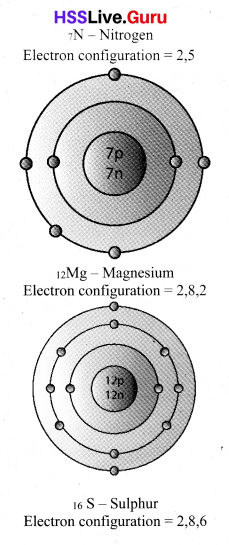
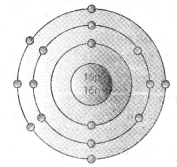
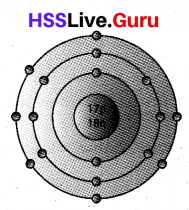
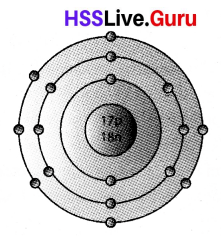
Redox Reactions Class 9 Extra Questions and Answers Kerala Syllabus Chemistry Chapter 4

Students rely on Kerala Syllabus 9th Standard Chemistry Notes Pdf Download Chapter 4 Redox Reactions Extra Questions and Answers to help self-study at home.

Kerala Syllabus Std 9 Chemistry Chapter 4 Redox Reactions Extra Questions and Answers

Question 1.
State the law of conservation of mass.
Answer:
In a chemical reaction, the total mass of the reactants will be equal to the total mass of the products.

Question 2.
What do you mean by balancing of chemical equations?
Answer:
Balancing a chemical equation is the method of equalising the number of the same type of atoms in both the reactants and the products.

Question 3.
Why the total mass remains unchanged in a chemical reaction?
Answer:
When reactants combine in a specific mass proportion to form products, the atoms in them only undergo a rearrangement. Thus, there will not be any change in the total number of atoms or the total mass.

Redox Reactions Class 9 Extra Questions and Answers Kerala Syllabus Chemistry Chapter 4

Question 4.
Consider the reaction between Zinc (Zn) and Hydrochloric Acid. (HCl) to form Zinc Chloride (ZnCl2) and Hydrogen gas (H2). Write a balanced chemical equation for this reaction.
Answer:
The balanced chemical equation for the reaction is:
Zn(s) + 2HCl(aq) → ZnCl2(aq) + H2(g)

Explanation:

  • Zn(s) represents Zinc metal (solid).
  • HCl(aq) represents Hydrochloric acid (aqueous solution).
  • ZnCl2(aq) represents Zinc chloride (aqueous solution).
  • H2(g) represents Hydrogen gas.

Balancing:
Step 1: Zn + HCl → ZnCl2 + H2
Reactants
Zn – 1
H – 1
Cl – 1
Products:
Zn – 1
H – 2
Cl – 2
Number of hydrogen atoms are not the same. Also, the number of Chlorine atoms is not the same.

Step 2: Zn + 2HCl → ZnCl2 + H2
Now, the number of both atoms is equal on the reactant and products. The equation is balanced.

Question 5.
Explain oxidation, reduction, oxidising agent and reducing agent.
Answer:

  • The process involving loss of electrons in a chemical reaction is called oxidation.
  • The process involving gaining of electrons in a chemical reaction is called reduction.
  • The species that helps oxidation in a chemical reaction is the Oxidising agent. The oxidising agent gets reduced in a chemical reaction.
  • The species that helps reduction is the reducing agent. The reducing agent gets oxidised in a chemical reaction.

Question 6.
What do you mean by oxidation number in a chemical reaction?
Answer:
If all the chemical bonds in a compound are considered to be ionic, the charge formed on each atom is considered as its oxidation number or oxidation state.

Question 7.
Write any three examples of redox reactions.
Answer:

  • Glucose molecules decompose and release energy during cellular respiration.
  • Formation of oxide coating on the surface of metals.
  • Combustion of fuels.
  • Decomposition of organic substances in the presence of oxygen.
  • Production of electricity in electrochemical cells.

Question 8.
Analyse the chemical equation given below and answer the questions.
Redox Reactions Class 9 Extra Questions and Answers Kerala Syllabus Chemistry Chapter 4 1
a) Which atom is getting oxidised?
b) Which atom is getting reduced? Why?
c) Which is the oxidizing agent?
d) Which is the reducing agent?
Answer:
a) Chlorine (Cl)
b) Manganese (Mn) Oxidation number decreases from +4 to +2.
c) Hydrogen chloride (HCl)
d) Manganese dioxide (MnO2)

Question 9.
From the given chemical equation identify the oxidising agent and the reducing agent by writing the chemical equation of oxidation and reduction.
i. Mg + F2 → MgF2
ii. 2Na + Cl2 → 2NaCl
Answer:
i. Mg → Mg2+ + 2e (Oxidation)
F + 1e → F (Reduction)
Here magnesium is the reducing agent and fluorine is the oxidising agent.

ii. Na → Na+ + le (Oxidation)
Cl + le → Cl (Reduction)
Here sodium is the reducing agent and chlorine is the oxidising agent.

Question 10.
What is the relation between the total mass of the reactants and the total mass of the products in a chemical reaction?
Answer:
Total mass of the reactants = Total mass of the products

Redox Reactions Class 9 Extra Questions and Answers Kerala Syllabus Chemistry Chapter 4

Question 11.
Who stated the law of conservation of mass?
Answer:
Antoine Lavoisier

Question 12.
4g Hydrogen reacts with 32g of oxygen to form 36g water. Which is the law related to this?
Answer:
Law of Conservation of mass

Question 13.
Find out the relationship and fill up
Laws of electrolysis : Michael Faraday
Law of Conservation of mass : ……………………..
Answer:
Antoine Lavoisier

Question 14.
a) What are the chemicals required to prepare hydrogen in laboratory?
b) Write the balanced chemical equation of this reaction.
Answer:
a) Dilute hydrochloric acid and Zinc
b) Zn + 2HCl → ZnCl2 + H2

Question 15.
Balance the chemical reactions given below.
a) SO2 + O2 → SO3
b) H2O2 → H2O + O2
Answer:
a) 2SO2 + O2 → 2SO3
b) 2H2O2 → 2H2O + O2

Question 16.
The chemical equation of a reaction is given below
Zn + xHCl → ZnCl2 + H2
a) Find the value of ‘x’ and then balance the chemical equation.
b) Which are the reactants of this reaction?
Answer:
a) According to Law of conservation of mass, Total mass of the reactants will be equal to the total mass of the products.
Here in this reaction,
Zn + x HCl → ZnCl2 + H2
65.38 + x(1 + 35.5) = 65.38 + (2 × 35.5) + 2
65.38 + x + 35.5x = 65.38 + 71 + 2
65.38 + 36.5x = 138.38
36.5x = 73
x = \(\frac{73}{36.5}\) = 2
Balanced Chemical equation: Zn + 2HCl → ZnCl2 + H2

b) Reactants: Zinc (Zn) and Hydrogen Chloride (HCl)

Redox Reactions Class 9 Extra Questions and Answers Kerala Syllabus Chemistry Chapter 4

Question 17.
Mg + 2HCl → MgCl2 + H2
24 g Mg completely reacts with 73 g HCl to form 95 g MgCl2 and ‘x’ g H2
a) Find the value of x.
b) To which law is it related?
Answer:
a) Mg + 2HCl → MgCl2 + H2
24g + 73g → 95g + xg
97 g → 95 g + x g
xg = 97g – 95g
x = 2g

b) Law of conservation of mass.

Question 18.
Check whether this chemical reaction obeys the law of conservation of mass.
N2 + H2 → NH3
(Hint H = 1 u, N = 14 u)
Answer:
Total mass of the reactants = (14 × 2) + (1 × 2)
= 28 + 2
= 30
Total mass of the products = (14 × 1) + (1 × 3)
= 14 + 3
= 17
The total mass of the reactants is not equal to the total mass of the products. So, this chemical reaction does not obey the law of conservation of mass.

Question 19.
Certain chemical equations are given below. From these find out the unbalanced chemical equations and balance them.
a) 2H2 + O2 → 2H2O
b) N2 + H2 → NH3
c) C + O2 → CO2
d) SO2 + O2 → SO3
Answer:
Unbalanced chemical equations: b), d)
Balanced chemical equation:
b) N2 + 3H2 → 2NH3
d) 2SO2 + O2 → 2SO3

Question 20.
Some chemical equations are given below.
i) 2Mg + O2 → 2MgO
ii) SO2 + O2 → SO3
iii) 2H2O2 → 2H2O + O2
a) Which of these are balanced equations?
b) Balance the unbalanced equation.
Answer:
i) and iii)
In i) and iii), the number of the same type of atoms in the reactants as well as the products are the same now.
ii) 2SO2 + O2 → 2SO3

Question 21.
Given below is a table showing the mass of the reactants and the products when hydrogen combines with chlorine to form hydrogen chloride in two situations.
Situation Mass of reac tants Mass of product
Redox Reactions Class 9 Extra Questions and Answers Kerala Syllabus Chemistry Chapter 4 2
Write down the total mass of the reactants and also the total mass of product in the above experiment.
a) Situation 1: ……………………….
b) Situation 2: ……………………….
c) Check whether this reaction obeys law of conservation of mass.
Answer:
a) Total mass of reactants – 73 g
Total mass of products – 73 g

b) Total mass of reactants – 146 g
Total mass of products – 146 g

c) According to law of conservation of mass, the total mass of the reactants will be equal to total mass of the products.
Here in both cases total mass of the reactants = total mass of the products. Hence this reaction obeys law of conservation of mass in both cases.

Question 22.
An unbalanced chemical equation is given
N2 + H2 → NH3
a) Which are the reactants in this reaction?
b) Balance the above chemical equation.
c) What is the total number of product molecules in the balanced chemical equation.
d) Identify the compound in this equation?
Answer:
a) Nitrogen, Hydrogen
b) N2 + 3H2 → 2NH3
c) 2 molecules (2 Ammonia)
d) Ammonia (NH3)

Question 23.
Analyse the following equation fill up the blanks.
Redox Reactions Class 9 Extra Questions and Answers Kerala Syllabus Chemistry Chapter 4 3
The oxidized atom is ……………………
Answer:
Zinc

Redox Reactions Class 9 Extra Questions and Answers Kerala Syllabus Chemistry Chapter 4

Question 24.
In most of the compounds the oxidation number of Oxygen is ……………………..
(+1, -1, +2, -2)
Answer:
-2

Question 25.
Reduction refers to reaction involving …………………… of electrons.
Answer:
Gain

Question 26.
Give an example Tor redox reaction.
Answer:
Burning of Magnesium.

Question 27.
Redox Reactions Class 9 Extra Questions and Answers Kerala Syllabus Chemistry Chapter 4 4
Which is the oxidising agent in this reaction?
Answer:
Chlorine.
(In a chemical reaction the process involving gaining of electrons is called reduction and the – species that helps in oxidation is oxidizing agent).

Question 28.
Oxidation refers to reaction involving
a) Loss of proton
b) Gain of electron
c) Loss of electron
d) Gain of proton
Answer:
c) Loss of electron.

Question 29.
Analyse the chemical equation given below and find out oxidizing and reducing agent.
Redox Reactions Class 9 Extra Questions and Answers Kerala Syllabus Chemistry Chapter 4 5
Answer:
Oxidising agent – Cl (Oxidation number is decreasing. So, it gets reduced)
Reducing agent – Na (Oxidation number is increasing. So, it gets oxidized.)

Question 30.
Find out the oxidation number of phosphorous in H3PO4.
(Hint: Oxidation number H = +1 O + -2)
Answer:
(+1 × 3) + P + (-2 × 4) = 0
+ 3 + P + -8 = 0
P + -5 = 0
P = +5

Question 31.
Calculate the oxidation number of ‘S’ in H2SO4.
Answer:
Oxidation number of hydrogen = +1
Oxidation number of oxygen – 2
The sum of the oxidation numbers of all the elements in a compound is zero, Hence
(2 × +1) + 5 + (4 × -2) = 0
2 + 5 + -8 = 0
5 – 6 = 0
5 = +6
Oxidation number of S in H2SO4 is +6.

Redox Reactions Class 9 Extra Questions and Answers Kerala Syllabus Chemistry Chapter 4

Question 32.
The equation of a chemical reaction is given.
Mg + F2 → MgF2
(Hint: Electronic configuration of Mg = 2, 8, 2 F = 2, 7)
a) Which atom loses electron in this reaction?
b) Which atom acts as oxidising agent here?
Answer:
a) In the formation of MgF2, Mg donates its 2 electrons to the fluorine atoms. So, the atom which loses electron is Magnesium (Mg).
b) Fluorine (F2) .
In a chemical reaction the process involving gaining of electrons is called reduction and the species that helps in oxidation is oxidizing agent.

Question 33.
Analyse the equation given below and answer the following questions
Mg + F2 → MgF2
[Hint: – Electronic Configuration Na = 2, 8, 1; Cl = 2, 8, 7]
a) Which atom gets oxidised here?
b) Write the equation for reduction in this reaction?
Answer:
a) Sodium (Na)
b) Cl2 + 2e → 2Cl

Question 34.
Analyse the statements and correct the wrong statements. If any
a) In elemental state, oxidation number of molecules is zero.
b) Generally, metals are oxidizing agents.
c) Reduction is the process of losing electrons.
Answer:
a) Statement is correct.
b) Wrong. Generally, metals are reducing agents OR Generally, non metals are oxidizing agents.
c) Wrong. Reduction is the process of gaining electrons. OR Oxidation is the process of losing electrons.

Question 35.
Redox Reactions Class 9 Extra Questions and Answers Kerala Syllabus Chemistry Chapter 4 6
Analyse the chemical equation and answer the following questions.
[Hint: x and y are the oxidation numbers of Zn]
a) Find x and y
b) Oxidation number of which atom is increased?
c) Which is the reducing agent in this reaction?
Answer:
a) x = 0 (Zn in elemental state.)
ZnCl2 :
y + (2 × -1) = 0
y – 2 = 0
y = +2

b) Zn (from 0 to +2)

c) Zinc(Zn).

Question 36.
Redox Reactions Class 9 Extra Questions and Answers Kerala Syllabus Chemistry Chapter 4 7Q
a) Find the Oxidation state of Fe in FeCl2.
b) Is this a redox reaction? Justify your answer.
Answer:
a) FeCl2
x + (2 × -2) = 0
x – 4 = 0
x = +4
The oxidation number of Fe in FeCl2 is +4.

b) Yes, it is a redox reaction.
The oxidation number of increases from 0 to +4. So there happens the oxidation.
The oxidation number of hydrogen decreases from +1 to 0. So there happens the reduction. As both reduction and oxidation take place simultaneously, the above given reaction is a reduction reaction.

Question 37.
Match suitably those given in column A with those in column B.

A B
Oxidising agent Losses electrons
Reducing agent Oxidation number increases
Oxidation Oxidation number decreases
Reduction Gains electron

Answer:

A B
Oxidising agent Gains electron
Reducing agent Losses electrons
Oxidation Oxidation number increases
Reduction Oxidation number decreases

Redox Reactions Class 9 Extra Questions and Answers Kerala Syllabus Chemistry Chapter 4

Question 38.
Explain the following
a) Balancing chemical equations
b) Oxidising agent
c) Redox reaction
d) Law of conservation of mass
Answer:
a) Balancing a chemical equation is the method of equalising the number of the same type of atoms in both the reactants and the products. The equation thus obtained is known as a balanced chemical equation.

b) Oxidising agent – The species that helps oxidation in a chemical reaction is the Oxidising agent.

c) Redox reactions – The reactions in which oxidation and reduction take place simultaneously are called redox reactions.

d) Law of conservation of mass – In a chemical reaction, the total mass of the reactants will be equal to the total mass of the products.

Question 39.
The oxidation number of certain atoms are given below.
O = -2, H = +1, K = +1
Find out the oxidation number of the atoms underlined in the compounds given below.
a) H2CO3
b) KNO3
Answer:
a) H2CO3
(+1 × 2) + C + (-2 × 3) = 0
+ 2 + C + -6 = 0
C + -4 = 0
C = +4
+4

b) KNO3
+ 1 + N + (-2 × 3) = 0
+ 1 + N + -6 = 0
N + -5 = 0
N = +5

Question 40.
Analyse the given equation and complete the table (Hint: Atomic number Mg = 12 0 = 17)
Mg + Cl2 → MgCl2

a) Oxidised atom ………………..

b) Oxidising agent …………………

c) Equation of reduction ………………..

d) Equation of oxidation ………………….

Answer:
a) Mg
b) Cl
c) Cl + le → Cl
d) Mg → Mg2+ + 2e

Kerala Syllabus Class 9 Maths Chapter 12 Solutions Malayalam Medium സ്തംഭങ്ങൾ

When preparing for exams, Kerala SCERT Class 9 Maths Solutions Chapter 12 Malayalam Medium സ്തംഭങ്ങൾ can save valuable time.

Kerala SCERT Class 9 Maths Chapter 12 Solutions Malayalam Medium സ്തംഭങ്ങൾ

Class 9 Maths Chapter 12 Kerala Syllabus Malayalam Medium

Class 9 Maths Chapter 12 Malayalam Medium Textual Questions and Answers

Question 1.
ഒരു സമഭുജത്രികോണസ്തംഭത്തിന്റെ പാദചുറ്റളവ് 18 സെന്റിമീറ്ററും, ഉയരം 5 സെന്റിമീറ്ററു മാണ്. അതിന്റെ വ്യാപ്തം കണ്ടുപിടിക്കുക.
Answer:
സമഭുജത്രികോണസ്തംഭത്തിന്റെ പാദചുറ്റളവ് = 18 സെമീ
പാദവശം = \(\frac{18}{3}\) = 6 സെമീ
ഉയരം = 5 സെമീ
സമഭുജത്രികോണസ്തംഭത്തിന്റെ പാദപരപ്പളവ് = \(\frac{\sqrt{3}}{4}\) × (വശം)²
= \(\frac{\sqrt{3}}{4}\) × (6)²
= 9√3 ഘ.മീ
വ്യാപ്തം = പാദപരപ്പളവ് × ഉയരം = 9√3 × 5 = 45√3 ഘ.മീ

Question 2.
ഒരു ത്രികോണസ്തംഭത്തിന്റെ പാദവക്കുകൾ 13 സെന്റിമീറ്റർ, 14 സെന്റിമീറ്റർ, 15 സെന്റിമീറ്റർ എന്നിങ്ങനെയാണ്. സ്തംഭത്തിന്റെ ഉയരം 20 സെന്റിമീറ്ററും. അതിന്റെ വ്യാപ്തം എത്രയാണ്?
Answer:
ത്രികോണസ്തംഭത്തിന്റെ പാദവക്കുകൾ a, b, c എന്നെടുത്താൽ
a = 13 6m, b = 14 സെമീ c = 15 സെമീ
ഉയരം = 20 സെമീ
അങ്ങനെയെങ്കിൽ, ത്രികോണസ്തംഭത്തിന്റെ അർദ്ധചുറ്റളവ് S ആണെങ്കിൽ
Kerala Syllabus Class 9 Maths Chapter 12 Solutions Malayalam Medium സ്തംഭങ്ങൾ 1
S = \(\frac{a+b+c}{2}\)
S = \(\frac{13+14+15}{2}\) = 21 ഘ.മീ

പാദപരപ്പളവ് = \(\sqrt{S(S-a)(S-b)(S-c)}\)
= \(\sqrt{21(21-13)(21-14)(21-15)}\)
= \(\sqrt{21 \times 8 \times 7 \times 6}\)
= \(\sqrt{7056}\)
= 84 ച.സെമീ
വ്യാപ്തം = പാദപരപ്പളവ് × ഉയരം = 84 × 20 = 1680 ഘ.സെമീ

Question 3.
മഴവെള്ളം ശേഖരിക്കാനായി, സ്കൂൾ മുറ്റത്ത്, സമഷഡ്ഭുജാകൃതിയിൽ ഒരു കുഴിയുണ്ട്. ഇതിന്റെ ഒരു വശം 2 മീറ്ററും, കുഴിയുടെ ആഴം 3 മീറ്ററുമാണ്. ഇതിൽ ഒരു മീറ്റർ ഉയരത്തിൽ വെള്ളമുണ്ട്. അത് എത്ര ലിറ്ററാണ്? ഈ കുഴിയിൽ എത്ര ലിറ്റർ വെള്ളം കൂടി കൊള്ളും?
Answer:
സമഷഡ്ഭുജത്തിന്റെ ഒരു വശം = 2 മീ
3 മീറ്റർ ആഴംമുള്ള കുഴിയിൽ 1 മീറ്റർ ഉയരത്തിൽ വെള്ളമുണ്ട്.
Kerala Syllabus Class 9 Maths Chapter 12 Solutions Malayalam Medium സ്തംഭങ്ങൾ 2
സമഷഡ്ഭുജത്തിന്റെ പാദപരപ്പളവ് = 6 × \(\frac{\sqrt{3}}{4}\) × (വശം)²
= 6 × \(\frac{\sqrt{3}}{4}\) × 2²
= 6√3 ച.മീ

അങ്ങനെയെങ്കിൽ വെള്ളത്തിന്റെ വ്യാപ്തം = സമഷഡ്ഭുജത്തിന്റെ വ്യാപ്തം
= സമഷഡ്ഭുജത്തിന്റെ പാദപരപ്പളവ് × ഉയരം
= 6√3 × 1
= 6√3
= 6 × 1.73 × 1000 ലിറ്റർ
= 10380 ഘ.ലിറ്റർ

സമഷഡ്ഭുജത്തിന്റെ ആകെ വ്യാപ്തം = സമഷഡ്ഭുജത്തിന്റെ പാദപരപ്പളവ് × ഉയരം
= 6√3 × 3
= 18 √3
= 18 × 1.73 × 1000 ഘ.ലിറ്റർ
= 31140 ഘ.ലിറ്റർ
കുഴിയിൽ അധികമായി കൊള്ളുന്ന വെള്ളം = 31140 – 10380 = 20760 ഘ.ലിറ്റർ

Kerala Syllabus Class 9 Maths Chapter 12 Solutions Malayalam Medium സ്തംഭങ്ങൾ

Question 4.
സമചതുരസ്തംഭാകൃതിയിലുള്ള ഒരു പാത്രത്തിന്റെ പാദവക്കുകൾ 16 സെന്റിമീറ്റർ ആണ്. പാത്രത്തിൽ 10 സെന്റിമീറ്റർ ഉയരത്തിൽ വെള്ളമുണ്ട്. ഇതിൽ, വക്കുകളെല്ലാം 8 സെന്റിമീറ്റർ ആയ സമചതുരക്കട്ട മുക്കിയാൽ, വെള്ളത്തിന്റെ നിരപ്പ് എത്ര സെന്റിമീറ്റർ ഉയരും?
Answer:
സമചതുരസ്തംഭാകൃതിയിലുള്ള പാത്രത്തിന്റെ പാദവക്കുകൾ = 16 സെമീ
വെള്ളത്തിന്റെ ഉയരം = 10 സെമീ
സമചതുരസ്തംഭത്തിന്റെ പാദപരപ്പളവ് = (വശം) = (16)2 = 256 ച.മീ
സമചതുരസ്തംഭത്തിലെ വെള്ളത്തിന്റെ വ്യാപ്തം = (വംശം)² × ഉയരം
സമചതുരക്കട്ടയുടെ വശം = 8 സെമീ
= 256 × 10
= 2560 ഘ.മീ

സമചതുരക്കട്ടയുടെ പാദപരപ്പളവ് = (വശം)² = 8²
= 64 ച.സെമീ

സമചതുരക്കട്ടയുടെ വ്യാപ്തം = 64 × 8
= 512 ഘ.സെമീ

വെള്ളത്തിന്റെ ഉയർന്ന നിരപ്പ് h എന്നെടുത്താൽ,
ഉയർന്ന വെള്ളത്തിന്റെ വ്യാപ്തം =(വശം) × ഉയരം
= 16 × 16 × h
= 256 h

ഉയർന്ന വെള്ളത്തിന്റെ വ്യാപ്തം = സമചതുരസ്തംഭത്തിലെ വെള്ളത്തിന്റെ വ്യാപ്തം + സമചതുരക്കട്ടയുടെ വ്യാപ്തം
256 h = 2560 + 512
256 h = 3072
h = \(=\frac{3072}{256}\) = 12 സെമീ
ഉയർന്ന വെള്ളത്തിന്റെ നിരപ്പ് = 12 – 10 = 2 സെമീ

Question 5.
ലോഹം കൊണ്ടുണ്ടാക്കിയ ഒരു ചതുരസ്തംഭത്തിന്റെ വക്കുകൾ 6 സെന്റിമീറ്റർ, 9 സെന്റി മീറ്റർ, 15 സെന്റിമീറ്റർ വീതമാണ്. ഇതുരുക്കി വക്ക് 3 സെന്റിമീറ്ററായ എത്ര സമചതുരക്കട്ട കളുണ്ടാക്കാം?
Answer:
ചതുരസ്തംഭത്തിന്റെ വക്കുകൾ = 6 സെമീ, 9 സെമീ, 15 സെമീ
ചതുരസ്തംഭത്തിന്റെ പാദപരപ്പളവ് = നീളം × വീതി = 9 × 6 = 54 ച.സെമീ
ചതുരസ്തംഭത്തിന്റെ വ്യാപ്തം = പാദപരപ്പളവ് × ഉയരം = 54 × 15 = 810 ഘ.സെമീ
സമചതുരക്കട്ടയുടെ പാദപരപ്പളവ് = (വശം)² = (3)² = 9 ച.സെമീ
സമചതുരക്കട്ടയുടെ വ്യാപ്തം = പാദപരപ്പളവ് × ഉയരം = 9 × 3 = 27 ഘ.സെമീ
ചതുരസ്തംഭത്തിന്റെ വ്യാപ്തത്തിനെ സമചതുരക്കട്ടയുടെ വ്യാപ്തം കൊണ്ട് ഹരിച്ചാൽ കിട്ടുന്ന തുക സമചതുരക്കട്ടകളുടെ എണ്ണത്തിന് തുല്ല്യമായിരിക്കും
സമചതുരക്കട്ടകളുടെ എണ്ണം = \(\frac{810}{27}\) = 30

Question 6.
മരംകൊണ്ടുണ്ടാക്കിയ ഒരു സമചതുരസ്തംഭത്തിന്റെ പാദവക്കുകൾ 6 സെന്റിമീറ്ററും ഉയരം 10 സെന്റിമീറ്ററുമാണ്. അതിന്റെ വ്യാപ്തം എത്രയാണ് ? ഇതിൽ നിന്ന് പരമാവധി എത്ര വ്യാപ്തമുള്ള ത്രികോണസ്തംഭം ചെത്തിയെടുക്കാം?
Answer:
സമചതുരസ്തംഭത്തിന്റെ പാദവക്കുകൾ 6 സെമീ
ഉയരം = 10 സെമീ
സമചതുരസ്തംഭത്തിന്റെ പാദപരപ്പളവ് = (വശം)² = 6² = 36 ച.സെമീ
സമചതുരസ്തംഭത്തിന്റെ വ്യാപ്തം = പാദപരപ്പളവ് × ഉയരം = 36 × 10 = 360 ഘ.സെമീ
പരമാവധി വ്യാപ്തമുള്ള ത്രികോണസ്തംഭം ചെത്തിയെടുക്കാൻ വികർണ്ണത്തിലൂടെ ഭാഗിച്ചാൽമതി.
ത്രികോണത്തിന്റെ പാദവക്കുകൾ = 6 സെമീ, 6 സെമീ, 10 സെമീ
പരപ്പളവ് = \(\frac{1}{2}\)(6 × 6 ) = \(\frac{36}{2}\) = 18 ച.സെമീ

ത്രികോണസ്തംഭത്തിന്റെ പരപ്പളവിന്റെയും പരമാവധി വ്യാപ്തം, ത്രികോണസ്തംഭത്തിന്റെ സമചതുരസ്തംഭത്തിന്റെ മൂന്നാമത്തെ വശത്തിന്റെയും ഗുണനഫലത്തിനു തുല്ല്യമായിരിക്കും
അതായത്,
ത്രികോണസ്തംഭത്തിന്റെ വ്യാപ്തം പരപ്പളവ് മൂന്നാമത്തെ വശം = 18 × 10 = 180 ഘ.സെമീ

Question 7.
ഒരു സമഭുജത്രികോണസ്തംഭത്തിന്റെ പാദചുറ്റളവ് 12 സെന്റിമീറ്ററും, ഉയരം 5 സെന്റി മീറ്ററുമാണ്. അതിന്റെ ഉപരിതലത്തിന്റെ ആകെ പരപ്പളവ് കണക്കാക്കുക.
Answer:
സമഭുജത്രികോണസ്തംഭത്തിന്റെ പാദചുറ്റളവ് = 12 സെമീ
പാദവശം = \(\frac{12}{3}\) = 4 സെമീ
ഉയരം = 5 സെമീ
സമഭുജത്രികോണസ്തംഭത്തിന്റെ പാർശ്വപരപ്പ് = പാദചുറ്റളവ് × ഉയരം = 12 × 5 = 60 ച.സെമീ
പാദപരപ്പളവ് = \(\frac{1}{2}\) × (വശം)² = \(\frac{1}{2}\) × 4² = 6.92 ച.സെമീ
ഉപരിതലപരപ്പളവ് = പാർശ്വപരപ്പ് + 2 ( പാദപരപ്പളവ് )
= 60 + 2 ( 6.92 )
= 60 + 13.84
= 73.84 ച.മീ

Question 8.
ചിത്രത്തിൽക്കാണിച്ചിരിക്കുന്നതുപോലെ, പാദം മട്ടത്രികോണമായ രണ്ടു സ്തംഭങ്ങൾ ചേർത്തു വച്ച് ഒരു ചതുരസ്തംഭം ഉണ്ടാക്കി.
Kerala Syllabus Class 9 Maths Chapter 12 Solutions Malayalam Medium സ്തംഭങ്ങൾ 3
ഈ ചതുരസ്തംഭത്തിന്റെ ആകെ ഉപരിതലപ്പരപ്പെത്രയാണ്?
Answer:
പാദം മട്ടത്രികോണമായ രണ്ടു സ്തംഭങ്ങൾ ചേർത്തു വച്ചുണ്ടാക്കിയ ചതുരസ്തംഭത്തിന്റെ വശങ്ങൾ,
നീളം = 12 സെമീ, വീതി = 5 സെമീ, ഉയരം = 15 സെമീ
പാദപരപ്പളവ് = നീളം × വീതി = 12 × 5 = 60 ച.സെമീ
പാർശ്വപരപ്പ് = പാദചുറ്റളവ് × ഉയരം = 2 (നീളം + വീതി ) × ഉയരം
= 2 (12 +5) × 15
= 2 × 17 × 15
= 510 ച.മീ

ഉപരിതലപരപ്പളവ് = പാർശ്വപരപ്പ് + 2 ( പാദപരപ്പളവ് )
= 510 + 2 ( 60)
= 510 + 120
= 630 ച.മീ

Kerala Syllabus Class 9 Maths Chapter 12 Solutions Malayalam Medium സ്തംഭങ്ങൾ

Question 9.
ഒര ത്രികോണസ്തംഭത്തിന്റെ പാദവക്കുകൾ 4 സെന്റിമീറ്റർ, 13 സെന്റിമീറ്റർ, 15 സെന്റിമീറ്റർ വീതവും ഉയരം 25 സെന്റിമീറ്ററുമാണ്. പാർശ്വപ്പരപ്പളവും ഉപരിതലത്തിന്റെ ആകെ പരപ്പളവും കണക്കാക്കുക.
Answer:
ത്രികോണസ്തംഭത്തിന്റെ പാദവക്കുകൾ a, b, c, എന്നെടുത്താൽ,
a = 4 സെമീ, b = 13 സെമീ, c = 15 സെമീ
ഉയരം = 25 സെമീ
പാദചുറ്റളവ് = a + b + c = 4 + 13 + 15 = 32 സെമീ
പാർശ്വപരപ്പ് = പാദചുറ്റളവ് × ഉയരം = 32 × 25 = 800 ച.സെമീ

ത്രികോണസ്തംഭത്തിന്റെ അർദ്ധചുറ്റളവ് S ആണെങ്കിൽ
S = \(\frac{a+b+c}{2}=\frac{4+13+15}{2}=\frac{32}{2}\) = 16 സെമീ
പാദപരപ്പളവ് = \(\sqrt{S(S-a)(S-b)(S-c)}\)
= \(\sqrt{16(16-4)(16-13)(16-15)}\)
= \(\sqrt{16 \times 12 \times 3 \times 1}\)
= \(\sqrt{576}\)
= 24 ച.സെമീ
ഉപരിതലപരപ്പളവ് = പാർശ്വപരപ്പ് + 2 ( പാദപരപ്പളവ് ) = 800 + 48 = 848 ച.സെമീ

Question 10.
ഒരു സമഭുജത്രികോണസ്തംഭത്തിന്റെ പാർശ്വപ്പരപ്പ് 120 ചതുരശ്രസെന്റിമീറ്ററാണ്.
i) ഇത്തരം രണ്ടു സ്തംഭങ്ങൾ ചേർത്തുവച്ച് ഉണ്ടാക്കുന്ന സമഭുജസാമാന്തരികസ്തംഭത്തിന്റെ പാർശ്വപ്പരപ്പ് എത്രയാണ് ?
ii) ഇത്തരം മൂന്നു സ്തംഭങ്ങൾ ചേർത്തുവച്ച് ഉണ്ടാക്കുന്ന സമപാർശ്വലംബകസ്തംഭത്തിന്റെ പാർശ്വപ്പരപ്പ് എത്രയാണ് ?
iii) ഇത്തരം ആറു സ്തംഭങ്ങൾ ചേർത്തുവച്ച് ഉണ്ടാക്കുന്ന സമഷഡ്ഭുജസ്തംഭത്തിന്റെ പാർശ്വപ്പരപ്പ് എത്രയാണ് ?
Answer:
സമഭുജത്രികോണസ്തംഭത്തിന്റെ ഒരുവശം = a എന്നും ഉയരം = h എന്നും കരുതാം
അങ്ങനെയങ്കിൽ, പാർശ്വപ്പരപ്പ് = 120 ച.സെമീ
3 ah = 120
ah = \(\frac{120}{3}\) = 40

i) സമഭുജസാമാന്തരികസ്തംഭത്തിന്റെ വശങ്ങളുടെ എണ്ണം = 4
Kerala Syllabus Class 9 Maths Chapter 12 Solutions Malayalam Medium സ്തംഭങ്ങൾ 4
പാർശ്വപ്പരപ്പ് = 4 ah = 4 × 40 = 160 ച.സെമീ

ii) സമപാർശ്വലംബകസ്തംഭത്തിന്റെ വശങ്ങളുടെ എണ്ണം
Kerala Syllabus Class 9 Maths Chapter 12 Solutions Malayalam Medium സ്തംഭങ്ങൾ 5
പാർശ്വപ്പരപ്പ് = 5 ah = 5 × 40 = 200 ച.സെമീ

iii) സമഷഡ്ഭുജസ്തംഭത്തിന്റെ വശങ്ങളുടെ എണ്ണം
Kerala Syllabus Class 9 Maths Chapter 12 Solutions Malayalam Medium സ്തംഭങ്ങൾ 6
പാർശ്വപ്പരപ്പ് = 6 ah = 6 × 40 = 240 ച.സെമീ

Question 11.
വശങ്ങളെല്ലാം 10 സെന്റിമീറ്റർ ആയ സമചതുരത്തകിടുകൾ ആറെണ്ണം ചേർത്തുവച്ച് ഒരു സമചതുരസ്തംഭം ഉണ്ടാക്കി.
Answer:
i) ഈ സ്തംഭത്തിന്റെ ആകെ ഉപരിതലപ്പരപ്പ് എത്രയാണ്?
ii) ഇതിൽ എത്ര ലിറ്റർ വെള്ളം കൊള്ളും?
സമചതുരത്തകിടുകളുടെ വശത്തിന്റെ നീളവും സമചതുരസ്തംഭത്തിന്റെ വശത്തിന്റെ നീളവും
ഒന്നുതന്നെയാണ്
സമചതുരസ്തംഭത്തിന്റെ ഒരുവശം = 10 സെമീ
സമചതുരസ്തംഭത്തിന്റെ ഉപരിതലപരപ്പളവ് = 6 × (വശം)² = 6 × (10)² = 600 ച.മീ
സമചതുരസ്തംഭത്തിന്റെ വ്യാപ്തം = (വശം)² = (10)<sup>3</sup> = 1000 ഘ.സെമീ

സമചതുരസ്തംഭത്തിൽ കൊള്ളുന്ന വെള്ളം
Kerala Syllabus Class 9 Maths Chapter 12 Solutions Malayalam Medium സ്തംഭങ്ങൾ 7
= \(\frac{1000}{1000}\)
= 1 ലിറ്റർ

Question 12.
പാദവ്യാസം 1 മീറ്ററും, ഉയരം 2 മീറ്ററുമായ വൃത്തസ്തംഭാകൃതിയിലുള്ള ജലസംഭരണിയിൽ എത്ര ലിറ്റർ വെള്ളം കൊള്ളും ?
Answer:
പാദവ്യാസം ‘d’ = 1 മീ
ഉയരം = 2 മീ
ആരം ‘r’ = \(\frac{d}{2}=\frac{1}{2}\) = 0.5 മീ
പാദപരപ്പളവ് = πr² = (0.5)² π = 0.25 π ച.മീ
വ്യാപ്തം = പാദപരപ്പളവ് × ഉയരം = 0.25 π × 2 = 0.5 π ഘ.മീ
1 ഘ.മീ എന്നാൽ 1000 ലിറ്റർ വെള്ളത്തിനു തുല്ല്യമാണ്,

അങ്ങിനെയെങ്കിൽ ജലസംഭരണിയിൽ കൊള്ളുന്ന വെള്ളം = വ്യാപ്തം × 1000
= 0.5 π × 1000
= 500 π ലിറ്റർ
= 500 × 3.1416
= 1570.8 ലിറ്റർ

Question 13.
ഇരുമ്പുകൊണ്ടുണ്ടാക്കിയ ഒരു വൃത്തസ്തംഭത്തിന്റെ പാദത്തിന്റെ ആരം 15 സെന്റിമീറ്ററും, ഉയരം 32 സെന്റിമീറ്ററുമാണ്. ഇതുരുക്കി, പാദത്തിന്റെ ആരം 20 സെന്റിമീറ്ററായ വൃത്തസ്തംഭം ഉണ്ടാക്കി. ഈ സ്തംഭത്തിന്റെ ഉയരം എത്രയാണ് ?
Answer:
ആദ്യ വൃത്തസ്തംഭത്തിന്റെ, ആരം = 15 സെമീ
പാദപരപ്പളവ് = πr² = 225 π ച.സെമീ
വ്യാപ്തം = പാദപരപ്പളവ് × ഉയരം
= 225 π × 32
= 7200 π ഘ. സെമീ

പുതിയ വൃത്തസ്തംഭത്തിന്റെ, ആരം = 20 സെമീ
ഉയരം h എന്നു കരുതാം,
പാദപരപ്പളവ് = 2 (20)2 π = 400 π
=
വ്യാപ്തം = പാദപരപ്പളവ് × ഉയരം
= 400 π h

ആദ്യ വൃത്തസ്തംഭത്തിന്റെയും പുതിയ വൃത്തസ്തംഭത്തിന്റെയും വ്യാപ്തം തുല്ല്യമാണ്, അതായത്
7200 π = 400 π h
h = \(=\frac{7200 \pi}{400 \pi}\) = 18 സെമീ

Kerala Syllabus Class 9 Maths Chapter 12 Solutions Malayalam Medium സ്തംഭങ്ങൾ

Question 14.
ഒരേ ഉയരമുള്ള രണ്ടു വൃത്തസ്തംഭങ്ങളുടെ പാദത്തിന്റെ ആരം 3 : 4 എന്ന അംശബന്ധത്തി ലാണ്. ഇവയുടെ വ്യാപ്തം തമ്മിലുള്ള അംശബന്ധം എന്താണ്?
Answer:
വൃത്തസ്തംഭങ്ങളുടെ ആരം, π1, π2 എന്നെടുകാം
അങ്ങിനെയെങ്കിൽ, r1 : r2 = 3 : 4
അതായത്, \(\frac{r_1}{r_2}=\frac{3}{4}\)

രണ്ടു വൃത്തസ്തംഭങ്ങളുടെയും ഉയരം h എന്നുകരുതാം
വൃത്തസ്തംഭത്തിന്റെ വ്യാപ്തത്തിനെ v = πr² h എന്നെടുകാം അങ്ങിനെയെങ്കിൽ

വൃത്തസ്തംഭങ്ങളുടെ വ്യാപ്തം തമ്മിലുള്ള അംശബന്ധം എന്നത്,
\(\frac{v_1}{v_2}=\frac{\pi r_1^2 h}{\pi r_2^2 h}=\frac{r_1^2}{r_2^2}=\frac{(3)^2}{(4)^2}=\frac{9}{16}\)
അതായത്, v1 : v2 = 9 : 16

Question 15.
രണ്ടു വൃത്തസ്തംഭങ്ങളുടെ പാദത്തിന്റെ ആരം 2:3 എന്ന അംശബന്ധത്തിലും ഉയരം 5:4 എന്ന അംശബന്ധത്തിലുമാണ്.
i) ഇവയുടെ വ്യാപ്തം തമ്മിലുള്ള അംശബന്ധം എന്താണ്?
ii) ചെറിയ വൃത്തസ്തംഭത്തിന്റെ വ്യാപ്തം 720 ഘനസെന്റിമീറ്റർ; വലുതിന്റെ വ്യാപ്തം എത്രയാണ്?
Answer:
i) രണ്ടു വൃത്തസ്തംഭങ്ങളുടെ പാദത്തിന്റെ ആരം തമ്മിലുള്ള അംശബന്ധം = 2 : 3
ഉയരം തമ്മിലുള്ള അംശബന്ധം = 5 : 4
അങ്ങിനെയെങ്കിൽ, ഒന്നാമത്തെ വൃത്തസ്തംഭത്തിന്റെ
ആരം = 27 എന്നും ഉയരം = 5h എന്നും
രണ്ടാമത്തെ വൃത്തസ്തംഭത്തിന്റെ
ആരം = 3r എന്നും ഉയരം = 4h എന്നും എടുത്താൽ
ഒന്നാമത്തെ വൃത്തസ്തംഭത്തിന്റെ വ്യാപ്തം = പാദപരപ്പളവ് × ഉയരം = π(2r)² × 5h
= 4 π r² × 5h = 20 π r²h ഘ. സെമീ

രണ്ടാമത്തെ വൃത്തസ്തംഭത്തിന്റെ വ്യാപ്തം = π (2r)² × 5h
= 4πr² × 5 h = 20π r²h.ma

പാദപരപ്പളവ് × ഉയരം = n (3r) × 4h
= 9πr² × 4 h
= 36π r²h.ma

വ്യാപ്തം തമ്മിലുള്ള അംശബന്ധം = 20 π r²h: 36 π г²h
= 20:36
= 5:9

ii) ചെറിയ വൃത്തസ്തംഭത്തിന്റെ വ്യാപ്തം 720 ഘ.സെമീ ആണെന്നും
വലിയ വൃത്തസ്തംഭത്തിന്റെ വ്യാപ്തം = x എന്നും കരുതാം
അങ്ങിനെയെങ്കിൽ, വ്യാപ്തം തമ്മിലുള്ള അംശബന്ധം = 5 : 9 ആണ്
അതായത്, 5 : 9 = 720 : x
\(\frac{5}{9}=\frac{720}{x}\)
5 x = 720 × 9
5 x = 6480
x = \(\frac{6480}{5}\) = 1296
വലിയ വൃത്തസ്തംഭത്തിന്റെ വ്യാപ്തം = 1296 ഘ.സെമീ

Question 16.
ഒരു സ്കൂൾ കെട്ടിടത്തിൽ വൃത്തസ്തംഭാകൃതിയിലുള്ള 12 തൂണുകളുണ്ട്. ഓരോന്നിന്റേയും പാദവ്യാസം \(\frac{1}{2}\) മീറ്ററും ഉയരം 4 മീറ്ററുമാണ്.
i) ഒരു തൂണിന്റെ വക്രതല പരപ്പളവെത്രയാണ് ?
ii) എല്ലാ തൂണുകളും ചായം പൂശുന്നതിന് ചതുരശ്രമീറ്ററിന് 80 രൂപ നിരക്കിൽ എത്ര രൂപ ചെലവ് വരും ?
Answer:
i) വൃത്തസ്തംഭാകൃതിയിലുള്ള 12 തൂണുകളാണുള്ളത്
ഓരോന്നിന്റെയും പാദവ്യാസം = \(\frac{1}{2}\) മീ
ഉയരം = 4 മീ
Kerala Syllabus Class 9 Maths Chapter 12 Solutions Malayalam Medium സ്തംഭങ്ങൾ 10
= \(\frac{1 / 2}{2}=\frac{1}{4}\)
= 0.25 മീ
പാദവ്യാസം = 2 π r = 2 π × 0.25
= 0.5 π
ഒരു തൂണിന്റെ വക്രതലപരപ്പളവ് = പാദചുറ്റളവ് × ഉയരം
= 0.5 π × 4
= 24 π ച.മീ

ii) 12 തൂണുകളുടെ വക്രതലപരപ്പളവ് = 12 × 2 π
= 24 7 ച.മീ

ചതുരശ്രമീറ്റർ ചായം പൂശുന്നതിന് = 80 രൂപ

12 തൂണുകൾ ചായം പൂശുന്നതിന് ചിലവാക്കുന്ന തുക
= മൊത്തം വക്രപരപ്പ് × 80
= 24 π × 80 = 1920 π
= 1920 × 3.1416
= 6031.872 രൂപ

Question 17.
1.20 മീറ്റർ നീളമുള്ള ഒരു റോളറിന്റെ വ്യാസം 80 സെന്റിമീറ്റർ ആണ്.
Kerala Syllabus Class 9 Maths Chapter 12 Solutions Malayalam Medium സ്തംഭങ്ങൾ 11
ഇത് ഒരു പ്രാവശ്യം കറക്കുമ്പോൾ, നിരപ്പാവുന്ന സ്ഥലത്തിന്റെ പരപ്പളവ് എത്രയാണ്?
Answer:
റോളറിന്റെ നീളം = 1.20 മീ = 120 സെമീ
വ്യാസം = 80 സെമീ
ആരം = \(\frac{80}{2}\) = 40 സെമീ
പാദചുറ്റളവ് = 2 × π × 40 = 80 π സെമീ
ഒരു പ്രാവശ്യം കറക്കുമ്പോൾ, നിരപ്പാവുന്ന സ്ഥലത്തിന്റെ പരപ്പളവ് റോളറിന്റെ വക്രപരപ്പിനു തുല്ല്യമാണ്,
അങ്ങിനെയെങ്കിൽ,
വക്രപരപ്പ് = പാദചുറ്റളവ് × ഉയരം = 80 π × 120 = 9600 π
= 9600 × 3.14
= 30,144 ച.സെമീ
= 3.0144 ച.മീ

Kerala Syllabus Class 9 Maths Chapter 12 Solutions Malayalam Medium സ്തംഭങ്ങൾ

Question 18.
ഒരു വൃത്തസ്തംഭത്തിന്റെ വക്രപ്പരപ്പും, പാദപ്പരപ്പും തുല്യമാണ്. പാദത്തിന്റെ ആരവും, സ്തംഭത്തിന്റെ ഉയരവും തമ്മിലുള്ള ബന്ധം എന്താണ്?
Answer:
വൃത്തസ്തംഭത്തിന്റെ ആരം = r എന്നും
ഉയരം = h എന്നും കരുതാം
പാദചുറ്റളവ് = 2π × ആരം = 2π r
അങ്ങിനെയെങ്കിൽ,
വൃത്തസ്തംഭത്തിന്റെ വക്രപരപ്പ് = പാദചുറ്റളവ് × ഉയരം = 2π × h = 2 × h
പാദപരപ്പളവ് = π × (ആരം)² = πr²
ചോദ്യത്തിൽനിന്നും, വൃത്തസ്തംഭത്തിന്റെ വക്രപ്പരപ്പും, പാദപ്പരപ്പും തുല്യമാണ്.
സ്തംഭങ്ങൾ, 2πr h = πr²
2 h = r
ഇതിൽനിന്നും സ്തംഭത്തിന്റെ ആരം ഉയരത്തിന്റെ രണ്ടുമടങ്ങാണ്

Question 19.
നീളം 48 സെന്റിമീറ്ററും, വീതി 25 സെന്റിമീറ്ററും ആയ ചതുരത്തകിട് വളച്ച്, 25 സെന്റിമീറ്റർ ഉയരമുള്ള കുഴലുണ്ടാക്കി, കൃത്യമായ അളവിൽ മുറിച്ചെടുത്ത വൃത്തങ്ങൾ കൊണ്ട് ഇതിന്റെ രണ്ടറ്റവും അടച്ചു. ഈ സ്തംഭത്തിന്റെ ഉപരിതലപ്പരപ്പ് എത്രയാണ് ?
Answer:
ചതുരത്തകിടിന്റെ നീളം = 48 സെമീ
വീതി = 25 സെമീ
കുഴലിന്റെ ഉയരം = 25 സെമീ
ആരം = r എന്നെടുകാം
ചതുരത്തകിടിന്റെ നീളം പാദവൃത്തത്തിന്റെ ചുറ്റളവിന് തുല്ല്യമാണ്, അതായത് പാദവൃത്തത്തിന്റെ ചുറ്റളവ് = 48 മീ
2 πr = 48
r = \(\frac{48}{2 \pi}=\frac{48}{2 \times 3.14}\) = 7.64 സെമീ

ഇതിൽനിന്നും r = 7.64 സെമീ എന്നുലഭിക്കും
വക്രപരപ്പ് = പാദചുറ്റളവ് × ഉയരം
= 2πr × h
= 2 × 3.1416 × 7.64 × 25
= 1200 ച.സെമീ

പാദവൃത്തങ്ങളുടെ പരപ്പളവ് = πr² = 3.14 × (7.64)²
= 183.37 ച.സെമീ

രണ്ടു വൃത്തങ്ങളുടെ പരപ്പളവ് = 2 × 183.37
= 366.7 ച.സെമീ

സ്തംഭത്തിന്റെ ഉപരിതലപ്പരപ്പ് = വക്രപരപ്പ് + രണ്ടു വൃത്തങ്ങളുടെ പരപ്പളവ്
= 1200 + 366.7
= 1566.7 ച.സെമീ

Class 9 Maths Chapter 12 Malayalam Medium Intext Questions and Answers

Question 1.
24 സെന്റിമീറ്റർ നീളവും 18 സെന്റിമീറ്റർ വീതിയുമുള്ള കട്ടിക്കടലാസ് നീളത്തിൽ മടക്കി സമഭുജത്രികോണസ്തംഭം, സമചതുരസ്തംഭം, സമഷഡ്ഭുജസ്തംഭം, സമഅഷ്ടഭുജസ്തംഭം, വൃത്തസ്തംഭം എന്നിവ ഉണ്ടാക്കുന്നു. ബഹുഭുജസ്തംഭങ്ങളുടെയെല്ലാം പാർശ്വപരപ്പും വൃത്തസ്തംഭത്തിന്റെ വക്രപ്പരപ്പും തുല്യമായിരിക്കുമല്ലോ. ഓരോന്നിന്റെയും വ്യാപ്തമോ? എന്തു പ്രത്യേകതയാണ് കിട്ടുന്നത്?

ഇതേ വലുപ്പമുള്ള കട്ടി കടലാസുകൾ വീതിയിൽ മടക്കി മുകളിൽ പറഞ്ഞ സമബഹുഭുജ സ്തംഭങ്ങളും വൃത്തസ്തംഭവുമുണ്ടാക്കിയാലോ? രണ്ടുകൂട്ടം സ്തംഭങ്ങളുടെയും പാർശ്വപരപ്പ്, വക്രപ്പരപ്പ്, വ്യാപ്തം എന്നിവയിലുള്ള സാമ്യവ്യത്യാസങ്ങൾ കണ്ടുപിടിക്കുക.
Answer:
കട്ടിക്കടലാസിന്റെ നീളം = 24 സെമീ
വീതി = 18 സെമീ

നീളത്തിൽ മടക്കിയാൽ,
പാദചുറ്റളവ് = 24 സെമീ
ഉയരം = 18 സെമീ

ബഹുഭുജസ്തംഭങ്ങളുടെ പാർശ്വപരപ്പ്
= പാദചുറ്റളവ് × ഉയരം
= 24 × 18
= 432 ച.സെമീ

വൃത്തസ്തംഭത്തിന്റെ വക്രപ്പരപ്പ്
= പാദചുറ്റളവ് × ഉയരം
= 24 × 18
= 432 ച.സെമീ

വീതിയിൽ മടക്കിയാൽ
പാദചുറ്റളവ് = 18 സെമീ
ഉയരം = 24 സെമീ

ബഹുഭുജസ്തംഭങ്ങളുടെ പാർശ്വപരപ്പ്
= പാദചുറ്റളവ് × ഉയരം
= 18 × 24
= 432 ച.സെമീ

വൃത്തസ്തംഭത്തിന്റെ വക്രപ്പരപ്പ്
= പാദചുറ്റളവ് × ഉയരം
= 18 × 24
= 432 ച.സെമീ

രണ്ടുകൂട്ടം സ്തംഭങ്ങളുടെയും പാർശ്വപരപ്പും, വക്രപ്പരപ്പും തുല്ല്യമാണ്.
എന്നാൽ വ്യാപ്തം വെത്യസ്തമാണ്

സമഭുജത്രികോണസ്തംഭം
Kerala Syllabus Class 9 Maths Chapter 12 Solutions Malayalam Medium സ്തംഭങ്ങൾ 8
= \(\frac{24}{3}\) = 8 സെമീ

പാദചുറ്റളവ് = \(\frac{\sqrt{3}}{4}\) × (വശം)²
= \(\frac{\sqrt{3}}{4}\) × (8)²
= 16√3 ച.സെമീ

വ്യാപ്തം = പാദപരപ്പളവ് × വശം
= 16√3 × 18
= 288√3
= 288 × 1.73
= 498.24 ച.സെമീ

സമഭുജത്രികോണസ്തംഭം
Kerala Syllabus Class 9 Maths Chapter 12 Solutions Malayalam Medium സ്തംഭങ്ങൾ 8
= \(\frac{18}{3}\) = 6 സെമീ

പാദചുറ്റളവ് = \(\frac{\sqrt{3}}{4}\) × (വശം)²
= \(\frac{\sqrt{3}}{4}\) × (6)²
= 9√3 ച.സെമീ

വ്യാപ്തം = പാദപരപ്പളവ് × വശം
= 9√3 × 24
= 216√3
= 216 × 1.73
= 373.68 ച.സെമീ

സമചതുരസ്തംഭം
Kerala Syllabus Class 9 Maths Chapter 12 Solutions Malayalam Medium സ്തംഭങ്ങൾ 9
= \(\frac{24}{4}\) = 6 സെമീ
പാദചുറ്റളവ് = (വശം)² = (6)² = 36 ച.സെമീ

വ്യാപ്തം = പാദപരപ്പളവ് × ഉയരം
= 36 × 18 = 648 ഘ.സെമീ

സമചതുരസ്തംഭം
Kerala Syllabus Class 9 Maths Chapter 12 Solutions Malayalam Medium സ്തംഭങ്ങൾ 9
= \(\frac{18}{4}\) = 4.5 സെമീ
പാദപരപ്പളവ് = (വശം)²
= (4.5)²
= 20.25 ച.സെമീ

വ്യാപ്തം = പാദപരപ്പളവ് × ഉയരം
= 20.25 × 24
= 486 ഘ.സെമീ

ഇതുപോലെ ബാക്കിഉള്ള സ്തംഭങ്ങളുടെയും വ്യാപ്തം കണ്ടുപിടിക്കാൻ സാധിക്കും ഇതിൽനിന്നും പാദപരപ്പളവവിനു മാറ്റം വരുന്നതിനാൽ വ്യാപ്തത്തിനും മാറ്റം വരും എന്നുലഭിക്കും.

Prisms Class 9 Extra Questions and Answers Malayalam Medium

Question 1.
പാദപരപ്പളവ് 50 ചതുരശ്രസെന്റിമീറ്ററും ഉയരം 20 സെന്റിമീറ്ററുമായ ഒരു സ്തംഭത്തിന്റെ വ്യാപ്തം കണ്ടുപിടിക്കുക.
Answer:
പാദപരപ്പളവ് = 50 ച.സെമീ
ഉയരം = 20 സെമീ
വ്യാപ്തം = പാദപരപ്പളവ് × ഉയരം = 50 × 20 = 1000 ഘ.സെമീ

Question 2.
10 സെന്റിമീറ്റർ വശമുള്ള 6 സമചതുരത്തകിടുകൾ ചേർത്തുവച്ച രീതിയിലാണ് ചിത്രം. ഇതു മടക്കി ഒരു സ്തംഭമുണ്ടാക്കി.
Kerala Syllabus Class 9 Maths Chapter 12 Solutions Malayalam Medium സ്തംഭങ്ങൾ 12
a) ഈ സ്തംഭത്തിന്റെ ഉപരിതല പരപ്പളവ് കണ്ടുപിടിക്കുക.
b) ഈ സ്തംഭത്തിൽ എത്ര ലിറ്റർ വെള്ളം കൊള്ളും?
Answer:
a) ഒരു വശം = 10 സെമീ
സമചതുരത്തിന്റെ പാദപരപ്പളവ് = (വശം) = 10 = 100 ച.സെമി
പരിതലപരപ്പളവ് = 6 × സമചതുരത്തിന്റെ പരപ്പളവ്
= 6 × 100
= 600 ച.സെമീ

b) വ്യാപ്തം = പാദപരപ്പളവ് × ഉയരം
= 100 × 10
= 1000 ഘ.സെമീ
= 1 ലിറ്റർ

Kerala Syllabus Class 9 Maths Chapter 12 Solutions Malayalam Medium സ്തംഭങ്ങൾ

Question 3.
a) ഒരു സമഭുജത്രികോണസ്തംഭത്തിന്റെ പാർശ്വതല പരപ്പളവ് 90 ചതുരശ സെന്റിമീറ്ററാണ്. ഇതിന്റെ ഒരു പാർശ്വതല പരപ്പളവ് എത്ര?
b) ഇത്തരം രണ്ട് സ്തംഭങ്ങൾ ചേർത്തുവച്ച് ഒരു സ്തംഭമാക്കിയാൽ ഇതിന്റെ പാർശ്വത പരപ്പളവ് എത്ര?
c) ഇത്തരം 6 സമഭുജത്രികോണസ്തംഭങ്ങൾ ചേർത്തുവച്ച് ഒരു സമഷഡ്ഭുജസ്തംഭമാ ക്കിയാൽ അതിന്റെ പാർശ്വതല പരപ്പളവ് എത്ര?
Answer:
a) പാർശ്വതല പരപ്പളവ് = 90 ച.സെമീ
ഒരു പാർശ്വതല പരപ്പളവ് = \(\frac{90}{3}\)
= 30 ച.മീ

b) പാർശ്വതല പരപ്പളവ് = 4 × 30
= 120 ച.സെമീ
[പാർശ്വമുഖങ്ങൾ ചേർത്ത് വച്ചാൽ മുകളിലെ ഉത്തരവും, പാദമുഖങ്ങൾ ചേർത്തു വച്ചാൽ പാർശ്വതല പരപ്പളവ് = 6 × 30 = 180 ച.സെമീ എന്നും കിട്ടും)

c) പാർശ്വതല പരപ്പളവ് = 6 × 30
= 180 ച.സെമീ

Question 4.
ചതുരസ്തംഭാകൃതിയിലുള്ള ഒരു കാർഡ്ബോർഡ് പെട്ടിയുടെ അളവുകൾ 50 സെന്റിമീറ്റർ, 30 സെന്റ്റിമീറ്റർ, 40 സെന്റിമീറ്റർ ആണ്. ഈ പെട്ടി നിർമ്മിക്കാനാവശ്യമായ കാർഡ്ബോർഡിന്റെ പരപ്പളവ് കണക്കാക്കുക.
Answer:
ചതുരസ്തംഭാകൃതിയിലുള്ള കാർഡ്ബോർഡ് പെട്ടിയുടെ അളവുകൾ
നീളം = 40 സെമീ, വീതി = 30 സെമീ, ഉയരം = 50 സെമീ

പാദപരപ്പളവ് = നീളം × വീതി
= 40 × 30
= 1200 ച.സെമീ

പാദചുറ്റളവ് = 2 (നീളം + വീതി) = 2( 40 + 30 )
= 2 × 70
= 140

സെമീ പാർശ്വപരപ്പ് = പാദചുറ്റളവ് × ഉയരം
= 140 × 50
= 7,000 ച.സെമി

ഉപരിതലപരപ്പളവ് = 2 × പാദപരപ്പളവ് + പാർശ്വപരപ്പ്
= (2 × 1200) + 7,000
= 2400 + 7,000
= 9400 ച.മീ

Question 5.
പാദആരം 4 സെന്റിമീറ്ററും ഉയരം 10 സെന്റിമീറ്ററുമായ ഒരു വൃത്തസ്തംഭത്തിന്റെ വ്യാപ്തം എത്ര? ഇതിന്റെ പകുതി പാദആരവും രണ്ട് മടങ്ങ് ഉയരവുമുള്ള മറ്റൊരു സ്തംഭമുണ്ട്. രണ്ടാമത്തേതിന്റെ വ്യാപ്തം ആദ്യത്തേതിന്റെ എത്ര ഭാഗമാണ്?
Answer:
പാദആരം = 4 സെമീ
ഉയരം = 10 സെമീ
പാദപരപ്പളവ് = πr² = π 2² = 4π

വൃത്തസ്തംഭത്തിന്റെ വ്യാപ്തം = പാദപരപ്പളവ് × ഉയര
= 16 π × 10
= 160 π ഘ.സെമീ

പാദആരം പകുതിയായ വൃത്തസ്തംഭം,
പാദആരം = 2 സെമീ
ഉയരം = 20 സെമീ
പാദപരപ്പളവ്
= πr² = π 2² = 4π
വൃത്തസ്തംഭത്തിന്റെ വ്യാപ്തം = പാദപരപ്പളവ് × ഉയരം
= 4π × 20
= 80 π ഘ.സെമീ
പാദആരം പകുതിയായ വൃത്തസ്തംഭത്തിന്റെ വ്യാപ്തം ആദ്യത്തെ വൃത്തസ്തംഭത്തിന്റെ പകുതി യാണ്

Question 6.
ഒരു സ്കൂൾ വരാന്തയിൽ 30 സെന്റിമീറ്റർ വ്യാസവും 5 മീറ്റർ ഉയരവുമുള്ള വൃത്തസ്തംഭാകൃതിയിലുള്ള 10 തൂണുകൾ ഉണ്ട്. ചതുരശ്രമീറ്ററിന് 80 രൂപ നിരക്കിൽ 10 തൂണുകൾക്കും ചായമടിക്കാൻ എത്ര രൂപ ചെലവാകും? (t = 3.14)
Answer:
വൃത്തസ്തംഭാകൃതിയിലുള്ള 10 തൂണുകളാണുള്ളത്
ഓരോന്നിന്റെയും പാദവ്യാസം = 30 ml = 0.3 മീ
ഉയരം = 5 മീ
Kerala Syllabus Class 9 Maths Chapter 12 Solutions Malayalam Medium സ്തംഭങ്ങൾ 13
= \(\frac{0.30}{2}\) = 0.15 മീ
പാദചുറ്റളവ് = 2πr = 2 π × 0.15
= 0.3 7 മീ

ഒരു തൂണിന്റെ വക്രതലപരപ്പളവ് = പാദചുറ്റളവ് × ഉയരം = 0.3 π × 5 = 1.5 π ച.മീ
10 തൂണുകളുടെ വക്രതലപരപ്പളവ് = 10 × 1.5 π = 15 π ച.മീ
ചതുരശ്രമീറ്റർ ചായം പൂശുന്നതിന് = 80 രൂപ
10 തൂണുകൾ ചായം പൂശുന്നതിന് ചിലവാക്കുന്ന തുക = മൊത്തം വക്രപരപ്പ് × 80
= 15 π × 80 = 1,200 π
= 1200 × 3.14
= 3,768 രൂപ

Kerala Syllabus Class 9 Maths Chapter 12 Solutions Malayalam Medium സ്തംഭങ്ങൾ

Question 7.
വൃത്തസ്തംഭാകൃതിയിലുള്ള ജലസംഭരണിയുടെ പാദആരം 1 മീറ്ററും ഉയരം 2 മീറ്ററുമാണ്. ഇതിൽ എത്ര ലിറ്റർ വെള്ളം കൊളളും? [1 ഘനമീറ്റർ = 1000 ലിറ്റർ ]
Answer:
വൃത്തസ്തംഭാകൃതിയിലുള്ള ജലസംഭരണിയുടെ പാദആരം = 1 മീ
ഉയരം = 2 മീ
പാദപരപ്പളവ് = πr² = π 1² = 1π മീ

വൃത്തസ്തംഭത്തിന്റെ വ്യാപ്തം
= പാദപരപ്പളവ് × ഉയരം
= 1π × 2
= 2 π
= 2 × 3.14
= 6.28 ഘ.മീ
= 6.28 × 1000
= 6280 ലിറ്റർ

Kerala Syllabus Class 9 Maths Chapter 9 Solutions Malayalam Medium രേഖീയസംഖ്യകൾ

When preparing for exams, Kerala SCERT Class 9 Maths Solutions Chapter 9 Malayalam Medium ബഹുപദങ്ങൾ can save valuable time.

Kerala SCERT Class 9 Maths Chapter 9 Solutions Malayalam Medium രേഖീയസംഖ്യകൾ

Class 9 Maths Chapter 9 Kerala Syllabus Malayalam Medium

Class 9 Maths Chapter 9 Malayalam Medium Textual Questions and Answers

Question 1.
ചുവടെയുള്ള പട്ടിക പൂർത്തിയാക്കുക.
Kerala Syllabus Class 9 Maths Chapter 9 Solutions Malayalam Medium രേഖീയസംഖ്യകൾ 1
i) x, y ആയി കൂടുതൽ സംഖ്യകൾ എടുത്ത് പട്ടിക വലുതാക്കുക. |xy| ഉം |xy| ഉം തമ്മിൽ പൊതുവായി എന്തെങ്കിലും ബന്ധം ഉണ്ടോ ?
ii) x, y ഏതു രണ്ടു സംഖ്യകളായാലും |xy| = |x||y| എന്നു തെളിയിക്കുക?
Answer:
Kerala Syllabus Class 9 Maths Chapter 9 Solutions Malayalam Medium രേഖീയസംഖ്യകൾ 2
i) പട്ടിക വലുതാക്കിയാൽ
Kerala Syllabus Class 9 Maths Chapter 9 Solutions Malayalam Medium രേഖീയസംഖ്യകൾ 3
ഇതിൽ നിന്നും |xy| ഉം [x||y] ഉം തുല്യമാണെന്ന് കണ്ടെത്താൻ കഴിയും.

ii) രണ്ടും അധിസംഖ്യകളായാൽ
രണ്ടു സംഖ്യകൾ x = 6 എന്നും y = 4 എന്നും എടുത്താൽ
|xy| = xy = |x||y|
|(6)(4)| = 24 = |6||4|

രണ്ടും ന്യൂനസംഖ്യകളായാൽ
രണ്ടു സംഖ്യകൾ x = -6 എന്നും y = -4 എന്നും എടുത്താൽ
|xy| = (-x) (-y) = |x||y|
|(-6)(-4)| = 24 = |-6||-4|

ഒന്ന് അധിസംഖ്യയും മറ്റൊന്ന് ന്യൂനസംഖ്യയുമായാൽ
രണ്ടു സംഖ്യകൾ x = 6 എന്നും y = -4 എന്നും എടുത്താൽ
|xy| = (-x) (-y) = |x| |y|
|(6)(-4)| = 24 = |6||-4|

Kerala Syllabus Class 9 Maths Chapter 9 Solutions Malayalam Medium രേഖീയസംഖ്യകൾ

Question 2.
ചുവടെയുള്ള പട്ടിക പൂർത്തിയാക്കുക.
Kerala Syllabus Class 9 Maths Chapter 9 Solutions Malayalam Medium രേഖീയസംഖ്യകൾ 4
x, y ആയി കുറേക്കൂടി സംഖ്യകൾ എടുത്ത് പട്ടിക വലുതാക്കുക. |x + y| ഉം |x| + |y| ഉം തമ്മിൽ പൊതുവായി എന്തെങ്കിലും ബന്ധം പറയാമോ?
Answer:
Kerala Syllabus Class 9 Maths Chapter 9 Solutions Malayalam Medium രേഖീയസംഖ്യകൾ 5
പട്ടിക വലുതാക്കിയാൽ
Kerala Syllabus Class 9 Maths Chapter 9 Solutions Malayalam Medium രേഖീയസംഖ്യകൾ 6
ഇതിൽ നിന്നും |x + y| ഉം |x| + |y| ഉം തുല്യമല്ലായെന്നു കണ്ടെത്താൻ കഴിയും.

Question 3.
ചുവടെപ്പറയുന്ന ഓരോ സമവാക്യവും ശരിയാകുന്ന x കണക്കാക്കുക.
i) |x|= 5
ii) |x – 3|= 2
iii) |x – 2 = 3
iv) |x + 2|= 3
Answer:
i) |x|= 5
ആണെങ്കിൽ, x ന് സ്വീകരിക്കാൻ കഴിയുന്ന രണ്ടു സംഖ്യകൾ 5 ഉം -5 ഉം ആണ് അതായതു,
x = 5 അല്ലെങ്കിൽ x = −5

ii) | x – 3|= 2
x > 3 ആണെങ്കിൽ,
|x – 3 | = x – 3 ആണ്
അതായത്, x – 3 = 2
x = 3 + 2 = 5
x = 5

x < 3 ആണെങ്കിൽ,
|x – 3| = 3 – x ആണ്
അതായത്, 3 – x = 2
– x = 2 – 3 = -1
x = 1
|x – 3| = 2 ആകണമെങ്കിൽ x = 1 അല്ലെങ്കിൽ x = 5 ആകണം

iii) |x – 2| = 3
x > 2 ആണെങ്കിൽ,
|x – 2| = x – 2 ആണ്
അതായത്, x – 2 = 3
x = 3 + 2 = 5
x = 5

x < 2 ആണെങ്കിൽ,
|x – 2|= 2 – x ആണ്
അതായത്, 2 – x = 3
– x = 3 -2 = 1
x = -1
|x – 3| = 2 ആകണമെങ്കിൽ x = 5 അല്ലെങ്കിൽ x = −1 ആകണം

iv) |x + 2|= 3
x > 2 ആണെങ്കിൽ,
x + 2 = x – (-2)
അതായത്, x – ( 2) = 3
x + 2 = 3
x = 3 – 2 = 1
x = 1

x < 2 ആണെങ്കിൽ,
|x + 2| = |x − (− 2) | = (− 2)
അതായത്, (-2) – x = 3
– x = 3 + 2 = 5
x = -5

|x – 3| = 2 ആകണമെങ്കിൽ x = 5 അല്ലെങ്കിൽ x = 1 ആകണം

Kerala Syllabus Class 9 Maths Chapter 9 Solutions Malayalam Medium രേഖീയസംഖ്യകൾ

Question 4.
ചുവടെപ്പറയുന്ന ഓരോ വാക്യവും ശരിയാകാൻ x ഏതൊക്കെ സംഖ്യകൾക്ക് ഇടയിലായി രിക്കണം എന്നു കണക്കാക്കുക.
i) |x| < 3
ii) |x – 2| < 1
iii) |x – 1| < 2
iv) |x + 1| < 2
Answer:
i) |x| = 3 ആണെങ്കിൽ,
x ന് സ്വീകരിക്കാൻ കഴിയുന്ന സംഖ്യകൾ 3 ഉം -3 ഉം ആണ്
എന്നാൽ |x| < 3 ആകുമ്പോൾ x ന് സ്വീകരിക്കാൻ കഴിയുന്ന സംഖ്യകൾ 3 നും 23 നും ഇടയിലായിരിക്കും
അതായതു, −3 < x 3

ii) |x – 2| < 1
ഇതിൽ x എന്ന ബിന്ദു, 2 എന്ന ബിന്ദുവിന്റെ വലത്തോ, ഇടത്തോ ആകാം, (2 ൽ നിന്നുള്ള അകലം 1 ൽ കുറവാകണമെന്നു മാത്രം)
x എന്ന ബിന്ദു 2 ന്റെ വലത്ത്, അകലം 1 ആയ സംഖ്യ,
x – 2 = 1
x = 1 + 2 = 3
x = 3
x എന്ന ബിന്ദു 2 ന്റെ ഇടത്ത്, അകലം 1 ആയ സംഖ്യ
2 – x = 1
-x = 1 – 2 = – 1
x = 1
അങ്ങനെയെങ്കിൽ, | x – 2 | < 1 ആകണമെങ്കിൽ, x എന്ന സംഖ്യ 1 നും 3 നും ഇടയ്ക്കാകണം. അതായത്, 1 < x < 3

iii) |x – 1| < 2
ഇതിൽ x എന്ന ബിന്ദു, 1 എന്ന ബിന്ദുവിന്റെ വലത്തോ, ഇടത്തോ ആകാം, (1 ൽ നിന്നുള്ള അകലം 2 ൽ കുറവാകണമെന്നു മാത്രം)
x എന്ന ബിന്ദു 1 ന്റെ വലത്ത് അകലം 2 ആയ സംഖ്യ
x – 1 = 2
x = 2 + 1 = 3
x = 3
x എന്ന ബിന്ദു 1 ന്റെ ഇടത്ത്, അകലം 2 ആയ സംഖ്യ
1 – x = 2
– x = 2 – 1 = 1
x = -1
അങ്ങനെയെങ്കിൽ, | x – 1 | < 2 ആകണമെങ്കിൽ, x എന്ന സംഖ്യ – 1 നും 3 നും ഇടയ്ക്കാകണം.
അതായത്, -1 < x < 3

iv) |x + 1| < 2
ഇതിൽ x എന്ന ബിന്ദു, – 1 എന്ന ബിന്ദുവിന്റെ വലത്തോ, ഇടത്തോ ആകാം, (1 ൽ നിന്നുള്ള അകലം 2 ൽ കുറവാകണമെന്നു മാത്രം)
x എന്ന ബിന്ദു – 1 ന്റെ വലത്ത്, അകലം 2 ആയ സംഖ്യ
x – (-1) = 2
x + 1 = 2
x = 2 – 1 = 1
x = 1
x എന്ന ബിന്ദു 1 ന്റെ ഇടത്ത്, അകലം 2 ആയ സംഖ്യ
– 1 – x = 2
– x = 2 + 1 = 3
x = -3
അങ്ങനെയെങ്കിൽ, |x + 1| < 2 ആകണമെങ്കിൽ, x എന്ന സംഖ്യ -3 നും 1 നും ഇടയ്ക്കാകണം അതായത്, -3 < x <1

Question 5.
രണ്ടാമത്തെ കണക്കിലെ വാക്യങ്ങൾ ഓരോന്നും ശരിയാകുന്ന പൂർണസംഖ്യകൾ ഏതൊക്കെ യാണെന്ന് കണക്കാക്കുക.
Answer:
i) x < 3
ഇവിടെ x ന് സ്വീകരിക്കാൻ കഴിയുന്ന സംഖ്യകൾ 3 നും -3 നും ഇടയിലായിരിക്കും
അങ്ങനെയെങ്കിൽ x ന് സ്വീകരിക്കാൻ കഴിയുന്ന പൂർണസംഖ്യകൾ -2, -1, 0, 1, 2

ii) |x − 2| < 1
ഇവിടെ x ന് സ്വീകരിക്കാൻ കഴിയുന്ന സംഖ്യകൾ 1 നും 3 നും ഇടയിലായിരിക്കും
അങ്ങനെയെങ്കിൽ x ന് സ്വീകരിക്കാൻ കഴിയുന്ന പൂർണസംഖ്യ = 2

iii) |x – 1| < 2
ഇവിടെ x ന് സ്വീകരിക്കാൻ കഴിയുന്ന സംഖ്യകൾ -1 നും 3 നും ഇടയിലായിരിക്കും
അങ്ങനെയെങ്കിൽ x ന് സ്വീകരിക്കാൻ കഴിയുന്ന പൂർണസംഖ്യകൾ = 0, 1, 2

iv) |x + 1| < 2
ഇവിടെ × ന് സ്വീകരിക്കാൻ കഴിയുന്ന സംഖ്യകൾ -3 നും 1 നും ഇടയിലായിരിക്കും
അങ്ങനെയെങ്കിൽ x ന് സ്വീകരിക്കാൻ കഴിയുന്ന പൂർണസംഖ്യകൾ = -2, -1, 0

Question 6.
സംഖ്യാരേഖയിൽ, ചുവടെ പറഞ്ഞിരിക്കുന്ന ഓരോ ജോടി സംഖ്യകളും സൂചിപ്പിക്കുന്ന ബിന്ദുക്കളുടെ മധ്യബിന്ദുവിനെ സൂചിപ്പിക്കുന്ന സംഖ്യ കണക്കാക്കുക:
i) 1, -5
ii) -1, -5
iii) –\(\frac{1}{2}\), –\(\frac{1}{3}\)
iv) –\(\frac{1}{3}\), \(\frac{3}{4}\)
v) -2.5, 3.5
vi) 1.3, 8.7
vii) -√2, -√3
viii) -√3, √7
Answer:
Kerala Syllabus Class 9 Maths Chapter 9 Solutions Malayalam Medium രേഖീയസംഖ്യകൾ 7

Question 7.
സംഖ്യാരേഖയിൽ 1 നെ സൂചിപ്പിക്കുന്ന, ബിന്ദു വിനും 2 നെ സൂചിപ്പിക്കുന്ന ബിന്ദുവിനും ഇടയ്ക്കുള്ള ഭാഗത്തിനെ നാലു സമഭാഗങ്ങളാക്കുന്ന ബിന്ദുക്കളെ സൂചിപ്പിക്കുന്ന സംഖ്യകൾ കണക്കാക്കുക.
Answer:
സംഖ്യാരേഖയിൽ 1-നും 2-നും ഇടയിലുള്ള ഭാഗത്തെ നാലു സമഭാഗങ്ങളാക്കുമ്പോൾ അവക്കിടയിൽ മൂന്ന് ബിന്ദുക്കൾ ഉണ്ടാകും. ഈ ബിന്ദുക്കളുടെ സ്ഥാനം കണക്കാക്കുന്നതിന്, ആദ്യമായി 1 ന്റെയും 2 ന്റെയും മധ്യബിന്ദു കാണുകയാണ് വേണ്ടത്.
1 ന്റെയും 2 ന്റെയും മധ്യബിന്ദു ആകുന്ന സംഖ്യ
= \(\frac{1}{2}\)(1 + 2)
= \(\frac{3}{2}\)

ഇനി, 1 ന്റെയും ന്റെയും മധ്യബിന്ദു ആകുന്ന സംഖ്യ
= \(\frac{1}{2}\)(1 + \(\frac{3}{2}\))
= \(\frac{5}{4}\)

അവസാനമായി, ന്റെയും 2 ന്റെയും മധ്യബിന്ദു ആകുന്ന സംഖ്യ
= \(\frac{1}{2}\)(\(\frac{3}{2}\) + 2)
= \(\frac{7}{2}\)
Kerala Syllabus Class 9 Maths Chapter 9 Solutions Malayalam Medium രേഖീയസംഖ്യകൾ 8

Question 8.
ചുവടെയുള്ള ഓരോ സമവാക്യവും ശരിയാകുന്ന x കണക്കാക്കുക.
Answer:
i) x – 1= |x − 3|
ii) |x – 3| = |x – 4|
iii) x + 2 = |x − 5|
iv) |x| = |x + 1|
Answer:
i) x = \(\frac{1}{2}\)(1 + 3) = \(\frac{4}{2}\) = 2
ii) x = \(\frac{1}{2}\)(3 + 4) = \(\frac{7}{2}\)
iii) x = \(\frac{1}{2}\)(-2 + 5) = \(\frac{3}{2}\)
iv) x = \(\frac{1}{2}\)(0 + -1) = \(\frac{-1}{2}\)

Class 9 Maths Chapter 9 Malayalam Medium Intext Questions and Answers

Question 1.
x ഏതു സംഖ്യ ആയാലാണ്, |x – 2| = |x – 5| എന്ന സമവാക്യം ശരിയാകുന്നത്?
Answer:
ജ്യാമിതീയമായി ആലോചിച്ചാൽ, |x – 2| = |x – 5| എന്ന സമവാക്യത്തിന്റെ അർത്ഥം, സംഖ്യാരേഖയിൽ x എന്ന സംഖ്യയെ സൂചിപ്പിക്കുന്ന ബിന്ദു, 2, 5 എന്നീ സംഖ്യകളെ സൂചിപ്പിക്കുന്ന ബിന്ദുക്കളിൽ നിന്ന് ഒരേ അകലത്തിലാണ്. അതായത്, സംഖ്യാരേഖയിൽ 2, 5 എന്നീ സംഖ്യകളെ സൂചിപ്പിക്കുന്ന ബിന്ദുക്കളുടെ മധ്യബിന്ദുവാണ് × നെ സൂചിപ്പിക്കുന്നത്.
ആയതിനാൽ, x = \(\frac{1}{2}\)(2 + 5) = \(\frac{7}{2}\)

Real Numbers Class 9 Extra Questions and Answers Malayalam Medium

Question 1.
ചുവടെയുള്ള സംഖ്യകളുടെ കേവലമൂല്യം എഴുതുക?
i) 7
ii) -11
iii) π
iv) \(\frac{-1}{2}\)
Answer:
i) |7| = 7
ii) |-11| = 11
iii) |π| = π
iv) |\(\frac{-1}{2}\)| = \(\frac{1}{2}\)

Kerala Syllabus Class 9 Maths Chapter 9 Solutions Malayalam Medium രേഖീയസംഖ്യകൾ

Question 2.
ചുവടെയുള്ള പട്ടിക പൂർത്തിയാക്കുക.
Kerala Syllabus Class 9 Maths Chapter 9 Solutions Malayalam Medium രേഖീയസംഖ്യകൾ 9
x, y ആയി കുറേക്കൂടി സംഖ്യകൾ എടുത്ത് പട്ടിക വലുതാക്കുക. 1x – y | ഉം 1x|- |y| ഉം തമ്മിൽ പൊതുവായി എന്തെങ്കിലും ബന്ധം പറയാമോ?
Answer:
Kerala Syllabus Class 9 Maths Chapter 9 Solutions Malayalam Medium രേഖീയസംഖ്യകൾ 10
പട്ടിക വലുതാക്കിയാൽ
Kerala Syllabus Class 9 Maths Chapter 9 Solutions Malayalam Medium രേഖീയസംഖ്യകൾ 11
ഇതിൽ നിന്നും |x – y| ഉം |x – y| ഉം തുല്യമല്ലായെന്നു കണ്ടെത്താൻ കഴിയും.

Question 3.
ചുവടെ കൊടുത്ത പട്ടികയിൽ വിട്ടുപോയ കളങ്ങൾ പൂരിപ്പിക്കുക
Kerala Syllabus Class 9 Maths Chapter 9 Solutions Malayalam Medium രേഖീയസംഖ്യകൾ 12
|x| = -x ആകുന്ന ഒരു സംഖ്യ എഴുതുക
Answer:
Kerala Syllabus Class 9 Maths Chapter 9 Solutions Malayalam Medium രേഖീയസംഖ്യകൾ 13
മുകളിലെ പട്ടികയിൽ പൂരിപ്പിച്ചത് പോലെ ന്യൂനസംഖ്യ മാത്രമേ ഉപയോഗിക്കുകയുള്ളൂ.
അതിനാൽ, x = -2

Question 4.
i) |x – 2| = 5 ആകണമെങ്കിൽ x ഏതൊക്കെ സംഖ്യകളാകാം?
ii) |x + 3| = 2 ആകണമെങ്കിൽ x ഏതൊക്കെ സംഖ്യകളാകാം?
Answer:
i) |x – 2| = 5
x < 2 ആണെങ്കിൽ,
|x – 2| = 2 – x ആണ്
അതായത്, 2 – x = 5
-x = 5 – 2 = 3
x = -3

x > 2 ആണെങ്കിൽ,
|x – 2|= x – 2 ആണ്
അതായത്, x – 2 = 5
x = 5 + 2 = 7
x = 7

|x – 2| = 5 ആകണമെങ്കിൽ x = -3 അല്ലെങ്കിൽ

ii) |x + 3| = 2
x < 3 ആണെങ്കിൽ,
|x + 3 | = | x – (- 3) | = (- 3) – x ആണ്
അതായത്, (- 3) – x = 2
– x = 2 + 3 = 5
x = – 5

x > 3 ആണെങ്കിൽ,
|x + 3| = x – (- 3) ആണ്
അതായത്, x – (- 3) = 2
x + 3 = 2
x= 2 – 3 = -1
x = −1
|x + 3| = 2 ആകണമെങ്കിൽ x = -5 അല്ലെങ്കിൽ x = −1 ആകണം

Question 5.
|x – 3| < 5 ആകണമെങ്കിൽ x ഏതൊക്കെ സംഖ്യകൾക്ക് ഇടയിലായിരിക്കണം? അവയുടെ പൂർണസംഖ്യകൾ ഏതൊക്കെയാണെന്ന് കണക്കാക്കുക.
Answer:
|x – 3| < 5
ഇതിൽ x എന്ന ബിന്ദു, 3 എന്ന ബിന്ദുവിന്റെ വലത്തോ, ഇടത്തോ ആകാം, (3 ൽ നിന്നുള്ള അകലം 5 ൽ കുറവാകണമെന്നു മാത്രം)
x എന്ന ബിന്ദു 3 ന്റെ വലത്ത്, അകലം 5 ആയ സംഖ്യ,
x – 3 = 5
x = 5 + 3 = 8
x = 8
x എന്ന ബിന്ദു 3 ന്റെ ഇടത്ത്, അകലം 5 ആയ സംഖ്യ
3 – x = 5
-x = 5 – 3 = 2
x = -2
ഇവിടെ × ന് സ്വീകരിക്കാൻ കഴിയുന്ന സംഖ്യകൾ – 2 നും 8 നും ഇടയിലായിരിക്കും
അങ്ങനെയെങ്കിൽ x ന് സ്വീകരിക്കാൻ കഴിയുന്ന പൂർണസംഖ്യകൾ = −1, 0, 1, 2, 3, 4, 5, 6, 7, 8

Question 6.
ഒരു സംഖ്യരേഖയിൽ 0 ത്തിൽ നിന്നും 3 യൂണിറ്റ് അകലെയുളള സംഖ്യകൾ ഏതെല്ലാം
Answer:
ഇതിൽ 3 യൂണിറ്റ്, 0 ത്തിന്റെ വലത്തോ, ഇടത്തോ ആകാം,
0 ന്റെ വലത്ത്, അകലം 3 ആയ സംഖ്യ = 0 + 3 = 3
0 ന്റെ ഇടത്ത്, അകലം 3 ആയ സംഖ്യ = 0 – 3 = -3
അതായത്, 0 ത്തിൽ നിന്നും 3 യൂണിറ്റ് അകലെയുളള സംഖ്യകൾ -3 ഉം 3 ഉം ആണ്.

Question 7.
സംഖ്യാരേഖയിൽ, ചുവടെ പറഞ്ഞിരിക്കുന്ന ഓരോ ജോടി സംഖ്യകളും സൂചിപ്പിക്കുന്ന ബിന്ദുക്കളുടെ മധ്യബിന്ദുവിനെ സൂചിപ്പിക്കുന്ന സംഖ്യ കണക്കാക്കുക:
i) -3, -7
ii) √5,√6
iii) 4\(\frac{1}{9}\), -2\(\frac{3}{4}\)
iv) -1.8, 0.25
Answer:
i) \(\frac{1}{2}\)(-3 + (-7)) = \(\frac{-10}{2}\) = -5
ii) \(\frac{1}{2}\)(√5 + √6)
iii) \(\frac{1}{2}\left(\frac{37}{2}+\frac{-11}{4}\right)=\frac{1}{2} \times \frac{63}{4}=\frac{63}{8}\)
iv) \(\frac{1}{2}\)(-1.8 + 0.25) = 0.775

Question 8.
i) ❘x – 2| = |x – 6|, ആയാൽ x എന്താണ്?
ii) |y – 3| = |y + 1|, ആയാൽ y എന്താണ്?
iii) |x – y| എന്തായിരിക്കും?
Answer:
i) x = \(\frac{2+6}{2}=\frac{8}{2}\) = 4
ii) y = \(\frac{3-1}{2}=\frac{2}{2}\) = 1
iii) |x – y| = |4 – 1| = 3

Kerala Syllabus Class 9 Maths Chapter 9 Solutions Malayalam Medium രേഖീയസംഖ്യകൾ

Question 9.
i) സംഖ്യാരേഖയിൽ 2, 7 എന്നീ സംഖ്യകൾ സൂചിപ്പിക്കുന്ന ബിന്ദുകൾ തമ്മിലുള്ള അകലം എത്രയാണ്?
ii) |x – 2| = |x – 7| എന്ന സമവാക്യം ശരിയാകുന്ന x കണ്ടുപിടിക്കുക?
Answer:
i) അകലം = 7 – 2 = 5
ii) x = \(\frac{7+2}{2}=\frac{9}{2}\) = 4.5

Kerala Syllabus Class 9 Maths Chapter 11 Solutions Malayalam Medium വൃത്തഭാഗങ്ങൾ

When preparing for exams, Kerala SCERT Class 9 Maths Solutions Chapter 11 Malayalam Medium വൃത്തഭാഗങ്ങൾ can save valuable time.

Kerala SCERT Class 9 Maths Chapter 11 Solutions Malayalam Medium വൃത്തഭാഗങ്ങൾ

Class 9 Maths Chapter 11 Kerala Syllabus Malayalam Medium

Class 9 Maths Chapter 11 Malayalam Medium Textual Questions and Answers

Question 1.
ഒരു വൃത്തത്തിൽ, കേന്ദ്രകോൺ 40 ആയ ഒരു ചാപത്തിന്റെ നീളം 3 സെന്റിമീറ്ററാണ്. വൃത്തത്തിന്റെ ചുറ്റളവ് എത്ര സെന്റിമീറ്ററാണ്? ആരമോ?
Answer:
കേന്ദ്രകോൺ = 40
ചാപത്തിന്റെ നീളം = 3π സെമീ
2πr × \(\frac{40}{360}\) = 3π
2r × \(\frac{1}{9}\) = 3
2r = 3 × 9 = 27
ചുറ്റളവ് = 2πr = 27π സെമീ
ആരം, r = \(\frac{27}{2}\)

Question 2.
ഒരു വൃത്തത്തിൽ, കേന്ദ്രകോൺ 25° ആയ ചാപത്തിന്റെ നീളം 4 സെന്റിമീറ്ററാണ്?
i) ഇതേ വൃത്തത്തിൽ, കേന്ദ്രകോൺ 75° ആയ ചാപത്തിന്റെ നീളം എത്രയാണ്?
ii) ആരം ഇതിന്റെ ഒന്നര മടങ്ങായ വൃത്തത്തിൽ, കേന്ദ്രകോൺ 75° ആയ ചാപത്തിന്റെ നീളം എത്രയാണ്?
Answer:
കേന്ദ്രകോൺ = 25°
ചാപത്തിന്റെ നീളം = 4 സെമീ
2πг × \(\frac{25}{360}\) = 4
2πг = 4 × \(\frac{360}{25}\)
= 4 × \(\frac{72}{5}=\frac{288}{5}\)

i) കേന്ദ്രകോൺ 75° ആയാൽ ചാപത്തിന്റെ നീളം
2πг × \(\frac{x}{360}=\frac{288}{5} \times \frac{75}{360}\) = 12 സെമീ

ii) ആരം ഒന്നര മടങ്ങായ വൃത്തത്തിന്റെ, കേന്ദ്രകോൺ 75° ആയ ചാപത്തിന്റെ നീളം
2πг × \(\frac{3}{2} r \times \frac{x}{360}=\frac{288}{5} \times \frac{3}{2} \times \frac{75}{360}\) = 18 സെമീ

Kerala Syllabus Class 9 Maths Chapter 11 Solutions Malayalam Medium വൃത്തഭാഗങ്ങൾ

Question 3.
ആരം 3 സെന്റിമീറ്ററായ ഒരു വളയിൽ നിന്ന് ഒരു കഷണം മുറിച്ചെടുത്ത്, ആരം സെന്റി മീറ്ററായ മോതിരമുണ്ടാക്കണം.
i) മുറിച്ചെടുക്കുന്ന കഷണത്തിന്റെ കേന്ദ്രകോൺ എത്ര ഡിഗ്രിയായിരിക്കണം?
ii) വളയുടെ മിച്ചമുള്ള ഭാഗം കൊണ്ട് അൽപം ചെറിയ മറ്റൊരു വളയുണ്ടാക്കി. അതിന്റെ ആരം എത്ര സെന്റിമീറ്ററാണ്?
Answer:
വളയുടെ ആരം = 3 സെമീ
മോതിരത്തിന്റെ ആരം = \(\frac{1}{2}\) സെമീ
മോതിരത്തിന്റെ ചുറ്റളവ് = 2πr = 2 × π × \(\frac{1}{2}\) = π സെമീ
മോതിരത്തിന്റെ ചുറ്റളവും, വളയുടെ ചാപനീളവും തുല്യമായതിനാൽ വളയുടെ ചാപനീളം = π സെമീ
2πr × \(\frac{x}{360}\) = π
കേന്ദ്രകോൺ, x = 360 × \(\frac{1}{6}\) = 60°

i) വളയിൽ നിന്നും മുറിച്ചെടുത്ത കഷണത്തിന്റെ കേന്ദ്രകോൺ

ii) മിച്ചമുള്ള വളയുടെ കേന്ദ്രകോൺ = 360° – 60° = 300°
മിച്ചമുള്ള വളയുടെ ചാപനീളം = 2πr × \(\frac{300}{360}\) = 5 π സെമീ
പുതിയ വളയുടെ ചുറ്റളവ് = മിച്ചമുള്ള വളയുടെ ചാപനീളം
പുതിയ വളയുടെ ചുറ്റളവ് = 5 π സെമീ
2πr = 5 π
r = \(\frac{5}{2}\) = 2.5 സെമീ

Question 4.
ഒരു സമഭുജത്രികോണത്തിന്റെ ഓരോ മൂല കേന്ദ്രമായും മറ്റുരണ്ടു മൂലകളിലൂടെ കടന്നുപോകുന്ന ചാപം വരച്ച ചിത്രമാണ് ചുവടെ കാണിച്ചിരിക്കുന്നത്.ഇതിന്റെ ചുറ്റളവ് എത്ര സെന്റിമീറ്ററാണ്?
Kerala Syllabus Class 9 Maths Chapter 11 Solutions Malayalam Medium വൃത്തഭാഗങ്ങൾ 1
Answer:
സമഭുജത്രികോണത്തിന്റെ കേന്ദ്രകോൺ, x = 60°
ചാപത്തിന്റെ നീളം = 2πr × \(\frac{x}{360}\)
= 2 × π × 4 × \(\frac{60}{360}\) = \(\frac{4π}{3}\) സെമീ
ചുറ്റളവ് = 3 × ചാപത്തിന്റെ നീളം
= 3 × \(\frac{4π}{3}\)
= 4π സെമീ

Question 5.
ഒരു സമഅഷ്ടഭുജത്തിന്റെ മൂലകൾ കേന്ദ്രമായി ചാപങ്ങൾ വരച്ച്, ചുവടെക്കാണുന്ന രൂപം വെട്ടിയെടുക്കുന്നു.
Kerala Syllabus Class 9 Maths Chapter 11 Solutions Malayalam Medium വൃത്തഭാഗങ്ങൾ 2
വെട്ടിയെടുത്ത രൂപത്തിന്റെ ചുറ്റളവ് കണക്കാക്കുക.
Answer:
സമഅഷ്ടഭുജത്തിന്റെ ആകെ കോണളവ് = (n – 2) × 180°
= (8 – 2) × 180°
= 6 × 180°
= 1080°

ഒരു മൂലയിലെ കോണളവ് = \(\frac{1080^{\circ}}{8}\) = 135°
കേന്ദ്രകോൺ, x = 135°
ഒരു വൃത്തഭാഗത്തിന്റെ ആരം = 1 സെമീ
ചാപത്തിന്റെ നീളം = 2πr × \(\frac{x}{360}\)
= 2 × π × 1 × \(\frac{135}{360}\)

വെട്ടിയെടുത്ത രൂപത്തിന്റെ ചുറ്റളവ് = 8 × ചാപത്തിന്റെ നീളം
= 8 × 2 × π × 1 × \(\frac{135}{360}\)
= 6π സെമീ

Kerala Syllabus Class 9 Maths Chapter 11 Solutions Malayalam Medium വൃത്തഭാഗങ്ങൾ

Question 6.
i) ആരം 3 സെന്റിമീറ്ററായ വൃത്തത്തിൽ, കേന്ദ്രകോൺ 120° ആയ വൃത്താംശത്തിന്റെ പരപ്പളവെത്രയാണ്?
Answer:
വൃത്തത്തിന്റെ ആരം = 3 സെമീ
കേന്ദ്രകോൺ, x = 120°
വൃത്താംശത്തിന്റെ പരപ്പളവ് = πr² × \(\frac{x}{360}\)
= πr² × 3² × \(\frac{120}{360}\)
= π × 9 × \(\frac{1}{3}\)
= 3π ച.സെമീ

ii) ആരം 6 സെന്റിമീറ്ററായ വൃത്തത്തിൽ കേന്ദ്രകോൺ ഇതുതന്നെയായ വൃത്താംശത്തിന്റെ പരപ്പളവോ?
Answer:
വൃത്തത്തിന്റെ ആരം = 6
കേന്ദ്രകോൺ, x = 120°
വൃത്താംശത്തിന്റെ പരപ്പളവ് = πr² × \(\frac{x}{360}\)
= πr² × 6² × \(\frac{120}{360}\)
= π × 36 × \(\frac{1}{3}\)
= 12π ച.സെമീ

Question 7.
ചുവടെയുള്ള ചിത്രത്തിലെ പച്ച നിറമുള്ള (ഷെയ്ഡ് ചെയ്ത ഭാഗത്തിന്റെ പരപ്പളവ് കണക്കാക്കുക
Kerala Syllabus Class 9 Maths Chapter 11 Solutions Malayalam Medium വൃത്തഭാഗങ്ങൾ 3
Answer:
കേന്ദ്രകോൺ, x = 120°
വലിയ വൃത്താംശത്തിന്റെ ആരം = 3 സെമീ
വലിയ വൃത്താംശത്തിന്റെ പരപ്പളവ് = πr² × \(\frac{x}{360}\)
= π × 9 × \(\frac{120}{360}\)
= 3 π ച.സെമീ

ചെറിയ വൃത്താംശത്തിന്റെ ആരം = 2 സെമീ
ചെറിയ വൃത്താംശത്തിന്റെ പരപ്പളവ് = πr² × \(\frac{x}{360}\)
= π × 4 × \(\frac{120}{360}\)
= 1.33 π ച. സെമീ

ഷെയ്ഡ് ചെയ്ത ഭാഗത്തിന്റെ പരപ്പളവ് = വലിയ വൃത്താംശത്തിന്റെ പരപ്പളവ് – ചെറിയ വൃത്താംശത്തിന്റെ പരപ്പളവ്
= 3 π – 1.33 π
= 1.67 π ച.സെമീ

Kerala Syllabus Class 9 Maths Chapter 11 Solutions Malayalam Medium വൃത്തഭാഗങ്ങൾ

Question 8.
ചിത്രത്തിൽ ഒരു സമഭുജത്രികോണത്തിന്റെ മൂലകൾ കേന്ദ്രമായും വശങ്ങളുടെ പകുതി ആരമായും ചാപങ്ങൾ വരച്ചിരിക്കുന്നു.
Kerala Syllabus Class 9 Maths Chapter 11 Solutions Malayalam Medium വൃത്തഭാഗങ്ങൾ 4
ചിത്രത്തിലെ നീലഭാഗത്തിന്റെ (ഷെയ്ഡ് ചെയ്ത പരപ്പളവ് കണക്കാക്കുക?
Answer:
ഷെയ്ഡ് ചെയ്ത ഭാഗത്തിന്റെ പരപ്പളവ് = സമഭുജത്രികോണത്തിന്റെ പരപ്പളവ് – 3 × വൃത്താംശത്തിന്റെ പരപ്പളവ്
= \(\frac{\sqrt{3}}{4}\) × 4² – 3 × π × 2² × \(\frac{60}{360}\)
= (4√3 – 2π) ച. സെമീ

Question 9.
ചിത്രത്തിൽ, ഒരു സമചതുരത്തിന്റെ രണ്ട് എതിർമൂലകൾ കേന്ദ്രമായി, മറ്റു രണ്ടു മൂലകളിലൂടെ യുള്ള ചാപങ്ങൾ വരച്ചിരിക്കുന്നു.
Kerala Syllabus Class 9 Maths Chapter 11 Solutions Malayalam Medium വൃത്തഭാഗങ്ങൾ 5
ചിത്രത്തിൽ പച്ച നിറം കൊടുത്തിരിക്കുന്ന (ഷെയ്ഡ് ചെയ്ത ഭാഗത്തിന്റെ പരപ്പളവ് കണക്കാക്കുക.
Answer:
ഷെയ്ഡ് ചെയ്ത ഭാഗത്തിന്റെ പരപ്പളവ് = 2 × വൃത്താംശത്തിന്റെ പരപ്പളവ് – സമചതുരത്തിന്റെ പരപ്പളവ്
= 2 × π × 4² × \(\frac{90}{360}\) – 4 × 4
= (8π – 16) ച. സെമീ

Question 10.
ഒരേ ആരമുള്ള രണ്ടു വൃത്തങ്ങളിൽ ഓരോന്നും മറ്റൊന്നിന്റെ കേന്ദ്രത്തിലൂടെ കടന്നുപോകുന്ന ചിത്രമാണ് ചുവടെ വരച്ചിരിക്കുന്നത്.
Kerala Syllabus Class 9 Maths Chapter 11 Solutions Malayalam Medium വൃത്തഭാഗങ്ങൾ 6
രണ്ടു വൃത്തങ്ങളിലും ഉൾപ്പെടുന്ന ഭാഗത്തിന്റെ പരപ്പളവ് കണക്കാക്കുക.
Answer:
Kerala Syllabus Class 9 Maths Chapter 11 Solutions Malayalam Medium വൃത്തഭാഗങ്ങൾ 7
ചിത്രത്തിന്റെ ത്രികോണം ABC, ABD എന്നിവ സമഭുജത്രികോണമാണ്.
ഇനി, രണ്ടു വൃത്തങ്ങൾ ഉൾപ്പെടുന്ന ഭാഗത്തിന്റെ പരപ്പളവ് = 2 × വൃത്താംശത്തിന്റെ പരപ്പളവ് – സമഭുജത്രികോണിന്റെ പരപ്പളവ്
= 2 × π × 2² × \(\frac{60}{360}\) – 2 × \(\frac{\sqrt{3}}{4}\) × 2²
= (\(\frac{5 \pi}{3}\) – 2√3) ച. മീ

Kerala Syllabus Class 9 Maths Chapter 11 Solutions Malayalam Medium വൃത്തഭാഗങ്ങൾ

Question 11.
ചിത്രത്തിൽ ഒരു മട്ടത്രികോണത്തിന്റെ വശങ്ങൾ വ്യാസമായി അർധവൃത്തങ്ങൾ വരച്ചിരിക്കു.
Kerala Syllabus Class 9 Maths Chapter 11 Solutions Malayalam Medium വൃത്തഭാഗങ്ങൾ 8
ഏറ്റവും വലിയ അർധവൃത്തത്തിന്റെ പരപ്പളവ്, ചെറിയ രണ്ട് അർധവൃത്തങ്ങളുടെ പരപ്പളവുക ളുടെ തുകയാണെന്നു തെളിയിക്കുക.
Answer:
AB വ്യാസം വരുന്ന അർധവൃത്തത്തിന്റെ പരപ്പളവ് = \(\frac{1}{2}\) × π × \(\left(\frac{A B}{2}\right)^2\)
= \(\frac{1}{2}\) × π × \(\frac{A B^2}{4}=\frac{\pi}{8}\)AB²

AC വ്യാസം വരുന്ന അർധവൃത്തത്തിന്റെ പരപ്പളവ് = \(\frac{1}{2}\) × π × \(\left(\frac{B C}{2}\right)^2\)
= \(\frac{1}{2}\) × π × \(\frac{B C^2}{4}=\frac{\pi}{8}\)BC²

BC വ്യാസം വരുന്ന അർധവൃത്തത്തിന്റെ പരപ്പളവ് = \(\frac{1}{2}\) × π × \(\left(\frac{A C}{2}\right)^2\)
= \(\frac{1}{2}\) × π × \(\frac{A C^2}{4}=\frac{\pi}{8}\)(AC)²

ചെറിയ രണ്ട് അർധവൃത്തങ്ങളുടെ പരപ്പളവുകളുടെ തുക = \(\frac{\pi}{8}\)(AB)² + \(\frac{\pi}{8}\)(BC)²
= \(\frac{\pi}{8}\) x ((AB)² + (BC)²)
= \(\frac{\pi}{8}\)(AC)²

Parts of Circles Class 9 Extra Questions and Answers Malayalam Medium

Question 1.
ഒരു വൃത്തത്തിൽ, കേന്ദ്രകോൺ 40 ആയ ചാപത്തിന്റെ നീളം 81 സെന്റിമീറ്ററാണ്?ഇതേ വൃത്തത്തിൽ, കേന്ദ്രകോൺ 100 ആയ ചാപത്തിന്റെ നീളം എത്രയാണ്?
Answer:
കേന്ദ്രകോൺ = 40°
ചാപത്തിന്റെ നീളം = 8π സെമീ
2πr × \(\frac{40}{360}\) = 8π
2πr = 8π × \(\frac{360}{40}\) = 8π × 9 = 72 π സെമീ

കേന്ദ്രകോൺ 100° ആയാൽ ചാപത്തിന്റെ നീളം
2πr × \(\frac{100}{360}\) = 12 π × \(\frac{100}{360}\) = 20 π സെമീ

Question 2.
i) 10 സെൻറീമീറ്റർ ആരമുള്ള ഒരു വൃത്താകൃതിയിലുള്ള ഡിസ്കിന്റെ പരപ്പളവ് കണക്കാക്കുക?
ii) ഇതിൽ പരസ്പരം ലംബങ്ങളായ രണ്ട് വ്യാസങ്ങൾ വരച്ച് 4 ഭാഗങ്ങളാക്കുന്നു . കിട്ടുന്ന ഓരോ വൃത്താംശത്തിന്റെയും പരപ്പളവ് എത്ര?
Answer:
i) ഡിസ്കിന്റെ ആരം = 10 സെമീ
ഡിസ്കിന്റെ പരപ്പളവ് = πr² = 100π ച.സെമീ

ii) വൃത്താംശത്തിന്റെയും പരപ്പളവ് πr² × \(\frac{x}{360}\)
= 100π × \(\frac{90}{360}\)
= 25π ച. സെമീ

Question 3.
ചിത്രത്തിൽ ഒരു ബിന്ദുവിൽ നിന്നുള്ള രണ്ട് ഭാഗമാണ് കാണുന്നത്. രണ്ട് ചാപങ്ങൾ തമ്മിലുള്ള അകലം 3 സെമീ. ഉം ഒന്നാമത്തെ ചാപത്തിന്റെ ആരം 6 സെമീ. ഉം ആണ്. ചാപനീളങ്ങൾ തമ്മിലുള്ള വ്യത്യാസം എത്ര?
Kerala Syllabus Class 9 Maths Chapter 11 Solutions Malayalam Medium വൃത്തഭാഗങ്ങൾ 9
Answer:
60° കേന്ദ്രകോണുള്ള ഒരു ചാപത്തിന്റെ നീളം = 2πr × \(\frac{60}{360}\)
= \(\frac{\pi r}{3}\)
ആരം 6 സെമീ. ഉള്ള ചാപത്തിന്റെ നീളം = \(\frac{6 \pi}{3}\) = 2π സെമീ

ആരം 9 സെമീ. (6+3) ഉള്ള ചാപത്തിന്റെ നീളം = \(\frac{9 \pi}{3}\) = 3π സെമീ
ചാപനീളങ്ങൾ തമ്മിലുള്ള വ്യത്യാസം = 3π – 2π
= π സെമീ

Question 4.
ഒരു ക്ലോക്കിന്റെ മിനിട്ട് സൂചിക്ക് 10 സെമീ. നീളമുണ്ട്. അത് 1.05 pm മുതൽ 1.40 pm വരെ സഞ്ചരിച്ചപ്പോഴുണ്ടായ ചാപത്തിന്റെ നീളം എത്ര?
Kerala Syllabus Class 9 Maths Chapter 11 Solutions Malayalam Medium വൃത്തഭാഗങ്ങൾ 10
Answer:
മിനിട്ടുസൂചി ഒരു പ്രാവശ്യം കറങ്ങുമ്പോൾ 360° ആകുന്നു
ഓരോ 5 മിനിട്ടിലും \(\frac{360}{12}\) = 30° കറങ്ങന്നു
1.05 മുതൽ 1.40 വരെ കറങ്ങാൻ 7 × 30 = 210° എടുക്കുന്നു.
മിനിട്ട് സൂചി ഉണ്ടാക്കുന്ന ചാപത്തിന്റെ കേന്ദ്രകോണിന്റെ അളവ് = 210°
ചാപനീളം = 2πr × \(\frac{210}{360}\)
= 2 × π × 10 × \(\frac{210}{360}\)
= \(\frac{70}{6}\)π സെമീ

Question 5.
4 സെമീ വശമുള്ള ഒരു സമഭുജത്രികോണത്തിന്റെ മുലകളിൽ നിന്നും വശത്തിന്റെ പകുതി വ്യാസമായി വൃത്തം വരച്ചിരിക്കുന്നു. ചിത്രത്തിലെ ഷെയ്ഡ് ചെയ്ത ഭാഗത്തിന്റെ പരപ്പളവ് കാണുക.
Kerala Syllabus Class 9 Maths Chapter 11 Solutions Malayalam Medium വൃത്തഭാഗങ്ങൾ 11
Answer:
4 സെമീ വശമുള്ള സമഭുജത്രികോണത്തിന്റെ പരപ്പളവ് = \(\frac{\sqrt{3}}{4}\) × 4² = 4√3 ച. സെമീ
സമഭുജത്രികോണത്തിന്റെ ഒരു മൂലയിലെ കോൺ = 60°

ഒരു മൂലയിലെ വൃത്തഭാഗത്തിന്റെ പരപ്പളവ് = π × r² × \(\frac{60}{360}\)
= π × r² × \(\frac{60}{360}\)
= \(\frac{2 \pi}{3}\)

3 മൂലകളിലുമുള്ള വൃത്തത്തിന്റെ പരപ്പളവ് = 3 × \(\frac{2 \pi}{3}\) = 2π ച. സമീ
ഷെയ്ഡ് ചെയ്ത ഭാഗത്തിന്റെ പരപ്പളവ് = സമഭുജത്രികോണത്തിന്റെ പരപ്പളവിൽ നിന്നും മൂലകളിലുള്ള വൃത്തഭാഗത്തിന്റെ പരപ്പളവ് കുറച്ചാൽ മതി.
= (4√3 – 2 π) ച. സമീ

Kerala Syllabus Class 9 Maths Chapter 11 Solutions Malayalam Medium വൃത്തഭാഗങ്ങൾ

Question 6.
ചിത്രത്തിൽ 2 സെമീ. വശമുളള ഒരു ഷഡ്ഭുജത്തിന്റെ ഓരോ മുലയിലും ഒരു സെന്റീമീറ്റർ ആരമുള്ള വൃത്തഭാഗങ്ങളുണ്ട്. ഷെയ്ഡ് ചെയ്ത ഭാഗത്തിന്റെ പരപ്പളവ് കാണുക?
Kerala Syllabus Class 9 Maths Chapter 11 Solutions Malayalam Medium വൃത്തഭാഗങ്ങൾ 12
Answer:
2 സെമീ. വശമുള്ള സമഷഡ്ഭുജത്തിന്റെ പരപ്പളവ് = 6 × \(\frac{\sqrt{3}}{4}\) × 22 = 6√3 ച. സമീ
സമഷഡ്ഭുജത്തിന്റെ ഒരു അകക്കോൺ = 120°
ആ മുലയിലെ പുറംകോൺ = 240°
ഒരു മൂലയിലെ വൃത്തഭാഗത്തിന്റെ പരപ്പളവ് π × r² × \(\frac{240}{360}\)
= π × 12 × \(\frac{240}{360}\)
= \(\frac{2 \pi}{3}\)

6 വൃത്തഭാഗങ്ങളുടെ പരപ്പളവ് = 6 × \(\frac{2 \pi}{3}\) = 4π

ഷെയ്ഡ് ചെയ്ത ഭാഗത്തിന്റെ പരപ്പളവ് = 2 സെമീ. വശമുള്ള സമഷഡ്ഭുജത്തിന്റെ പരപ്പളവ് + 6 വൃത്തഭാഗങ്ങളുടെ പരപ്പളവ്
= (6√3 + 4) ച. സെമീ

Kerala Syllabus Class 9 Chemistry Chapter 4 Redox Reactions Notes Solutions

Students rely on Kerala Syllabus 9th Standard Chemistry Textbook Solutions Chapter 4 Redox Reactions Notes Questions and Answers English Medium to help self-study at home.

Kerala SCERT Class 9 Chemistry Chapter 4 Solutions Redox Reactions

Kerala Syllabus Std 9 Chemistry Chapter 4 Redox Reactions Notes Solutions Questions and Answers

Class 9 Chemistry Chapter 4 Let Us Assess Answers Redox Reactions

Question 1.
The unbalanced chemical equation regarding the formation of ammonia from nitrogen and hydrogen is given below.
N2 + H2 → NH3
a) Balance the chemical equation.
b) Find out the total number of atoms of the same type in both the reactants and the products.
c) If 28 g of nitrogen combines with 6 g of hydrogen, find out the mass of ammonia formed. (Hint: Atomic mass H = 1 u N = 14 u)
Answer:
a) N2 + 3H2 → NH3

b)

Elements Nitrogen Hydrogen
Reactants 2 6
Products 2 6

c) The balanced chemical equation for the formation of Ammonia
N2 + 3H2 → 2NH3
28g + 6g → 2 × 17 (34g)
Mass of ammonia formed = 34g

Question 2.
C + 4HNO3 → 2H2O + CO2 + 4NO2
a) Find out and mark the oxidation number of carbon in this reaction.
b) What happens to the oxidation number of carbon in this reaction?
c) What happens to carbon – oxidation or reduction?
d) What are the oxidising and reducing agents in this reaction?
Answer:
a) C + 4HNO3 → 2H2O + CO2 + 4NO2
In reactants carbon is in the elemental state, So the oxidation number is 0.
In products, let the oxidation number of carbon be ‘x’
x + (2x – 2) = 0 1
x + – 4 = 0
x = +4
Kerala Syllabus Class 9 Chemistry Chapter 4 Redox Reactions Notes Solutions 1

b) Increases from zero to +4.

c) Oxidation

d) Oxidising agent – HNO3
Reducing agent – C

Kerala Syllabus Class 9 Chemistry Chapter 4 Redox Reactions Notes Solutions

Question 3.
Find out the oxidation number of sulphur in the following compounds.
(Hint: Oxidation number H = +1, O = -2)
a) SO2
b) SO3
c) H2SO3
d) H2SO4
Answer:
a) SO2
S + (2 × -2) = 0
S + -4 = 0
S = +4

b) SO3
S + (-2 × 3) = 0
S + -6 = 0
S = + 6

c) H2SO3
(+1 × 2) + S + (-2 × 3) = 0
+ 2 + S + -6 = 0
S + -4 = 0
S = + 4

d) H2SO4
(+1 × 2) + S + (-2 × 4) = 0
+ 2 + S + -8 = 0
S + -6 = 0
S = +6

Question 4.
Certain statements are given below. Write whether they are true or false.
a) The process involving an increase in oxidation number is oxidation.
b) The process involving a decrease ini oxidation number is oxidation.
c) In a chemical reaction, oxidising agent undergoes reduction.
d) In a chemical reaction, oxidising agent undergoes oxidation.
Answer:
a) True
b) False
c) True
d) False

Question 5.
Balance the chemical equations given below.
a) SO2 + O2 → SO3
b) H2O2 → H2O + O2
c) CH4 + O2 → H2O + CO2
d) Fe + HCl → FeCl2 + H2
Answer:
a) 2SO2 + O2 → 2SO3
b) 2H2O2 → 2H2O + O2
c) CH4 + 2O2 → 2H2O + CO2
d) Fe + 2HCl → FeCl2 + H2

Question 6.
Two chemical reactions are given below. Find out the oxidation number of atoms and check whether these reactions are redox reactions.
a) CaCO3 + 2HCl → CaCl2 + H2O + CO2
b) Zn + 2HCl → ZnCl2 + H2
Answer:
a) Kerala Syllabus Class 9 Chemistry Chapter 4 Redox Reactions Notes Solutions 2
Not a redox reaction. Oxidation and reduction do not take place.

b) Kerala Syllabus Class 9 Chemistry Chapter 4 Redox Reactions Notes Solutions 3
It is a redox reaction, because oxidation and reduction take place simultaneously-.

Question 7.
The gaseous fuel carbon monoxide burns in oxygen to form carbon dioxide.
a) Write the balanced equation of this chemical reaction.
b) Is this a redox reaction? Why?
c) What is the oxidising agent in this reaction? What is the reducing agent?
Answer:
a) 2CO + O2 → 2CO2

b) Kerala Syllabus Class 9 Chemistry Chapter 4 Redox Reactions Notes Solutions 4
Yes, this is a redox reaction and reduction takes place simultaneously.

c) Oxidising agent – Oxygen (O)
Reducing agent – Carbon monoxide (CO)

Question 8.
Analyse the chemical equation given below.
Zn + 2HCl → ZnCl2 + H2
a) Mark the oxidation number of atoms before and after the chemical reaction.
b) Which atom undergoes oxidation?
c) Which atom undergoes reduction?
d) What are the oxidising and reducing agents?
Answer:
a) Kerala Syllabus Class 9 Chemistry Chapter 4 Redox Reactions Notes Solutions 5
b) Zn
c) H
d) Oxidising agent – HCl
Reducing agent – Zn

Kerala Syllabus Class 9 Chemistry Chapter 4 Redox Reactions Notes Solutions

Question 9.
Analyse the chemical equations given below and find out whether they are redox reactions.
a) NaOH + HCl → NaCl + H2O
b) H2S + Cl2 → 2HCl + S
Answer:
a) Kerala Syllabus Class 9 Chemistry Chapter 4 Redox Reactions Notes Solutions 6
It is not a redox reaction. No oxidation and reduction reactions.

b) Kerala Syllabus Class 9 Chemistry Chapter 4 Redox Reactions Notes Solutions 7
It is a redox reaction, because oxidation and reduction reactions takes place simultaneously.

Question 10.
A chemical reaction is given in the concept map below. Find out the oxidation number of each atom. On the basis of this, fill up the blanks.
(Hint: Valency S = 2 Fe = 2)
Kerala Syllabus Class 9 Chemistry Chapter 4 Redox Reactions Notes Solutions 8
Answer:
Kerala Syllabus Class 9 Chemistry Chapter 4 Redox Reactions Notes Solutions 9

Extended Activities

Question 1.
Mix iron powder and sulphur in the mass ratio 7 : 4 in a china dish. Heat the mixture well. After some time cool the china dish. Check whether iron can be separated using magnet.
Examine whether the product dissolves in carbon disulphide.
What is your inference?
Write down the equation of the chemical reaction. Check whether it is a redox reaction.
Answer:
Iron and sulphur on heating combines to gether to form Iron sulphide (ferrous sulphide). Thereafter iron cannot be separated using a magnet. The product obtained does not dissolve in carbon disulphide.

The constituents of a compound never retain their fundamental properties. (Iron is attracted by a magnet, sulphur dissolves in carbon disulphide).

This is a redox reaction because oxidation and reduction take place simultaneously
Kerala Syllabus Class 9 Chemistry Chapter 4 Redox Reactions Notes Solutions 10

Question 2.
Take some sand in a tray. Place calcium carbide (CaC2) on it. Place some more sand on top of it. Place some ice cubes on the sand. Ignite the ice cubes carefully. What do you see?
Calcium carbide reacts with water and forms acetylene (C2H2) gas. Acetylene is an inflammable gas.
Write the chemical equation of the combustion.
Check whether it is a redox reaction.
Answer:
Kerala Syllabus Class 9 Chemistry Chapter 4 Redox Reactions Notes Solutions 11
It is a redox reaction.
Because oxidation and reduction take place simultaneously.

Question 3.
Make a mixture of aluminium powder and powdered iodine crystals in the mass ratio 1 : 2. Make a heap of it in a china dish. Make a small hole at the top of the heap. Add one or two drops of water into the hole. What do you see?
Here aluminium and iodine combine to form aluminium triiodide.
The valency of Al= 3 I = 1
a) Write the equation of the chemical reaction.
b) Find out the oxidation number of each atom. Check whether it is a redox reaction.
Answer:
a) 2Al + 3I2 → 2AlI3
b) Kerala Syllabus Class 9 Chemistry Chapter 4 Redox Reactions Notes Solutions 12
It is a redox reaction.
Because oxidation and reduction take place simultaneously.

Kerala Syllabus Class 9 Chemistry Chapter 4 Redox Reactions Notes Solutions

Question 4.
Conduct a study tour to understand the importance of redox reactions in industry.
Answer:
You can visit one among the following to understand the importance of Redox reactions:

  • Visit a metal refinery (e.g., aluminum or copper). Observe the smelting process, where a reducing agent (like carbon) extracts the desired metal from its oxide ore through a redox reaction. Learn about the role of electrolysis in purifying metals, another application of redox reactions.
  • Visit a factory producing a metal product (e.g., car parts or appliances). Discuss how corrosion protection techniques, like galvanization (coating with zinc), utilize redox reactions to prevent rust.
  • Tour a power plant (e.g., coal or natural gas). Understand the combustion process, a redox reaction releasing energy to generate electricity. Discuss the environmental implications of these reactions and potential cleaner alternatives.
  • Visit a battery manufacturing facility. Learn about the different types of batteries (e.g., lithium – ion) and how they rely on redox reactions to store and release electrical energy. Explore advancements in battery technology.
  • Tour a chemical plant producing a product that utilizes redox reactions (e.g., chlorine bleach or fertilizers). Understand the specific redox chemistry involved in the manufacturing process. Discuss safety protocols for handling these chemicals.
  • Visit a water treatment facility. Leam about water disinfection methods like ozonation, which uses redox reactions to eliminate bacteria and contaminants. Explore wastewater treatment processes that employ redox reactions to break down pollutants.

Tips and Tricks for Your Redox Reactions Study Tour:
Preparation:

  • Pre-tour Research: For each industry visit, delve deeper. Research the specific redox reactions . involved and the role of different chemicals. This will allow you to ask insightful questions during the tours.
  • Focus and Note Taking: With so much information, prioritize! Identify key aspects of each visit that align with your learning goals. Take clear notes with diagrams or sketches for better recall.
  • Bring Curiosity. Don’t be afraid to ask questions. The best way to learn is through active engagement with industry professionals.

During the Tour:

  • Observe Keenly: Pay close attention to the processes and equipment used. Look for evidence of redox reactions happening (e.g., color changes, gas evolution).
  • Engage with the Guides: Ask clarifying questions when something.is unclear. Don’t hesitate to request additional information or demonstrations.
  • Network with Professionals: Introduce yourself and exchange contact information with industry experts. This can be valuable for future research or career opportunities.

Post-Tour:

  • Consolidate Your Learnings: Review your notes and revisit the research you conducted. Organize the information to identify patterns and connections across different industries,
  • Group Discussions: Share your experiences and insights with fellow participants. Discuss the broader implications of redox reactions in industry and brainstorm potential future applications.
  • Project or Presentation: Consider creating a project or presentation summarizing your learnings. This will help solidify your understanding and allow you to share your knowledge with others.

Redox Reactions Class 9 Notes Questions and Answers Kerala Syllabus

Question 1.
What changes are generally observed during chemical reactions?
Answer:

  • Different types of energy are absorbed or released.
  • Occur change in the number of substances
  • Occur colour change.
  • Occur change in physical state.
  • New substances are formed.

Question 2.
Let us do an experiment.
Take a trough and fill three-fourths of it with water. Add two drops of phenolphthalein to it and stir well. Cut a small piece of sodium and put it into the trough carefully.
Kerala Syllabus Class 9 Chemistry Chapter 4 Redox Reactions Notes Solutions 13
a) What changes can be observed?
Answer:
Kerala Syllabus Class 9 Chemistry Chapter 4 Redox Reactions Notes Solutions 14

  • Sodium reacts with water vigorously.
  • Sodium moves faster on the surface of the water and catches fire.
  • A gas is evolved.
  • Water in the trough turns pink.

b) What is the reason? Analyse the chemical equation and find out.
2Na + 2H2O → 2NaOH + H2
Answer:
Reason – Sodium reacts with water, forming sodium hydroxide alkali and hydrogen. In the presence of alkali, phenolphthalein turns pink. During this reaction, heat is liberated. Because of this heat, hydrogen gas bums.

Question 3.
Is there any change in the total mass of the substances during chemical reactions?
Answer:
No, there are no changes happening in the total mass of the substances during chemical reactions.

Kerala Syllabus Class 9 Chemistry Chapter 4 Redox Reactions Notes Solutions

Question 4.
Take 20 mL barium chloride (BaCl2) solution in a beaker. Take 20 mL sodium sulphate (Na2SO4) solution in another beaker. Place both the beakers together on an electronic balance and note the reading.
Now, pour the solution from one beaker to the other.
Kerala Syllabus Class 9 Chemistry Chapter 4 Redox Reactions Notes Solutions 15
a) What do you observe?
Answer:
A chemical reaction takes place, and a white precipitate is formed.

b) After some time, note the reading of the electronic balance again. Compare this with the previous reading. What is your inference?
Kerala Syllabus Class 9 Chemistry Chapter 4 Redox Reactions Notes Solutions 16
Answer:
We can see that the reading is not having any changes from the previous reading. Both are the same. From this, we can infer that the total mass of the reactants and the total mass of the products in the chemical reaction is constant.

c) Is there any change in the total mass as a result of this chemical reaction?
Answer:
No

d) Let us write the equation of this chemical reaction.
Answer:
BaCl2 + Na2SO4 → BaSO4 ↓ + 2NaCl
In this chemical reaction, barium chloride reacts with sodium sulphate to form barium sulphate and sodium chloride.

Question 5.
Take 20 mL of dilute hydrochloric acid (HCl) in a conical flask. Drop some zinc (Zn) granules in a balloon. Fix the balloon firmly to the mouth of the conical flask, as shown in the figure. Place the conical flask on an electronic balance and note the mass. Then, carefully raise the balloon and drop the zinc granules into the acid in the flask.
Kerala Syllabus Class 9 Chemistry Chapter 4 Redox Reactions Notes Solutions 17
a) What do you see?
Answer:
Zinc reacts vigorously with hydrochloric acid. A gas evolves. The balloon gets inflated as the gas is collected in it.
Kerala Syllabus Class 9 Chemistry Chapter 4 Redox Reactions Notes Solutions 18
b) Note the reading of the electronic balance. Compare this reading with the previous one. What do you understand?
Answer:
There is no change in both readings.

c) Which gas is collected in the balloon?
Answer:
Hydrogen gas (H2)

d) Let us write the equation of the chemical reaction,
Answer:
Zn + 2HCl → ZnCl2 + H2

Question 6.
What can be inferred from these experiments?
Answer:
The total mass of the reactants and products does not change due to chemical reactions.

Question 7.
Does the total mass change during chemical reactions?
Answer:
No.
During chemical reactions, there is no change in the total mass of substances.
During the combustion of fuels and the burning paper, the total mass of the reactants and the products is constant. The major products formed during these reactions are carbon dioxide and water vapour. They are lost in the atmosphere. But if we collect these products without any loss and weighed, we can see that There will be no change in total mass.
Kerala Syllabus Class 9 Chemistry Chapter 4 Redox Reactions Notes Solutions 19
Based on experiments and observations, the French scientist Antoine Lavoisier stated the law of conservation of mass,

LAW OF CONSERVATION OF MASS

In a chemical reaction, the total mass of the reactants will be equal to the total mass of the products.

Question 8.
Carbon and oxygen combine to form carbon dioxide. Analyse the symbolic representation of this chemical reaction.
Kerala Syllabus Class 9 Chemistry Chapter 4 Redox Reactions Notes Solutions 20
a) Complete table given below.

Total mass of the reactants ……………………….
Total mass of the products ……………………….

Answer:

Total mass of the reactants 12 u + 32 u = 44 u
Total mass of the products 16u + 12u + 16u = 44u

b) Record your inference.
Answer:
The total mass of the reactants is equal to the total mass of the products in a chemical reaction.

Kerala Syllabus Class 9 Chemistry Chapter 4 Redox Reactions Notes Solutions

Question 9.
Methane (CH4) burns in air to form carbon dioxide and water vapour. The symbolic representation of this chemical reaction is given below.
Kerala Syllabus Class 9 Chemistry Chapter 4 Redox Reactions Notes Solutions 21
a) Write down the equation of the chemical reaction.
Answer:
CH4 + 2O2 → CO2 + 2H2O

b) Check whether this chemical reaction obeys the law of conservation of mass.
(Hint: H = 1 u, C = 12 u, O = 16 u.)
Answer:
Total mass of the reactants = (1 × 4) + 12 + (16 × 4)
= 4 + 12 + 64
= 80
Total mass of the products = (16 × 2) + 12 + (18 × 2)
= 32 + 12 + 36
= 80
The total mass of the reactants is equal to the total mass of the products. So, this chemical reaction obeys the law of conservation of mass.

Question 10.
You know that oxygen and hydrogen are diatomic molecules.
a) How are these molecules represented using symbols?
Oxygen ………………….., Hydrogen …………………
Answer:
Oxygen – O2
Hydrogen – H2

b) What is the total number of atoms in water (H2O) molecule?
Answer:
3 (Three)

c) Calculate the number of molecules and the total number of atoms present in 5H2O.
Total number of molecules …………….. Total number of atoms ………………..
Answer:
Total number of molecules – 5
Total number of atoms – 5 × 3 = 15
Balancing the chemical equation of the formation of water from hydrogen and oxygen:
Step 1 : Kerala Syllabus Class 9 Chemistry Chapter 4 Redox Reactions Notes Solutions 22

Number of atoms in the reactants Hydrogen = 2 Oxygen = 2
Number of atoms in the products Hydrogen = 2 Oxygen = 1

According to the law of conservation of mass, the total number of atoms should be the same.
So, the number of oxygen atoms in the products and reactants should be the same. We must make the number of oxygen atom must be 2. For this make the number of water molecules 2.

Step 2: H2 + O2 → 2H2O
Number of atoms in the reactants
Number of atoms in the products

Number of atoms in the reactants Hydrogen = 2 Oxygen = 2
Number of atoms in the products Hydrogen = 4 Oxygen = 2

Now, the number of Hydrogen atoms is not the same. So we have to make it as four.

Step 3: 2H2 + O2 → 2H2O

Number of atoms in the reactants Hydrogen = 4 Oxygen = 2
Number of atoms in the products Hydrogen = 4 Oxygen = 2

Now the number of atoms in reactants and the products are the same. Now we can say that the reaction is balanced.
The balanced chemical equation for this reaction is:
2H2 + O2 → 2H2O

Balancing a chemical equation is the method of equalising the number of the same type of atoms in both the reactants and the products. The equation thus obtained is known as a balanced chemical equation.

More examples:
• Magnesium + Oxygen → Magnesium Oxide
Step 1: Mg + O2 → MgO
Reactants
Mg – 1
O – 2
Products:
Mg – 1
O – 1
Number of oxygen atoms is not the same. Making it equal.

Step 2: Mg + O2 → 2MgO
Reactants
Mg – 1
O – 2
Products:
Mg – 2
O – 2
Number of Magnesium atoms is not equal. Making it equal.

Step 3: 2Mg + O2 → 2MgO
Reactants
Mg – 2
O – 2
Products:
Mg – 1
O – 1
Now, the number of both atoms is equal on both sides.

Balanced Chemical Equation: 2Mg + O2 → 2MgO

• Hydrogen + Chlorine → Hydrogen chloride
Step 1: H2 + Cl2 → HCl
Reactants
H – 2
Cl – 2
Products:
H – 1
Cl – 1
Number of both the atoms are not same. Making it equal.

Step 2: H2 + Cl2 → 2HCl
Reactants
H – 2
Cl – 2
Products:
H – 2
Cl – 2
Now, the number of both atoms is equal on both sides. The equation is now balanced.

Balanced Chemical Equation: H2 + Cl2 → 2HCl
• Aluminium + Oxygen → Aluminium oxide
Step 1: Al + O2 → Al2O3
Reactants
Al – 1
O – 2
Products:
Al – 2
O – 3
(Number of oxygen atoms is not the equal. Making it equal)

Step 2: Al + 3O2 → Al2O3
Reactants
Al – 1
O – 6
Products:
Al – 2
O – 3
(Again, number of oxygen atoms is not the same. Making it equal))

Step 3: Al + 3O2 → 2Al2O3
Reactants
Al – 1
O – 6
Products:
Al – 4
O – 6
Now, the number of oxygen atoms is the same. But the number of Aluminium atoms is not the same. Making it equal.

Step 4: 4Al + 3O2 → 2Al2O3
Reactants
Al – 4
O – 6
Products:
Al- 4
O – 6
Now, the number of both atoms is equal on the reactant and products. The equation is balanced.

Balanced Chemical Equation: 4Al + 3O2 → 2Al2O3
• Nitrogen + Hydrogen → Ammonia
Step 1: N2 + H2 → NH3
Reactants
N – 2
H – 2
Products:
N – 1
H – 3
Making the number of Nitrogen atoms equal.

Step 2: N2 + H2 → 2NH3
Reactants
N – 2
H – 2
Products:
N – 2
H – 6
Now, the number of hydrogen atoms is not the same. Making it equal.

Step 3: N2 + 3H2 → 2NH3
Reactants
N – 2
H – 6
Products:
N – 2
H – 6
Now, the number of both atoms is equal on the reactant and products. The equation is balanced.
Balanced Chemical Equation:N2 + 3H2 → 2NH3

Kerala Syllabus Class 9 Chemistry Chapter 4 Redox Reactions Notes Solutions

Question 11.
Balance the chemical equations given below and record them in science diary.
a) H2 + I2 → HI
b) Na + H2O → NaOH + H2
c) Mg + HCl → MgCl2 + H2
Answer:
a) H2 + I2 → HI
Step 1: H2 + I2 → HI
Step 2: H2 + I2 → 2HI
Balanced Chemical Equation: H2 + I2 → 2HI

b) Na + H2O → NaOH + H2
Step 1: Na + 2H2O → NaOH + H2
Step 2: Na + 2H2O → 2NaOH + H2
Step 3: 2Na + 2H2O → 2NaOH + H2
Balanced Chemical Equation: 2Na + 2H2O → 2NaOH + H2

c) Mg + HCl → MgCl2 + H2
Step 1: Mg + HCl → MgCl2 + H2
Step 2: Mg + 2HCl → MgCl2 + H2
Balanced Chemical Equation: Mg + 2HCl → MgCl2 + H2

Question 12.
Look at the chemical equation regarding the formation of sodium chloride.
2Na + Cl2 → 2NaCl
a) Which atom undergoes oxidation?
Answer:
Sodium (Loses electron)

b) Which atom supports oxidation? (sodium/chlorine)
Answer:
Chlorine (gains electron)

c) Which atom gets reduced? olojDceadm nilauxnxBac&jcm and)Qo
Answer:
Chlorine (gains electron)

d) Which atom helps reduction?
Answer:
Sodium (loses electron)
Kerala Syllabus Class 9 Chemistry Chapter 4 Redox Reactions Notes Solutions 23

The species that helps oxidation in a chemical reaction is the Oxidising agent. The oxidising agent gets reduced in a chemical reaction.
The species that helps reduction is the reducing agent. The reducing agent gets oxidised in a chemical reaction.

Question 13.
Analyse the chemical reactions given below and complete the table.
1) Mg + F2 → MgF2
2) Ca + Cl2 → CaCl2
3) 4Fe + 3O2 → 2Fe2O3
Kerala Syllabus Class 9 Chemistry Chapter 4 Redox Reactions Notes Solutions 24
Answer:
Kerala Syllabus Class 9 Chemistry Chapter 4 Redox Reactions Notes Solutions 25

Question 14.
The oxidation number of magnesium is +2 and that of oxygen is -2 in magnesium oxide (MgO). What do you understand from this?
Answer:
MgO (Magnesium oxide) is composed of Magnesium ion (Mg2+) and Oxide ion (O2-).
When an electron is lost, a positive ion is formed and when an electron is gained, a negative ion is formed. Magnesium loses two electrons and become a positively charged ion, oxide gains two electrons and becomes negatively charged electron. The positively charged Magnesium ion (Mg2+) and the negatively charged oxide ion (O2-) combine together to form Magnesium oxide (MgO). Covalent compounds are formed by the sharing of electrons. In such compounds, the oxidation number is assigned assuming that the shared electrons are shifted to the more electronegative element.

Example – In the covalent compound HF, it is considered that the more electronegative fluorine (F) attracts the electron pair and attains -1 oxidation number. Hydrogen is assumed to lose one electron and it attains +1 oxidation number.

The sum of the oxidation numbers of all atoms in a compound is zero.
In element molecules, electrons are equally shared by the atoms. So, at elemental state the oxidation number is considered to be zero.

Question 15.
Find out the oxidation number of nitrogen in HNO2 and NO2.
Answer:
HNO2
+ 1 + N + (-2 × 2) = 0
+ 1 + N + – 4 = 0
N + -3 = 0
N = +3
Oxidation number of nitrogen in HNO3 is +3.

NO2
N + (-2 × 2) = 0
N + -4 = 0
N = +4
Oxidation number of nitrogen in NO2 is +4.

Finding out the oxidation number of chromium (Cr) in potassium dichromate (K2Cr2O7).
If the oxidation number of chromium is considered to be ‘x’.
Kerala Syllabus Class 9 Chemistry Chapter 4 Redox Reactions Notes Solutions 26

Question 16.
Find out the oxidation number of chromium in Cr2O3.
Answer:
2Cr + (-2 × 3) = 0
2Cr + -6 = 0
2Cr = +6
Cr = \(\frac{+6}{2}\) = +3
Oxidation number of Chromium in Cr2O3 is + 3.

Kerala Syllabus Class 9 Chemistry Chapter 4 Redox Reactions Notes Solutions

Question 17.
Find out the oxidation number of manganese (Mn) in the following compounds and record it in your science diary. (Hint: Oxidation number of O = -2, K = +1.)
a) MnO2
b) Mn2O7
c) KMnO4
Answer:
a) MnO2
Mn + (-2 × 2) = 0
Mn + -4 = 0
Mn = +4
Oxidation number of Manganese in MnO2 is +4.

b) Mn2O7
2Mn + (-2 × 2) = 0
2Mn + -14 = 0
2Mn = +14
Mn = \(\frac{+14}{2}\) = +7
Oxidation number of Manganese in Mn2O7 is +7.

c) KMnO4
+ 1 + Mn + (-2 × 4) = 0
+ 1 + Mn + -8 = 0
Mn + -7 -0
Mn = +7
Oxidation number of manganese in KMnO4 is +7.

Question 18.
Analysing the chemical equation of the formation of sodium chloride (NaCl).
2Na + Cl2 → 2NaCl
a) What is the oxidation number of sodium and chlorine in their elemental state?
Answer:
Zero

b) Write the the chemical equation including their oxidation numbers.
Answer:
Kerala Syllabus Class 9 Chemistry Chapter 4 Redox Reactions Notes Solutions 27

c) What happened to the oxidation number of sodium as a result of this reaction (increased/decreased)?
Answer:
Increased (Increased from 0 to +1)

d) What happened to the oxidation number of chlorine?
Answer:
Decreased (Decreased from 0 to -1)
Oxidation number increases during oxidation reactions. Reduction reactions involve a decrease in oxidation number.

e) Which atom undergoes oxidation during the formation of sodium chloride?
Answer:
Sodium

f) What is the oxidising agent in this reaction? Why?
Answer:
Chlorine. Because Chlorine helps oxidation by gaining electron.

g) Which atom undergoes reduction in this reaction? Why?
Answer:
Chlorine. Because the oxidation number of chlorine decreased from zero to -1.

g) What is the reducing agent in this case?
Answer:
Sodium. Because podium loses electron.

Question 19.
Analyse the chemical equation given below. Find out the oxidation number of atoms and complete the table given below.
H2 + Cl2 → 2HCl
Kerala Syllabus Class 9 Chemistry Chapter 4 Redox Reactions Notes Solutions 28
Answer:
Kerala Syllabus Class 9 Chemistry Chapter 4 Redox Reactions Notes Solutions 29

Question 20.
Let us analyse another chemical equation.
Mg + 2HCl → MgCl2 + H2
Kerala Syllabus Class 9 Chemistry Chapter 4 Redox Reactions Notes Solutions 30
a) The oxidation number of magnesium changes from ………………. to ……………….
Answer:
Zero to +2

b) The change that happened to magnesium, (oxidation/ reduction).
Answer:
Oxidation

c) What is the oxidising agent in this case? ………………… (Mg/HCl)
Answer:
HCl

d) What is the reducing agent? (Mg/HCl)
Answer:
Mg

Question 21.
Analyse the chemical reaction given below and complete the table given below.
Kerala Syllabus Class 9 Chemistry Chapter 4 Redox Reactions Notes Solutions 31
Answer:
Kerala Syllabus Class 9 Chemistry Chapter 4 Redox Reactions Notes Solutions 32

Question 22.
The equation for the chemical reaction between hydrogen and chlorine to form hydrogen chloride is given below.
Kerala Syllabus Class 9 Chemistry Chapter 4 Redox Reactions Notes Solutions 33
a) Which atom has undergone oxidation in this reaction?
Answer:
Hydrogen (H2)

b) Which atom has undergone reduction?
Answer:
Chlorine (Cl)

A chemical reaction in which oxidation and reduction take place simultaneously is a redox reaction. In a redox reaction oxidising agent gets reduced and the reducing agent gets oxidised.

Familiar Redox reactions:

  • Glucose molecules decompose and release energy during cellular respiration.
  • Formation of oxide coating on the surface of metals.
  • Combustion of fuels.
  • Decomposition of organic substances in the presence of oxygen.
  • Production of electricity in electrochemical cells.

Kerala Syllabus Class 9 Chemistry Chapter 4 Redox Reactions Notes Solutions

Question 23.
Analyse the above redox reactions and present a seminar on the importance of redox reactions in daily life.
Answer:
Hints that can be used for seminar preparation

Redox Reactions

  • Briefly explain chemical reactions as the rearranging of atoms to form new substances.
  • Introduce the concept of redox reactions (reduction-oxidation) involving electron transfer.
  • Mention that one element loses electrons (oxidation) while another gains them (reduction).

Redox Reactions in Action
• Energy for Life:

  • Explain cellular respiration, where glucose (food) breaks down using oxygen, releasing energy to power our cells.
  • Highlight that this is a redox reaction with glucose losing electrons (oxidized) and oxygen gaining them (reduced).
  • Briefly mention ATP as the energy currency in cells produced during this process.

• Fire and Fuel:

  • Explain combustion of fuels like wood or gasoline as a redox reaction.
  • Show how the fuel loses electrons (oxidized) while reacting with oxygen (reduced), releasing heat and light energy.
  • Briefly mention the importance of combustion for cooking, heating, and transportation.

• Metal Mysteries:

  • Explain rusting of iron as a redox reaction.
  • Show how iron atoms lose electrons (oxidized) to oxygen and water Vapour in the environment, forming the reddish-brown rust.
  • Briefly mention that painting or using galvanized steel can prevent rust (oxidation).

Amazing Applications
• Briefly discuss how redox reactions are used in:

  • Batteries: Electrochemical cells where reactions convert chemical energy to electrical energy (e.g., AA batteries).
  • Food Preservation: Adding antioxidants (reducing agents) to food slows down spoilage by preventing oxidation.

Real-world Examples and Activities

  • Show a simple demonstration (depending on safety guidelines):
    Observe the browning of an apple slice (oxidation) or the burning of a steel wool pad – (oxidation).
  • Encourage class mates to brainstorm other examples of redox reactions in daily life (e.g., food
    browning, bleaching clothes).

Conclusion

  • Summarize how redox reactions are crucial for our energy needs, material protection, and technological advancements.
  • Briefly discuss the negative aspects of some redox reactions, like corrosion, and ways to mitigate them.

Chemical Bonding Class 9 Extra Questions and Answers Kerala Syllabus Chemistry Chapter 3

Students rely on Kerala Syllabus 9th Standard Chemistry Notes Pdf Download Chapter 3 Chemical Bonding Extra Questions and Answers to help self-study at home.

Kerala Syllabus Std 9 Chemistry Chapter 3 Chemical Bonding Extra Questions and Answers

Question 1.
What peculiarity do you see in the electronic configuration of noble elements except Helium?
Answer:
Except Helium all other elements have 8 electrons in the outermost shell, hence shall be considered to be chemically stable.

Question 2.
What is called an octet electron configuration?
Answer:
The arrangement of eight electrons in the outermost shell of an atom is called octet electron configuration.

Question 3.
Why helium is stable?
Answer:
In the Helium atom, there is only one shell. The maximum number of electrons in the first shell is 2. Hence, the electron pattern system of Helium is also stable.

Chemical Bonding Class 9 Extra Questions and Answers Kerala Syllabus Chemistry Chapter 3

Question 4.
The electronic configuration of some elements is given below.

Element Atomic mass Electronic configuration
Magnesium 12 2, 8, 2
Oxygen 8 2, 6
Sodium 11 2, 8, 1
Chlorine 17 2, 8, 7

(i) You are familiar with the compounds of these elements. Write the names of some compounds.
(ii) How are atoms in these compounds held together?
Answer:
(i) Magnesium chloride, Sodium oxide, Sodium chloride, Magnesium oxide.
(ii) Strong, attractive force holds these atoms together in a compound.

Question 5.
What is meant by Chemical Bonding?
Answer:
The attractive force that holds the atoms together in the formation of a molecule is called chemical bonding.

Question 6.
How many electrons are there in the outermost shell of sodium atom?
Answer:
Only one electron.

Question 7.
How the ionic bond formation of sodium oxide is represented? [Hint: Atomic No. of sodium 11, oxygen 8]
Answer:
Sodium oxide is Na2O.
Chemical Bonding Class 9 Extra Questions and Answers Kerala Syllabus Chemistry Chapter 3 1

Question 8.
In the formation of sodium chloride which atoms are combining?
Answer:
Sodium, chlorine

Question 9.
How many electrons are there in outermost shell of chlorine?
Answer:
7

Question 10.
How do chlorine and sodium attain stability?
Answer:
Sodium donates one electron to chlorine to become a sodium ion [Na+], and chlorine gains one electron to become a chloride ion [Cl].

Chemical Bonding Class 9 Extra Questions and Answers Kerala Syllabus Chemistry Chapter 3

Question 11.
Draw the electron dot diagram of the transference of electrons of a sodium atom and chlorine atom in the formation of a sodium chloride molecule.
Answer:
Chemical Bonding Class 9 Extra Questions and Answers Kerala Syllabus Chemistry Chapter 3 2

Question 12.
Explain about the electron transfer during the formation of sodium chloride.
Answer:
During the formation of sodium chloride sodium atom donates an electron and gets converted to a sodium ion (Na+). Chlorine accepts an electron to form a chloride ion (Cl). Through this, sodium and chlorine atoms complete an octet in their outermost shell to attain stability. The electrostatic force of attraction holds together the oppositely charged ions thus formed. This attractive force is called the Ionic Bond.

Question 13.
Define Ionic Bond?
Answer:
An ionic bond is a chemical bond formed by electron transfer. In an ionic bond, the ions are held together by the electrostatic force of attraction between the oppositely charged ions.

Question 14.
Draw the electron dot diagram of the following compounds.
A) Sodium Fluoride and
B) Magnesium Fluoride [Hint: Atomic No. Na = 11, F = 9, Mg = 12].
Answer:
Chemical Bonding Class 9 Extra Questions and Answers Kerala Syllabus Chemistry Chapter 3 3
The distribution of electrons of fluorine is given.

Question 15.
What happens during the formation of fluorine molecule, electron transfer or electron sharing?
Answer:
Electron sharing

Question 16.
How covalent bonds are formed?
Answer:
The chemical bond formed as a result of the sharing of electrons between the combining atoms is called a covalent bond.

Chemical Bonding Class 9 Extra Questions and Answers Kerala Syllabus Chemistry Chapter 3

Question 17.
How single bonds are formed?
Answer:
Single bonds are formed by sharing one pair of electrons. A small line between the symbols of the combining elements represents it. For example, the Fluorine molecule can be represented as F – F.

Question 18.
Draw the electron dot diagram of the formation of a chlorine, molecule by combining two chlorine atoms.
Answer:
Chemical Bonding Class 9 Extra Questions and Answers Kerala Syllabus Chemistry Chapter 3 4
Chlorine atoms share one pair of electrons, forming a single covalent bond.

Question 19.
Complete the table given below related to covalent bonding.

Element molecule Shared electron pairs Chemical bond
F2 One pair Single bond
Cl2
O2
N2

Answer:

Element molecule Shared electron pairs Chemical bond
F2 One pair Single bond
Cl2 One pair Single bond
O2 Two pair Double bond
N2 Three pair Triple bond

Question 20.
Examples of some covalent compounds are given. Draw the chemical bonds of the compounds using an electron dot diagram.
a) CH4
b) HF
C) H2O
Answer:
Chemical Bonding Class 9 Extra Questions and Answers Kerala Syllabus Chemistry Chapter 3 5

Question 21.
Who proposed the electronegativity scale?
Answer:
Linus Pauling

Chemical Bonding Class 9 Extra Questions and Answers Kerala Syllabus Chemistry Chapter 3

Question 22.
Explain the properties of ionic compounds and covalent compounds.
Answer:

Ionic compounds Covalent compounds
Generally solids. Either solid, liquid or gas
Soluble in water Insoluble in water. But soluble in organic solvents like kerosene, benzene etc.
Conduct electricity in a fused or solution state. Do not conduct electricity.
High melting and boiling point Low melting and boiling point.

Question 23.
In the formation of magnesium oxide, how many electrons are donated by magnesium?
Answer:
Two electrons

Question 24.
What is the valency of oxygen? ood&cnJlsaanjj cuaejorSmfl o^)t«nauo6nf?
Answer:
Two

Question 25.
Write down the formulae of
(i) Sodium oxide
(ii) Aluminium chloride
(iii) Sodium sulphide
(iv) Magnesium hydroxide
Answer:
Chemical Bonding Class 9 Extra Questions and Answers Kerala Syllabus Chemistry Chapter 3 6
Chemical Bonding Class 9 Extra Questions and Answers Kerala Syllabus Chemistry Chapter 3 7

Question 26.
Write down the names of compounds represented by the following formulae:
(i) Al2(SO4)3
(ii) CaCl2
(iii) K2SO4
(iv) KNO3
(v) CaCO3
Answer:
(i) Aluminium sulphate [Al2(SO4)3]
(ii) Calcium chloride [CaCl2]
(iii) Potassium sulphate [K2SO4]
(iv) Potassium nitrate [KNO3]
(v) Calcium carbonate [CaCO3]

Question 27.
Give the names of the elements present in the following compounds.
(a) Quick lime
(b) Hydrogen bromide
(c) Baking powder
(d) Potassium sulphate.
Answer:
(a) Quick lime is calcium oxide (CaO) – Ca and O
(b) Hydrogen bromide (HBr) – H and Br
(c) Baking powder (NaHCO3) – Na, H, C and O
(d) Potassium sulphate (K2SO4) – K, S and O

Chemical Bonding Class 9 Extra Questions and Answers Kerala Syllabus Chemistry Chapter 3

Question 28.
Which of the following represents a correct chemical formula? Name it.
a) CaCl
b) BiPO4
c) NaSO
d) NaS
Answer:
b) BiPO4 – Bismuth phosphate
The correct formulas for other compounds are,
Calcium chloride – CaCl2, Sodium sulphate – Na2SO4, Sodium sulphide – Na2S.

Question 29.
Which type of force holds the atoms together in an ionic compound?
Answer:
Electrostatic force of attraction of oppositely charged ions.

Question 30.
The formation of sodium fluoride molecule is represented below.
Chemical Bonding Class 9 Extra Questions and Answers Kerala Syllabus Chemistry Chapter 3 8
Identify the type of bonding in this molecule.
Answer:
Ionic bonding

Question 31.
Electronic configuration of magnesium is 2, 8, 2. What is the valency of magnesium?
Answer:
Two.

Question 32.
Which type of force holds the atoms together in an ionic compound?
Answer:
Electrostatic force of attraction of oppositely charged ions.

Question 33.
Find the odd one out. [Ar, Ne, Kr, He]
Answer:
He (Duplet configuration)

Question 34.
Draw the electron dot structure of H2S.
Answer:
Chemical Bonding Class 9 Extra Questions and Answers Kerala Syllabus Chemistry Chapter 3 9

Question 35.
Which is the anion of sodium sulphate?
Answer:
Sulphate (SO42-) is the anion.

Chemical Bonding Class 9 Extra Questions and Answers Kerala Syllabus Chemistry Chapter 3

Question 36.
Which noble gas has no octet arrangement in the outermost shell of the atom?
Answer:
Helium (He)

Question 37.
The force that binds together constituent particles of a molecule is ………………….
Answer:
Chemical bonding

Question 38.
What change in energy takes place when a molecule is formed from its atoms?
Answer:
Energy decreases

Question 39.
Some elements and their electronic configuration are given in the table. (Hint: Symbols are not real).

Element Electronic configuration
A 2, 8, 1
B 2, 8
C 2, 8, 7

a) Among these elements, which has the highest stability? Give reason.
Answer:
a) B
Reason: Element B has 8 electrons in the outermost shell. (Octet rule)

Question 40.
From the following statements, write those applicable to ionic compounds.
a) Usually do not dissolve in water.
b) Conduct electricity in the molten state and aqueous solution.
c) Generally not a conductor of electricity.
d) Exists in the solid state.
Answer:
b) Conduct electricity in a molten state and aqueous solution
d) Exists in a solid state.

Question 41.
Identify the relation and fill up the blank
(i) Electron dot diagram: Gilbert Newton Lewis
Electronegativity scale: ……………………..
(ii) Elements : Symbols
Compounds : ………………….
Answer:
(i) Electronegativity scale – Linus Pauling
(ii) Compounds: Chemical formula

Question 42.
Analyse the electronic configurations of the elements given below and answer the following questions, (symbols are not real).
p – 2, 7
Q – 2, 8, 2
R – 2, 8, 8
a. R is the most stable element. Why?
b. Which one of these elements donates its electrons in chemical reactions?
Answer:
a) Because of the octet electron configuration. (The arrangement of 8 electrons in the outermost shell).
b) Q

Chemical Bonding Class 9 Extra Questions and Answers Kerala Syllabus Chemistry Chapter 3

Question 43.
How many atoms are present in a (i) H2S molecule and (ii) PO43- ion?
Answer:
(i) H2S
2 Hydrogen atoms + 1 sulphur atom = 3 atoms
(ii) PO43-
1 phosphorous atoms + 4 oxygen atoms = 5 atoms.

Question 44.
In NaCl, sodium and chlorine are held together by the attraction between anions and cations in it. Identify the anion and cation in the NaCl molecule.
Answer:
Anion Cl
Cation Na+

Question 45.
Choose the compounds containing ionic bonds and covalent bonds out of the following.
HCl, NaCl, MgO, CH4, CCl4, MgCl2
Answer:
Ionic bond – NaCl, MgO, MgCl2 Covalent bond – HCl, 4, CCl4

Question 46.
The electronic configuration of oxygen is 2, 6.
a) Oxygen usually shows valency 2. What is the reason?
b) Illustrate the formation of sodium oxide using an electron-dot diagram.
(Hint: Electronic configuration of Na = 2, 8, 1)
Answer:
a) Oxygen has 6 electrons in the outermost shell. Thus, it tends to accept 2 electrons to attain stability. This usually shows valency 2.
b) Chemical Bonding Class 9 Extra Questions and Answers Kerala Syllabus Chemistry Chapter 3 10

Question 47.
MgF2 is an ionic compound. [Hint: Atomic number of Mg = 12, F = 9]
a) Which is the cation present in MgF2?
b) Write the electronic configuration of the anion in this compound.
c) Write one property of ionic compounds.
Answer:
a) Magnesium ion – Mg2+
b) Anion is F.
Electronic configuration – 2, 8.
c) They are good conductors of electricity in a molten and aqueous state.

Question 48.
What are ionic and molecular compounds? Give examples.
Answer:

  • Ionic compounds are made up of ions.
  • Ionic compounds have strong electrostatic forces of attraction, called ionic bonds or electrovalent bonds, that hold cations and anions together.
  • Examples are Sodium chloride, calcium oxide, etc.
  • In molecular compounds, element atoms share electrons via covalent connections.
  • Examples include methane (CH4) and water (H2O).

Question 49.
The electron dot diagram of the formation of sodium oxide is given below
Chemical Bonding Class 9 Extra Questions and Answers Kerala Syllabus Chemistry Chapter 3 10
(Hint: Atomic number Na = 11 and O = 8)
a) Which atom donates an electron in this reaction?
b) Write the electronic configuration of the oxide ion (O2 ).
c) Write the name of the cation.
d) Which type of chemical bonding is present in sodium oxide?
Answer:
a) Sodium (Na)
b) 2, 8
b) Sodium ion
c) Ionic bonding

Question 50.
The electron dot diagram of magnesium oxide is given below.
a) Which atom accepts electrons?
Chemical Bonding Class 9 Extra Questions and Answers Kerala Syllabus Chemistry Chapter 3 11
b) Write the equation showing the formation of Mg2+ ions.
c) Name the anion present in it.
d) Write the electronic configuration of the Mg2+ ion.
Answer:
a) Oxygen (O)
b) Mg → Mg2+ + 2e
c) Oxide ion (O2-)
d) 2, 8

Chemical Bonding Class 9 Extra Questions and Answers Kerala Syllabus Chemistry Chapter 3

Question 51.
a) Why noble gases do not take part in chemical reactions?
b) Noble gas helium doesn’t have an octet electron configuration in the outermost shell. Yet, it is stable. Why?
Answer:
a) Noble gases do not take part in chemical reactions because they have attained stable octet electron configuration (except helium) in the outermost shell. So, they are chemically stable, b) Helium atom has only one shell (K) in it. The maximum number of electrons that can be accommodated in the first K shell is 2. Helium has 2 electrons in it. So it is stable.

Question 52.
Which among the following is a molecule showing a polar nature?
(H2, HBr, N2, Cl2)
Answer:
HBr

Question 53.
Nitrogen (N2) molecule doesn’t show polar nature. Why?
Answer:
It is a homodiatomic molecule in which the two atoms have the same electronegativity values.

Question 54.
Write the chemical formula of sodium sulphide.
Answer:
Sodium – 1
Sulphide – 2
Formula – Na2S

Question 55.
How many pairs of electrons are mutually shared in the formation of a nitrogen molecule?
Answer:
3 pairs

Question 56.
Write the chemical formula of the salt formed by the reaction of ammonium ion and sulphate ion.
Answer:
(NH4)2SO4 (Ammonium sulphate)

Question 57.
Write down the name of the compound represented by the formula KNO3.
Answer:
Potassium nitrate

Chemical Bonding Class 9 Extra Questions and Answers Kerala Syllabus Chemistry Chapter 3

Question 58.
What is meant by the term chemical formula?
Answer:
A chemical formula is the most concise method of representing a compound using symbols and the valency of elements.

Question 59.
The chemical formula of calcium carbonate is CaCO3 then what is the valency of Ca?
Answer:
The valency of calcium is 2.

Question 60.
The formula of a compound is X3Y. The valencies of elements X and Y will be, _________ respectively
Answer:
Valency of X – 1
Valency of Y – 3

Question 61.
Magnesium ion (Mg2+) and Phosphate ion (PO43-) combine to form magnesium phosphate.
a) Identify the cation in magnesium phosphate.
b) Write the chemical formula of magnesium phosphate.
Answer:
a) Magnesium ion (Mg2+)
b) Mg3(PO42)

Question 62.
Write the chemical formula of baking soda and caustic soda.
Answer:
Baking soda is the common name used for sodium hydrogen carbonate, and caustic soda is the name for sodium hydroxide.
Baking soda – NaHCO3
Caustic soda – NaOH

Question 63.
Some elements and their valencies are given.

Element Valency
Ba 2
Cl 1
O 2

a) Write the chemical formula of Barium chloride.
b) The chemical formula of Calcium oxide is CaO. What is the valency of Ca?
Answer:
a)BaCl2
b) The valency of calcium is 2.

Question 64.
Identify the Ionic and Covalent compounds from the following.
a) CaO
b) CO2
[Hint: Electronegativity values of O = 3.44, C = 2.5, Ca = 1.0]
Answer:
a) CaO is an ionic compound (3.44 – 1.0 = 2.44)
2.44 >1.7; hence, ionic bonding is present in it.

b) CO2 is a covalent compound (3.44 – 2 .5 = 0.94)
0.94 < 1.7; hence, covalent bonding is present in it.

Chemical Bonding Class 9 Extra Questions and Answers Kerala Syllabus Chemistry Chapter 3

Question 65.
The element ‘X’ forms a diatomic molecule with a double bond.
a) How many electrons are there in the outermost shell of ‘X’?
b) How many pairs of electrons are shared for this bond formation?
Answer:
a) a) 6
b) Two pair

Question 66.
Some elements and their electronic configuration are given below. (Symbols are not real)

Element Electronic configuration
A 2, 8, 7
B 2, 6
C 2, 8, 2
D 2, 5

a) Which among the elements shows the same valency?
b) Write the chemical formula of the compound formed by the combination of C and A.
Answer:
a) B and C (Valency 2)
b) CA2

Question 67.
Electronic configuration of Nitrogen is 2, 5.
a) How many electrons are required by nitrogen to attain octet electronic configuration?
b) Draw the electron dot diagram of the formation of nitrogen (N2) molecules.
Answer:
a) 3
b) Chemical Bonding Class 9 Extra Questions and Answers Kerala Syllabus Chemistry Chapter 3 12

Question 68.
The atomic numbers of the elements X and Y are 13 and 16, respectively.
a) Write the electronic configuration of X and Y
b) Write the valency of X and Y
c) Write the molecular formula of the compound formed by the combination of X and Y.
Answer:
a) 13X = 2, 8, 3
Y = 2, 8, 6
b) Valency of X = 3
Valency of Y = 2
c) X2Y3

Question 69.
Electronegativity values of some elements are given.
H = 2.20
O = 3.44
Mg = 1.31
On the basis of electronegativity values, identify the type of chemical bond in H2O and MgO. Give reasons.
Answer:
If the electronegativity difference is greater than 1.7, the compound is ionic, and if it is less than 1.7, the compound is covalent.
Chemical Bonding Class 9 Extra Questions and Answers Kerala Syllabus Chemistry Chapter 3 13

Question 70.
a) Draw the electron dot diagram of the formation of hydrogen chloride (HCl) molecule. [Hint: Electronic configuration H – 1, Cl -2, 8, 7]
b) The HCl molecule shows a polar nature. Why?
Answer:
a) Chemical Bonding Class 9 Extra Questions and Answers Kerala Syllabus Chemistry Chapter 3 14

b) HCl is a polar molecule. This is because the Chlorine (Cl) atom in the HCl molecule is more electronegative and does not share the bonding electrons equally with Hydrogen (H).

Question 71.
Analyse the given electron dot diagram and answer the following questions.
Chemical Bonding Class 9 Extra Questions and Answers Kerala Syllabus Chemistry Chapter 3 14
a) Which type of chemical bond is represented here?
b) What is the valency of Chlorine in this compound?
c) Write the chemical formula of Aluminium chloride (Hint: Valency of Aluminium = 3)
Answer:
a) Covalent Bond
b) One
c) Valency of Al = 3 Valency of Cl = 1
Chemical formula = AlCl3

Question 72.
Electronegativity values of some elements are given. Analyse these values and answer the following questions. [Electro negativity of S = 2.58,03.44, Ca 1.0, F = 3.98]
a) Complete the table

Compound Type of bond
SO2 A
CaF2 B

b) Justify your answer.
Answer:
a)

Compound Type of bond
SO2 Covalent
CaF2 Ionic

b) If the difference in electronegativity values of elements in a compound is 1.7 or more compound shows ionic character, and if it is less than 1.7 compound shows a covalent nature. For SO2
Difference = 3.44 – 2.58 = 0.86
For CaF2
Difference = 3.98 – 1.0 = 2.98

Chemical Bonding Class 9 Extra Questions and Answers Kerala Syllabus Chemistry Chapter 3

Question 73.
Carbon combines with chlorine to form a compound carbon tetrachloride. [Hint: Atomic Number: C = 6, Cl = 17]
a) How many electrons are required to complete the octet of a carbon atom?
b) How many atoms of chlorine should combine with a carbon atom to complete the octet?
c) Which type of covalent bond is present in carbon tetrachloride? (Single bond, Double bond, Triple bond)
Answer:
a) 4
b) 4
c) Single bond

Question 74.
The molecular formula of Carbon tetrachloride is CCl4
[Hint: Electronegativity C = 2.55 and CI = 3.16; Atomic number C =6 and CI = 17]
a) How many electrons are present in the outermost shell of carbon?
b) Which type of chemical bonding is present in CCl4?
c) Draw the electron dot diagram of the formation of CCl4.
Answer:
a) 4
b) Covalent bonding (single bond)
C – 2.55
Cl – 3.16
Electronegativity difference = 3.16 – 2.55 = 0.61 <1.7

Thus, covalent bonding.
c)
Chemical Bonding Class 9 Extra Questions and Answers Kerala Syllabus Chemistry Chapter 3 15

Question 75.
Oxygen molecule (O2) and Nitrogen molecule (N2) are formed by covalent bonding.
a) Which type of covalent bond is formed in N2 molecule.?
b) How many pairs of electrons are shared in the O2 molecule?
c) Draw the electron dot diagram illustrating the formation of chemical bonds in the O2 molecule [Hint: Atomic number of O = 8, N = 7]
Answer:
a) Triple bond
b) 2 pair
c) Chemical Bonding Class 9 Extra Questions and Answers Kerala Syllabus Chemistry Chapter 3 16

Question 76.
The table lists the valencies of different elements.

Symbol of element/ion Valency
O 2
Na 1
OH 1

a) What will be the chemical formula of sodium oxide?
b) How many oxygen atoms are there in 2Fe2O3?
c) How many atoms are there in H2SO4?
d) Write the chemical formula of sodium hydroxide,
Answer:
a) Na2O
b) 6 oxygen atoms
c) 2H + 1 S + 40 = 7
d) NaOH is the chemical formula of sodium hydroxide.

Periodic Table Class 9 Extra Questions and Answers Kerala Syllabus Chemistry Chapter 2

Students rely on Kerala Syllabus 9th Standard Chemistry Notes Pdf Download Chapter 2 Periodic Table Extra Questions and Answers to help self-study at home.

Kerala Syllabus Std 9 Chemistry Chapter 2 Periodic Table Extra Questions and Answers

Question 1.
What are groups and periods in the modern periodic table.
Answer:
In the periodic table, the horizontal rows are called periods, and the vertical columns are called
groups.

Question 2.
How did Henry Moseley prove that the properties of elements depend mainly on atomic number rather than atomic mass?
Answer:
Through the X-ray diffraction studies.

Question 3.
Which one of the following statements is true?
a) The biggest atom in a period will be that of the alkali metal.
b) From left to right in a period, the size of atoms of elements increases.
Answer:
a) The biggest atom in a period will be that of the alkali metal.

Question 4.
Find out the relation and fill in the blanks
Group 1 : Alkali metals
Group 2: …………….
Answer:
Alkaline earth metals.

Periodic Table Class 9 Extra Questions and Answers Kerala Syllabus Chemistry Chapter 2

Question 5.
What is the total number of groups in the periodic table?
Answer:
18

Question 6.
Match the following suitably

A B C
Noble gases Elements of group 3 to 12 Known as rare earths
Lanthanoids Elements of group 18 Gives coloured compounds
Transition elements Kept as separate row below the periodic table Do not take part in chemical reactions

Answer:

A B C
Noble gases Elements of group 18 Do not take part in chemical reactions
Lanthanoids Kept as separate row below the periodic table Known as rare earths
Transition elements Elements of group 3 to 12 Give coloured compounds

Question 7.
Which one of the following does not belong to the same group?
a) Fluorine
b) Chlorine
c) Bromine
d) Neon
Answer:
d) Neon
Neon is a noble gas. Others are halogens.

Question 8.
Match the following

A B
Silicon Noble element
Helium 7th period
Lanthanides Metalloid
Actinides Rare earths

Answer:

A B
Silicon Metalloid
Helium Noble element
Lanthanides Rare earths
Actinides 7th period

Question 9.
How does the increase in the number of shells influence the size of an atom?
Answer:
When the number of shells increases, the size of the atom also increases

Question 10.
What do you mean by the modern periodic Law?
Answer:
The chemical and physical properties of elements are periodic functions of their atomic numbers.

Question 11.
The scientist, known as “the father of Periodic table”, is ………………….
Answer:
Dmitri Mendeleev

Question 12.
Symbols of some atoms are given, (symbols are not real)
\({ }_8^{17} \mathrm{P}\) \({ }_18^{40} \mathrm{Q}\) \({ }_8^{16} \mathrm{P}\) \({ }_20^{40} \mathrm{R}\)
a) Which among these is an isotopic pair? Give reason.
b) How many neutrons are present in Q?
Answer:
a) \({ }_8^{17} \mathrm{P}\) & \({ }_8^{16} \mathrm{P}\)
Atoms of the same element have the same atomic number but different mass numbers.
b) 22

Periodic Table Class 9 Extra Questions and Answers Kerala Syllabus Chemistry Chapter 2

Question 13.
The names of some scientists related to the classification of elements are given in the box.
Lavoisier, Dobereiner, Newlands, Mendeleev, Moseley
Identify the names related to the statements given below.
a) The known 30 elements were classified into metals and non-metals.
b) Columns were left vacant for elements that were not known at that time, and their properties were predicted.
c) Serial numbers were given to the elements through X-ray diffraction experiments,
Answer:
a) Lavoisier
b) Mendeleev
c) Moseley

Question 14.
An element in the 11th group contains electrons in four shells.
a) To which period does this element belong?
b) Name the family of this element.
(alkali metals, alkaline earth metals, halogens, transition elements.)
c) Write any two properties of the elements of this family.
Answer:
a) 4
b) Transition elements
c)

  • They are metals.
  • They form coloured compounds

Question 15.
The maximum number of electrons that can be accommodated in the outermost shelFof an element is …………………….
(12, 10, 8, 18)
Answer:
8

2.
Analyse the electronic configurations of the elements given below and answer the following questions, (symbols are not real)
P – 2, 7
Q – 2, 8, 2
R – 2, 8, 8
a) R is the most stable element. Why?
b) Which one of these elements donates its electrons in chemical reactions?
Answer:
a) Octet electron configuration. (The arrangement of 8 electrons in the outermost shell),
b) Q

Question 16.
The mass number of an element is 27. The M shell of its atom contains 3 electrons.
a) Write the electronic configuration of this atom.
b) What is the atomic number of this element?
c) How many neutrons are present in this atom?
Answer:
a) 2, 8, 3
b) 13
c) Number of neutrons = Mass number – Atomic number = 27 – 13 = 14

Question 17.
The electronic configuration of certain elements is given in the table.

Element Electronic configuration
X 2, 8, 7
Y 2, 8, 8
Z 2, 8, 1

a) Which element has the biggest atom?
b) Name the family to which the element ‘Y’ belongs.
c) Which among these has the highest electronegativity?
Answer:
a) Z
b) Noble gases (Inert gases)
c) X

Question 18.
There are 5 electrons in the M shell of an atom.
a. To which group does this element belong?
b. To which period is this element included?
c. How many elements are present in the period in which this element belongs?
d. Write the electronic configuration of the element just above it in the same group.
Answer:
a. 15
b. 3
c. 8
d. 2, 5

Question 19.
The third shell (M shell) of an element X contains 7 electrons. Its mass number is 35
a) Write the electronic configuration of the element.
b) What is the atomic number of the element?
c) Write the number of neutrons in this element.
d) Write the symbol of the ion of this element.
Answer:
a) 2, 8, 7
b) 17
c) No: of neutrons = Mass number – atomic number = 35 – 17 = 18
d) X

Periodic Table Class 9 Extra Questions and Answers Kerala Syllabus Chemistry Chapter 2

Question 20.
A part of the periodic table is given (symbols are not real)

X 6Y Z
13P Q R

a) Identify the group to which P belongs.
b) Write the electronic configuration of the inert gas in the period in which Pn included.
c) Which one of these elements has the highest metallic character?
d) Write the electronic configuration of element Q?
Answer:
a) 13
b) 2, 8, 8
c) 13P
d) 2, 8, 4

Question 21.
Symbols of certain elements are given. Write their electronic configuration and find the period and group in which they are included.
a) \({ }_{6}^{12} \mathrm{C}\)
b) \({ }_{12}^{24} \mathrm{Mg}\)
c) \({ }_{17}^{35} \mathrm{Cl}\)
d) \({ }_{13}^{27} \mathrm{Al}\)
e) \({ }_{10}^{20} \mathrm{Ne}\)
Answer:
a) Electronic configuration – 2, 4 Period – 2 Group – 14
b) Electronic configuration – 2, 8, 2 Period – 3 Group – 2
c) Electronic configuration – 2, 8, 7 Period – 3 Group – 17
d) Electronic configuration – 2, 8, 3 Period – 3 Group – 13
e) Electronic configuration – 2, 8 Period – 2 Group – 18

Question 22.
The elements belonging to group 18 in the periodic table are called ………………..
Answer:
Noble gas elements

Question 23.
Find the relationship and fill it suitably
Sodium: Metal
Germanium: ………………….
Answer:
Metalloid

Question 24.
Some elements and their electronic configuration are given in the table.
(Hint: Symbols are not real)

Element Electronic configuration
A A
B B
C C

a) Among these elements, which has the highest stability? Give reason.
Answer:
a) B
Reason: Element B has 8 electrons in the outermost shell.

Question 25.
Lanthanoids and Actinoids belong to the 6th and 7th periods, respectively of the periodic table
a. These elements are together known as ………………
(Representative elements, Transition elements. Inner transition elements)
b. Which of them is known as rare earths?
Answer:
a. Inner transition elements.
b. Lanthanoids

Question 26.
a) Write the electronic configuration of \({ }_{10}^{20} \mathrm{Ne}\) and find its group number
b) Does this element generally take part in chemical reactions? Why?
Answer:
a) Electron configuration of \({ }_{10}^{20} \mathrm{Ne}\) – 2, 8
Group number – 18
b) No. The outermost shell is completely filled (octet – 8 electrons), thus they are stable and do not take part in chemical reaction.

Question 27.
Atomic number of an element Y is 16 (Symbol is not real).
a. Write the electronic configuration of this element.
b. To which period does this element belong?
c. To which family of elements does this element belong?
Answer:
a) 2, 8, 6.
b) Third period
c) Oxygen family

Periodic Table Class 9 Extra Questions and Answers Kerala Syllabus Chemistry Chapter 2

Question 28.
The symbol of Argon atom is \({ }_{18}^{40} \mathrm{Ar}\)
a. How many electrons are there in an Argon atom?
b. Draw the Bohr model of this atom?
c. Which shell of Argon atom has the highest energy?
Answer:
a) 18
b) Periodic Table Class 9 Extra Questions and Answers Kerala Syllabus Chemistry Chapter 2 15
c) M (3rd shell)

Question 29.
Choose the correct statements among the following.
i. As the size of an atom increases, ionisation energy increases.
ii. As the size of the atom decreases, electronegativity increases.
iii. As the size of the atom increases, its metallic character increases.
iv. The size of the atom increases on moving from left to right in a period.
Answer:
ii. As the size of an atom decreases, electronegativity increases.
iv. The size of the atom increases on moving from left to right in a period.

Question 30.
What happens to the size of an atom when we go from left to right in a period? Explain the reason.
Answer:
From left to right in a period with an increase in atomic number, electrons are added to the same shell and the nuclear charge increases. Thus, size decreases.

Structure of Atom Class 9 Extra Questions and Answers Kerala Syllabus Chemistry Chapter 1

Students rely on Kerala Syllabus 9th Standard Chemistry Notes Pdf Download Chapter 1 Structure of Atom Extra Questions and Answers to help self-study at home.

Kerala Syllabus Std 9 Chemistry Chapter 1 Structure of Atom Extra Questions and Answers

Question 1.
Atom is electrically neutral”. Why?
Answer:
The number of electrons (negative charge) and protons (positive charge) is equal in an atom. So an atom is electrically neutral.

Question 2.
Mention the characteristics of cathode rays.
Answer:
Characteristics of cathode rays are:

  • Cathode rays travel in straight lines.
  • The particles of cathode rays have mass.
  • Cathode rays have negative charge.
  • The path of cathode rays gets deflected in the magnetic field.

Question 3.
Who was the first scientist to propose an atom model?
Answer:
J.J. Thomson was the first to propose an atom model.

Question 4.
How are electrons, positive charge and mass distributed in an atom according to the plum pudding model?
Answer:
According to the plum pudding model of the atom, positive charge and mass are uniformly distributed in the shape of a sphere. The electrons are embedded in this sphere uniformly.

Question 5.
Name the chargeless particles present in atom and mention its significance.
Answer:
Chargeless particles present in atoms are called neutrons. They have a mass equivalent to that of protons. So they, along with protons, contribute to the overall mass of the atom.

Structure of Atom Class 9 Extra Questions and Answers Kerala Syllabus Chemistry Chapter 1

Question 6.
What is a nucleon? Where are they found in an atom?
Answer:
Protons and neutrons in an atom are called nucleons. They are found inside the nucleus of the atom.

Question 7.
What are atomic number and mass number?
Answer:
Atomic number is the total number of protons in an atom. Mass number is the total number of protons and neutrons in an atom.

Question 8.
What is maximum electrons that can be accommodated in K shell ?
Answer:
Maximum electrons K shell can accommodate is 2.

Question 9.
What are the rules for filling electrons in shells?
Answer:
Rules for electron filling in shells are

  • The maximum electrons that can be accommodated in any given shell can be calculated by the equation 2n2 where ‘n’ represents the number of shells.
  • Shells with lower energy will be filled with maximum number of electrons first. Thereafter shells having higher energy will get filled.
  • The maximum number of electrons that can be contained in the outermost shell of an atom is 8.

Question 10.
Write down the electron configuration of the following elements. Draw their Bohr model.
Answer:
Structure of Atom Class 9 Extra Questions and Answers Kerala Syllabus Chemistry Chapter 1 30
Structure of Atom Class 9 Extra Questions and Answers Kerala Syllabus Chemistry Chapter 1 31

Structure of Atom Class 9 Extra Questions and Answers Kerala Syllabus Chemistry Chapter 1

Question 11.
Fill up suitably.
Electron: J.J. Thomson
Neutron: ___________
Answer:
James Chadwick

Question 12.
Name of the scientist who suggested the planetary model of atom is ……………………… .
Answer:
Rutherford

Question 13.
Who discovered that the same negative particles are formed, when electric discharge is passed
through any gas in a discharge tube?
(Niels Bohr, James Chadwick, J.J. Thomson, Rutherford)
Answer:
J.J. Thomson

Question 14.
Choose the correct answer for the following questions from the options given in the box.
J.J. Thomson, Rutherford, Chargeless, Positive Charge, Negative Charge, Chadwick
a) Name the scientist who discovered neutron.
b) What is the charge of an electron?
Answer:
a) Chadwick
b) Negative charge

Question 15.
Match columns A, B and C suitably.

A B C
Electron has positive charge not present in protium
Proton Neutral takes part in chemical reactions
Neutron Has negative charge its presence causes nuclear charge

Answer:

A B C
Electron has negative charge takes part in chemical reactions
Proton Has positive charge its presence causes nuclear charge
Neutron Neutral not present in protium

Question 16.
Match suitably.

Name of scientist Name of particles Charge of particles
James Chadwick Proton Negative charge
J.J. Thomson Neutron Positive charge
Rutherford Electron Chargeless

Answer:

Name of scientist Name of particles Charge of particles
James Chadwick Neutron Chargeless
J.J. Thomson Electron Negative charge
Rutherford Proton Positive charge

Structure of Atom Class 9 Extra Questions and Answers Kerala Syllabus Chemistry Chapter 1

Question 17.
Maximum number of electrons that can be accommodated in the outermost shell of an element is ______________ .
(12, 10, 8, 18)
Answer:
8

Question 18.
Which shell among the following has the highest energy?
(K, L, M, N)
Answer:
N shell has the highest energy.

Question 19.
The isotope of hydrogen used in nuclear reactors is ………………….
Answer:
Deuterium

Question 20.
Identify the isotope which is used to calculate the age of fossils and prehistoric objects.
(Deuterium, Carbon – 14, Carbon – 13, Iodine – 131)
Answer:
Carbon – 14

Question 21.
Symbols of some atoms are given, (symbols are not real)
\({ }_8^{17} \mathrm{P}\) \({ }_{18}^{40} Q\) \({ }_{8}^{16} P\) \({ }_{20}^{40} R\)
a) Which among these is an isotopic pair? Give reason.
b) How many neutrons are present in Q?
Answer:
a) \({ }_8^{17} \mathrm{P}\) and \({ }_8^{16} \mathrm{P}\) is the isotopic pair. They are the atoms of the same element with the same atomic number but different mass numbers.

b) Mass Number of element Q = 40 Atomic number of element Q = 18
No: of neutrons = Mass number-Atomic number = 40 – 18 = 22

Question 22.
Mass number of an atom is 31. There are 15 positively charged particles in its nucleus.
a) Write the electronic configuration of this atom.
b) How many neutrons are there in this atom?
Answer:
a) No: of protons (positively charged particle) = No: of electrons = 15
Electronic configuration = 2, 8, 5

b) Mass number A = 31
Atomic number Z = 15
No: ofneutrons = A – Z = 31 – 15 = 16

Structure of Atom Class 9 Extra Questions and Answers Kerala Syllabus Chemistry Chapter 1

Question 23.
Some statements regarding atom are given below. Find the correct statements.
a) In an atom number of protons and electrons are not equal.
b) Atom is the smallest particle that can take part in a chemical reaction.
c) Atoms of different elements have same atomic number.
d) In an atom the entire mass is concentrated at its nucleus.
Answer:
d) In an atom the entire mass is concentrated at its nucleus.

Question 24.
Some elements and their electronic configuration are given in the table.
(Hint: Symbols are not real)

Element Electronic configuration
A 2, 8, 1
B 2, 8
C 2, 8, 7

a) Among these elements, which has the highest stability? Give reason
Answer:
a) Element B has the highest stability due to its complete octet.

Question 25.
The isotopes of Hydrogen are given in the box.
\({ }_1^1 H\) \({ }_1^2 H\) \({ }_1^3 H\)
a) Write the name of the isotope \({ }_1^3 H\).
b) Identify the particle whose number is different in these isotopes.
Answer:
a) \({ }_1^3 H\) is known as tritium.
b) Neutrons

Question 26.
Write one use each of iodine-131 and uranium-235.
Answer:
Iodine-131 is used in the diagnosis of cancer in thyroid gland. Uranium-235 is used as fuel in nuclear reactors.

Question 27.
Atomic number of an element is 17 and its mass number is 35.
a) Find out the number of protons and neutrons in this atom.
b) Draw the Bohr model of this atom.
Answer:
a) Atomic number Z = 17
No: of proton = Atomic number = 17
Mass number of the atom A = Z + No: of neutrons = 35
No: of neutron in the atom = A – Z = 35 – 17 = 18
b) Bohr model of the atom is
Structure of Atom Class 9 Extra Questions and Answers Kerala Syllabus Chemistry Chapter 1 32

Question 28.
The mass number of an element is 27. The M shell of its atom contains 3 electrons.
a) Write the electronic configuration of this atom.
b) What is the atomic number of this element?
c) How many neutrons are present in this atom?
Answer:
a) Outermost shell (M shell) contains 3 electrons indicates that the,inner shells (i.e., K, L shells) are filled with maximum no: of electrons
i.e., electronic configuration of the atom = 2, 8, 3

b) . Atomic Number = no: of protons = no: of electrons in a neutral atom = 2 + 8 + 3 = 13

c) Mass number A = 27
No: of neutrons = Mass number – Atomic number = A – Z = 27 – 13 = 14

Structure of Atom Class 9 Extra Questions and Answers Kerala Syllabus Chemistry Chapter 1

Question 29.
Choose the correct answer from the box and complete the table.

Carbon – 14, Uranium – 235, Phosphorous – 31, Cobalt – 60
Use Isotope
Used as fuel in atomic reactors
Used to determine age of fossils
Used in medical field

Answer:

Use Isotope
Used as fuel in atomic reactors Uranium – 235
Used to determine age of fossils Carbon – 14
Used in medical field Cobalt – 60

Question 30.
Symbol of an atom is given \({ }_11^23 Na\).
a) Find the number of protons and neutrons in this atom?
b) How many shells are occupied by electrons in this atom?
Answer:
a) Mass number A = 23
Atomic number Z = 11
No: of protons = Atomic number Z = 11
No: of neutrons = Mass number-Atomic number = 23 – 11 = 12

b) NQ: of electrons = 11
Electronic configuration = 2, 8, 1
Electrons in the Na atom occupies three shells, i.e., K, L, M

Question 31.
An Aluminium atom (Al) has 13 electrons and 14 neutrons.
a) Find its mass number.
b) Draw the Bohr model of Aluminium atom.
c) Which shell of this atom has the highest energy?
Answer:
a) No: of electrons = 13
No: of protons = 13
No: of neutrons =14
Mass number = No: of protons + No: of neutrons = 13 + 14 = 27

b) Bohr model of Aluminium atom
Structure of Atom Class 9 Extra Questions and Answers Kerala Syllabus Chemistry Chapter 1 33
c) M shell in aluminium atom has highest energy because as the distance from nucleus increases, energy of the shell increases.

Question 32.
The mass number of an atom is 35. The number of electrons present = 17
a) Find its atomic number.
b) How many neutrons are present in it?
c) What is its valency?
d) Write the electronic configuration of the inert gas coming just after this element.
Answer:
a) Mass number of atom A = 35
No: of electrons = 17 .
Atomic number Z = No: of electrons = 17

b) No: of neutrons = Atomic Number = 17

c) Valency is the combining power of an atom in regard to making a chemical bond with another atom or with itself.

d) Electronic of the given element = 2, 8, 7
Electronic configuration of the inert gas coming just after the given element = 2, 8, 8
Inert gases have electronic configuration with complete octet in their outermost shell.

Question 33.
The mass number of an atom X is 23. Its M shell contains 1 electron, (symbol X is not real)
a) Write the electronic configuration of X.
b) Find the total number of particles present in its nucleus.
c) How does X attain octet electronic configuration in chemical reactions?
d) Write the chemical formula of the compound formed when X reacts with oxygen.
[Hint: valency of oxygen = 2]
Answer:
a) M shell of X (outermost shell) contains 1 electrons. Therefore, the inner shells K and L contains 2 and 8 electrons respectively.
The electronic configuration of X = 2, 8, 1

b) Mass number of element X = 23
Total number of particles in nucleus is the sum of neutrons and protons (mass number) = 23

c) X attain octet electronic configuration in a chemical reaction by losing an electron, i.e., valency of X is 1

d) X2O

Structure of Atom Class 9 Extra Questions and Answers Kerala Syllabus Chemistry Chapter 1

Question 34.
Three isotopes of carbon are C – 12, C – 13, C – 14.
[Hint: Atomic Number of C = 6]
a) Find out the number of protons in each of the above isotopes?
b) Which is the particle that differ in its number in isotopes?
c) How many neutrons are there in C – 13 isotope?
d) Which isotope of carbon is used to determine the age of fossils?
Answer:
a) No: of proton in the isotopes C – 12, C – 13, and C – 14 are same, i.e., 6
b) No: of neutrons are different for these isotopes.
c) No: of neutrons in C – 13 isotope = A – Z = 13 – 6 = 7
d) C – 14 isotope of carbon is used to determine the age of fossils.

Question 35.
Mass number of an atom is 35. There are three shells in this atom. The outermost shell of this atom contain 7 electrons.
a) Write the electronic configuration of this atom.
b) What is its atomic number?
c) Draw the Bohr model of this atom.
Answer:
a) Outermost shell/third shell carry 7 electrons.
Therefore, the electronic configuration is 2,8,7.
b) Atomic number = No: of protons = No: of electrons = 2 + 8 + 7 = 17.
c) Bohr model of the atom is
Structure of Atom Class 9 Extra Questions and Answers Kerala Syllabus Chemistry Chapter 1 34

Question 36.
The symbol of Argon atom is \({ }_{18}^{40} \mathrm{Ar}\).
a) How many electrons are there in an Argon atom?
b) Draw the Bohr model of this atom.
c) Which shell of Argon atom has the highest energy?
Answer:
a) No: of electrons = 18
b) Bohr modle of Ar atom
Structure of Atom Class 9 Extra Questions and Answers Kerala Syllabus Chemistry Chapter 1 35
c) M shell of argon atom possess highest energy.

Kerala Syllabus Class 9 Maths Chapter 14 Solutions Malayalam Medium അനുപാതം

When preparing for exams, Kerala SCERT Class 9 Maths Solutions Chapter 14 Malayalam Medium അനുപാതം can save valuable time.

Kerala SCERT Class 9 Maths Chapter 14 Solutions Malayalam Medium അനുപാതം

Class 9 Maths Chapter 14 Kerala Syllabus Malayalam Medium

Class 9 Maths Chapter 14 Malayalam Medium Textual Questions and Answers

Question 1.
ചുവടെ പറയുന്ന ഓരോ സന്ദർഭത്തിലും ആദ്യത്തെ അളവിന് ആനുപാതികമായാണ് രണ്ടാമത്തെ അളവ് മാറുന്നത് എന്നു തെളിയിക്കുക. ഓരോന്നിലും ആനുപാതികസ്ഥിരം

കണക്കാക്കുക:
i) വശങ്ങളുടെ നീളം പലതായി വരയ്ക്കുന്ന സമചതുരങ്ങളുടെ വശത്തിന്റെ നീളവും, ചുറ്റളവും.
ii) പല നീളങ്ങളുള്ള കമ്പികൾ വളച്ചുണ്ടാക്കുന്ന സമചതുരങ്ങളിൽ കമ്പിയുടെ നീളവും, വശ ത്തിന്റെ നീളവും.
iii) ഒരു വരയിലൂടെ ഉരുളുന്ന വൃത്തത്തിന്റെ കറക്കങ്ങളുടെ എണ്ണവും, വരയിലൂടെ സഞ്ചരിച്ച ദൂരവും.
Answer:
i) സമചതുരത്തിന്റെ ഒരു വശത്തിന്റെ നീളം 5 എന്നും, ചുറ്റളവിനെ P എന്നും എടുക്കാം.
സമചതുരത്തിന്റെ ചുറ്റളവ്, P = 4s
ഇനി, ചുറ്റളവും ഒരു വശത്തിന്റെ നീളവും തമ്മിലുള്ള അനുപാതം കണ്ടെത്താം:
\(\frac{P}{s}=\frac{4 s}{s}\) = 4
സമചതുരത്തിന്റെ ചുറ്റളവ് വശങ്ങളുടെ നീളത്തിനൊപ്പം ആനുപാതികമായി മാറുന്നുവെന്നു കാണാം. ഇതിന്റെ, ആനുപാതികസ്ഥിരം 4 ആണ്.

ii) കമ്പിയുടെ മുഴുവൻ നീളം L എന്നും, സമചതുരത്തിന്റെ ഒരു വശത്തിന്റെ നീളം 5 എന്നും എടുക്കാം. സമചതുരത്തിന്റെ മുഴുവൻ നീളം, L = 45
കമ്പിയുടെ മുഴുവൻ നീളവും സമചതുരത്തിന്റെ വശത്തിന്റെ നീളവും തമ്മിലുള്ള അനുപാതം
കണ്ടെത്താം:
\(\frac{L}{s}=\frac{4 s}{s}\) = 4
കമ്പിയുടെ മുഴുവൻ നീളം സമചതുരത്തിന്റെ വശത്തിന്റെ നീളത്തിനൊപ്പം ആനുപാതികമായി മാറുന്നു. ഇതിന്റെ, ആനുപാതികസ്ഥിരം 4 ആണ്.

iii) വൃത്തത്തിന്റെ വ്യാസം r എന്നും, ചുറ്റളവിനെ C എന്നും എടുക്കാം.
വ്യത്തത്തിന്റെ ചുറ്റളവ്, C = 2πr
ഒരു വരയിലൂടെ ഉരുളുന്ന വൃത്തത്തിന്റെ കറക്കങ്ങളുടെ എണ്ണം n എന്നും, വരയിലൂടെ സഞ്ചരിച്ച ദൂരം d എന്നും എടുത്താൽ d =n C = n2πr

സഞ്ചരിച്ച ദൂരവും കറക്കത്തിന്റെ എണ്ണവും തമ്മിലുള്ള അനുപാതം കണ്ടത്താം:
\(\frac{d}{n}\) = 2πг
സഞ്ചരിച്ച ദൂരം കറക്കത്തിന്റെ എണ്ണത്തിനൊപ്പം ആനുപാതകമായി മാറുന്നു. ഇതിന്റെ ആനുപാതികസ്ഥിരം 21 ആണ്.

Question 2.
ചിത്രത്തിലെ ചരിഞ്ഞ വരയിലെ ബിന്ദുക്കളെല്ലാമെടുത്താൽ, കോണിന്റെ മൂലയിൽ നിന്നുള്ള അകലത്തിന് ആനുപാതികമായാണ്, താഴത്തെ വരയിൽ നിന്നുള്ള ഉയരം മാറുന്നത് എന്നു കണ്ടല്ലോ 30, 45°, 60° കോണുകളിൽ ആനുപാതികസ്ഥിരം കണക്കാക്കുക.
Kerala Syllabus Class 9 Maths Chapter 14 Solutions Malayalam Medium അനുപാതം 1
Answer:
കോൺ 30° ആയാൽ
Kerala Syllabus Class 9 Maths Chapter 14 Solutions Malayalam Medium അനുപാതം 2
ത്രികോണം ABC, AC = 2 സെമീ, BC = 1 സെമീ, AB = √3 സെ.മീ

ഇവിടെ ABC യും APQ യും സദൃശത്രികോണങ്ങളാണ്.
\(\frac{A C}{A Q}=\frac{B C}{P Q}=\frac{A B}{A P}\)
BC യും PO യും ഉയരമായിട്ടും AC യും AQ യും അകലമായിട്ടും കണക്കാക്കുന്നു.
\(\frac{A C}{A Q}=\frac{B C}{P Q}\)
AQ = PQ × \(\frac{A C}{B C}\) = PQ × \(\frac{2}{1}\)
AQ = 2 PQ
അതിനാൽ, ആനുപാതികസ്ഥിരം = 2
കോൺ 60° ആയാൽ
ത്രികോണം ABC, AC = 2 സെമീ, AB = 1 സെമീ, BC = √3 സെമീ

ഇവിടെ ABC യും APO യും സദൃശത്രികോണങ്ങളാണ്.
\(\frac{A C}{A Q}=\frac{B C}{P Q}=\frac{A B}{A P}\)
BC യും PO യും ഉയരമായിട്ടും AC യും AQ യും അകലമായിട്ടും കണക്കാക്കുന്നു.
\(\frac{A C}{A Q}=\frac{B C}{P Q}\)
AQ = PQ × \(\frac{A C}{B C}\) = PQ × \(\frac{2}{\sqrt{3}}\)
AQ = \(\frac{2}{\sqrt{3}}\) PQ
അതിനാൽ, ആനുപാതികസ്ഥിരം = \(\frac{2}{\sqrt{3}}\)

കോൺ 45° ആയാൽ
ത്രികോണം ABC, AC = √2 സെമീ, BC = 1 സെമീ, AB = 1 സെമീ
ഇവിടെ ABC യും APO യും സദൃശത്രികോണങ്ങളാണ്.
\(\frac{A C}{A Q}=\frac{B C}{P Q}=\frac{A B}{A P}\)
BC യും PQ യും ഉയരമായിട്ടും AC യും AQ യും അകലമായിട്ടും കണക്കാക്കുന്നു.
\(\frac{A C}{A Q}=\frac{B C}{P Q}\)
AQ = PQ × \(\frac{A C}{B C}\)
AQ = PQ × √2
AQ = √2 PQ
അതിനാൽ, ആനുപാതികസ്ഥിരം = √2

Kerala Syllabus Class 9 Maths Chapter 14 Solutions Malayalam Medium അനുപാതം

Question 3.
വശങ്ങളുടെ നീളം പലതായി വരയ്ക്കുന്ന സമഭുജത്രികോണങ്ങളുടെ ചുറ്റളവ് വശത്തിന് ആനുപാതികമാണ് എന്ന് സമർത്ഥിക്കുക. ആനുപാതികസ്ഥിരം കണക്കാക്കുക. മറ്റു സമബഹുഭുജങ്ങളിലോ?
Answer:
വശങ്ങളുടെ നീളം 5 ഉള്ള ഒരു സമഭുജത്രികോണം പരിഗണിക്കാം.
സമഭുജത്രികോണത്തിന്റെ ചുറ്റളവ്, P = 35
ഒരു സമഭുജത്രികോണത്തിന്റെ ചുറ്റളവ് അതിന്റെ വശങ്ങളുടെ നീളവുമായി ആനുപാതികമായി മാറുന്നു, ആനുപാതികസ്ഥിരം 3 ആണ്.

n വശങ്ങളുള്ളതും 5 നീളമുള്ളതുമായ ഒരു സമബഹുഭുജത്തെ നമുക്ക് പരിഗണിക്കാം. സമബഹുഭുജത്തിന്റെ ചുറ്റളവ്, P = ns
ഏതൊരു സമബഹുഭുജത്തിന്റെയും ചുറ്റളവ് അതിന്റെ വശങ്ങളുടെ നീളവുമായി
ആനുപാതികമായി മാറുന്നു, ആനുപാതികസ്ഥിരം വശങ്ങളുടെ എണ്ണത്തിന് തുല്യമാണ്.

Question 4.
ഒരു നിശ്ചിത വൃത്തത്തിലെ വ്യത്യസ്ത ചാപങ്ങളുടെ നീളം, അവയുടെ കേന്ദ്രകോണിന് ആനുപാതികമാണ് എന്നു തെളിയിക്കുക. ആനുപാതികസ്ഥിരം എന്താണ്? വ്യത്യസ്ത വൃത്താംശങ്ങളുടെ പരപ്പളവും കേന്ദ്രകോണും തമ്മിലുള്ള ബന്ധമോ ?
Answer:
വ്യത്തത്തിന്റെ വ്യാസം = r സെമീ
കേന്ദ്രകോൺ = θ
ചാപത്തിന്റെ നീളം, L = θ x r
ഒരു നിശ്ചിത വൃത്തത്തിന്റെ ചാപത്തിന്റെ നീളം അവയുടെ കേന്ദ്രകോണുമായി ആനുപാതികമായി മാറുന്നു, ആനുപാതികസ്ഥിരം r ആണ്.
വൃത്താംശത്തിന്റെ പരപ്പളവ് A = \(\frac{1}{2}\)r² θ
ഒരു നിശ്ചിത വൃത്തത്തിന്റെ വൃത്താംശത്തിന്റെ പരപ്പളവ് അതിന്റെ കേന്ദ്രകോണുമായി ആനുപാതികമായി മാറുന്നു, ആനുപാതികസ്ഥിരം = \(\frac{1}{2}\)r² ആണ്.

Question 5.
i) ഒരു ത്രികോണത്തിന്റെ കോണുകളുടെ തുക എത്രയാണ്? ഒരു ഷഡ്ഭുജത്തിന്റെയോ ?
iii) ബഹുഭുജങ്ങളുടെ വശങ്ങളുടെ എണ്ണം മാറുന്നതിന് ആനുപാതികമായാണോ, കോണു കളുടെ തുക മാറുന്നത് ? കാരണം വിശദീകരിക്കുക.
Answer:
i) ത്രികോണത്തിന്റെ കോണുകളുടെ ആകെത്തുക = (3 – 2) × 180° = 180°
ഷഡ്ഭുജത്തിന്റെ കോണുകളുടെ ആകെത്തുക = (6 – 2) × 180° = 720°

ii) n വശങ്ങളുള്ള ഒരു ബഹുഭുജത്തിന്റെ കോണുകളുടെ ആകെത്തുക എന്നു പറയുന്നത്, S = (n – 2) × 180°
ബഹുഭുജങ്ങളുടെ കോണുകളുടെ ആകെത്തുക അതിന്റെ വശങ്ങളുടെ എണ്ണത്തിനു ആനുപാതികമായി മാറുന്നു, ആനുപാതികസ്ഥിരം 180° ആണ്.

Question 6.
പാദം 6 സെന്റിമീറ്ററും, ഉയരം 3 സെന്റിമീറ്ററും ആയ ത്രികോണത്തിനുള്ളിൽ പാദത്തിനു സമാന്തരമായി വരകൾ വരയ്ക്കുന്നു ഈ വരകളുടെ നീളം മുകളിലെ മൂലയിൽനിന്നുള്ള അക . ലങ്ങൾക്ക് ആനുപാതികമാണെന്നു തെളിയിക്കുക ആനുപാതികസ്ഥിരം എന്താണ് ?
Kerala Syllabus Class 9 Maths Chapter 14 Solutions Malayalam Medium അനുപാതം 4
Answer:
പാദം = 6 സെന്റിമീറ്റർ
ഉയരം = 3 സെന്റിമീറ്റർ
ത്രികോണത്തിന്റെ മുകളിലെ മൂലയിൽ നിന്നും നീളം വരുന്ന ഒരു സമാന്തര വര വരക്കുക. മുകളിലെ മൂലയിൽ നിന്നും സമാന്തര വരയിലേക്കുള്ള അകലം y ആയിട്ടെടുക്കുക. സദൃശത്രികോണങ്ങൾ ഉപയോഗിക്കുമ്പോൾ,
\(\frac{y}{x}=\frac{6}{3}\)
y = 2x
ത്രികോണത്തിന്റെ പാദത്തിനു സമാന്തരമായി വരക്കുന്ന വരകളുടെ നീളം അതിന്റെ മുകളിലെ മൂലയിൽ നിന്നും സമാന്തര വരയിലേക്കുള്ള അക്കാലത്തിനു ആനുപാതികമായി മാറുന്നു . ഇതിന്റെ ആനുപാതികസ്ഥിരം 2 ആണ് .

Question 7.
വ്യാസം 10 സെന്റിമീറ്റർ ആയ അർധവൃത്തത്തിനുള്ളിൽ വ്യാസത്തിനു സമാന്തരമായി വരകൾ വരയ്ക്കുന്നു.
Kerala Syllabus Class 9 Maths Chapter 14 Solutions Malayalam Medium അനുപാതം 5
i) ചുവടെയുള്ള ഓരോ ചിത്രത്തിലും, വ്യാസത്തിനു സമാന്തരമായ വരയുടെ നീളം കണക്കാക്കുക:
Kerala Syllabus Class 9 Maths Chapter 14 Solutions Malayalam Medium അനുപാതം 6
ii) വരകളുടെ നീളം അർധവൃത്തത്തിന്റെ ഏറ്റവും മുകളിൽ നിന്നുള്ള അകലങ്ങൾക്ക് ആനുപാതികമാണോ? കാരണം വിശദീകരിക്കുക.
Answer:
i) Figure 1
Kerala Syllabus Class 9 Maths Chapter 14 Solutions Malayalam Medium അനുപാതം 7
സമാന്തരമായ വരയുടെ നീളം = 2\(\sqrt{(5)^2-(4)^2}\) = 2 × 3 = 6 സെമീ

Figure 2
Kerala Syllabus Class 9 Maths Chapter 14 Solutions Malayalam Medium അനുപാതം 8
സമാന്തരമായ വരയുടെ നീളം = 2\(\sqrt{(5)^2-(3)^2}\) = 2 × 4 = 8 സെ.മീ

ii) സമാന്തരമായ വരയുടെ നീളം അർധവൃത്തത്തിന്റെ ഏറ്റവും മുകളിൽ നിന്നുള്ള അകലവും ആനുപാതികമല്ല.

Question 8.
(i) സമഭുജത്രികോണങ്ങളുടെ പരപ്പളവ്, വശത്തിന്റെ വർഗത്തിന് ആനുപാതികമാണെന്നു തെളിയിക്കുക. ആനുപാതികസ്ഥിരം എന്താാണ്?
Answer:
Kerala Syllabus Class 9 Maths Chapter 14 Solutions Malayalam Medium അനുപാതം 9
സമഭുജത്രികോണങ്ങളുടെ പരപ്പളവ് വശത്തിന്റെ വർഗത്തിന് ആനുപാതികമായാണ് മാറുന്നത്. ആനുപാതികസ്ഥിരം = \(\frac{\sqrt{3}}{4}\)

(ii) സമചതുരങ്ങളുടെ പരപ്പളവ്, വശത്തിന്റെ വർഗത്തിന് ആനുപാതികമാണോ? ആണെങ്കിൽ, ആനുപാതികസ്ഥിരം എന്താണ്?
Answer:
Kerala Syllabus Class 9 Maths Chapter 14 Solutions Malayalam Medium അനുപാതം 10
സമചതുരങ്ങളുടെ പരപ്പളവ് വശത്തിന്റെ വർഗത്തിന് ആനുപാതികമായാണ് മാറുന്നത്. ആനുപാതികസ്ഥിരം = 1.

Kerala Syllabus Class 9 Maths Chapter 14 Solutions Malayalam Medium അനുപാതം

Question 9.
പരപ്പളവ് ഒരു ചതുരശ്രമീറ്ററായ ചതുരങ്ങളിൽ, ഒരു വശത്തിന്റെ നീളം മാറുന്നതിനനുസരിച്ച് മറ്റേ വശത്തിന്റെ നീളവും മാറണം. ഈ ബന്ധം ബീജഗണിതസമവാക്യമായി എഴുതുക. അനുപാതത്തിന്റെ ഭാഷയിൽ ഈ ബന്ധം എങ്ങനെ പറയാം ?
Answer:
പരപ്പളവ് 1 ചതുരശ്രമീറ്ററായ ചതുരങ്ങളിൽ നീളം × ഉം വീതി y യും ആയി
പരിഗണിച്ചാൽ,
പരപ്പളവ് = നീളം × വീതി
1 = x × y
1 = xy
y = \(\frac{1}{x}\)
y, x നു വിപരീതാനുപാതത്തിലാണ്.

Question 10.
ഒരേ പരപ്പളവുള്ള ത്രികോണങ്ങളിൽ, ഏറ്റവും വലിയ വശത്തിന്റെ നീളവും, എതിർ മൂലയിൽ നിന്ന് ആ വശത്തിലേക്കുള്ള ലംബത്തിന്റെ നീളവും തമ്മിലുള്ള ബന്ധം അനുപാതമായി എങ്ങനെ പറയാം ? ഏറ്റവും വലിയ വശത്തിനു പകരം, ഏറ്റവും ചെറിയ വശമെടുത്താലോ ?
Answer:
വലിയ വശം a എന്നും , എതിർ മൂലയിൽ നിന്നുള്ള ലംബം h എന്നും, പരപ്പളവ് A എന്നും എടുത്താൽ,
A = \(\frac{1}{2}\)a × h,
a = \(\frac{2A}{h}\)
വലിയ വംശത്തിന്റെ നീളം എതിർമൂലയിൽ നിന്നുള്ള ലംബവുമായി
വിപരീതാനുപാതത്തിലാണ്.
അതുപോലെതന്നെ, ചതുരത്തിന്റെ ചെറിയവശത്തിന്റെ നീളം ആ വശത്തിന്റെ
എതിർമൂലയിൽ നിന്നുള്ള ലംബത്തിന് വിപരീതാനുപാതത്തിലാണ്.

Question 11.
സമബഹുഭുജങ്ങളിൽ, വശങ്ങളുടെ എണ്ണവും, ഒരു പുറംകോണിന്റെ അളവും തമ്മിലുള്ള ബന്ധത്തിന്റെ സമവാക്യമെന്താണ് ? ഈ ബന്ധം അനുപാതമായി പറയാൻ കഴിയുമോ ? ആനുപാതികസ്ഥിരം എന്താണ് ?
Answer:
ഏതൊരു ബഹുഭുജത്തിന്റെയും പുറംകോണുകളുടെ തുക 360° ആണ്.
വശങ്ങളുടെ എണ്ണം n എന്നെടുത്താൽ,
Kerala Syllabus Class 9 Maths Chapter 14 Solutions Malayalam Medium അനുപാതം 11
ഒരു പുറംകോണിന്റെ അളവ് × എന്നെടുത്താൽ,
x = \(\frac{360^{\circ}}{n}\)
സമബഹുഭുജങ്ങളിൽ വശങ്ങളുടെ എണ്ണവും ഒരു പുറംകോണിന്റെ അളവും വിപരീതാനുപാതത്തിലാണ്.
ആനുപാതികസ്ഥിരം = 360°

Proportion Class 9 Extra Questions and Answers Malayalam Medium

Question 1.
ചതുരാകൃതിയിലുള്ള ടാങ്കിലേക്ക് ഒരു നിശ്ചിത അളവിലുള്ള വെള്ളം ഒഴുകുന്നു . ഒഴുക്കിന്റെ നിരക്ക് വ്യത്യസ്ത പൈപ്പുകൾ ഉപയോഗിച്ച് മാറ്റാം . ഇനിപ്പറയുന്ന അളവുകൾ തമ്മിലുള്ള ബന്ധം ഒരു ബീജഗണിത സമവാക്യമായും അനുപാതങ്ങളുടെ അടിസ്ഥാനത്തിലും എഴുതുക.
i) ജലപ്രവാഹത്തിന്റെ തോതും ജലനിരപ്പിന്റെ ഉയരവും.
ii) ജലപ്രവാഹത്തിന്റെ തോതും ടാങ്ക് നിറയാൻ എടുത്ത സമയവും.
Answer:
i) ജലപ്രവാഹത്തിന്റെ തോത് x എന്നും, ടാങ്കിലെ ജലനിരപ്പ് y എന്നും , ടാങ്കിന്റെ പാദപരപ്പളവ് A എന്നും എടുത്താൽ, x = A y
അതായത്, ടാങ്കിലെ ജലനിരപ്പ് ജലപ്രവാഹത്തിന്റെ തോതില് നേരനുപാതത്തിലാണ്.

ii) ടാങ്കിന്റെ വ്യാപ്തം C എന്നും, ഒരു സെക്കന്റിൽ ഒഴുകുന്ന ജലത്തിന്റെ വ്യാപ്തം V എന്നും എടുത്താൽ,
t സെക്കന്റിൽ ഒഴുകിയ ജലത്തിന്റെ അളവ്,
C = V × t
V = C × \(\frac{1}{t}\)
അതായത്, ജലപ്രവാഹത്തിന്റെ തോതും നിറയാൻ എടുക്കുന്ന സമയവും വിപരീതാനുപാതത്തിലാണ്. ആനുപാതികസ്ഥിരം = C

Question 2.
രഘു 60,000 രൂപയും നാസർ 1,00,000 രൂപയും നിക്ഷേപിച്ചു ഒരു ബിസിനസ് തുടങ്ങി. ഒരു മാസത്തിനകം 4800 രൂപ ലാഭം കിട്ടി. ലാഭത്തിൽ 1800 രൂപ രഘുവും 3000 രൂപ നാസറും എടുത്തു.നിക്ഷേപത്തിന്റെ അനുപാതം എന്താണ്? നിക്ഷേപവും ലാഭവും വിഭജിച്ചത് അനുപാതികമായാണോ?
Answer:
നിക്ഷേപിച്ച തുകയുടെ അനുപാതം = 60000: 100000 = 6: 10 = 3: 5
ലാഭത്തിന്റെ അനുപാതം = 1800: 3000 = 18: 30 = 3: 5
നിക്ഷേപിച്ച തുകയുടെ അനുപാതവും ലാഭത്തിന്റെ അനുപാതവും
തുല്യമാണ്.അതിനാൽ നിക്ഷേപവും ലാഭവും വിഭജിച്ചത് ആനുപാതികമാണ്.

Question 3.
ഒരേ ചുറ്റളവുള്ള ഒരു സമചതുരത്തിന്റെ നീളവും വീതിയും വിപരീതാനുപാതത്തിലാണോ ?
Answer:
സമചതുരത്തിന്റെ ചുറ്റളവ് = 20 സെന്റിമീറ്റർ
2(നീളം +വീതി) = 10
നീളം +വീതി = 10
നീളം x എന്നും വീതി y എന്നുമെടുത്താൽ,
x + y = 10
x ന്റെയും y യുടെയും സാധ്യമായ വിലകൾ,
x = 9 ആയാൽ y = 1
x = 8 ആയാൽ y = 2
ഇവിടെ xy ഒരു സ്ഥിരസംഖ്യയല്ല.
അതിനാൽ, നീളവും വീതിയും വിപരീതാനുപാതത്തിലല്ല.

Kerala Syllabus Class 9 Maths Chapter 14 Solutions Malayalam Medium അനുപാതം

Question 4.
5 ലിറ്റർ പെട്രോൾ ഉള്ള ഒരു കാർ 75 കിലോമീറ്റർ ദൂരം സഞ്ചരിക്കും. സഞ്ചരിച്ച ദൂരത്തിന്റെയും പെട്രോളിന്റെ അളവിന്റെയും ഇടയിലുള്ള ആനുപാതികസ്ഥിരം എന്താണ്? 180 കിലോമീറ്റർ ദൂരം സഞ്ചരിക്കാൻ എത്ര പെട്രോൾ വേണം?
Answer:
സഞ്ചരിച്ച ദൂരം x എന്നും പെട്രോളിന്റെ അളവ് y എന്നും എടുത്താൽ,
Kerala Syllabus Class 9 Maths Chapter 14 Solutions Malayalam Medium അനുപാതം 12
k = \(\frac{x}{y}=\frac{75}{5}\) = 15
ആനുപാതികസ്ഥിരം : 15
സഞ്ചരിച്ച ദൂരം =180 കിലോമീറ്റർ
k = \(\frac{x}{y}\) = 15
\(\frac{180}{x}\) = 15
x = \(\frac{180}{15}\) = 12
180 കിലോമീറ്റർ ദൂരം സഞ്ചരിക്കാൻ 12 ലിറ്റർ പെട്രോൾ വേണം.

Kerala Syllabus Class 9 Chemistry Chapter 2 Periodic Table Notes Solutions

Students rely on Kerala Syllabus 9th Standard Chemistry Textbook Solutions Chapter 2 Periodic Table Notes Questions and Answers English Medium to help self-study at home.

Kerala SCERT Class 9 Chemistry Chapter 2 Solutions Periodic Table

Kerala Syllabus Std 9 Chemistry Chapter 2 Periodic Table Notes Solutions Questions and Answers

Class 9 Chemistry Chapter 2 Let Us Assess Answers Periodic Table

Question 1.
The symbols of a few elements are given. Write the electron configurations of these elements and find the period and group to which they belong.
a) \({ }_{11}^{23} \mathrm{Na}\)
b) \({ }_{13}^{27} \mathrm{Al}\)
c) \({ }_{17}^{35} \mathrm{Cl}\)
d) \({ }_{8}^{16} \mathrm{O}\)
e) \({ }_{10}^{20} \mathrm{Ne}\)
f) \({ }_{6}^{12} \mathrm{C}\)
Answer:

Element Atomic Number Electron configuration Period number Group number
a) \({ }_{11}^{23} \mathrm{Na}\) 11 2, 8, 1 3 1
b) \({ }_{13}^{27} \mathrm{Al}\) 13 2, 8, 3 3 13
c) \({ }_{17}^{35} \mathrm{Cl}\) 17 2, 8, 7 3 17
d) \({ }_{8}^{16} \mathrm{O}\) 8 2, 6 2 16
e) \({ }_{10}^{20} \mathrm{Ne}\) 10 2, 8 2 18
f) \({ }_{6}^{12} \mathrm{C}\) 6 2, 4 2 14

Question 2.
The electron configuration of element X is 2, 8, 8, 1. (Symbol is not real.)
a. Find the atomic number of X.
b. To which group does it belong?
c. What is its period number?
d. To which family does it belong?
e. Write the electron configuration of the noble gas which comes just before X.
Answer:
a. 19
b. Group 1
c. Period 4
d. Alkali metals
e. 2, 8, 8

Kerala Syllabus Class 9 Chemistry Chapter 2 Periodic Table Notes Solutions

Question 3.
There are 3 shells in an atom of element P. There are 7 electrons in its outermost shell. (Symbol is not real.)
a. Write the electron configuration of element P.
b. What is its atomic number?
c. To which period does it belong?
d. To which group does it belong?
e. Draw the model of this atom.
Answer:
a. 2, 8, 7
b. Atomic number – 17
c. Period – 3
d. Group – 17
e. Kerala Syllabus Class 9 Chemistry Chapter 2 Periodic Table Notes Solutions 1

Question 4.
The element M belongs to the 3rd period and group 1. (Symbol is not real)
a. Write the electron configuration of this element.
b. Write its name and symbol.
c. To which family does this element belong?
d. Write the electron configuration of the element belonging to the Same period and group 13.
Answer:
a. 2, 8, 1
b. Sodium, Na
c. Alkali metals
d. 2, 8, 3

Question 5.
Electron configurations of elements P, Q, R and S are given. (Symbols are not real)
P – 2, 7
Q – 2, 8
R- 2, 8, 1
S – 2, 8, 7
a) Which of these elements belong to the same period?
b) Which of these elements belong to the same group?
c) Identify the noble gas among these.
d) Find the group number and period number of element S.
Answer:
a) P and Q, R and S
b) P and S
c) Q (electron configuration: 2, 8)
d) Group number – 17
Period number – 3

Question 6.
Electron configurations of a few elements are given.
A – 2, 1
B – 2, 8, 1
C – 2, 8, 7
(Symbols are not real)
a. Which of these elements has bigger atom, A or B?
b. Which atom is bigger, B or C?
Answer:
a. B
b. B

Question 7.
A portion of the modern periodic table is given. (Symbols are not real) Answer the following questions.
Kerala Syllabus Class 9 Chemistry Chapter 2 Periodic Table Notes Solutions 2
a. Which of these elements belong to the halogen family?
b. Which are the transition elements?
c. Write the elements of group 1 in the decreasing order of their atomic size.
d. Which element has a smaller atom, B or I?
e. Write the elements of period 3 in the increasing order of their atomic size.
f. Which of these are alkaline earth metals?
g. Which element has 8 electrons in its outermost shell?
h. Find the real symbols of the given elements with the help of the periodic table.
Answer:
a. M and N
b. G and H
c. D > C > B > A
d. I
e. N < J < F < C
f. E and F
g. O
h. A – H, B – Li, C – Na, D – K, E – Be, F – Mg, G – Cr, H – Fe
I – B, J – Al, K – N, L – O, M – F, N – Cl, O – Ne

Kerala Syllabus Class 9 Chemistry Chapter 2 Periodic Table Notes Solutions

Question 8.
An element belonging to the 2nd period has 2 electrons in the outermost shell of its atom.
a. Write the electron configuration of this element.
b. Write the electron configuration of the noble gas belonging to the same period.
c. What is its group number?
d. Write the electron configuration of an element in the same group and in the third period.
Answer:
a. 2, 2
b. 2, 8
c. 2
d. 2, 8, 2

Question 9.
Analyse the table and answer the following questions.

Element Mass number Number of neutrons
A 9 5
B 35 18
C 39 20
D 40 22

(Hint: Symbols are not real)
a. Find the atomic number of these elements.
b. Write their electron configurations.
c. Which among these is a noble gas?
d. To which family does the element B belong?
e. To which period and group does the element C belong?
f. Which of these elements belong to the same period?
Answer:
a. Atomic numbers: A – 4, B – 17, C – 19, D – 18.
b. Electron configurations: A – 2, 2, B – 2, 8, 7, C – 2, 8, 8, 1, D – 2, 8, 8
c. D
d. Halogens
e. Period – 4, Group – 1
f. B and D

Extended Activities

Question 1.
Two English alphabets have not been used as symbols of elements so far. Find them with the help of the periodic table.
Answer:
The letters “J” and “Q” are the only two letters not found on the periodic table.

Question 2.
Prepare the biography of scientists involved in the classification of elements and publish it in the science magazine.
Answer:
Hints
Title: Pioneers of Periodicity
1. Dmitri Mendeleev (1834 – 1907):

  • Formulated Periodic Law and created the first periodic table.
  • Predicted properties of undiscovered elements.

2. Henry Moseley (1887 – 1915):

  • Determined atomic number’s significance in element arrangement.
  • Resolved periodic table inconsistencies.

3. Glenn T. Seaborg (1912 – 1999):

  • Discovered transuranium elements.
  • Proposed modem periodic table layout, including actinides.

Question 3.
Draw a model of the modern periodic table and exhibit it in your classroom.
Answer:
Hints

  1. Materials: Poster board, markers, index cards.
  2. Layout: Draw a grid with rows (periods) and columns (groups).
  3. Element Blocks: Write element symbols and numbers on index cards.
  4. Colour Coding: Use different colours for metals, non-metals, and metalloids.
  5. Periods and Groups: Label rows 1 – 7 as periods and columns 1 – 18 as groups.
  6. Element Placement: Arrange cards by atomic number and properties.
  7. Display: Hang the model in the classroom for easy reference.

Question 4.
Prepare a table including the symbol, the electron configuration, and the physical state of elements having atomic numbers 1 to 36, using Kalzium software.
Answer:

Element Symbol Electron configuration Physical state
Hydrogen H 1 Gas
Helium He 2 Gas
Lithium Li 2, 1 Solid

Similarly, complete the table.

Question 5.
Using cardboard pieces, design a periodic table as shown in the figure given in the first page of this unit.
Answer:

  • Gather cardboard, scissors, markers, and glue.
  • Create a base structure with rows and columns.
  • Cut out element tiles and label them.
  • Arrange tiles by periods and groups.
  • Add transition metals and separate lanthanides/actinides if desired.
  • Decorate and label for clarity.
  • Glue tiles onto the base.
  • Display your cardboard periodic table.

Kerala Syllabus Class 9 Chemistry Chapter 2 Periodic Table Notes Solutions

Periodic Table Class 9 Notes Questions and Answers Kerala Syllabus

Question 1.
List the merits of Mendeleev’s periodic table.
Answer:

  • Elements are classified in such a way that elements of similar properties were placed in the same group. Thus, learning chemistry was made easier.
  • Corrected the wrongly determined atomic masses and gave the correct position to elements.
  • Columns were left vacant for elements that were not known at that time, and predicted their properties.

Question 2.
List the limitations of Mendeleev’s periodic table.
Answer:

  • Elements with large differences in properties were included in the same group.
  • Eg: Hard metals like copper (Cu) and silver (Ag), along with soft metals like Sodium (Na) and potassium (K).
  • No proper position could be given to the element hydrogen. Non-metallic hydrogen was placed along with metals like lithium (Li), Sodium (Na) and potassium (K).
  • The increasing order of atomic mass was not strictly followed throughout.
  • If elements are arranged in the order of atomic mass, isotopes should also be given a position. That was not done.

Question 3.
How do isotopes of the same element differ from one another?
Answer:
Isotopes are the atoms of the same element with the same atomic number and different mass numbers.
Eg: \({ }_{1}^{1} \mathrm{H}\), \({ }_{1}^{2} \mathrm{H}\) and \({ }_{1}^{3} \mathrm{H}\)
You know that elements are arranged on the basis of atomic mass in Mendeleev’s periodic table. Since isotopes have different atomic masses, it is necessary to assign different positions for them in the periodic table.

For example, \({ }_{1}^{1} \mathrm{H}\), \({ }_{1}^{2} \mathrm{H}\) and \({ }_{1}^{3} \mathrm{H}\) are the isotopes of hydrogen. As per Mendeleev’s periodic table, it is not possible to assign a specific position to each of them on the basis of atomic mass.

Through his X-ray diffraction experiments, Henry Moseley proved that the properties of elements depend mainly on atomic number rather than atomic mass. He then revised Mendeleev’s periodic law. This is known as modem periodic law.

Question 4.
How many periods are there?
Answer:
There are seven periods in the modem periodic table.

Question 5.
Write the total number of groups.
Answer:
Eighteen

Question 6.
Which period has the least number of elements?
Answer:
Period 1. (Two elements only: Hydrogen and Helium)

Kerala Syllabus Class 9 Chemistry Chapter 2 Periodic Table Notes Solutions

Question 7.
Are the number of elements in periods 2 and 3 the same?
Answer:
Yes (eight elements each)

Question 8.
How many elements are included in the 4th period?
Answer:
Eighteen

Question 9.
What all information about an element can be obtained from the periodic table? Note down in the science diary.
Answer:
Name, Symbol, Atomic number, Mass number, Electronic configuration, Physical state, Group number, Period number.

Question 10.
Elements of group 1 are given in the table. Complete the table

Name of the element Symbol Atomic number Electron configuration
Lithium Li 3
Sodium Na 11
Potassium 2, 8, 8, 1
Rubedium Rb 2, 8, 18, 8, 1
Caesium 55 2, 8, 18, 18, 8, 1
Francium Fr 2, 8, 18, 32, 18, 8, 1

Answer:

Name of the element Symbol Atomic number Electron configuration
Lithium Li 3 2,1
Sodium Na 11 2, 8, 1
Potassium K 19 2, 8, 8, 1
Rubedium Rb 37 2, 8, 18, 8, 1
Caesium Cs 55 2,8, 18, 18, 8, 1
Francium Fr 87 2,8, 18, 32, 18, 8, 1

Question 11.
Have you noticed any peculiarity regarding the number of outermost electrons in the elements of group 1?
Answer:
All elements in group 1 have the same number of outermost electrons.

Question 12.
With the help of the periodic table, write the electron configuration of the elements in group 2.
Answer:

Name of the Element Symbol Atomic Number Electron Configuration
Beryllium Be 4 2,2
Magnesium Mg 12 2, 8, 2
Calcium Ca 20 2, 8, 8, 2
Strontium Sr 38 2, 8, 18, 8, 2
Barium Ba 56 2, 8, 18,18, 8, 2
Radium Ra 58 2, 8, 18, 32, 18, 8, 2

It is clear that the number of outermost electrons of the elements in a given group is the same.The
chemical properties of elements are based on the number of outermost electrons in them. Usually,
these electrons take part in chemical reactions.

Based on the common characteristics of elements in each group, they can be considered as families.
A table enlisting the various families of elements is given below.

Group number Name of family
1 Alkali metals
2 Alkaline earth metals
From 3 to 12 Transition elements
13 Boron family
14 Carbon family
15 Nitrogen family
16 Oxygen family
17 Halogens
18 Noble gases

Kerala Syllabus Class 9 Chemistry Chapter 2 Periodic Table Notes Solutions

Question 13.
Which of these elements are familiar to you?
Answer:
Hydrogen, Nitrogen, Oxygen, Chlorine, Aluminium, Sodium.

Question 14.
Write the examples of metals among these elements.
Answer:
Li, Na, K, Rb, Cs, Fr, Be, Mg, Ca, Sr, Ba, Ra, Al, Ga, Sn, Pb etc.

Question 15.
Do these elements include non-metals?
Answer:
Yes. B, C, Si, N, P, O, S, F, Br, He, Ne, Ar etc.

Question 16.
Do these groups include elements belonging to the solid state, liquid state and gaseous state?
Answer:
Solids: – Li, Na, K, Rb, Be, Mg, Ca, Sr, Ba, Ra, B, Al, In, Tl, C, Si, Ge, Sn, Pb, S, Se, Te, Po, I, At
Liquids:- Cs, Fr, Hg, Ga, Br
Gases:- H, N, O, F, Cl, He, Ne, Ar, Kr, Xe, Rn

Question 17.
How does electron filling take place in the outermost shell of these elements?
Answer:
From left to right, with an increase in atomic number, the number of electrons in the outermost shell increases by one.

Question 18.
What change do you observe in the number of outer electrons on moving from left to right along a period?
Answer:
On moving along a period from left to right, there is an increase of one electron in the outermost shell of the main group elements until eight electrons are gained.

Kerala Syllabus Class 9 Chemistry Chapter 2 Periodic Table Notes Solutions

Question 19.
Which are the families included in the main group elements?
Answer:
Alkali metals, Alkaline earth metals, Boron family, Carbon family, Nitrogen family, Oxygen family, halogens and noble gases.

Question 20.
In which groups are metalloids present?
Answer:
The metalloids are found in a zig-zag arrangement in the periodic table between group 13 and group 17.
They are found between the metals and non-metals in the periodic table.
Eg: silicon is in group 14 along with germanium, whereas arsenic belongs to group 15.

Question 21.
A few elements of groups 1 and 2 are given in the Table below.
Complete the table and record it in your science diary.
Kerala Syllabus Class 9 Chemistry Chapter 2 Periodic Table Notes Solutions 3
Answer:
Kerala Syllabus Class 9 Chemistry Chapter 2 Periodic Table Notes Solutions 4

Question 22.
What is the relation between the number of outermost electrons and the group number here?
Answer:
Both are same.
In the elements of groups 1 and 2, the number of outermost electrons represents the group number
Let us examine whether groups 13 to 18 follow the same relation.

Question 23.
Complete the Table on the basis of the periodic table.
Kerala Syllabus Class 9 Chemistry Chapter 2 Periodic Table Notes Solutions 5
Answer:
Kerala Syllabus Class 9 Chemistry Chapter 2 Periodic Table Notes Solutions 6

Question 24.
Find the number that is added to the number of outermost electrons to get the group number of elements in groups 13 to 18.
Answer:
10

Kerala Syllabus Class 9 Chemistry Chapter 2 Periodic Table Notes Solutions

Question 25.
Have you ever thought why the number 10 is added to the number of outermost electrons?
Answer:
Between 2 and 13 groups of elements, 10 groups of transition elements are included.

Question 26.
In how many groups are they distributed?
Answer:
From 3 to 12
The position of transition elements is after the second group elements in the periodic table. The elements from groups 13 to 18 are placed after these 10 groups of transition elements.
It is clear why the number 10 is added to the number of outermost electrons to get the group number of groups 13 to 18.
Kerala Syllabus Class 9 Chemistry Chapter 2 Periodic Table Notes Solutions 7

Question 27.
Complete the Table with the help of the periodic table.
Kerala Syllabus Class 9 Chemistry Chapter 2 Periodic Table Notes Solutions 8
Answer:
Kerala Syllabus Class 9 Chemistry Chapter 2 Periodic Table Notes Solutions 9

Question 28.
Can you find any relation between the period number and the number of shells of the given elements?
Answer:
In these elements, the number of shells is the period number.
The number of shells in the atoms of elements is their period number

Question 29.
Certain data regarding the main group elements are given in the following table. Complete the Table and record it in your science diary.
Kerala Syllabus Class 9 Chemistry Chapter 2 Periodic Table Notes Solutions 10
Answer:
Kerala Syllabus Class 9 Chemistry Chapter 2 Periodic Table Notes Solutions 11

Question 30.
You know that the elements given in the table are noble gases. To which group do they
belong?
Answer:
Group 18

Kerala Syllabus Class 9 Chemistry Chapter 2 Periodic Table Notes Solutions

Question 31.
What peculiarity do you notice in the number of the outermost electrons of elements except helium?
Answer:
All elements have 8 electrons in the outermost shell except helium.
If elements other than hydrogen and helium have 8 electrons in their outermost shell, they attain . stability. It is to attain this stability that atoms of all elements undergo chemical reactions. (You can leam more about this in the next unit.)

Usually, 18th-group elements do not take part in chemical reactions because of the stable arrangement of electrons.

Question 32.
Elements 8P, 10Q, 12R, 18S are given, (symbols are not real)
a) Write down the electron configuration of these elements.
b) Which among these are noble gases?
Answer:
a) P : 2, 6
Q : 2, 8
R : 2, 8, 2
S : 2, 8, 8

b) Q and S

Question 33.
Which transition elements are familiar to you? List them with the help of the periodic table.
tsonSmiloaand ntg^ejoanjjjdajgpem mlsBnc/dt©® torel^jlanaocojcoi? (dlcdHeayocuildBs
Answer:
Iron, copper, zinc, silver, mercury etc.

Question 34.
Are all of them metals?
Answer:
Yes. All of them are metals.

Question 35.
From which period onwards can you locate transition elements in the periodic table?
Answer:
From the fourth period.

The elements of groups 1 and 2 are generally more metallic in nature and are placed on the left side of the periodic table. Meanwhile, the elements from groups 13 to 18 are placed on the right side, of the periodic table and are generally less metallic in nature. Based on this, how will you indicate the position of the transition elements?

The transition elements lie in between the more metallic elements and the comparatively less metallic ones.

The elements from group 3 upto group 12 are known as the transition elements because they indicate a regular change or transition from more metallic elements of group 2 to less metallic elements of group 13
Let us consider another peculiarity of the transition elements. The electron configuration of a few elements in the 4th period is given in the Table below
Kerala Syllabus Class 9 Chemistry Chapter 2 Periodic Table Notes Solutions 12
It is evident from the table that in the elements of group 1 and 2, the electron is being added to the last shell.

However, in groups 3,4 and 5, electrons are being added to the penultimate shell.

In ten groups from group 3 to 12 (transition elements), electron filling takes place in the penultimate shell.

You have learnt that elements in the same group show similarity in properties.
Generally, transition metals also show such similarity in groups.
Let us examine whether they exhibit any peculiarity along a period.

Question 36.
Analyse the transition elements of the 4th period given in the Table above.
Do they have any peculiarity in the number of outermost electrons?
Answer:
They have the same number of outermost electrons.
Usually, transition elements in the same period have the same number of outermost electrons. Hence,they show similarity in properties along a period too.

Kerala Syllabus Class 9 Chemistry Chapter 2 Periodic Table Notes Solutions

Question 37.
You have seen coloured chemicals in your lab. Examine the chemicals given in the Table given below. Find their molecular formulae and identify their colours with the help of your teacher. Complete the table and record it in your science diary.
Kerala Syllabus Class 9 Chemistry Chapter 2 Periodic Table Notes Solutions 13
Answer:

Name of the chemical Molecular formula Colour
Nickel sulphate NiSO4 Bluish green
Copper sulphate CuSO4 Blue
Calcium carbonate CaCO3 No Colour
Potassium permanganate KMnO4 Pink
Cabolt nitrate CO(NO3)2 Blue
Potassium diehromate K2Cr2O7 Orange
Ferrous sulphate FeSO4 light green

It is clear that transition elements are present in the coloured compounds given in the table.Usually,
transition elements form coloured compounds.

  • Elements included in groups 3 to 12 are transition elements.
  • The filling of electrons takes place in the penultimate shell.
  • Generally, they exhibit similanty in chemical properties in groups as well as in periods.
  • They are metals.
  • They generally form coloured compounds.

Question 38.
Have you noticed the number of elements included in the 6th period of the periodic table?
Answer:
18

Question 39.
Identify the position of lanthanum (atomic number -57) and the 14 elements following it.
Answer:
They are placed just below the main body of the periodic table as the first row.

Question 40.
Similarly, find the position of actinium (atomic number-89) and the 14 elements following it in the 7th period.
Answer:
They are placed just below the main body of the periodic table as the second row.

In the 6th period, lanthanum and the 14 elements following it, have been arranged separately at the bottom of the periodic table. The elements from lanthanum, (La, atomic number – 57) to lutetium (Lu, atomic number – 71) are known as lanthanoids.

In the 7th period, actinium and the 14 elements following it have ’been given a separate position below lanthanoids. The elements from actinium (Ac, atomic number – 89) to lawrencium (Lr, atomic number – 103) are called actinoids.

Lanthanoids and actinoids are known as inner transition elements. Lanthanoids are also called rare earths. Actinoids coming after uranium (U) are man-made elements.

Question 41.
You are familiar with situations in which transition elements and their compounds are used in our daily life. What are they?
Answer:

  • All transition elements are useful metals.
  • They are used to make alloys.
  • Compounds of transition elements are used for adding colour to glass, fireworks etc.
  • Transition elements and their compounds are used as catalysts.

Transuranium Elements

All the 118 elements discovered till now are included in the modem periodic table. Among elements from atomic number 1 to 92, the elements except technitium (atomic number 43) and promethium (atomic number 61) are naturally occurring. Elements coming after atomic number 92 are made artificially. Artificial elements are less stable and exhibit radio activity.
The elements coming after uranium (atomic number – 92) are known as transuranium elements

Question 42.
What change do you observe in the number of shells, on moving down the group?
Answer:
The number of shells increases.

Kerala Syllabus Class 9 Chemistry Chapter 2 Periodic Table Notes Solutions

Question 43.
How does the increase in the number of shells influence the size of an atom?
Answer:
When the number of shells increases, the size of the atom also increases.The nuclear charge depends on the number of protons present in the nucleus.

Question 44.
What change do you observe in the number of protons with the increase in the atomic number?
Answer:
Increases

Question 45.
If so, what happens to the nuclear charge with the increase in the atomic number?
Answer:
Increases
With an increase in nuclear charge, the force of attraction between the nucleus and the outermost electron increases.

Question 46.
If so, what happens to the size of the atom? Why?
Answer:
Size of atom decreases.
Because when nuclear charge increases, the attraction of nucleus on electrons increases.
Though nuclear charge increases down a group, its effect is overcome by the increase in the number of shells and hence, the size of the atom increases.
The electron configuration of the elements belonging to the 2nd period of the periodic table is given below.
Kerala Syllabus Class 9 Chemistry Chapter 2 Periodic Table Notes Solutions 14

Question 47.
Do you observe any change in the number of shells on moving along a period from left to right?
Answer:
No

Question 48.
Does the nuclear charge increase?
Answer:
Nuclear charge increases on moving along a period from left to right, but there is no change in the number of shells.

Kerala Syllabus Class 9 Chemistry Chapter 2 Periodic Table Notes Solutions

Question 49.
What happens to the attractive force of the nucleus towards the outermost electrons? (increases/ decreases)
Answer:
Increases

Question 50.
What change takes place in the size of the atom?
Answer:
The size of the atom will decrease.
Moving along a period from left to right, there is no change in the number of shells. But nuclear charge increases gradually. The attractive force of the nucleus on the outermost electron increases. Hence, the size of the atom gradually decreases.

Screening Effect (Shielding Effect)
The number of shells increases down a group. As a result, the outermost electrons move away from the nucleus. As the number of electrons in the inner shells increases, the attractive force of the nucleus on the outermost electrons decreases gradually. This is known as the screening effect.
You have seen the change in the size of the atom in group and period.

Question 51.
If so, where can you locate the comparatively bigger atoms in the periodic table?
Answer:
Left bottom area

Question 52.
Where are the smaller atoms located?
Answer:
Right top area
Moving down the group, the size of an atom increases. The size of an atom decreases on moving from left to right along a period.
You will learn about periodic trends, such as ionisation energy, electronegativity etc in the next unit.